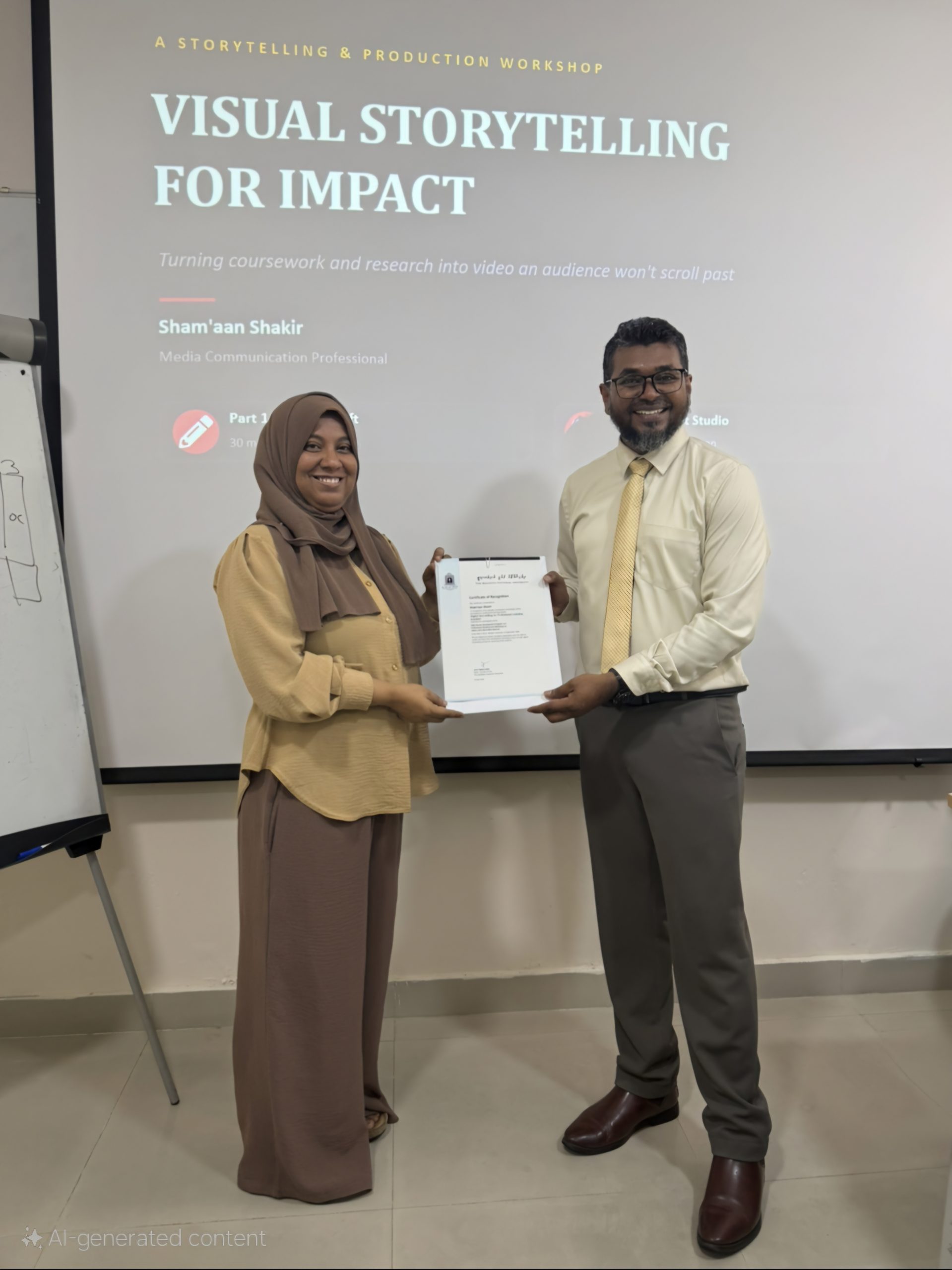
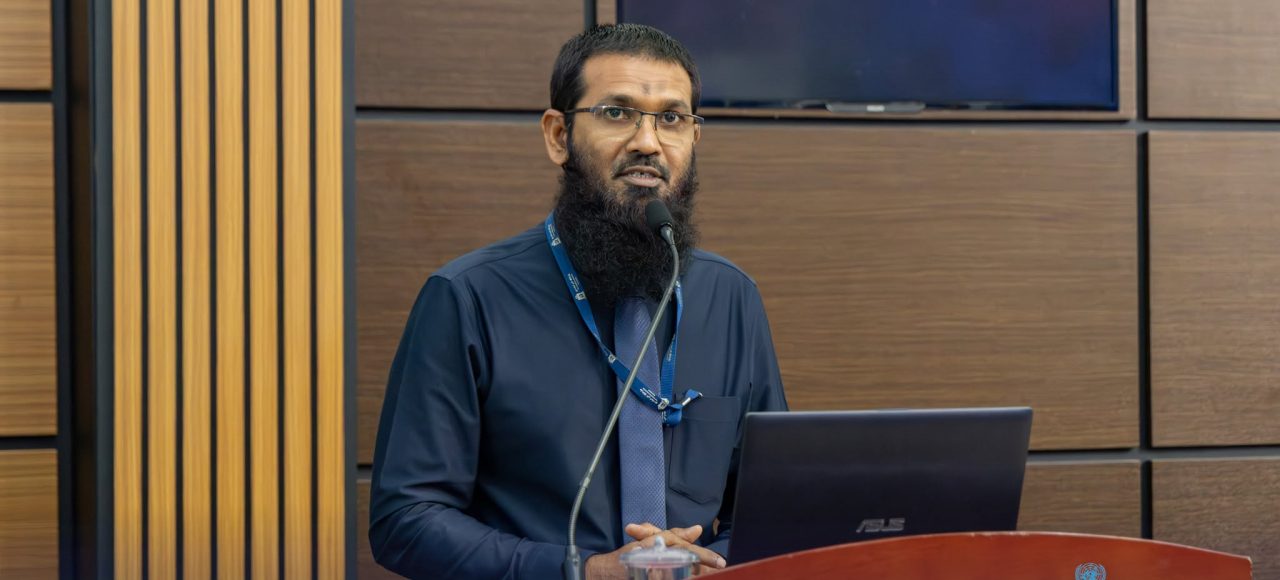
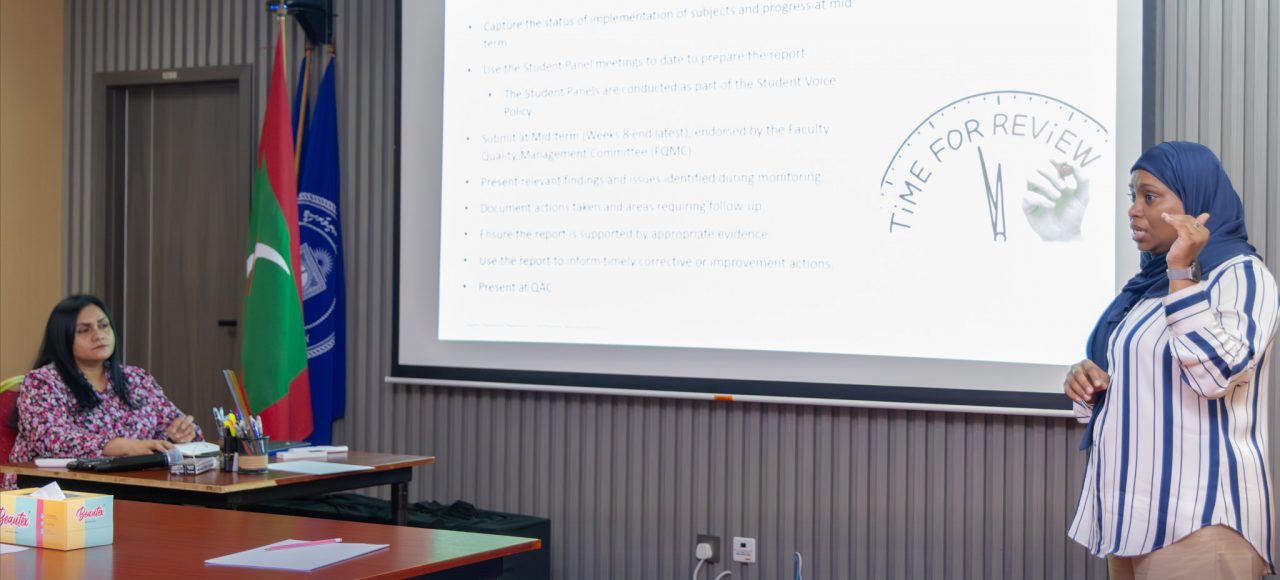
The Faculty of Arts, Maldives National University, conducted a workshop titled “Digital Storytelling for Professional Learning Journeys”, designed to equip participants with practical skills to document, communicate, and reflect on their professional experiences using accessible digital technologies.
The workshop was designed primarily for the FDP/PDWL 2026 cohort of the Library and Information Services (LIS) community of Maldives, with an open invitation extended to Faculty of Arts staff. The session provided participants with an opportunity to explore how digital storytelling can be used as an effective way to communicate professional experiences, learning journeys, achievements, and reflections through engaging multimedia content.
The workshop focused on practical and creative skills in videography, photography, on-camera presentation, voice-over narration, and basic video editing. Through hands-on activities, participants were introduced to the different stages involved in developing a digital story, from planning and capturing visual content to presenting a clear narrative and combining images, video, audio, and narration into a coherent final product.
Particular emphasis was placed on using mobile technologies and readily available digital tools to create professional and meaningful content. Participants explored how photographs and video footage can be intentionally selected to support a story, how voice-over narration can strengthen the message, and how basic editing techniques can be used to bring different elements together into a polished digital presentation.
The workshop also encouraged participants to view digital storytelling as more than a technical skill. By documenting their own professional experiences, participants were encouraged to reflect on their learning, identify important milestones, and consider how their experiences can be communicated to wider professional and academic communities. Digital storytelling can provide a flexible way to make professional learning visible while strengthening communication, creativity, digital literacy, and reflective practice.
For members of the LIS community, the workshop provided an opportunity to consider practical applications of digital storytelling in library and information services, including documenting professional development activities, sharing learning experiences, communicating community engagement initiatives, and creating engaging digital content for educational and professional purposes.
The session also supported the broader objectives of the Professional Development Workshop in Library and Information Services (PDWL) and Faculty Development Programme (FDP) 2026, which emphasise continuous professional learning, capacity building, and opportunities for participants to develop skills that can be applied within their professional environments.
By combining creativity, communication, technology, and reflection, the Digital Storytelling for Professional Learning Journeys workshop highlighted the importance of developing digital competencies alongside professional expertise. It provided participants with practical tools to capture and share their professional journeys while encouraging them to become more confident creators and communicators in an increasingly digital learning and working environment.
The workshop contributes particularly to Sustainable Development Goal 4: Quality Education, through its focus on lifelong learning, professional development, and the development of relevant digital skills. It also supports SDG 8: Decent Work and Economic Growth by strengthening professional competencies and employability-related skills through continuous learning.
Through initiatives such as this, the Faculty of Arts continues to create opportunities for staff and professionals to develop relevant skills, share knowledge, and engage in meaningful lifelong learning experiences.