SDG 15 – Life on Land
15.2 Supporting Land Ecosystems Through Education
The Maldives National University (MNU) promotes environmental education, biodiversity conservation and sustainable land management through academic engagement, campus sustainability initiatives and community partnerships. These activities contribute to protecting terrestrial ecosystems, strengthening environmental stewardship and raising awareness of ecosystem conservation and restoration. By integrating sustainability into university activities and community outreach, MNU supports SDG 15: Life on Land and contributes to broader efforts towards environmental sustainability and climate resilience.
15.2 Supporting Land Ecosystems Through Education
MNU organises and supports environmental awareness events, tree-planting programmes and community engagement initiatives that promote the conservation and sustainable use of terrestrial ecosystems. These activities encourage environmental stewardship, sustainable land management and community participation in protecting natural resources and improving green spaces.
2024 – Environmental conservation and sustainable land use
World Environment Day – MNU Thinadhoo Campus
MNU Thinadhoo Campus commemorated World Environment Day through tree planting and the establishment of a kitchen garden, promoting environmental education, sustainable land use, green spaces and responsible resource management. The initiative encouraged practical participation in environmental conservation and sustainable agricultural practices.
World Environment Day
Community Tree Planting – Thinadhoo Jetty Area
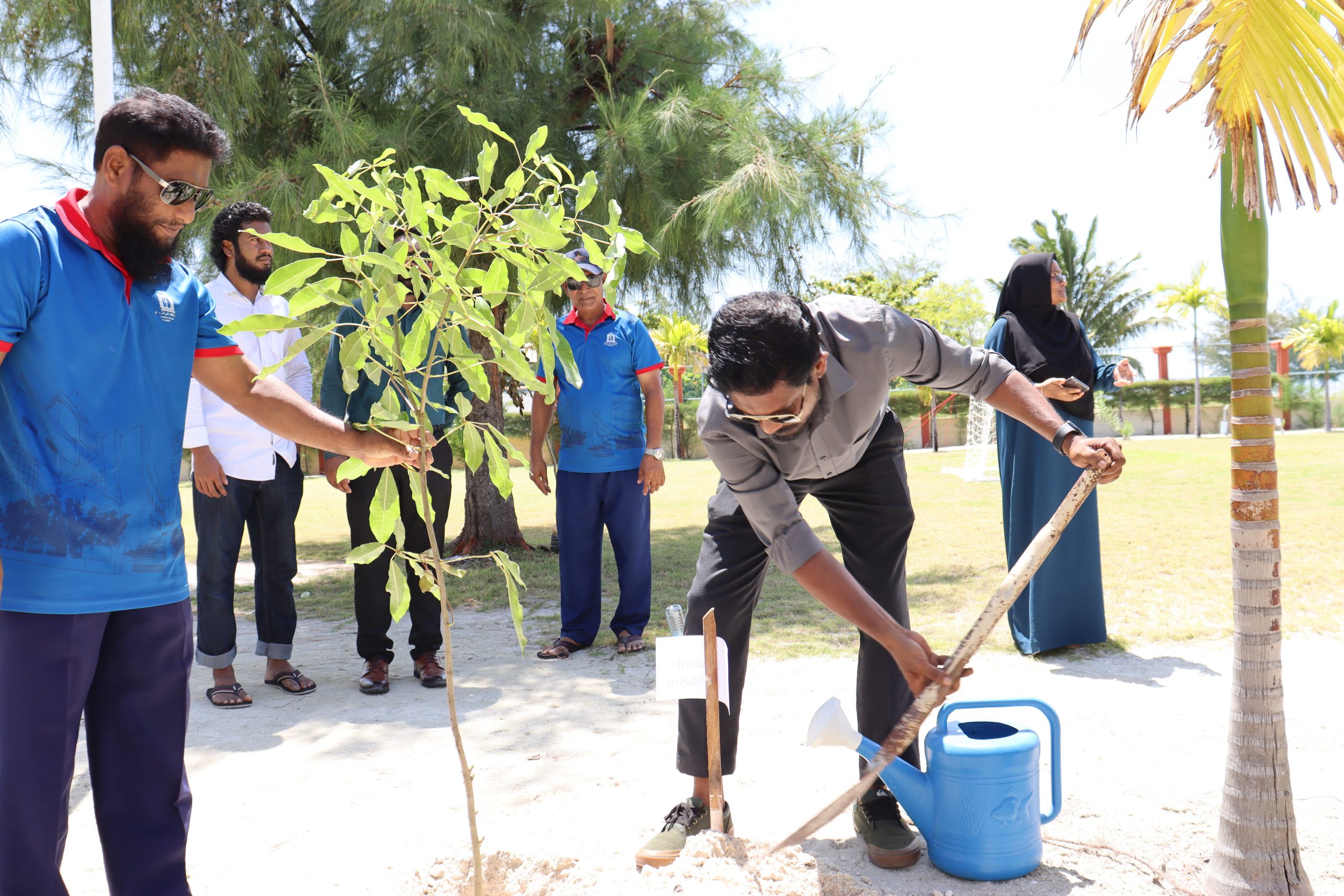
MNU Thinadhoo Campus participated in a community tree-planting initiative involving 50 rooted plant cuttings. The activity promoted community engagement, urban greening, sustainable land management and environmental conservation, contributing to the enhancement of public green spaces.
Community Tree Planting
MNU 51st Anniversary Tree Planting
As part of its 51st anniversary celebrations, MNU organised the planting of 100 flowering plants in public parks near Thinadhoo jetty. The initiative promoted environmental sustainability, green spaces, community participation and terrestrial ecosystem stewardship.
Anniversary Tree Planting
2025 – Community participation in environmental sustainability
National Tree Planting Initiative – MNU Kulhudhuffushi Campus
MNU Kulhudhuffushi Campus supported national sustainability efforts through a tree-planting programme involving students, staff and government representatives. The initiative strengthened community engagement, environmental conservation, sustainable land management and institutional collaboration.
Kulhudhuffushi Tree Planting
Government’s Five Million Tree Planting Pledge – MNU Hithadhoo Campus
MNU Hithadhoo Campus participated in the national tree-planting initiative, encouraging student and staff involvement in environmental sustainability, terrestrial ecosystem conservation, climate action and community environmental stewardship.
View MNU Hithadhoo Activity
MNU Student Union Tree-Planting Event – Thinadhoo Campus
The MNU Student Union organised a tree-planting event to promote student participation, environmental education, sustainable land use and green campus development. The activity encouraged students to take an active role in environmental conservation.
Student Union Tree Planting
2026 – Sustainable land management and environmental education
Gardening and Compost Day – MNU Hithadhoo Campus
MNU Hithadhoo Campus organised a gardening and composting activity promoting sustainable agriculture, soil conservation, organic waste reuse, resource efficiency and environmental education. The initiative encouraged practical learning about responsible land management and sustainable gardening practices.
View MNU Hithadhoo Activity
MNU 53rd Anniversary Tree Planting – Thinadhoo Campus
MNU Thinadhoo Campus incorporated tree planting into its 53rd anniversary celebrations, promoting environmental awareness, community participation, sustainable land use and campus greening.
Anniversary Tree Planting
15.2.3 Maintain and Extend Current Ecosystems’ Biodiversity
MNU promotes sustainable land management, biodiversity conservation and environmentally responsible landscaping through campus greening, gardening, tree planting and vegetation management. These activities contribute to maintaining green spaces, improving soil conditions and encouraging responsible management of terrestrial environments. MNU also supports practical environmental education and community participation in campus sustainability initiatives.
2024 – Sustainable campus landscaping and green spaces
Campus Gardening and Vegetation Management
MNU maintained campus gardens, cared for bamboo plants and reused fallen leaves through composting and mulching. These practices supported sustainable land management, soil conservation, circular resource use and responsible vegetation management, contributing to environmentally sustainable campus operations.
Kitchen Garden Project – MNU Thinadhoo Campus
MNU Thinadhoo Campus established a kitchen garden to encourage sustainable agriculture, food security, resource efficiency, sustainable food production and environmental education. The initiative demonstrated practical approaches to small-scale cultivation and responsible use of land resources.
Kitchen Garden Project
2025 – Expanding green spaces and environmental collaboration
Donation of 200 Plants to Aboobakuru School
MNU Thinadhoo Campus donated 200 plants to Aboobakuru School, supporting green space development, environmental education, community partnerships and sustainable landscaping. The initiative encouraged collaboration between educational institutions in promoting environmental sustainability.
Donation of 200 Plants
Tree Planting – MNU Kulhudhuffushi Campus
MNU Kulhudhuffushi Campus conducted tree-planting activities that contributed to campus greening, sustainable land management, environmental stewardship and community participation. The initiative encouraged practical engagement in maintaining green spaces.
Kulhudhuffushi Tree Planting
2026 – Sustainable vegetation management and environmental practices
Bamboo Planting – MNU Thinadhoo Campus
MNU Thinadhoo Campus collaborated with Thinadhoo School in planting two bamboo plants, promoting institutional collaboration, environmental education, vegetation management and sustainable campus landscaping.
Bamboo Planting
Gardening and Composting – MNU Hithadhoo Campus
MNU Hithadhoo Campus promoted sustainable gardening and composting practices, supporting soil conservation, organic waste management, resource efficiency and sustainable land use. The activity encouraged responsible environmental practices among students and staff.
View MNU Hithadhoo Activity
SDG 15 – Life on Land
15.3 Supporting Land Ecosystems Through Action
The Maldives National University (MNU) contributes to the conservation and sustainable management of terrestrial ecosystems through environmental planning, responsible land-use practices and community collaboration. The university supports initiatives that promote the maintenance of vegetation, conservation of natural environments and sustainable management of shared green spaces. Through partnerships with local councils, government institutions and communities, MNU encourages collective responsibility for protecting terrestrial ecosystems and maintaining environmentally sustainable landscapes across the Maldives.
15.3.3 – Local Biodiversity Included in Planning and Development
MNU recognises the importance of incorporating local biodiversity, terrestrial ecosystem conservation and sustainable land management into planning and development activities. Through environmental resource assessments and sustainable development planning, the university supports approaches that consider natural resources, environmental conditions and the potential impacts of development on terrestrial environments. These initiatives contribute to strengthening environmental considerations in land-use planning and supporting the long-term conservation of island ecosystems.
2024 – Environmental Resource Planning and Sustainable Land Management
Resilient and Sustainable Environmental Resource Utilisation and Development Plan – Kulhudhuffushi City
MNU contributed to the development of the Resilient and Sustainable Environmental Resource Utilisation and Development Plan for Kulhudhuffushi City. The initiative focused on assessing environmental resources and identifying environmental pressures associated with development and changing environmental conditions. The planning process supported sustainable natural resource management, responsible land-use planning and consideration of terrestrial environmental conditions in local development decisions.
By contributing to environmental resource planning, MNU supported efforts to strengthen the integration of environmental considerations into development processes and promote the sustainable management of island land resources.
2025 – Research Supporting Sustainable Land-Use Planning
Satellite Imagery for Shoreline Monitoring and Farmland Mapping
MNU registered a research project examining the application of satellite imagery for shoreline monitoring and agricultural land mapping. The project focused on using geospatial information to support sustainable land-use planning, terrestrial environmental monitoring and responsible management of agricultural land resources.
The research has potential to contribute to evidence-based planning by improving understanding of land-use patterns and environmental changes affecting island landscapes.
2026 – Sustainable Campus Development Planning
Environmental Considerations in MNU Campus Development Projects
MNU incorporated sustainable design considerations into the planning and development of campus infrastructure projects across several islands. The recorded projects include developments in Vilimalé, M. Muli, Dh. Kudahuvadhoo, Th. Vilufushi and Ga. Kolamaafushi.
These initiatives reflect institutional efforts towards responsible land development and environmentally sustainable campus planning.
Supporting evidence: MNU Projects Team records, 2026. No public biodiversity planning document was identified in the activity records.
15.3.5 – Collaboration for Shared Land Ecosystems
MNU actively engages with local councils, government institutions and community stakeholders to promote the conservation and sustainable management of shared terrestrial ecosystems. Through collaborative tree-planting initiatives and community-based vegetation management, the university contributes to maintaining public green spaces and encouraging shared responsibility for terrestrial environmental conservation.
These partnerships promote sustainable land management, ecosystem stewardship, vegetation conservation and community participation in protecting and maintaining island environments.
2024 – Community Collaboration for Terrestrial Ecosystem Conservation
Tree Planting on Council-Allocated Land – MNU Kulhudhuffushi Campus
MNU Kulhudhuffushi Campus collaborated with the local council to undertake tree-planting activities on council-allocated land and within campus grounds. The initiative promoted sustainable land management, maintenance of terrestrial vegetation and collaborative stewardship of shared green spaces.
Through this partnership, MNU contributed to community efforts to maintain vegetation and promote responsible management of land resources beyond university premises.
Supporting evidence: MNU Kulhudhuffushi Campus activity record, 5 June 2024. No public link was recorded.
Community Tree Planting – Thinadhoo Jetty Area
MNU Thinadhoo Campus participated in a community tree-planting initiative involving local stakeholders, during which 50 rooted plant cuttings were planted in the Thinadhoo jetty area. The initiative supported sustainable land management, maintenance of shared terrestrial green spaces and community participation in environmental conservation.
The activity demonstrated MNU’s contribution to collaborative land stewardship through the maintenance and enhancement of vegetation in public areas.
Tree Planting at Thinadhoo Jetty
World Environment Day and World Ocean Day – Thinadhoo City Council Collaboration
MNU Thinadhoo Campus participated in environmental activities organised in collaboration with Thinadhoo City Council and local stakeholders. The activities included tree planting and community environmental initiatives aimed at promoting terrestrial environmental conservation, sustainable land management and community participation in ecosystem stewardship.
The tree-planting component contributed to collaborative efforts to maintain vegetation and encourage responsible management of shared land environments.
Community Environmental Activities
2025 – Collaborative Conservation and Sustainable Management of Shared Land
National Tree Planting Initiative – MNU Kulhudhuffushi Campus
MNU Kulhudhuffushi Campus collaborated with government representatives through a tree-planting initiative supporting national environmental conservation efforts. The programme encouraged participation in sustainable land management, vegetation conservation and collaborative terrestrial ecosystem stewardship.
The initiative strengthened institutional participation in maintaining green spaces and promoting collective responsibility for the sustainable use of land resources.
Kulhudhuffushi Tree Planting
Community Tree Planting – MNU Hithadhoo Campus
MNU Hithadhoo Campus participated in the Government’s Five Million Tree Planting Pledge alongside local stakeholders. The initiative promoted community-based land conservation, sustainable management of terrestrial vegetation and shared environmental stewardship.
Through participation in this national initiative, MNU supported collaborative efforts to maintain vegetation and encourage responsible management of island green spaces.
View MNU Hithadhoo Tree Planting Initiative
2026 – Collaborative Vegetation Management
Bamboo Planting Collaboration – Thinadhoo School and MNU Thinadhoo Campus
MNU Thinadhoo Campus collaborated with Thinadhoo School through the donation and planting of two bamboo plants. The activity promoted collaborative vegetation management, sustainable landscaping and environmental stewardship.
The initiative demonstrated cooperation between educational institutions in maintaining planted vegetation and encouraging environmentally responsible management of campus green spaces.
Bamboo Planting Collaboration
SDG 15 – Life on Land
15.4 Land-Sensitive Waste Disposal
The Maldives National University (MNU) recognises the importance of responsible waste management, pollution prevention and sustainable resource use in protecting terrestrial ecosystems. Through campus environmental management activities, MNU promotes waste minimisation, organic material reuse and environmentally responsible practices that help reduce pressure on land resources. These initiatives support SDG 15 by encouraging practices that minimise the potential impacts of waste on soil, terrestrial habitats and the surrounding environment.
15.4.2 – Policy on Plastic Waste Reduction
MNU recognises that reducing plastic waste is important for preventing land pollution and protecting terrestrial ecosystems. The university’s approach to environmental sustainability includes promoting waste minimisation, responsible resource management and pollution prevention through campus operations and environmental awareness.
Reducing unnecessary plastic consumption, encouraging reusable alternatives and ensuring appropriate plastic waste collection are important measures for protecting land ecosystems and minimising the accumulation of persistent waste in the environment.
In addition to campus environmental management activities, MNU contributes to addressing plastic pollution through research and knowledge dissemination. The University provides opportunities for researchers to share findings on environmental challenges, including plastic pollution, waste management and sustainable practices.
As part of MNU’s Lunchtime Talk series, a research presentation titled “Understanding Marine Plastic Pollution: Awareness Among Secondary School Students in the Maldives” was delivered on 16 September 2025. The presentation focused on awareness of marine plastic pollution among secondary school students, highlighting the relevance of environmental education in addressing plastic pollution.
Such research presentations and knowledge-sharing activities complement MNU’s campus sustainability initiatives by promoting awareness of plastic pollution and encouraging informed discussions on responsible waste management. Although the research focused on marine pollution, it is also relevant to land-based waste management, as improperly disposed plastic waste can enter coastal and marine environments.
Related Research Talk: Understanding Marine Plastic Pollution: Awareness Among Secondary School Students in the Maldives – MNU Lunchtime Talk
Ongoing Environmental Sustainability Practices
MNU continued campus gardening, bamboo maintenance and the reuse of fallen leaves through composting and mulching. These activities promoted responsible waste management, resource reuse and prevention of unnecessary organic waste accumulation.
Waste Management in MNU Campus Development Projects
MNU’s 2026 campus development records identify waste management considerations within proposed sustainable design standards for projects in Vilimalé, M. Muli, Dh. Kudahuvadhoo, Th. Vilufushi and Ga. Kolamaafushi.
These measures indicate an intention to incorporate environmentally responsible waste management into campus infrastructure planning
15.4.3 – Policy on Hazardous Waste Disposal
MNU recognises the importance of safe hazardous waste management, pollution prevention and terrestrial ecosystem protection in maintaining a healthy and sustainable campus environment. Appropriate identification, segregation, storage and disposal of hazardous materials are essential to minimising environmental contamination and protecting soil, land ecosystems, wildlife and human health.
The university’s approaches ensure responsible environmental management should including procedures for handling chemical, biological, electronic and other potentially hazardous waste generated through teaching, research, laboratory activities and campus operations.