Public events and lifelong learning opportunities
Public Lectures
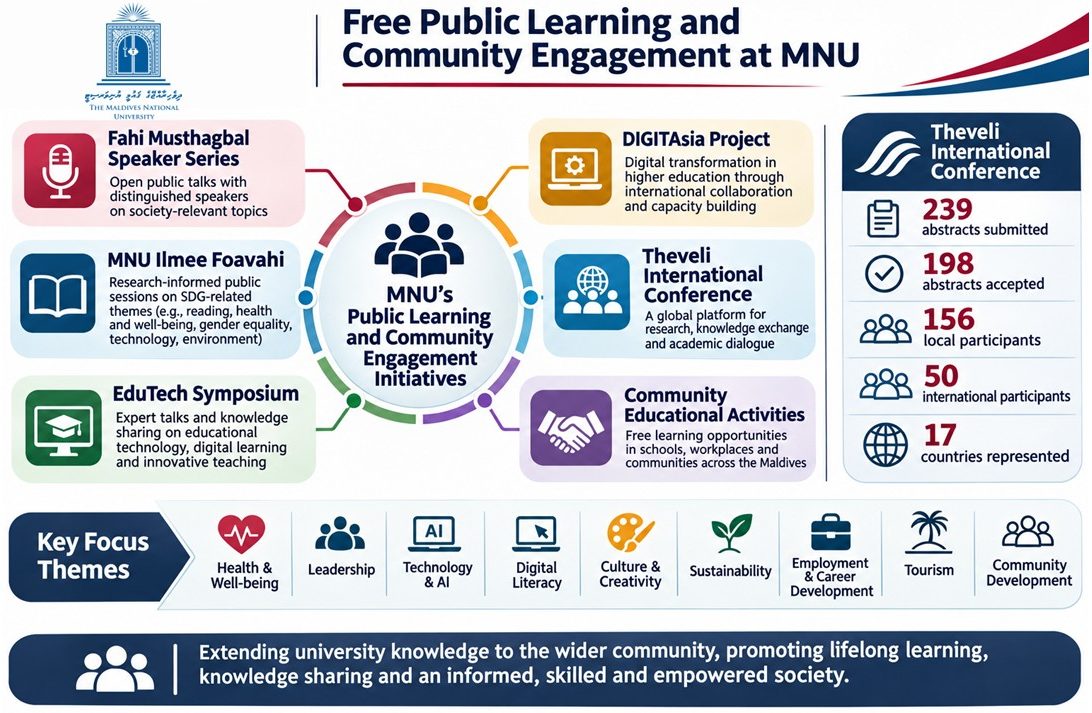
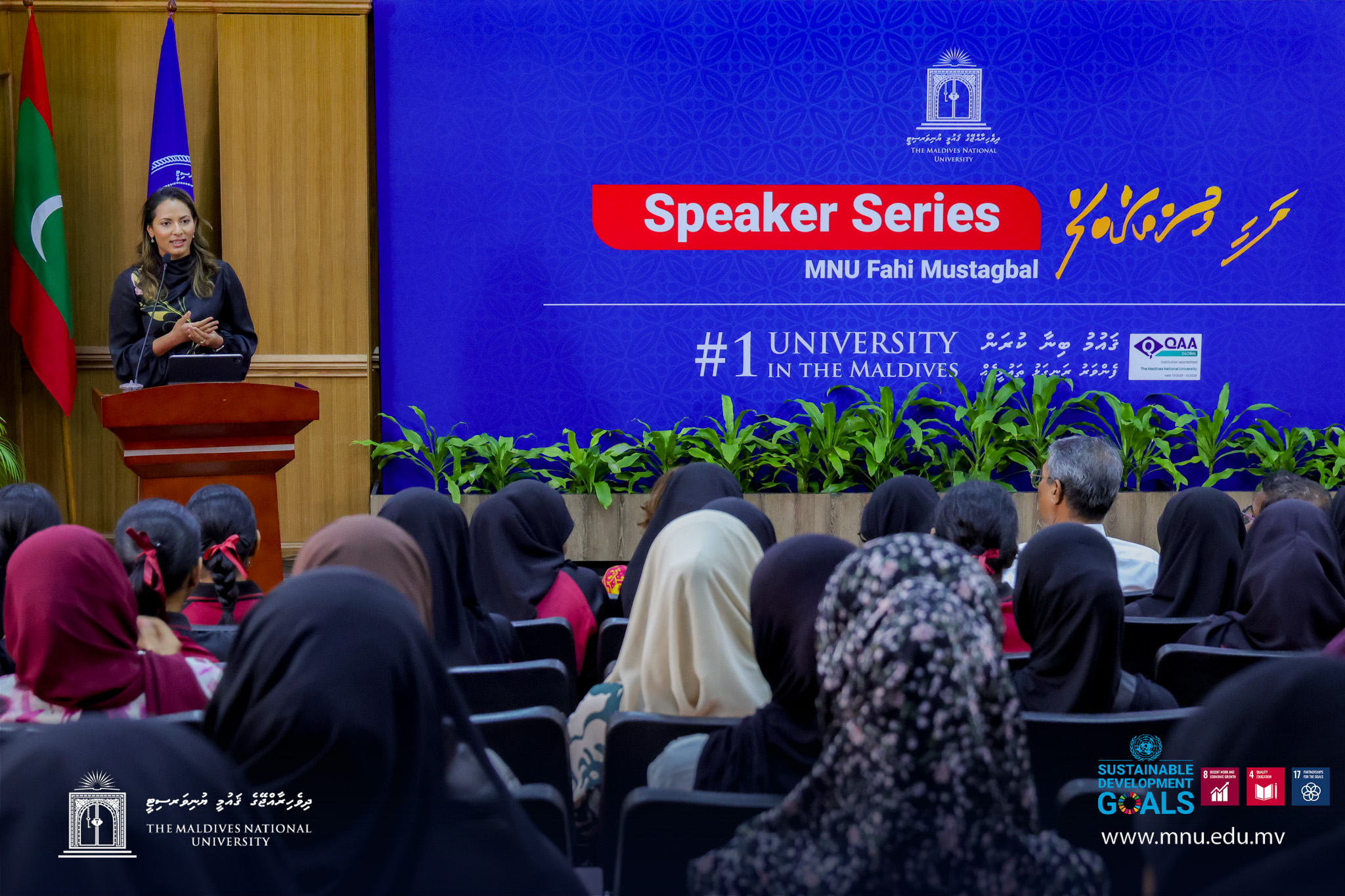
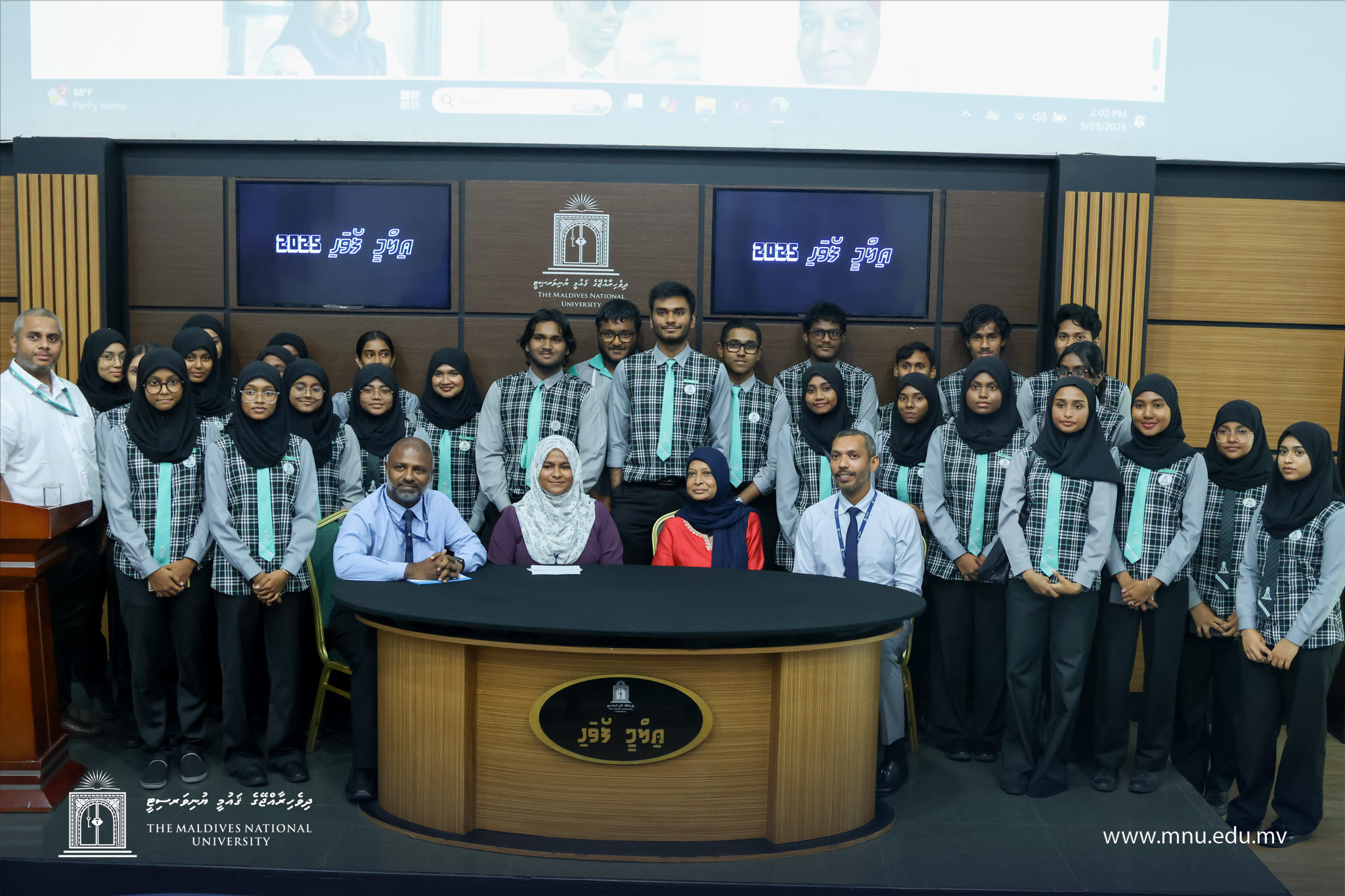
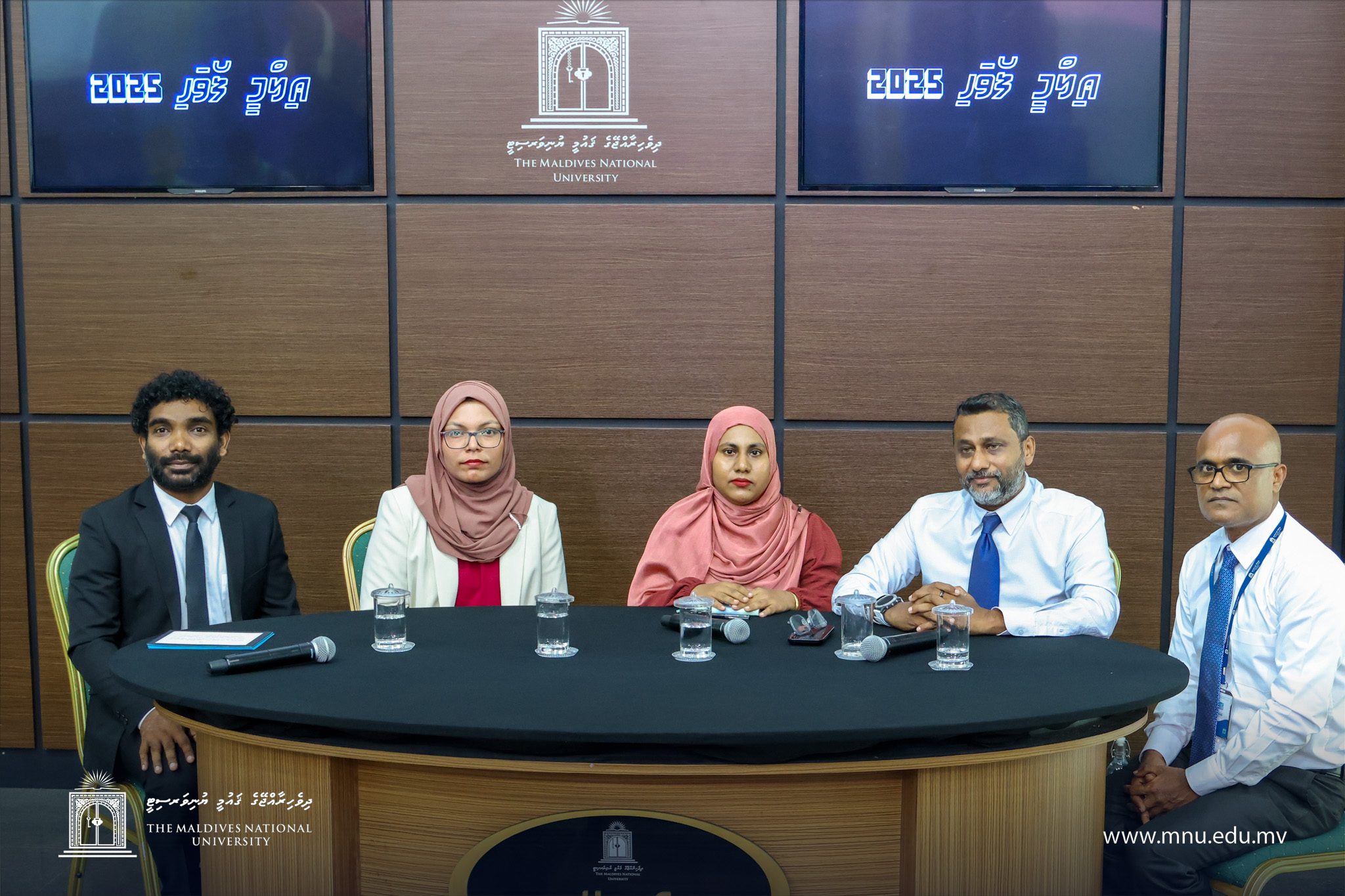
MNU’s public lectures provide opportunities for the wider community to engage with professionals, alumni, student leaders, researchers, and specialists. The 2025 Fahi Musthagbal Speaker Series comprised nine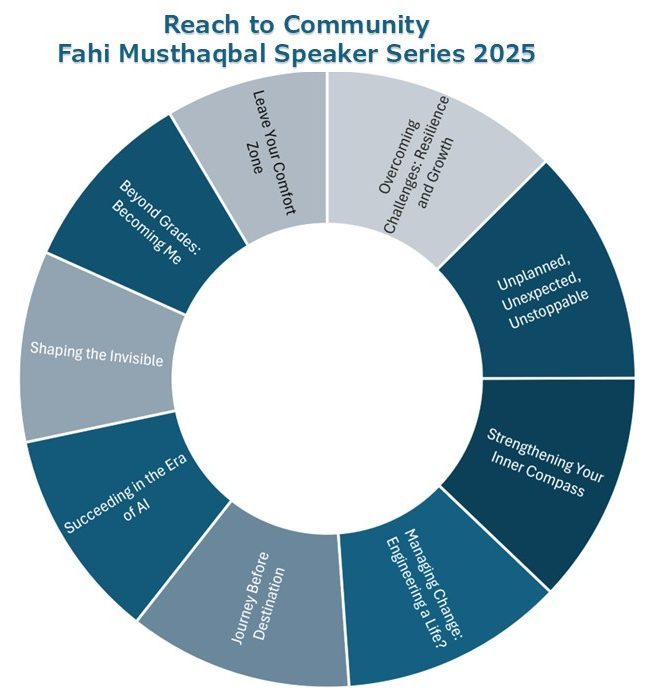 documented sessions and recorded at least 749 participants across staff, students, and community members.
Overcoming Challenges: Resilience and Growth
On 10 February 2025, Dr. Saifulla Muslim shared his experiences as a medical graduate, student leader, healthcare professional, and person living with thalassaemia, highlighting good health and well-being, quality education, resilience, inclusive healthcare, reduced inequalities, ethical leadership, social responsibility, and lifelong learning. The session connected personal development and health awareness with compassionate and equitable healthcare, responsible citizenship, community service, and strong, inclusive institutions, while emphasizing the importance of collaboration and partnerships in addressing social and health-related challenges. The event was open to the public, MNU students and staff, with a recorded attendance of 94 participants, and contributed to SDGs 3 (Good Health and Well-being), 4 (Quality Education), 10 (Reduced Inequalities), 16 (Peace, Justice and Strong Institutions), and 17 (Partnerships for the Goals).
Leave Your Comfort Zone
Leave Your Comfort Zone: On 15 April 2025, Dr. Mohamed Shafiu drew on his experience as a surgical leader and his involvement in the Maldives’ early locally delivered heart bypass surgeries to highlight the importance of good health and well-being, quality education, innovation, professional excellence, resilience and lifelong learning. The public lecture encouraged participants to approach professional and personal challenges with discipline, courage, continuous learning and adaptability, while demonstrating how specialised knowledge and innovative healthcare practices can contribute to national development. The event was open to the public, MNU students and staff, with a recorded attendance of 64 participants, and contributed to SDGs 3 (Good Health and Well-being), 4 (Quality Education), 9 (Industry, Innovation and Infrastructure), and 17 (Partnerships for the Goals).
Shaping the Invisible
Shaping the Invisible: On 19 May 2025, Maldivian artist Naushad Waheed explored the role of art in preserving cultural heritage, strengthening cultural identity, promoting inclusive communities and encouraging social dialogue. The lecture highlighted the value of creativity, critical thinking and cultural expression in fostering quality education, sustainable communities and greater understanding across society, while encouraging participants to use innovation and artistic practice as tools for positive social change. The event was open to the public, MNU students and staff, with a recorded attendance of 75 participants, and contributed to SDGs 4 (Quality Education), 11 (Sustainable Cities and Communities), 16 (Peace, Justice and Strong Institutions), and 17 (Partnerships for the Goals).
Journey Before Destination
Journey Before Destination: On 25 August 2025, student speaker Abdullah Razi Mohamed encouraged participants to view higher education as a journey of lifelong learning, personal development, resilience, creativity, and active citizenship, rather than solely as a pathway to academic qualifications. Drawing on his experiences in writing, debating, and campus engagement, the session emphasised inclusive learning opportunities, effective communication, confidence, participation, and holistic student development, while encouraging learners to contribute positively to their communities. The event was open to the public, MNU students, and staff, with a recorded attendance of 88 participants, and contributed to SDGs 3 (Good Health and Well-being), 4 (Quality Education), 10 (Reduced Inequalities), and 17 (Partnerships for the Goals).
Managing Change: Engineering a Life?
Managing Change: Engineering a Life?: On 8 September 2025, engineer and renewable-energy advocate Dr. Ibrahim Nashid discussed innovation, entrepreneurship, sustainable development, clean energy, and lifelong learning, drawing on his professional experience with solar photovoltaic systems and clean transport. The session demonstrated how engineering knowledge, technological innovation, and sustainable problem-solving can support climate action, energy transition, and national development, while encouraging participants to develop the skills and adaptability required to address emerging challenges. The event was open to the public, MNU students, and staff, with a recorded attendance of 88 participants, and contributed to SDGs 4 (Quality Education), 7 (Affordable and Clean Energy), 9 (Industry, Innovation, and Infrastructure), 13 (Climate Action), and 17 (Partnerships for the Goals).
Succeeding in the Era of AI
Succeeding in the Era of AI: On 11 September 2025, AI researcher and finance professional Dr. Azzam Naeem explored digital transformation, technological innovation, digital competence, future-ready skills, and the changing nature of work. The lecture encouraged participants to develop critical thinking, adaptability, ethical awareness, and continuous learning to navigate artificial intelligence and emerging technologies responsibly, while recognising the importance of education and innovation in supporting decent work and inclusive economic opportunities. The event was open to the public, MNU students, and staff, with a recorded attendance of 83 participants, and contributed to SDGs 4 (Quality Education), 8 (Decent Work and Economic Growth), 9 (Industry, Innovation, and Infrastructure), and 17 (Partnerships for the Goals).
Beyond Grades: Becoming Me
Beyond Grades: Becoming Me: On 22 September 2025, student leader Moosa Maahee Mohamed reflected on perseverance, research, leadership, international academic experiences, and holistic personal development, emphasizing that education extends beyond academic achievement. The session promoted lifelong learning, inclusive participation, student leadership, research engagement, community service, and extracurricular development, encouraging learners to build confidence, resilience, and skills that enable them to contribute meaningfully to society. The event was open to the public, MNU students, and staff, with a recorded attendance of 73 participants, and contributed to SDGs 3 (Good Health and Well-being), 4 (Quality Education), 10 (Reduced Inequalities), and 17 (Partnerships for the Goals).
Unplanned, Unexpected, Unstoppable
Unplanned, Unexpected, Unstoppable: On 13 October 2025, student innovator Rashnan Mohamed Shihab explored how adaptability, initiative, resilience, continuous learning, creativity, and innovation can help individuals respond effectively to unexpected academic and professional challenges. The lecture encouraged participants to develop problem-solving abilities, entrepreneurial thinking, and future-ready skills, demonstrating the importance of innovation and lifelong learning in navigating change and creating opportunities for personal and professional growth. The event was open to the public, MNU students, and staff, with a recorded attendance of 93 participants, and contributed to SDGs 4 (Quality Education), 8 (Decent Work and Economic Growth), 9 (Industry, Innovation, and Infrastructure), and 17 (Partnerships for the Goals).
Strengthening Your Inner Compass
Strengthening Your Inner Compass: On 10 November 2025, business and governance leader Ayesha Nurain Janah discussed authentic leadership, resilience, ethical decision-making, professional development, gender equality and public service. The session encouraged young people, including aspiring women leaders, to pursue leadership opportunities with confidence, integrity and a commitment to inclusive and responsible decision-making, while highlighting the importance of education and decent work in strengthening individual and institutional capacity. The event was open to the public, MNU students and staff, with a recorded attendance of 91 participants, and contributed to SDGs 4 (Quality Education), 5 (Gender Equality), 8 (Decent Work and Economic Growth), and 17 (Partnerships for the Goals).
Community Educational Events
MNU also takes learning into community settings through educational events, forums, health-awareness activities, career events, workshops, and public outreach.
These activities connect university knowledge and student learning with community needs and provide practical opportunities for lifelong learning.
Public Health Promotion Event
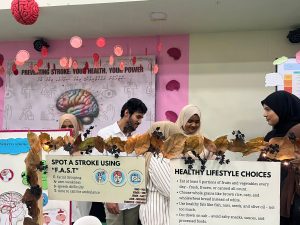
On 24 October 2025, Bachelor of Nursing students at MNU Thinadhoo Campus organised a community health promotion event focused on stroke awareness, disease prevention, healthy lifestyles, and health.
literacy. Community members received information on stroke warning signs and participated in blood-pressure checks, blood-sugar testing, body-fat analysis, and BMI assessments, while activities for children promoted health awareness among families and supported intergenerational learning. The event was open to the general public and families, with access provided to the wider community, and contributed to SDGs 3 (Good Health and Well-being), 4 (Quality Education), and 17 (Partnerships for the Goals).
World Tourism Day Forum
On 6 October 2025, MNU Thinadhoo Campus, in collaboration with the Business Center Corporation, Thinadhoo City Council, and the Women’s Development Committee, conducted a forum examining sustainable tourism, local economic development, inclusive communities, responsible consumption, and cross-sector partnerships. Keynote presentations and a panel discussion brought experts, community leaders, and local stakeholders together to strengthen knowledge sharing and collaborative approaches to sustainable tourism and community development. The forum was attended by experts, community leaders, and local stakeholders, with a recorded attendance of 50 participants, and contributed to SDGs 8 (Decent Work and Economic Growth), 11 (Sustainable Cities and Communities), 12 (Responsible Consumption and Production), and 17 (Partnerships for the Goals).
World AIDS Day Family Event
On 22 December 2025, MNU Thinadhoo Campus participated in a multi-partner family event promoting good health and well-being, HIV/AIDS awareness, prevention, compassion, social inclusion and reduction of stigma and inequalities. The programme brought together healthcare institutions, public agencies, international partners, government bodies, NGOs and community members, demonstrating the importance of coordinated action, inclusive public health education and strong partnerships in addressing community health challenges. The event engaged families and community members and contributed to SDGs 3 (Good Health and Well-being), 4 (Quality Education), 10 (Reduced Inequalities), 16 (Peace, Justice and Strong Institutions), and 17 (Partnerships for the Goals).
Fahi Furushathu Job Festival
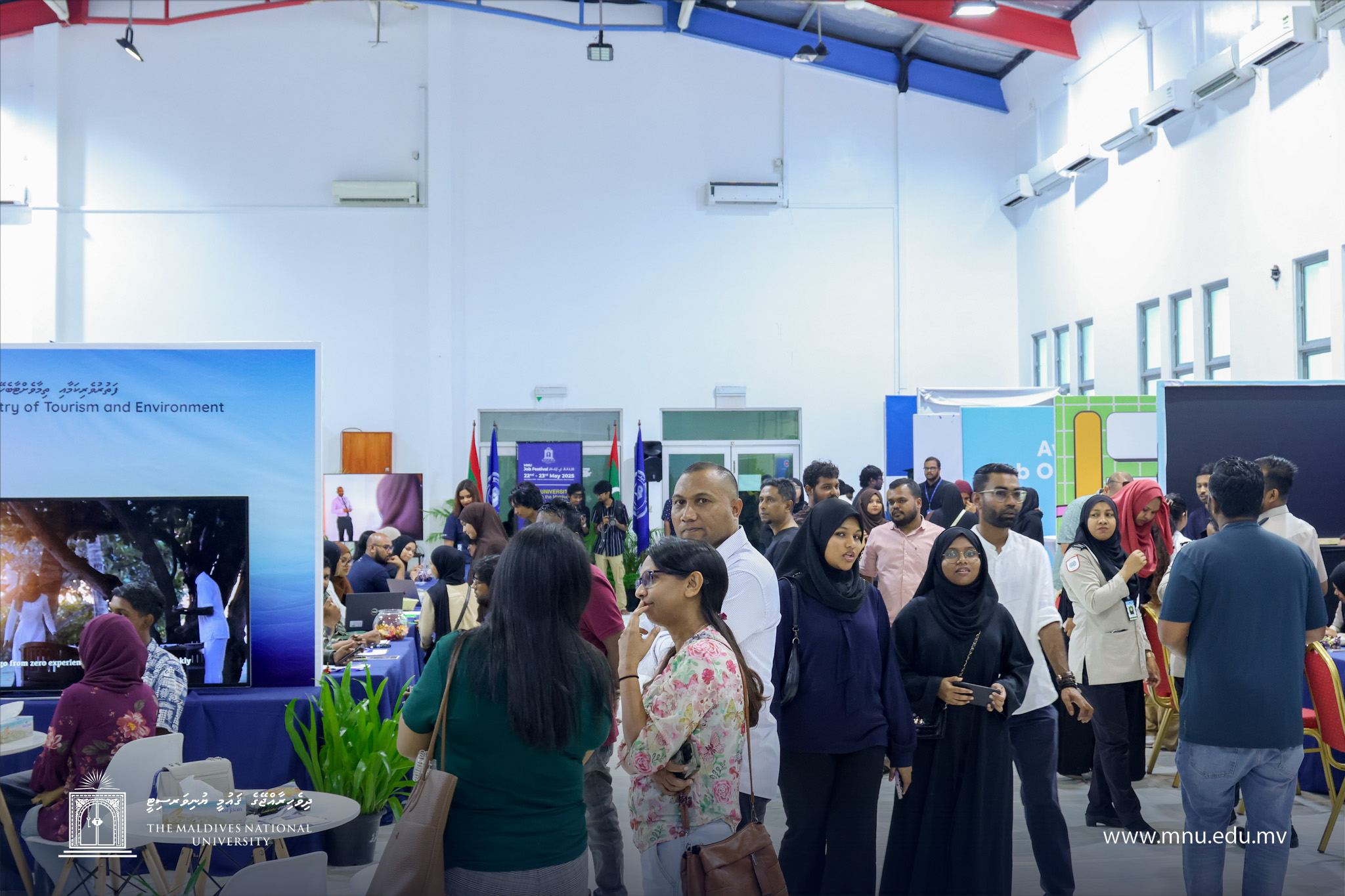
On 23 May 2025, the Fahi Furushathu Job Festival connected graduates, job seekers and community members with employment opportunities, career guidance, skills development, decent work and inclusive access to information. The festival provided opportunities to engage directly with employers and institutional service providers, supporting informed career decision-making and strengthening the connection between education, employability and economic participation. The event reached 315 visitors and representatives from 11 institutions, including graduates, job seekers and community members, and contributed to SDGs 4 (Quality Education), 8 (Decent Work and Economic Growth), 10 (Reduced Inequalities), and 17 (Partnerships for the Goals).
Namaadhu Workshop 2: Dheenuge Thanbu
Held on 20–21 February 2025, the seven-hour Namaadhu Workshop combined lectures and guided practical activities to promote quality education, lifelong learning, values-based education, discipline, responsible citizenship and social responsibility. Delivered in partnership with Thinadhoo City Council, Arutha NGO and Tibyan Tarbiyya Centre, the workshop strengthened community engagement and collaborative learning while encouraging participants to develop positive values and responsible behaviours that contribute to peaceful and inclusive communities. The workshop engaged 35 community participants and contributed to SDGs 4 (Quality Education), 16 (Peace, Justice and Strong Institutions), and 17 (Partnerships for the Goals).
Community Health Education by the School of Nursing
Throughout 2025, the School of Nursing delivered a range of community-learning and health-promotion activities, including preschool health education, first-aid training, health awareness programmes and preventive-health initiatives. These activities extended university knowledge into schools and public settings, strengthened health literacy and supported lifelong learning, early childhood development and community well-being. Examples included human-body health education for 605 children across four preschools, first-aid education for 20 school health officers, sports supervisors and leading teachers, and community health-promotion activities involving campuses, hospitals, schools, healthcare workers and community organisations. These initiatives contributed primarily to SDG 4 (Quality Education), while also supporting SDG 3 (Good Health and Well-being) and SDG 17 (Partnerships for the Goals) through community health education and collaborative outreach.
Contribution to SDG 4.3 – Lifelong Learning
These activities support MNU’s commitment to lifelong learning by enabling people beyond the enrolled student population to access university knowledge, engage with specialists and participate in learning opportunities relevant to health, technology, employment, culture, sustainability, leadership and personal development.