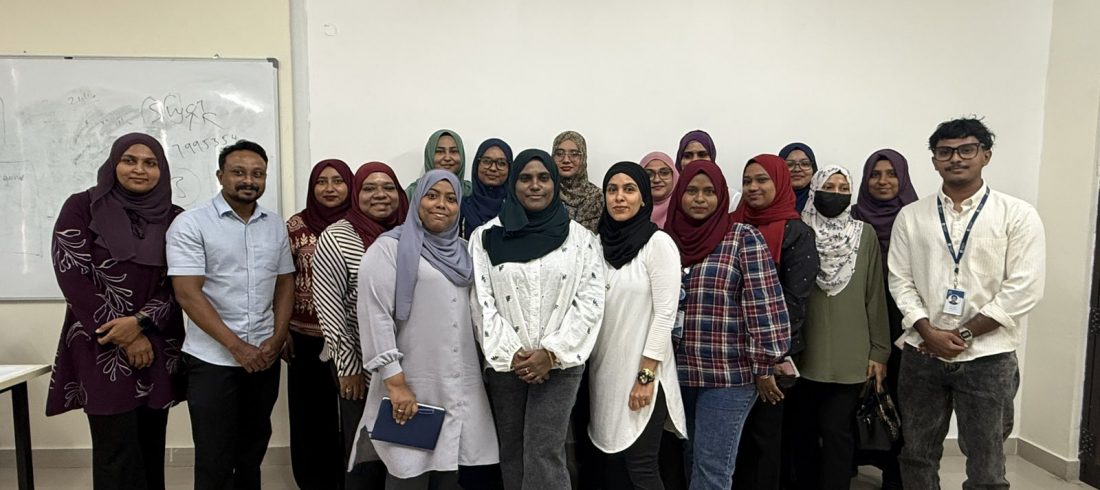
The Maldives National University (MNU), through its Training Unit, has strengthened its commitment to workforce development and staff well-being with a professional development programme titled “Time Management & Productivity,” aimed at helping administrative leaders and officers manage workloads effectively, improve productivity, and maintain a healthier work-life balance.
Facilitated by Dr. Aishath Leeza, the programme focused on equipping administrative personnel with practical strategies to organise daily responsibilities, establish realistic priorities, and develop productive working habits. The training highlighted the importance of effective time management in supporting efficient administrative operations while reducing unnecessary workplace pressure.
A central focus of the session was setting achievable professional goals and prioritising tasks according to their importance and urgency. Participants explored approaches to distinguishing between immediate demands and longer-term responsibilities, encouraging more structured decision-making and better allocation of time and resources.
The programme also addressed common workplace challenges, including interruptions, distractions, competing demands, and time-consuming activities that can affect productivity. By examining these barriers, the training encouraged staff to identify opportunities for improving concentration, streamlining daily routines, and maintaining progress on essential responsibilities.
Practical time management tools and techniques formed an important component of the training. The session introduced approaches to workload planning, focused work, and timely task completion, with the aim of helping administrative staff manage multiple responsibilities while maintaining the quality and consistency of university services.
Beyond workplace efficiency, the programme placed particular emphasis on staff well-being and the importance of maintaining a healthy work-life balance. Recognising that sustained productivity depends on manageable workloads and effective working practices, the training encouraged participants to adopt approaches that support both professional performance and personal well-being.
The initiative further highlighted the connection between effective time management and institutional service delivery. Strengthening organisational skills among administrative leaders and officers can contribute to smoother workflows, improved coordination, and more responsive support for students, academic staff, and other university stakeholders.
Through this professional development initiative, the MNU Training Unit reaffirmed the importance of investing in employees’ practical skills and workplace well-being as complementary priorities. The programme aimed to foster a working environment where staff can manage responsibilities confidently, collaborate effectively, and contribute to continuous institutional improvement.
Aligned with priorities of quality education, lifelong learning, decent work, good health and well-being, professional capacity development, workplace productivity, and effective institutional services, the training reflects MNU’s ongoing efforts to build a capable, resilient, and well-supported administrative workforce while promoting a balanced and sustainable working environment.