Introduction
At the recently concluded Quad Foreign Ministerial Summit in New Delhi, Australia, India, Japan and the United States (US) jointly announced the launch of the Quad Indo-Pacific Surveillance Initiative. They also agreed to expand the Indo-Pacific Maritime Domain Awareness (IPMDA) initiative launched in 2022.
The Quad Indo-Pacific Surveillance Initiative aims to further strengthen Maritime Domain Awareness (MDA) among Indian Ocean nations, including Sri Lanka and the Maldives, by fostering regional collaboration and information-sharing mechanisms. This analysis examines the strategic significance of enhancing MDA capacities in Sri Lanka and Maldives and how the Quad initiative can contribute to regional security, cooperative maritime governance, and stability in the wider Indian Ocean region.
Regional Function of MDA and Small States
With major international shipping routes facilitating the eastward transport of crude oil from the Middle East to Asia and the westward movement of manufactured goods traversing their ocean territory, Sri Lanka and Maldives form an integral part of the Indian Ocean’s critical infrastructure.
To illustrate, approximately 100,000 vessels transit the Indian Ocean carrying nearly 30 per cent of global containerised cargo and 42 per cent of world’s crude oil every year. A significant proportion of this traffic passes Southern Sri Lanka, through the Traffic Separation Scheme (TSS) and Maldives, making the safety of their territorial waters a strategic priority for the region. Furthermore, Sri Lanka’s and Maldives’ EEZs adjoin India’s EEZ, creating a critical “Tri-Junction” to the south of India.
In this context, small and littoral states require ‘maritime control and protection’ that can be achieved through better intelligence, surveillance and reconnaissance (ISR). Regionally coordinated MDA can fulfil this part by enabling real-time surveillance, especially for countries like Sri Lanka and Maldives with limited terrestrial assets.
MDA Capabilities in Sri Lanka and Maldives
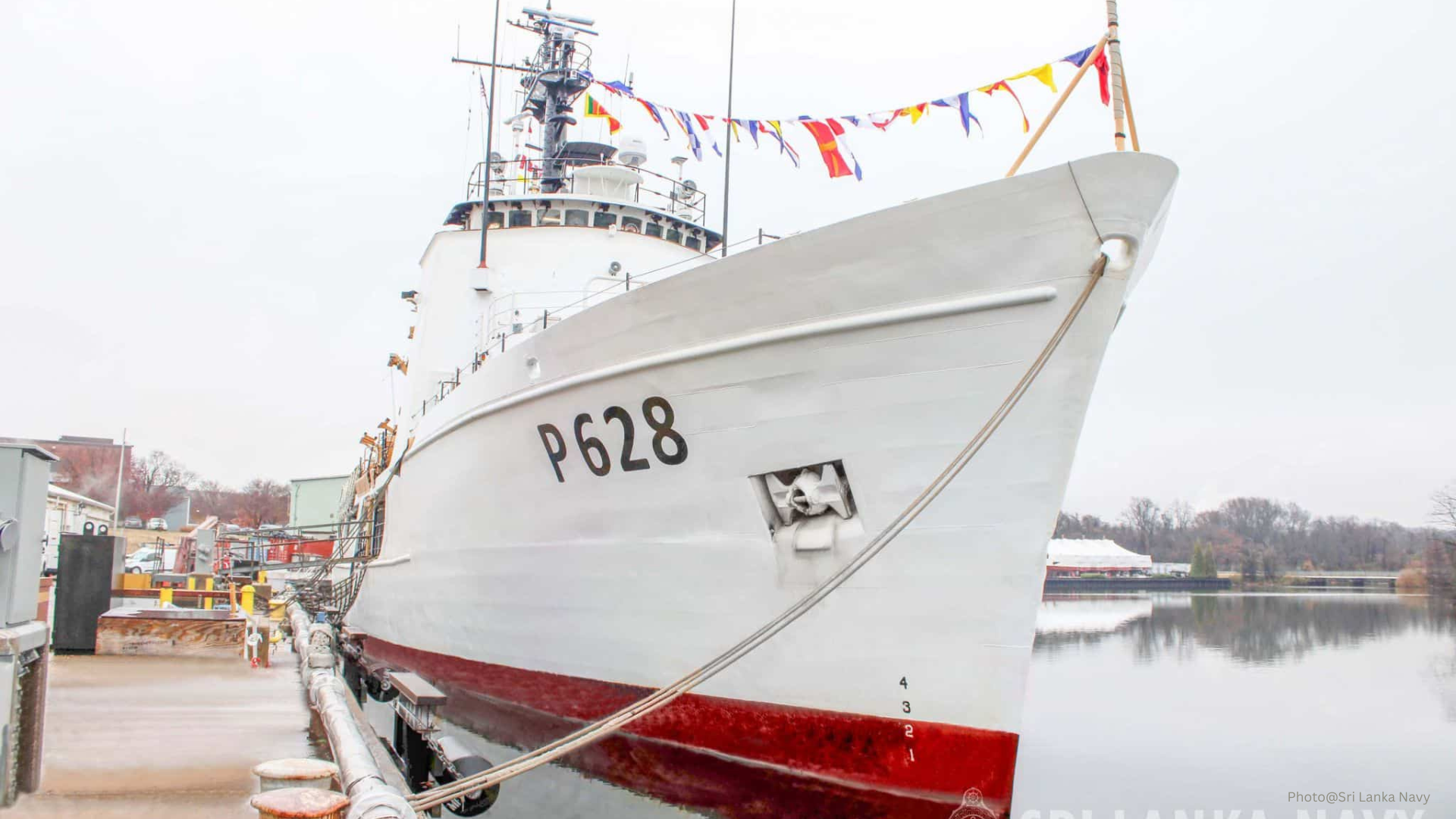
Sri Lankan and Maldivian MDA capabilities rely on a limited fleet of vessels which constitute the foundational layer of surveillance and interdiction.
Generally, in Sri Lanka, coastal radar networks, Long-Range Identification and Tracking (LRIT) systems, space and terrestrial-based Automatic Identification System (AIS) nodes, the Blue Tracker Vessel Monitoring System on Sri Lankan flagged multi-day fishing vessels, web-based MDA platforms, shore-launched unmanned drones, regional information-sharing mechanisms, and nascent space-based detection capabilities contribute to building a common operating picture (COP).
Nonetheless, Sri Lanka lacks subsurface monitoring capabilities to safeguard critical underwater infrastructure, restricting its MDA coverage to surface and above-surface domains. Furthermore, coordination among its internal maritime stakeholders remains limited, hampered by administrative obstacles and entrenched institutional egocentrism.
For example, in Sri Lanka, a few Sri Lankan Air Force aircraft coordinate with naval and coast guard units in maritime operations. While there is strong integration in military and security institutions, a lack of advanced integrated infrastructure can limit coordination in MDA efforts.
In Maldives, the Maldives National Defence Force (MNDF) Coast Guard takes the lead in ensuring the ‘security of the seas’ with its modest assets. MDA in Maldives involves the fusion of civilian and military surveillance systems, including radar networks and unmanned aerial vehicles (UAVs). Information required to better situational awareness is also acquired from maritime agencies, fishermen, utility vessels, and white-shipping data. Capacity building for MDA has been achieved through foreign assistance and aid in the form of patrol boats that were gifted to Malé by Australia and Türkiye.
However, Maldives continues to have limited access to satellite imagery, although it uses specific MDA software such as SeaVision to advance maritime security. The MNDF Coast Guard, Marine and Air Corps do assist in getting a better COP, and Maldives uses specific software, such as IORIS and Sea Vision, among other locally available software to ensure better situational awareness.
Despite the advances mentioned hereinabove, both Sri Lanka and Maldives confront structural challenges in governing, monitoring, and regulating their expansive maritime domain, necessitating remedial measures to bolster their MDA capabilities. For example, with limited equipment, Sri Lanka and Maldives can find it challenging to distinguish between legitimate and illicit activities among white, grey, and dark shipping within this vast area. Hence, to address such national shortcomings, one must resort to bilateral and regional cooperation, and the Quad framework can contribute to this by improving capabilities for maritime situational awareness.
Bolstering bilateral cooperation in Quad partners
The Quad partners have individually assisted Sri Lanka and Maldives in strengthening their surface and aerial surveillance capabilities. In 2022, Japan collaborated with the United Nations Office on Drugs and Crime (UNODC) to establish the Information Fusion Centre (IFC) at the Sri Lankan Navy Headquarters. The United States supported Sri Lanka’s MDA development through a maritime surveillance project enhancing coastal monitoring and maritime security.
Likewise, Maldives received assistance from Australia in 2025 through the gift of a Guardian-class patrol boat and from Japan in 2024 through the donation of MDA equipment to enhance surveillance and strengthen the operational effectiveness of the MNDF Coast Guard. The United States assisted Maldives in establishing Automatic Identification System (AIS) stations, and countries agreed to use the Merchant Ship Information System (MSIS) to share white shipping and AIS data. India provided advanced radar systems and assisted Maldives in establishing a radar chain.
However, such assistance remains ad-hoc, while the Quad surveillance initiative and IPMDA offer opportunities for systems integration in the IOR.
Strategy – India-led Quad within IOR
India takes the lead in building the regional institutional architecture. Other Quad members support Indian efforts. Other Quad member states can go by the Ricardian principle of comparative advantage and plug-in while supporting an India-led MDA architecture in the IOR.
India is already engaging in capacity building with the Indian Navy-led Information Fusion Centre for the Indian Ocean Region (IFC-IOR), hosting International Liaison Officers (ILOs) and building the indigenously constructed platform NISHAR MITRA to ensure a robust COP for the IOR. The IFC-IOR can work with the IFC-Colombo and the Maritime Rescue Coordination Centre (MRCC) in Maldives to enhance coordination. Merchant vessels engaged in shipping can also be incorporated into the NISHAR MITRA framework for detecting and reporting ‘dark vessels’.
Similarly, Sri Lanka and Maldives’ underwater blindness in monitoring subsea spaces can be rectified by India and the Quad through space-based services, undersea cables with integrated underwater domain awareness sensors, and cable repair capacity. The IPMDA initiative using satellite-based radio frequency (RF) data could further help detect dark vessels, strengthen MDA, and curb IUU Fishing in the IOR.
For example, the potential integration of Regional Fisheries Management Organisations (RFMOs) with the IPMDA initiative could enable Sri Lanka and Maldives to manage IUU fishing. Australia has already integrated its Regional Fisheries Management Organisations (RFMOs), such as the Pacific Islands Forum Fisheries Agency (PIFFA), to enhance regional MDA through satellite data, training and capacity building.
Conclusion
The Quad Indo-Pacific Surveillance Initiative and IPMDA provide an opportunity to transform ad-hoc maritime cooperation into an integrated regional MDA architecture in the IOR. Through India-led institutional coordination, technological integration, and capacity building, Sri Lanka and Maldives can reciprocally strengthen maritime security, improve resilience, and contribute more effectively to cooperative regional governance.
Authors
Ms Anuttama Banerji is an Associate Fellow at the Centre for Aerospace Power and Strategic Studies (CAPSS) in New Delhi. She is also an affiliate of the National Maritime Foundation, New Delhi. She graduated with a Masters in International Relations from the London School of Economics in 2018. Her research focuses on water and maritime security as well as South Asian geopolitics.
Commander Chanaka Udayanga is currently serving as the International Liaison Officer at the Information Fusion Centre-Indian Ocean Region (IFC-IOR) representing Sri Lanka Navy. Prior to this appointment he was the Senior Staff Officer Maritime Surveillance at the Directorate of Naval Operations at Naval Head Quarters in Colombo and Officer In-Charge of Maritime Rescue Coordinating Centre in Colombo.