The Maldives National University (MNU) recognises that meaningful stakeholder engagement is essential to responsible university governance, institutional accountability and national development. As the national university, MNU is committed to identifying and engaging external stakeholders, including local councils, government ministries and agencies, industry partners, employers, civil society organisations, professional bodies and local communities across the Maldives.
Engagement is a key strategic priority of MNU, reflecting the University’s commitment to building strong relationships that benefit students, staff, communities and the nation. Through institutional policies, strategic planning, academic partnerships, research collaboration and community outreach, MNU seeks to ensure that stakeholder perspectives inform University planning, programme development, research priorities and institutional decision-making.
MNU’s engagement approach recognises the unique geographical context of the Maldives. With campuses and outreach centres across the country, the University works with island and atoll councils, local communities and regional stakeholders to identify educational needs, strengthen access to higher education and contribute to sustainable local development.
These arrangements support SDG 16 – Peace, Justice and Strong Institutions, particularly Target 16.7, by promoting inclusive governance, stakeholder participation, transparency and responsive decision-making.
View Policy on Identification and Engagement of Local Stakeholders
Strategic Frameworks, Policies and Engagement Mechanisms
MNU’s approach to stakeholder identification and engagement is supported by its institutional strategic priorities and established collaboration mechanisms.
- MNU Strategic Plan 2026–2030 – Engagement and National Development
The MNU Strategic Plan 2026–2030 identifies Engagement as one of the University’s eight strategic priorities, alongside Academic Excellence, Research and Innovation, Maldivian Identity, Empowering People, Sustainability, Governance and Student-Centred Excellence.
Through this strategic framework, MNU seeks to strengthen relationships with government, industry, communities, educational institutions and international partners.
These priorities provide direction for identifying relevant stakeholders and developing partnerships that support:
- National and regional human resource development.
- Industry-responsive academic programmes and professional education.
- Research collaboration and evidence-based policy development.
- Community engagement and social responsibility.
- Greater access to higher education across the atolls.
- Sustainable development and stronger public institutions.
- Stakeholder Identification and Engagement Policy
MNU has developed a Stakeholder Identification and Engagement Policy to provide a structured institutional approach to identifying, mapping, consulting and engaging relevant stakeholders.
The policy framework addresses:
- Identification of internal and external stakeholders.
- Stakeholder mapping according to their interests, influence and relationship with the University.
- Planning appropriate engagement and consultation activities.
- Assigning institutional responsibilities for stakeholder engagement.
- Documenting stakeholder feedback and contributions.
- Monitoring and reviewing engagement activities to support continuous improvement.
The framework is intended to strengthen transparency, accountability and meaningful stakeholder participation in institutional planning and decision-making.
- Engagement with Local Councils and Island Communities
MNU maintains relationships with island and atoll councils to expand educational opportunities and respond to local development priorities.
Through its regional campuses, outreach centres and collaborative arrangements with local councils, MNU works to identify community needs, improve access to higher education and support local capacity development.
These engagements include collaboration on educational facilities, outreach programmes, training opportunities and community development initiatives.
This decentralised approach provides opportunities for local stakeholders to contribute to the development of higher education services relevant to their communities.
- Government and Public Sector Engagement
As the national university, MNU works closely with government ministries, public institutions and national agencies to contribute academic expertise, professional training, research and policy-relevant knowledge.
Engagement takes place through:
- Participation of MNU staff in national committees, advisory bodies and technical working groups.
- Consultation with government agencies on educational and professional development needs.
- Collaborative research addressing national priorities.
- Professional development and capacity-building programmes.
- Academic advice and contributions to public policy discussions.
These activities strengthen connections between academic expertise and public institutions, supporting evidence-based policy and institutional effectiveness.
- Industry, Employer and Professional Engagement
MNU engages with employers, professional bodies and industry partners to ensure that its academic programmes and graduate competencies remain responsive to national workforce requirements.
These relationships support curriculum development, professional education, internships, practical training, research collaboration and graduate employability.
Engagement with external professional and industry stakeholders helps the University identify emerging skills requirements and strengthen the relevance of its educational offerings.
- Research Partnerships and Community Engagement
MNU promotes research collaboration and community engagement to address challenges relevant to the Maldives, including climate change, marine and environmental sustainability, public health, education, economic development and social wellbeing.
Through partnerships with government agencies, local councils, industry and community organisations, the University seeks to connect research with practical national and local priorities.
These collaborations create opportunities for stakeholders to participate in identifying research needs, contributing local knowledge and applying research findings to community development.
Research collaborations with ministries, government agencies and local councils
- National College of Policing and Law Enforcement (NCPLE) Professional Development Lecture
- SSSS Security Research Roundtable with Maldives’ national security agencies
- National College of Policing and Law Enforcement(NCPLE) Professional Development Lecture
- Lecture at the Australian High Commission and The Foreign Service Institute of Maldives (FOSIM)
- MNU and Ministry of Tourism and Environment Launch Knowledge Transfer Series
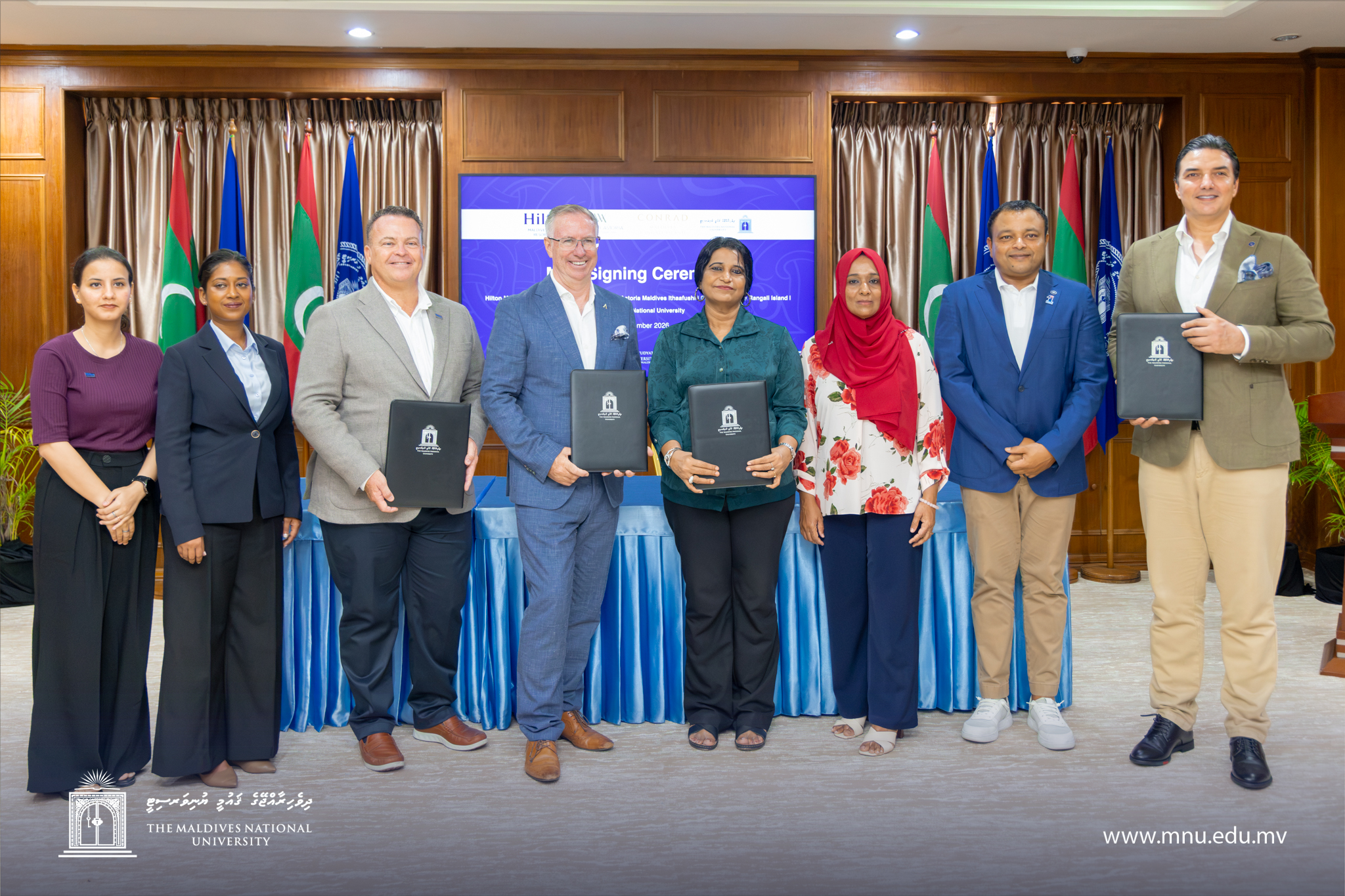
- MNU Strengthens Industry Partnership with Three Hilton Maldives Properties
Supporting Inclusive Governance and SDG 16
MNU’s approach to stakeholder identification and engagement contributes to the development of strong, transparent, accountable and responsive institutions.
By engaging government agencies, local councils, industry, civil society and communities, the University seeks to ensure that diverse perspectives inform institutional priorities and strengthen its contribution to national development.
These efforts particularly support:
- SDG 16.6: Develop effective, accountable and transparent institutions at all levels.
- SDG 16.7: Ensure responsive, inclusive, participatory and representative decision-making at all levels.
Through these commitments, MNU advances its SDG 16 focus, Stronger Together: Shared Voices, Shared Decisions, recognising that meaningful partnerships and stakeholder participation are essential to building stronger institutions and a more inclusive society.