Executive and professional education
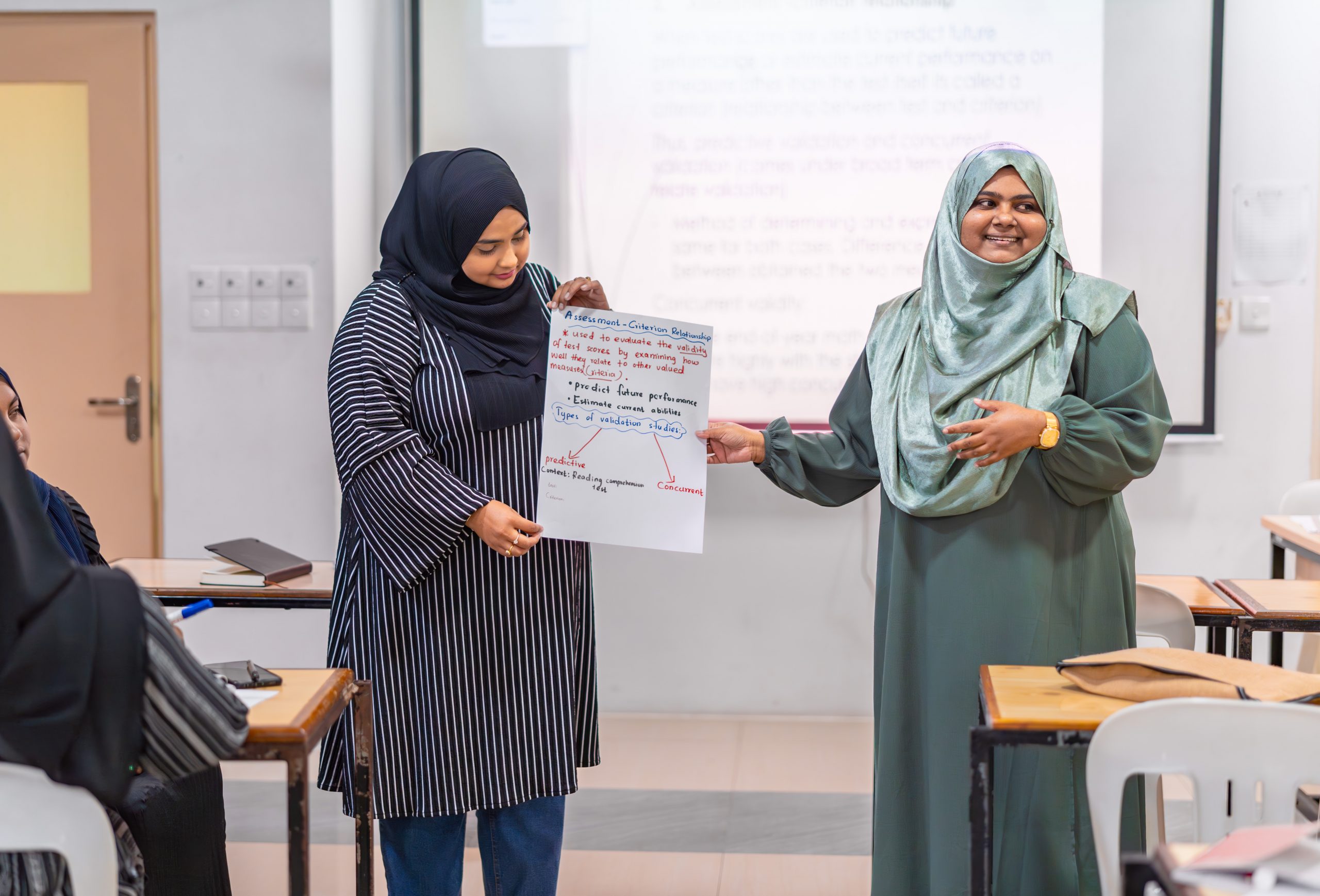
MNU delivers targeted executive and professional education for external professionals, public-sector agencies, schools, and industry organisations, extending lifelong-learning opportunities beyond its enrolled student body. In 2025, this included customer-service training for 16 WAMCO staff, a Leadership in Action workshop for IGMH professionals, financial-literacy training for more than 30 Gan Police officers, and professional-development programmes for teachers across multiple schools and atolls. MNU also delivered library-services training with Baa Atoll Education Centre for school teachers, library and information-science professionals, and Parent-Teacher Association members.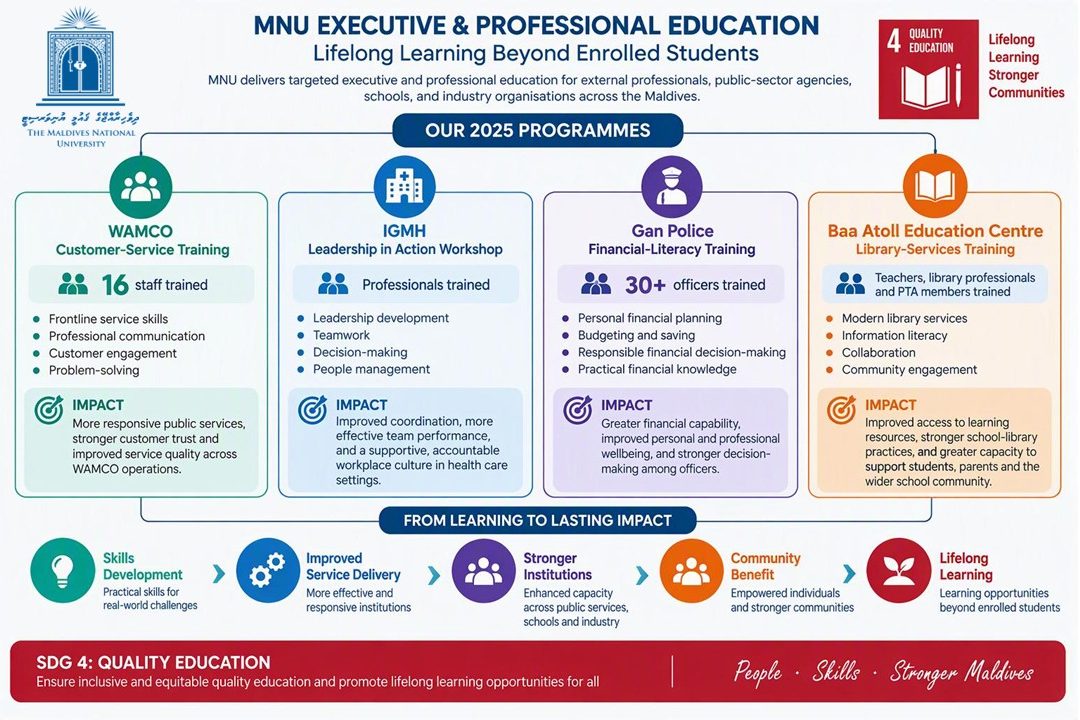
These activities demonstrate MNU’s role as a provider of continuing professional education for people who are not necessarily studying at the University. By working with employers, public institutions, schools, and community organisations, MNU helps participants strengthen practical skills that can be applied directly in their workplaces and communities. The recorded participant numbers provide measurable evidence of the University’s external educational reach.
The customer-service training for 16 WAMCO staff strengthened frontline service skills, professional communication, customer engagement, and problem-solving. By improving the ability of staff to respond confidently and consistently to customers, the programme can contribute to more responsive public services, stronger customer trust, and improved service quality across WAMCO operations.
The Leadership in Action workshop for IGMH professionals supported the development of leadership, teamwork, decision-making, and people-management capabilities in a health-care setting. Stronger leadership can improve coordination among health professionals, support more effective team performance, and contribute to a more supportive and accountable workplace culture.
The financial-literacy training for more than 30 Gan Police officers developed practical knowledge of personal financial planning, budgeting, saving, and responsible financial decision-making. Improved financial capability can help officers make informed decisions, manage financial pressures more effectively, and strengthen their overall personal and professional wellbeing.
Together, these programmes show how MNU’s executive and professional education helps external participants build skills, improve service delivery, strengthen institutions, and contribute to lifelong learning across the Maldives.
Vocational and skills training
MNU provides vocational and safety-related training that develops practical competencies for employment, workplace safety, emergency response, and public service. The Centre for Maritime Studies delivered recurring maritime programmes, including Advanced Training for Oil Tanker Cargo Operations, Proficiency in Fire Prevention and Fire Fighting, and Personal Survival Techniques. MNU also delivered first-aid training for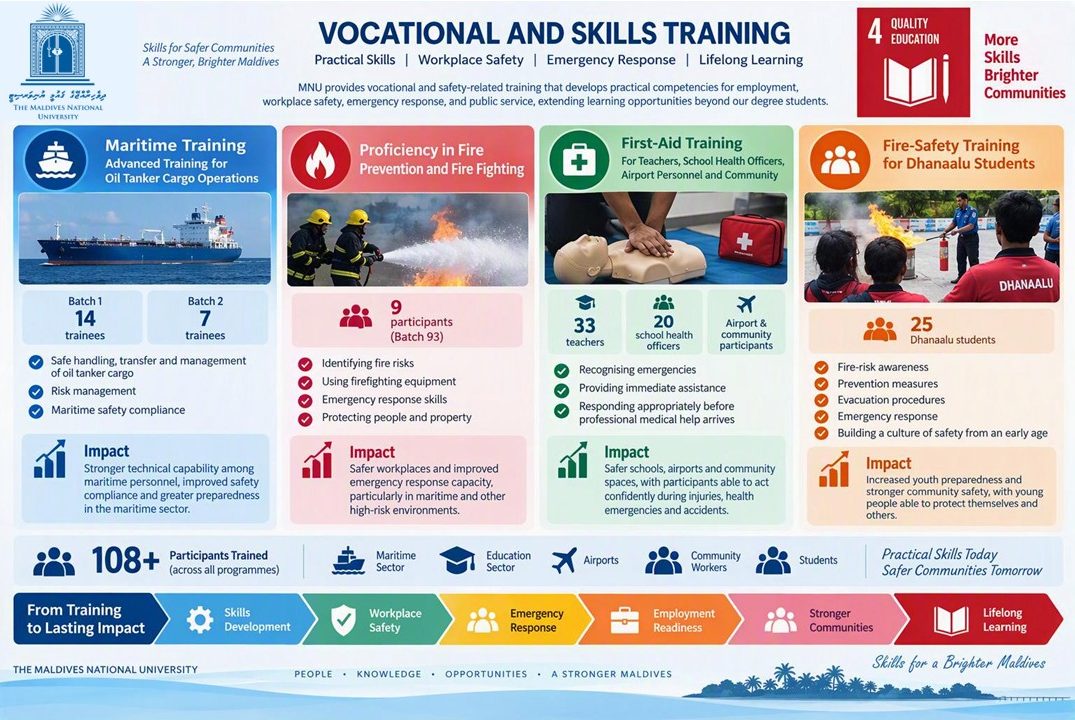 teachers, airport personnel, and community workers, as well as fire-safety training for Dhanaalu students. These structured programmes extend learning opportunities beyond MNU’s degree students and provide occupation-specific skills that participants can apply immediately in their work and communities.
MNU delivered Advanced Training for Oil Tanker Cargo Operations to 14 trainees in Batch 1 and 7 trainees in Batch 2. The training develops specialised knowledge and practical competence in the safe handling, transfer, and management of oil tanker cargo. Its impact includes stronger technical capability among maritime personnel, improved compliance with safety procedures, and greater preparedness to prevent and respond to operational risks in the maritime sector.
The Proficiency in Fire Prevention and Fire Fighting programme trained 9 participants in Batch 93. It builds essential skills in identifying fire risks, using firefighting equipment, responding to emergencies, and protecting people and property. By strengthening fire-safety awareness and emergency response capacity, the training supports safer workplaces, particularly in maritime and other high-risk operational environments.
MNU delivered first-aid training to 33 teachers, 20 school health officers, and airport and community participants. The training equips participants with the ability to recognise emergencies, provide immediate assistance, and respond appropriately before professional medical help arrives. Its impact includes safer schools, airports, and community spaces, as trained participants can act confidently during injuries, health emergencies, and accidents.
Fire-safety training for 25 Dhanaalu students developed awareness of fire risks, prevention measures, evacuation procedures, and emergency response. By building these skills at an early stage, the programme helps young people protect themselves and others, respond calmly in emergencies, and promote a stronger culture of safety within their school and community.
Together, these vocational and safety-related programmes demonstrate MNU’s contribution to lifelong learning by equipping external participants with practical, employment-relevant, and life-saving skills. The recorded participant numbers and the direct application of training in maritime operations, emergency response, education, health care, and public service provide clear evidence of the University’s educational reach beyond its campus community.