The Maldives National University (MNU) contributes to strengthening food security by providing access to free education, scientific knowledge and practical skills across agriculture, fisheries and marine sciences, and hospitality and tourism. Through its academic programmes, the University develops knowledge and professional competencies in sustainable agricultural production, fisheries and marine resource management, food processing, culinary arts, nutrition, food safety and quality assurance.
These programmes address different stages of the food system, from local food production and sustainable utilisation of marine resources to food preparation, processing, preservation and safe food handling. Through theoretical learning, practical training, laboratory activities and industry exposure, students acquire skills relevant to improving domestic food production, maintaining food quality and safety, reducing food losses and promoting responsible food utilisation.
By integrating expertise across these disciplines, MNU supports the development of a skilled workforce capable of contributing to national food security priorities and strengthening the sustainability and resilience of the Maldivian food system.
Agriculture and Food Production
MNU provides academic and practical learning opportunities in agriculture to strengthen knowledge and competencies in local food production and sustainable farming practices. The programmes introduce students to agricultural science, horticulture, crop production, soil management, plant protection, mushroom cultivation and agricultural value addition.
Through these programmes, learners develop practical knowledge relevant to establishing and managing agricultural activities, improving crop production and exploring alternative food production opportunities suited to the geographical and environmental conditions of the Maldives. Particular emphasis is placed on sustainable and innovative approaches that can contribute to diversifying domestic food production and strengthening local food systems.
The Mushroom Cultivation programme is particularly relevant to the Maldivian context. The program identifies mushroom farming as a space-efficient food production opportunity that can contribute to national food security and reduce dependence on imported food.
Fisheries and Marine Sciences
Sustainable Fisheries, Aquaculture and Marine Food Resources
As an island nation, the Maldives relies significantly on its marine resources as a source of food, livelihoods and economic development. MNU contributes to developing knowledge and technical expertise in fisheries and marine sciences through academic programmes that address marine ecosystems, fisheries biology, sustainable natural resource management and fish processing and quality control.
These educational opportunities support understanding of the sustainable utilisation of marine resources and the importance of maintaining the quality and safety of seafood throughout the food supply chain. Through higher education and technical qualifications, MNU contributes to building professional capacity in marine resource management and fisheries-related industries, supporting the sustainable development of an important component of the Maldivian food system.
National Certificate I in Fish Processing and Quality Control
National Certificate II in Fish Processing and Quality Control
National Certificate III in Fish Processing and Quality Control
Hospitality, Culinary Arts and Food Science
Through its Hospitality and Tourism programmes, MNU provides education and practical training in culinary arts, food production, food and beverage operations, nutrition, food hygiene and sanitation. These programmes develop professional competencies in food preparation, cooking techniques, food handling, culinary production and hospitality food service operations.
Students gain practical experience in the preparation and utilisation of different food ingredients while developing an understanding of nutrition, food safety and sanitation requirements. The programmes also introduce students to food production and service management, supporting the development of professional skills relevant to restaurants, hotels, resorts and other food-related industries.
By incorporating food-related knowledge and practical training into hospitality education, MNU contributes to developing professionals who can support safe food handling, improved food utilisation, quality food production and responsible practices within the hospitality and food service sectors.

The Maldives National University (MNU) has published various research studies indexed in the Scopus database that contribute to the Sustainable Development Goal 2 (SDG 2): Zero Hunger. These publications address key issues related to food security, nutrition, sustainable agriculture, and strategies to improve food production and accessibility. Through these research contributions, MNU demonstrates its commitment to supporting evidence-based solutions that promote food security and sustainable food systems.
Resilience to Climate Vulnerability and Environmental Risk (RECOVER): Focus on Small Islands
The Maldives National University (MNU) is a partner institution in the international RECOVER project, led by the University of Waterloo, Canada, and funded through the CLARE programme of IDRC-Canada and the UK Foreign, Commonwealth and Development Office (FCDO). Working with partners in Mauritius and Seychelles, the project aims to strengthen the climate adaptation capacity of Small Island Developing States (SIDS) through inclusive, research-informed decision-making. It brings together research and practical approaches through four pilot studies, supporting the development of scalable and transformative solutions to enhance climate resilience across small island communities.
In 2025, MNU, in collaboration with the University of Waterloo, advanced RECOVER’s work in the Maldives through research on food systems and biomass flows, household water use, water insecurity, urban resource systems and rainfall trends. Key achievements included the introduction of a new case study on biomass flows in Maldivian food systems, the implementation of three major surveys, and the completion of a policy brief addressing water insecurity among vulnerable communities in Greater Malé. The project also strengthened international research collaboration and knowledge exchange through Real-World Labs, CLARE peer-learning activities and participation in international workshops. Together, these initiatives contribute to climate adaptation and resilience while advancing partnerships for sustainable development.
Conference on – Climate Resilient Agriculture for Food Security in the Maldives
The conference highlighted the importance of developing sustainable and climate-resilient agricultural practices to strengthen food security and reduce the Maldives’ reliance on imported food. Bringing together national and international experts and stakeholders, it provided a platform to examine climate-related vulnerabilities in the agricultural sector, share innovative approaches and identify practical strategies for strengthening local food production. The initiative also promoted collaboration and knowledge exchange to enhance the resilience of livelihoods, the economy and ecosystems in the face of climate change.
The Maldives National University’s Centre for Ocean and Fisheries Studies (CFOS) participated in the 5th World Shiology Forum in Hainan, China, from 28 to 31 October 2025. The Dean contributed to panel discussions on sustainable food supply chains, highlighting the Maldives’ traditional pole-and-line tuna fishery and the importance of science-based fisheries management. The forum provided an opportunity to exchange international knowledge, strengthen research collaboration, and promote resilient, sustainable, and equitable food systems in support of global food security and the Sustainable Development Goals.
The Maldives National University (MNU) extends its academic knowledge beyond the classroom through community-based programmes, public awareness campaigns, student activities and national and international engagement. These initiatives promote awareness of healthy nutrition, balanced diets, sustainable fisheries, aquaculture and responsible food-resource management. Through collaboration with government agencies, industry partners and international organisations, MNU facilitates knowledge exchange and encourages informed practices that support healthier communities and more sustainable food systems.
By combining academic learning with practical experiences and public engagement, MNU strengthens students’ professional competencies while sharing relevant knowledge with the wider community. These initiatives contribute to promoting healthy lifestyles, diversifying local food production, supporting sustainable use of marine resources and building community awareness of the relationship between food, nutrition, health and environmental sustainability.
Visit to MMRI Aquaculture Facility
CFOS students visited the Maniyafushi aquaculture facility to gain practical insights into hatchery operations and mariculture practices, including the breeding and rearing of groupers, Maldivian clownfish, and sea cucumbers. The visit highlighted the role of research, hands-on training, and sustainable aquaculture in diversifying the Maldives’ fisheries sector, strengthening food security, reducing pressure on wild fish stocks, and supporting the development of the blue economy.
FHS Shares Healthy Lifestyle Messages at MyHulhumalé Festival
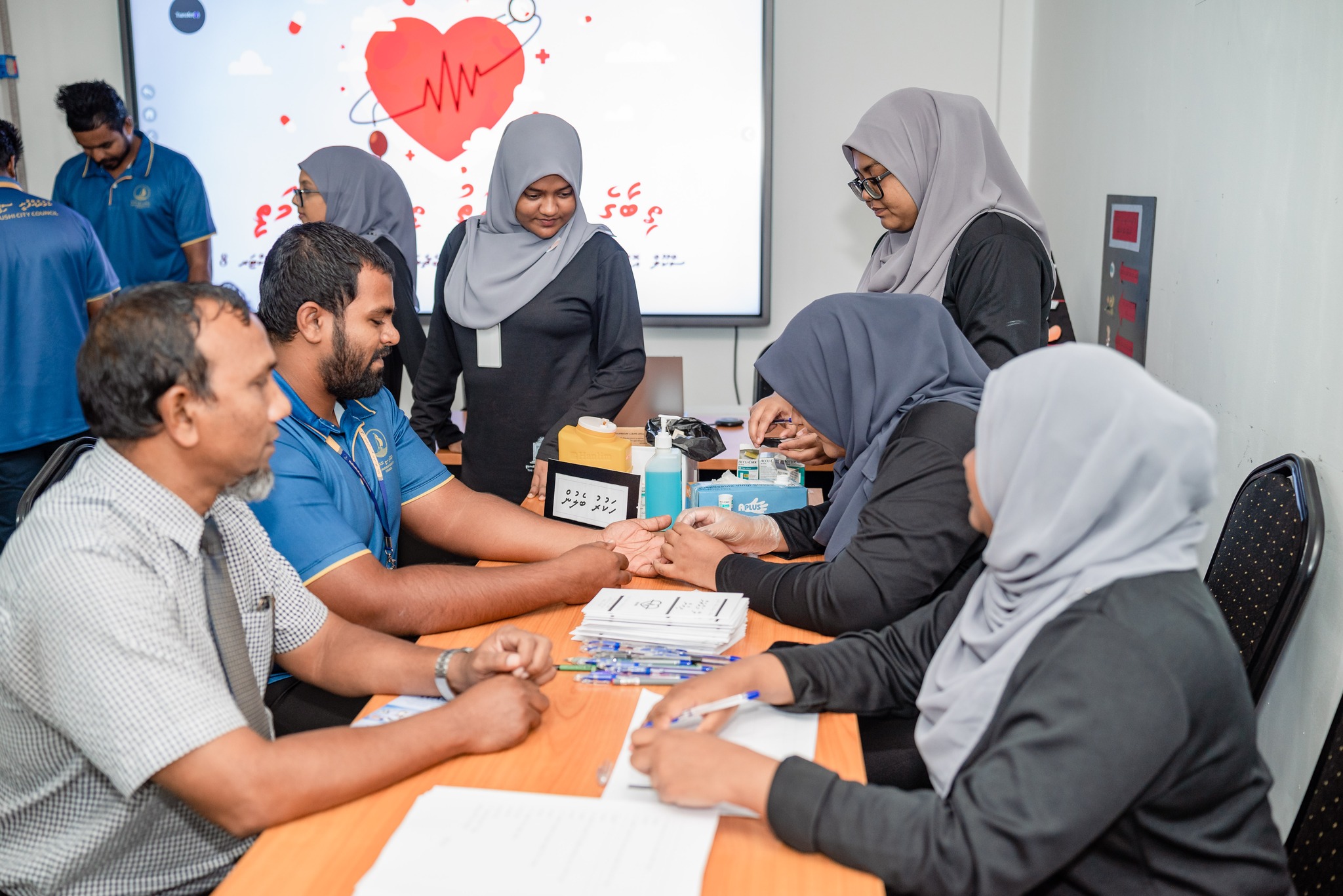
The Faculty of Health Sciences (FHS) at The Maldives National University (MNU) participated in the MyHulhumalé Festival health fair on 8 May 2025, organised by the Housing Development Corporation. Through a public awareness stall, FHS staff shared information on healthy lifestyles and the prevention of noncommunicable diseases, engaging the community in accessible health education.
Promoting healthy lifestyles complements efforts to improve nutrition and encourage healthier dietary choices, contributing to overall health and well-being.
FHS Supports Dhulhaheyo Sihhath National Healthy Lifestyle Campaign
The Faculty of Health Sciences (FHS) at The Maldives National University participated in the Dhulhaheyo Sihhath national campaign in February 2025, promoting healthy lifestyles and raising awareness of non-communicable disease prevention through public awareness stalls. Coordinated by Mariyam Neerish, the initiative encouraged informed lifestyle choices, including healthier dietary practices, and strengthened collaboration between MNU and government-sector partners.
This campaign supports broader efforts to promote healthy nutrition and encourage informed food choices as part of a balanced lifestyle. Through community engagement and health education, FHS contributes to raising awareness of the role of healthy dietary practices in supporting nutritional well-being and healthier communities.
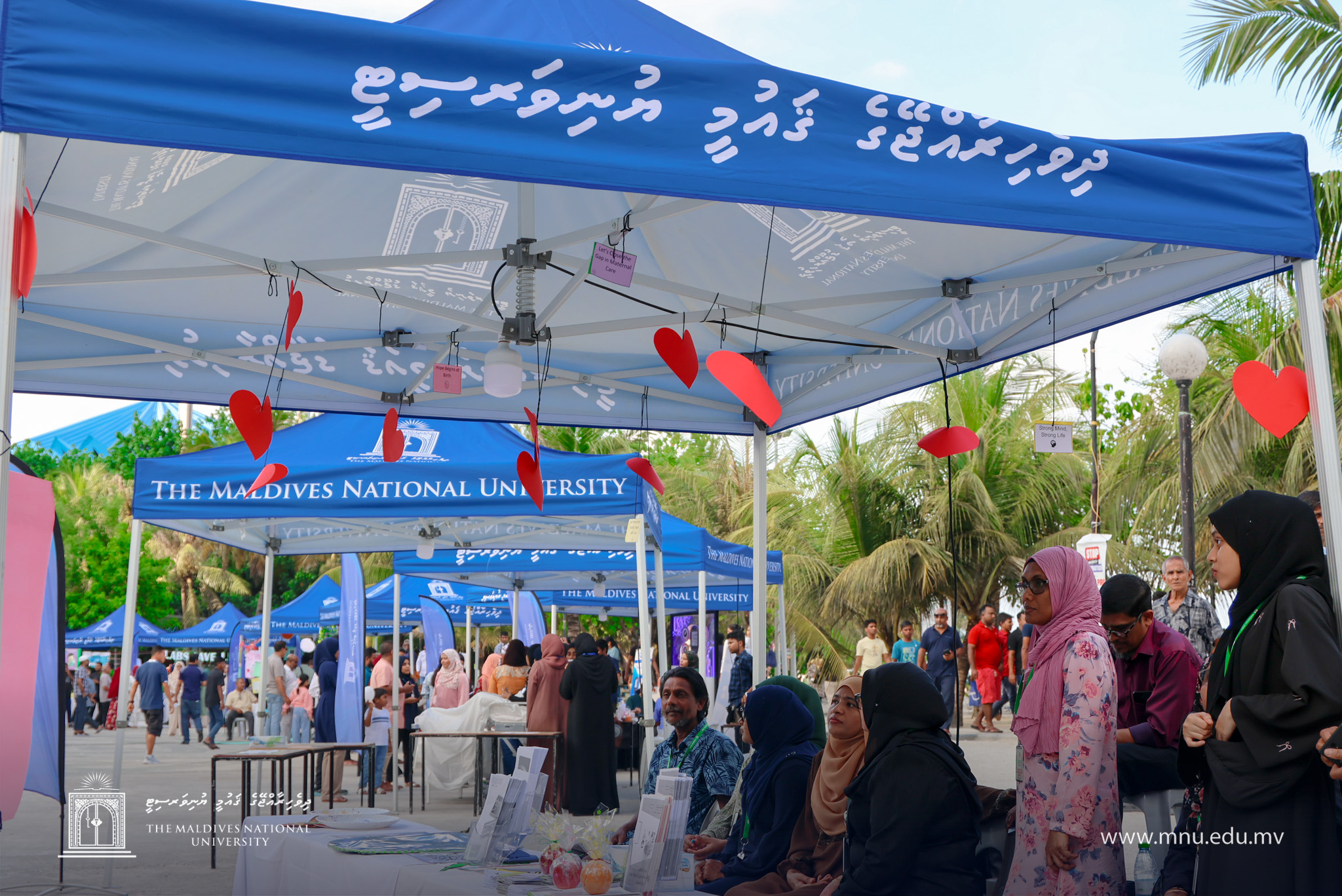
Health Promotion Event – Male’ Campus
Bachelor of Nursing eighth-semester students organised a Term 1 health-promotion event in Malé, providing accessible health education to the public through creative displays and interactive activities. The event promoted healthy lifestyles, disease prevention, early recognition of common health concerns, and appropriate help-seeking, while enabling students to apply their knowledge in a community setting.
This event contributes to promoting awareness of healthy dietary practices and the importance of nutrition as part of a healthy lifestyle. Participants found the information useful, informative, and easy to understand, and appreciated the creativity demonstrated by students in communicating health messages.