Introduction
Maldives is a maritime nation facing countless challenges at sea, including both natural and man-made threats to economic wellbeing and security.
Despite military cooperation from strategic partners like India and Sri Lanka, there is a growing need to strengthen maritime surveillance in Maldives, especially the Maldives National Defence Force (MNDF) Coast Guard capabilities and national strategy to coordinate monitoring and surveillance activities within and outside its vast Exclusive Economic Zone (EEZ).
Diplomacy and partnerships in Maritime Domain Awareness (MDA) with the regional countries in IOR and beyond play a key role in interoperability capabilities; however, MDA alone does not guarantee effective surveillance – i.e., regional platforms that guarantee dialogue and resource allocation and sharing are important to strengthen operations at sea.
This article discusses the economic and resource-based aspects of improving surveillance capabilities in maritime security operations involving Maldives and its regional engagement.
Geo-economic implications of Maritime Security in Small States
Maintaining the security of the Indian Ocean is a costly task. Maldives, being part of the Indian vision of “MAHASAGAR” (Mutual and Holistic Advancement for Security and Growth Across Regions), strengthens its operational capabilities with a comprehensive collaborative structure in capacity-building and capability-enhancement in the region.
Transnational and illegal cross-border transactions traverse many ocean territories, including small littoral states. The spillover effect of conflicts in West Asia is evidently contributing to rising economic costs and geoeconomic risks in the region.
The defence-to-Gross Domestic Product (GDP) ratio has implications for financing naval modernisation, military infrastructure development, and strategic partnerships – of course, small states do not finance partnerships, but they occupy over 80 per cent of global maritime oil trade and 70 per cent of container traffic routes. Economic growth in this zone relies heavily on keeping the sea lines of communication (SLOCs) safe and open.
Maldives, with its most credible revenue coming from tourism and human security that depends on imported goods and commodities, must, therefore, rely on its national security agencies and cooperate with regional security actors in the broader maritime domain. The most visible and strongest aid cooperation lies with India.
India has its own bilateral and multilateral platforms for security cooperation, including with Australia and the United States (US). Apart from cooperation in MDA, the interoperable capabilities of India’s partners can cut or reduce the costs of maritime security and surveillance.
Furthermore, Maldives – India security cooperation constitutes a pivotal engagement of the October 2024 Vision for Comprehensive Economic and Maritime Partnership. During this, India committed to providing advanced radar systems and other equipment, which enhances MNDF’s surveillance and monitoring capabilities.
While Maldives benefits from such a regional setting, it has also aimed to strengthen national security platforms.
For example, in 2026, the MNDF launched a new ship, its first Guardian‑class Patrol Boat (named Imaduddin), gifted by Canberra. This is a step up in Maldives efforts, with the help of its partners, in maritime security operations.
In the vast ocean territory, the MNDF Coast Guard is better prepared than before to contribute to the protection of these critical maritime infrastructures. Such establishments are also transactional, whereby Maldives’ future interoperable capability can translate into the expansion of the economic value of military cooperation with countries like Australia. Acquiring a ship will incur costs; however, the mutual benefits from the defence platform can reflect potential return on investment.
Maritime Surveillance and Regional Cooperation
Bilateral partnerships or trilateral operations, such as the DOSIT trilateral exercise between Maldives, India and Sri Lanka’s Coast Guards and Navies, have established monitoring and surveillance across maritime borders.
Maldives also utilises India’s Information Fusion Centre for the Indian Ocean Region (IFC-IOR) by contributing a liaison office working full-time at the fusion centre, the most institutionally durable security contribution to the large ocean state for a broader coastal surveillance radar network.
Jointness and collaboration are the key principles for sustainable outcomes for developing nations. Regional platforms, like the Indian Ocean Naval Symposium (IONS) and the Indian Ocean Rim Association (IORA), should have interfaces to expand and institutionalise maritime surveillance.
Nevertheless, data sharing via surveillance work must not be confined to partners within or closest to Indian Ocean territories.
Consider extra-regional connections in the Red Sea. For example, Saudi Arabia has launched the Multinational Maritime Defence Coalition (MMDC) alongside regional partners, including Maldives, to secure critical waterways like the Red Sea and Bab el-Mandeb Strait. Such a relationship can have both economic benefits, such as cutting costs of approaching multiple actors for data sharing, and opportunities to build military capabilities, which can ultimately contribute to the country’s regional interoperability capability.
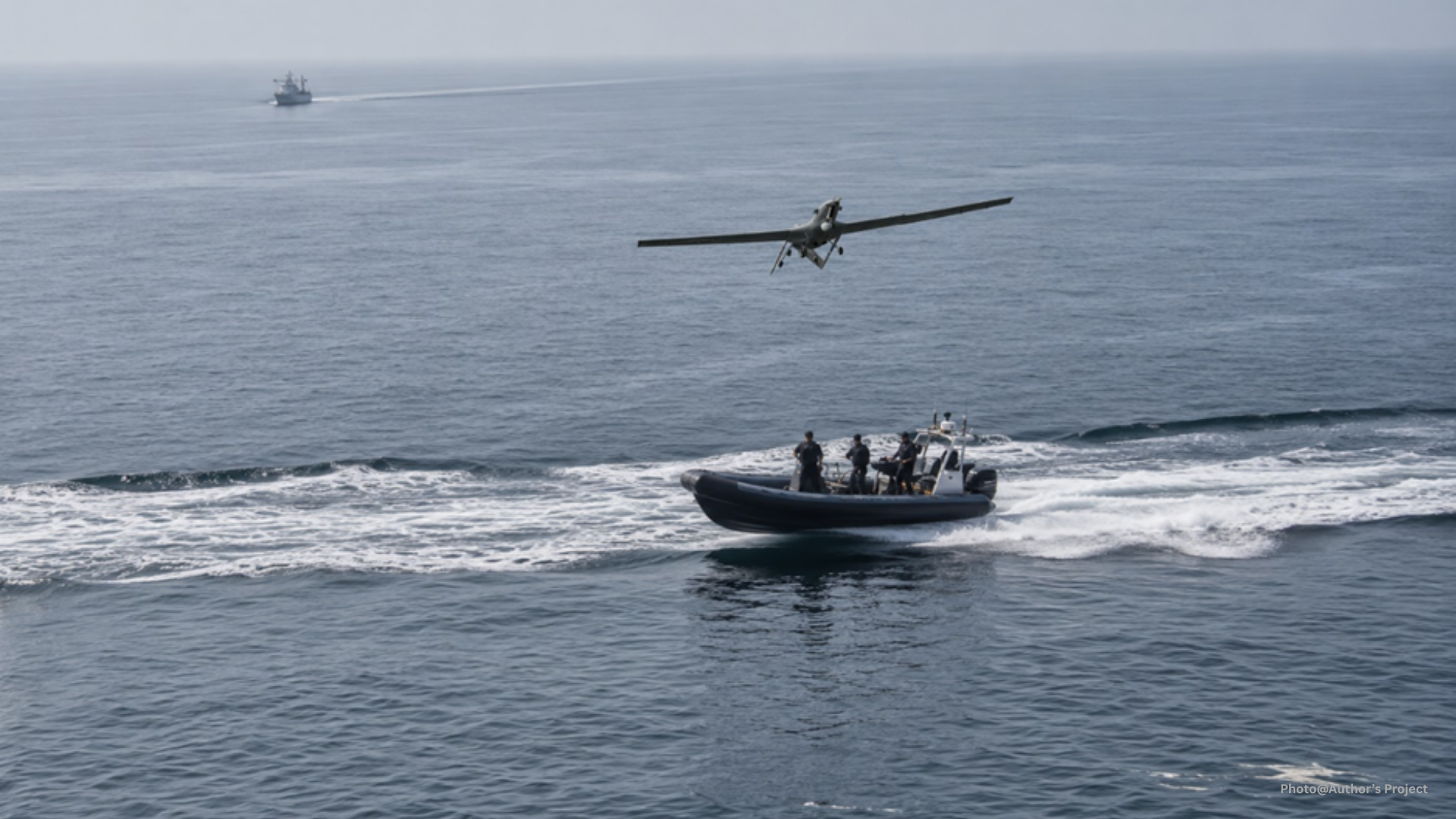
Last year, Türkiye delivered Doğan-class fast attack craft (named Dharumavantha), which has already contributed to surveillance operations in the Southern seas of Maldivian territorial waters, along with the integration of Bayraktar TB2 drones, which credits for enabling indigenous aerial surveillance for the first time.
Maldives is not looking for kinetic warfare and conflict with foreign states’ military activities, such as the US or Australian operations linked to AUKUS, across its EEZ. Rather, by enhancing its military platforms with sophisticated technology, including tactical drones, Maldives can position itself as more than a sufficient and interoperable partner in running regional security operations from it horizon.
Conclusion
Maldives’ security is fundamentally maritime, extending beyond traditional military concerns to encompass economic, environmental, and human security. Institutions like MDA can help. More so, an active role in sharing surveillance-based data can position the country as strategically useful.
However, limited national resources constrain their ability to independently manage a function, and regional cooperation and interoperability remain critical to achieve maritime security.
Author
Col Amanulla Ahmed Rasheed is a serving officer in the Maldives National Defence Force (MNDF). He has two postgraduate degrees, in Management from Kotelawala Defence University, Sri Lanka and Art and Science in Warfare from the National Defence University, Pakistan. The author acknowledges that statements, opinions and arguments made are of his own and do not reflect the Maldivian Government’s policy and position.