Introduction
On 26 July, Maldives marked its 61st Anniversary of Independence and hosted many dignitaries from partner countries in this auspicious time, including Australia’s Special Envoy for Indian Ocean Affairs, Honourable Tim Watts MP, who arrived on a special bilateral commitment.
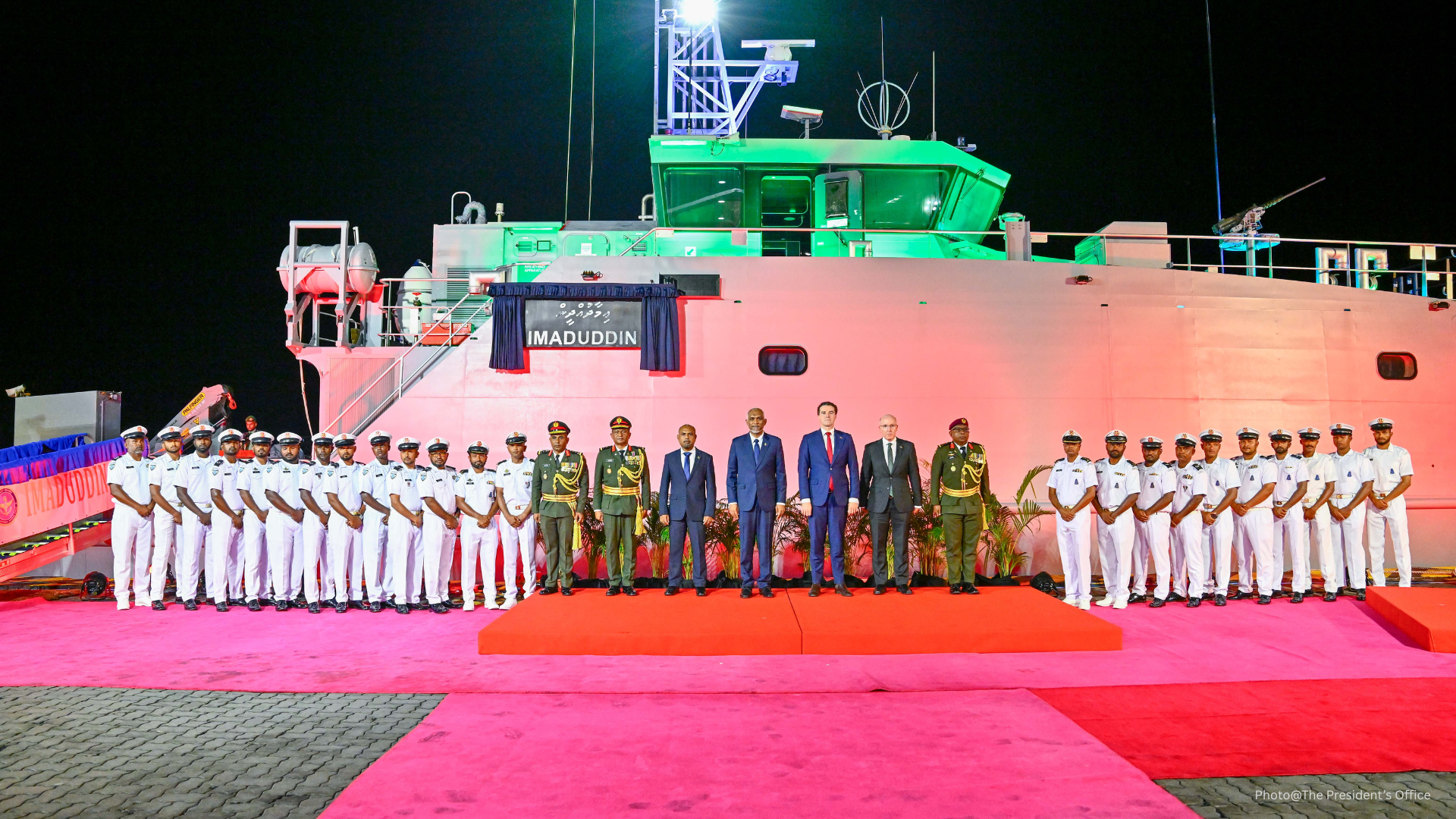
On 27 July, Watts attended two key events: the launch of the Maritime Rescue Coordination Centre (MRCC) on Villimalé island and the formal commissioning ceremony of the Guardian‑class Patrol Boat held on Hulhumalé island.
Australians might be wondering why Australia has a Special Envoy for Indian Ocean Affairs or, more importantly, why Australia donated a Guardian‑class Patrol Boat to Maldives, an Indian Ocean archipelago known worldwide as a famous tourist destination.
Watts was in the Indian Ocean region for a reason. The foremost is Australia’s presence at the top diplomatic level shows the importance Canberra has placed on building a partnership. First, Maldives, as a strategic location in the Indo-Pacific, bears a responsibility to defend and uphold the rules-based order at sea and across the wider region, and hence, the donation makes sense.
Second, as a maritime state, with 99 per cent of its territory consisting of ocean, Maldives forms a critical maritime space, hosting major shipping routes, such as the Eight-Degree Channel, which connects shipping from the Indian Ocean to Australia’s commercial and security interests at sea.
This analysis shows that Australia’s presence in Maldives has mutually grounded interests to promote defence cooperation.
Small States and Strategic Location
Small states have exercised agency by forming partnerships within great-power alliances and coalitions, as illustrated by the post-Cold War Baltic states in NATO. Despite possessing limited military resources, Lithuania, Latvia, and Estonia used their identities and strategic positioning to demonstrate their relevance within the NATO framework.
For Maldives, history has long demonstrated the importance of location. Seafarers found refuge in its islands, conducted trade, and, at times, sought to capture the country because of its strategic position.
As global trade and security have become increasingly dependent on the safety and security of sea lines of communication, the significance of Maldives has become more apparent. This was reflected in Watts’ remarks on the maritime connectivity and shared ocean identities linking Australia and Maldives.
In Maldives’ context, Guardian‑class Patrol Boat was named Imaduddin, honouring a national hero who served as a Sultan and is remembered for constructing defensive walls and fortifications around Malé to protect the island from foreign pirates and other invaders in the 1600s. This history tells an important aspect of a maritime nation with enduring links to the wider world.
Today, Maldives’ strategic location is increasingly visible as it intersects with the commercial and strategic interests of major traders and security actors. This involves working with like-minded partners to enhance interoperability at sea, improve information-sharing mechanisms, and conduct joint operations against illegal, unreported and unregulated (IUU) fishing, piracy, and the trafficking of drugs and arms.
Where Two Countries Meet
A war-simulation study conducted by researchers from Stanford University, La Trobe University, and the Australian National University found that an attack on shipping in the Indian Ocean could potentially “trigger prohibitive war-risk premiums from shipping insurers, costly route diversions, or the withdrawal of commercial traffic from the Indian Ocean altogether.” Such findings reinforce the rationale behind Australia’s 2024 National Defence Strategy and its growing policy focus on the north-eastern Indian Ocean.
Today, Australia’s continued presence in the Indian Ocean defence sphere is evident from its Maldives engagements.
During 2022-2025, four flagship Indo-Pacific Endeavour (IPE) engagement programs highlight part of the military-to-military engagements, promoting a localised approach to defence diplomacy.
Furthermore, Maldives is an archipelago that spreads across a maritime area of approximately 90,000 square kilometres and occupies a position adjacent to one of the busiest shipping routes in the world. In that, more than 90,000 vessels transit the Indian Ocean annually, carrying billions of tonnes of cargo and a substantial share of global energy supplies, many en route to Australia too.
Given the vast extent of its maritime territory, Maldives National Defence Force (MNDF) Coast Guard is now prepared to contribute to the protection of these critical maritime infrastructures.
As Chief of Defence Force Major General Ibrahim Hilmy stressed during the commissioning ceremony, Maldives looks beyond its Exclusive Economic Zone (EEZ). With the necessary equipment, training, and advanced technology platforms, the Coast Guard can become increasingly interoperable with partner navies.
In recent years, the arrival of the refitted ship, Huravee, from India, the newly commissioned gunboat from Türkiye, and now, the ‘Guardian’ from Australia may mark the early stages of a broader expansion of Maldives maritime capabilities.
Australia can naturally fit into the Maldives’ maritime security equation, and vice versa. For example, the historic voyage of the patrol boat from Western Australia to Maldives, the longest voyage undertaken by a fully MNDF-operated vessel to date, reflects MNDF’s preparedness to operate alongside the Australian Navy. Officers and crew departed only after completing three months of training in Australia to Australian standards.
However, the extent to which Maldives can fit into Australia’s Indo-Pacific strategy will also depend on the degree of agency and foreign policy autonomy that a small state can exercise in an increasingly competitive Indian Ocean region – i.e., high-level dialogue through visits such as Watts’ can cater for this.
Conclusion
Maldives-Australia defence cooperation shows roots in shared maritime interests and an appreciation of the Indian Ocean’s growing strategic importance. As both countries seek to uphold a free and open Indo-Pacific, the maritime cooperation can exhibit their strategic convergence and mutually beneficial partnerships at sea.
Author
Dr Athaulla A Rasheed is the Head of Centre at the Centre for Security and Strategic Studies at The Maldives National University. A former foreign service officer and diplomat at the Ministry of Foreign Affairs, Maldives, Athaulla also holds two PhDs in international and strategic studies, and political science from ANU and the University of Queensland, Australia. He is also the author of 2025 book, ‘Small States Maritime Security: The Indo-Pacific Strategy for Maldives’, published by The Maldives National University.