Introduction
Among the various challenges confronting the country, maritime terrorism stands out as one of the most severe and enduring traditional security threats facing Maldives.
Terrorist organisations increasingly favour maritime routes – see the 2008 Mumbai terrorist attack – because they provide anonymity, operational flexibility, and access to soft, high-value targets. Maldives does not escape this threat domain. For example, the terrorist attack on 03 November 1988 illustrates this vulnerability. A Liberation Tigers of Tamil Eelam (LTTE) terrorist group, along with locals who conspired a coup d’état, to overthrow the government and take over Malé, had a sea excursion. The operation Cactus, India’s military aid operation, had its interception at sea with the runaway terrorists’ boat with Maldivian hostages in Maldives’ territorial waters.
In a time when regional terrorism continues to threaten activities both at sea and on land, littoral states such as Maldives and Sri Lanka must navigate their national strategies to address them. This analysis revisits Maldives’ critical maritime infrastructure in terms of potential terrorist acts at sea.
Small State Security and Maritime Terrorism
From a realist perspective, security is shaped by material capabilities such as military power, territorial control, and surveillance capacity. Small states lack the naval and aerial assets and intelligence infrastructure required to monitor large maritime spaces. For Maldives, the ocean territory vastly exceeds land territory, creating a structural imbalance between land and sea resources that terrorist actors can exploit and potentially plot an attack with relatively few resources.
This is especially true given that terrorist organisations, responsible for severe harm and human rights violations, do not require conventional military strength to challenge a state. Instead, they exploit vulnerabilities in security, governance, and intelligence systems. Maritime routes are particularly attractive because they allow attackers to bypass formal maritime border controls and approach targets covertly. For terrorist organisations, this makes maritime incursions a cost-effective strategy with potentially high political and economic impact. Maritime routes are navigable and provide avenues for manoeuvrability that enable non-state actors to conduct successful infiltration bids, and exposed to this threat domain, small littoral states must engage in effective resource management and coordinated decision making through security partnerships.
Maritime Routes, Economic Targeting, and Implications for Maldives
The most likely terrorist threat to Maldives will emerge through the same maritime routes exploited in 1988. Terrorist groups are adaptive and learn from previous operations, making repeated use of successful infiltration pathways highly probable. For example, the Yemen-based Houthis, beginning in late 2023, initiated sustained attacks on commercial and naval vessels transiting the Red Sea and the strategic Strait of Bab el-Mandeb. From 2008 to 2013, the same international sea lanes were heavily exploited by Somali pirate networks during the peak of piracy activity in the Gulf of Aden.
Maldives has an open and vast maritime territory, and its heavy reliance on sea transport increases exposure to such risks.
The most dangerous scenario or potential contingency would involve an attack on the tourism sector, particularly in a high-profile resort, during the presence of a high-profile individual. To run a potential scenario, a terrorist could seize control of an island resort at a time when a head of state is present there.
A tourism-dependent economy, Maldives can become extremely sensitive to perceptions of insecurity. Even a single attack can lead to long-term economic damage through declining arrivals, travel advisories, and reduced investment. For example, Maldives’ resorts are small and individually and independently placed at sea in an archipelago. Monitoring security-related threats will be part of the country’s inter-agency efforts. For Maldives, an attack on the tourism industry would represent a direct hit on national security, at least on the economic and political fronts, disrupting the country’s economy.
Policy Response – Thinking Strategically
Impacts on tourism do not end the story – rather, they add to multifaceted challenges, directly and indirectly, linked to potential acts of terrorism at Maldives’ waters. For example, put aside the ongoing climatic challenges, a complex threat system has been generated by criminal networks involved in drugs and weapons traffic and illegal fishing that have strong links with terrorist organisations – see Al-Shabaab and Houthis links. In this context, addressing the strategy against terrorism must involve the coordination of national and regional resources.
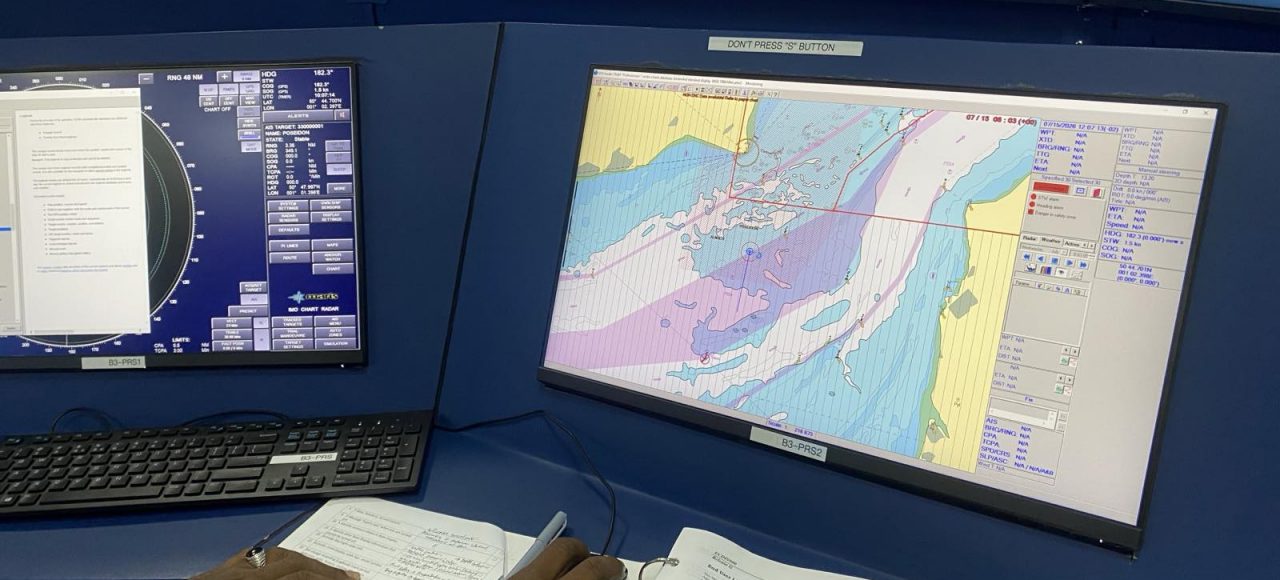
For Maldives, an intelligence-led strategy, with both technology and human resource coordination efforts, would be essential. Military and maritime intelligence must be strengthened to monitor vessel movement, assess threat indicators, and integrate civilian maritime data into national security systems. Security agencies must be comfortable moving beyond formal institutional initiatives. For example, establishing a maritime inter-agency, civil-military-based information fusion centre consisting of POCs from all resort security heads can enhance the Common Operational Picture (COP) by integrating intelligence inputs from multiple agencies.
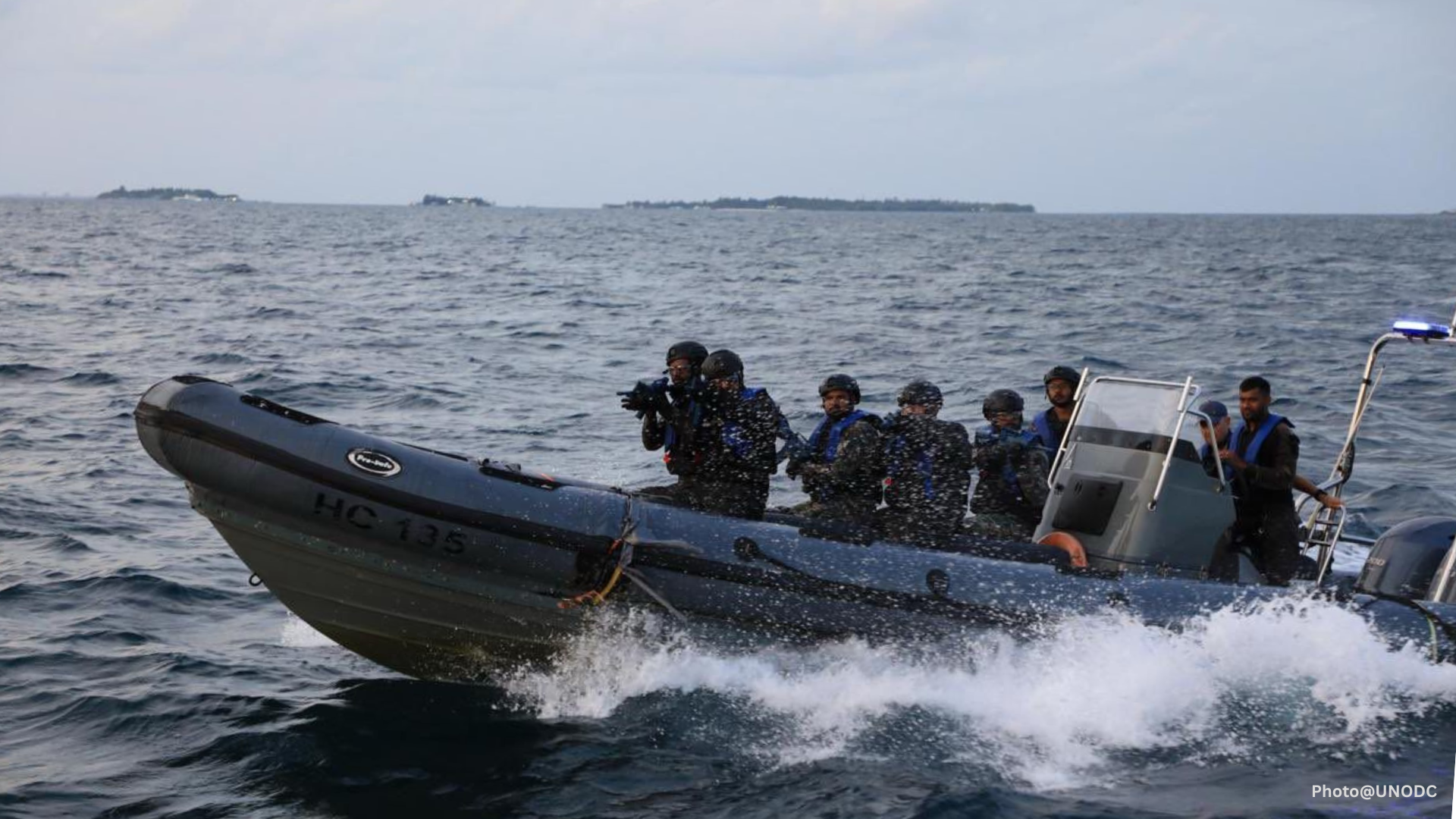
In Maldives, the Maldives National Defence Force’s (MNDF) Coast Guard leads strategy and tactical planning for such threat-based maritime surveillance and monitoring operations. The defence doctrine embeds an integrated military strategy – the Coast Guard, Marine Corps, Air Corps, are the primary forces. For example, the drones or Unmanned Aerial Vehicle (UAV) have effectively operated to support the Coast Guard’s surveillance and capture of illegal vessels entering Maldives’ waters. The Coast Guard’s functions are supported by the locally generated information sharing system, where local fishermen report on illegal fishers sighted on their paths.
Furthermore, national strategies – i.e., through local networks – must also work coherently with regional strategies. For example, an integrated effort between India and Maldives is central to the security of the Indian Ocean states – see the DOSTI exercise between Maldives, India and Sri Lanka. Enhanced intelligence-sharing through the Indian Fusion Center-Indian Ocean Region (IFC-IOR) is a key data point. Besides, cooperation among Indo-Pacific partners is essential, given the transnational nature of maritime terrorism, which exceeds regional waters and has origins on lands afar.
Enhanced agents’ coordination
Despite this institutional coordination, the role of agents is a critical aspect of national security. Their functions must uphold the rule of law, the constitution and citizenship rights. This underscores accountability within and between the agents of national security – a group comprising people from security agencies and non-security bodies responsible for the nation’s overall security. A regular and well-harmonised system of coordination and decision-making must be established between these agents. For example, ensuring that Maldivians are employed in the security of all high-profile resorts is essential to building confidence and trust in coordinated actions. Local personnel can provide cultural familiarity, linguistic competence, and community awareness, tools which are essential prerequisites for early threat detection.
Conclusion
Maritime terrorism remains one of the most serious national security threats facing Maldives. Due to the complex nature of the threat, addressing maritime terrorism would require a well-integrated system of approaches between formal and informal security agencies and agents.
Author
Lt Col Ahmed Jameel is a serving officer in the Maldives National Defence Force (MNDF), with 20+ years of experience in the maritime domain. He also has a postgraduate degree in International Relations from Salve Regina University, USA. The author acknowledges that the statements, opinions and arguments made are his own and do not reflect the Maldivian Government’s policies and position.