1. Evidence of free drinking water provision
Filtered drinking-water systems at MNU Gan Campus
MNU’s official campus webpage states that filtered free drinking-water systems have been installed to provide students and staff with fresh, clean drinking water.
Drinking-water access across university facilities
MNU’s 2024 Sustainability Report states that potable drinking water is readily available to staff and students across its facilities free of charge, and that filtered systems have been installed for students, staff and residents in student accommodation.
2. Theveli 2025- Bulk free water-refilling stations were established for attendees
The conference was held during mid August 2024 and 2025. Bulk water-refilling stations were provided at the conference free of charge, alongside reusable crockery and glassware, as part of sustainable procurement and zero-single-use-plastic measures. this supports reduced reliance on single use plastic water bottles and promotes reusable alternatives.
3. Civil Engineering industrial visit — TaZa bottled water production
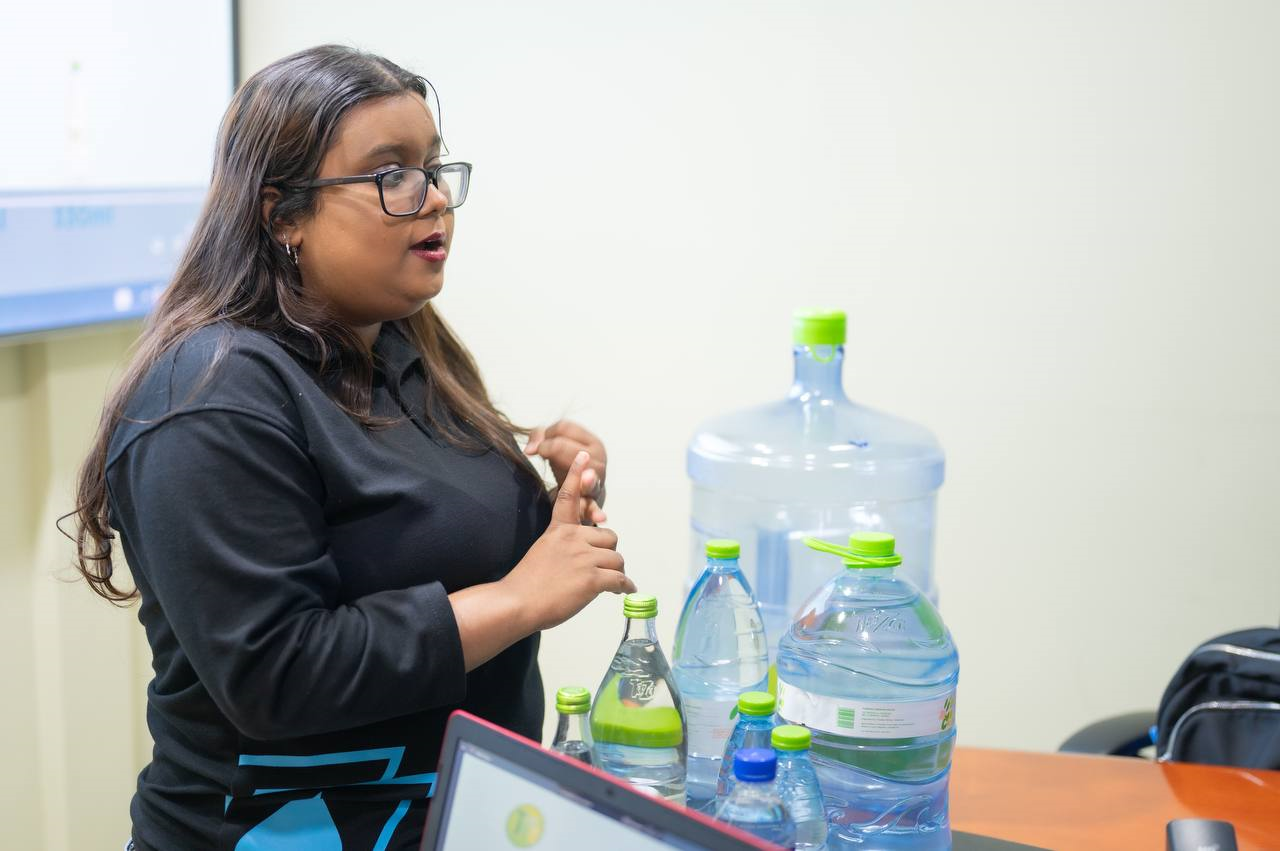
Nine students from FEST and one lecturer visited Island Beverages Maldives on the 1st of September 2025, to learn about TaZa bottled-water production, quality control and manufacturing processes. The visit supports towards education and awareness of drinking water production and quality control processes.
4. Other MNU activities related to SDG 6
a. RECOVER project — water security research
MNU participates in the international RECOVER project, which examines climate vulnerability and environmental risks in small-island settings. Its Maldives case study focuses on water metabolism and water security in Malé.