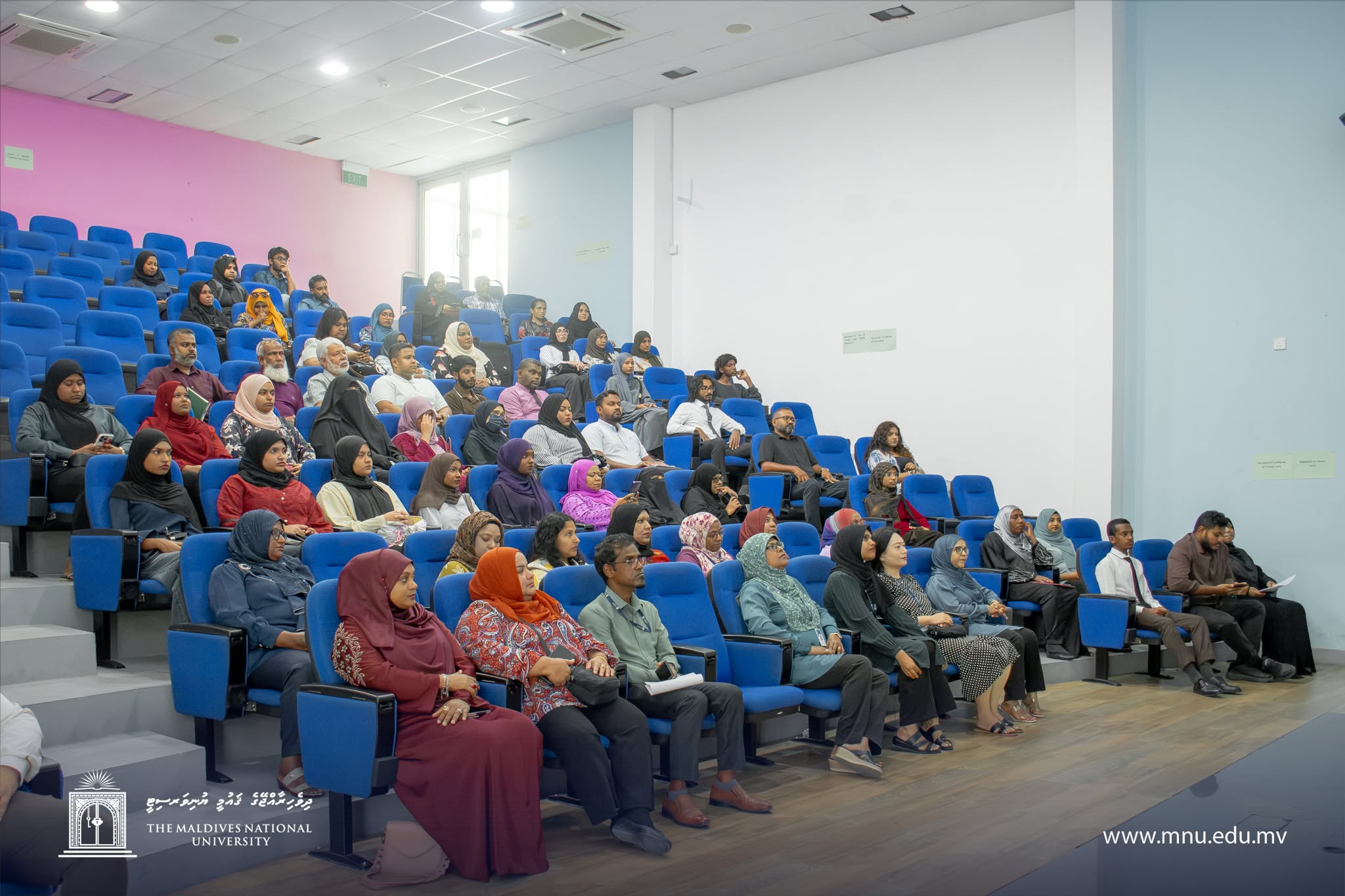
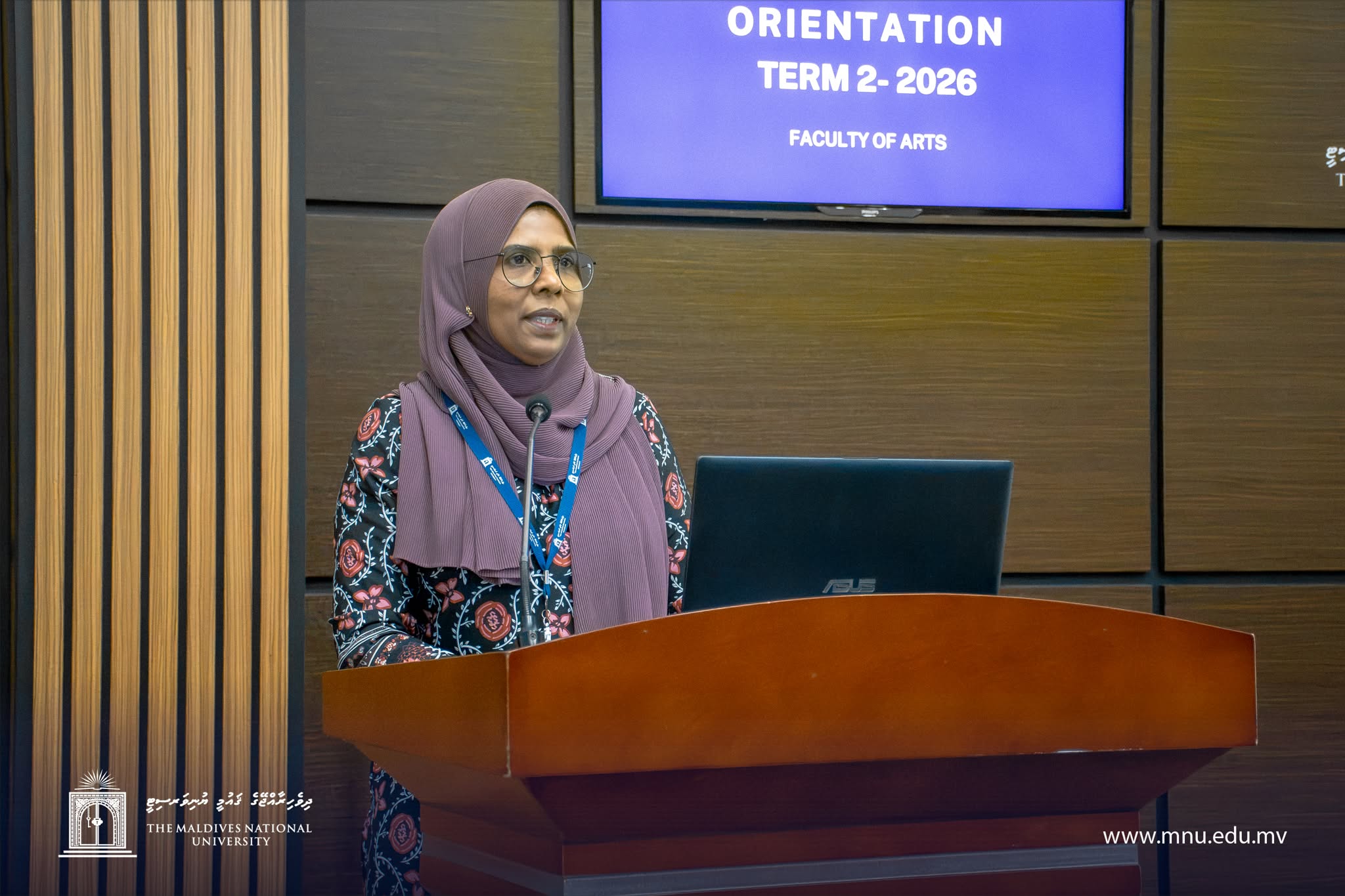
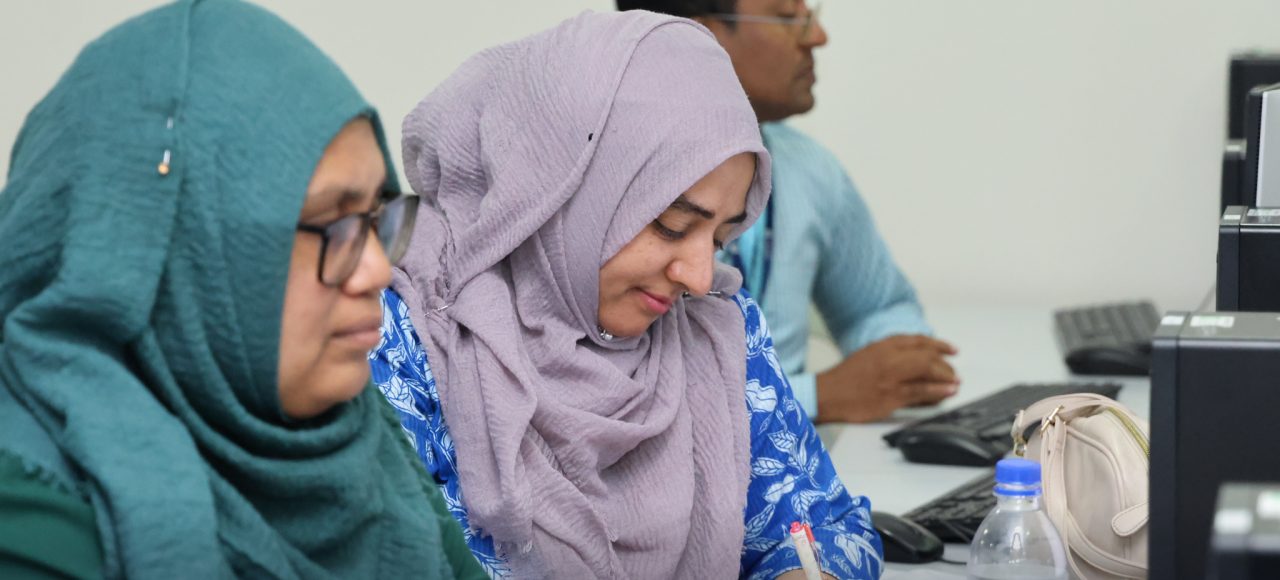
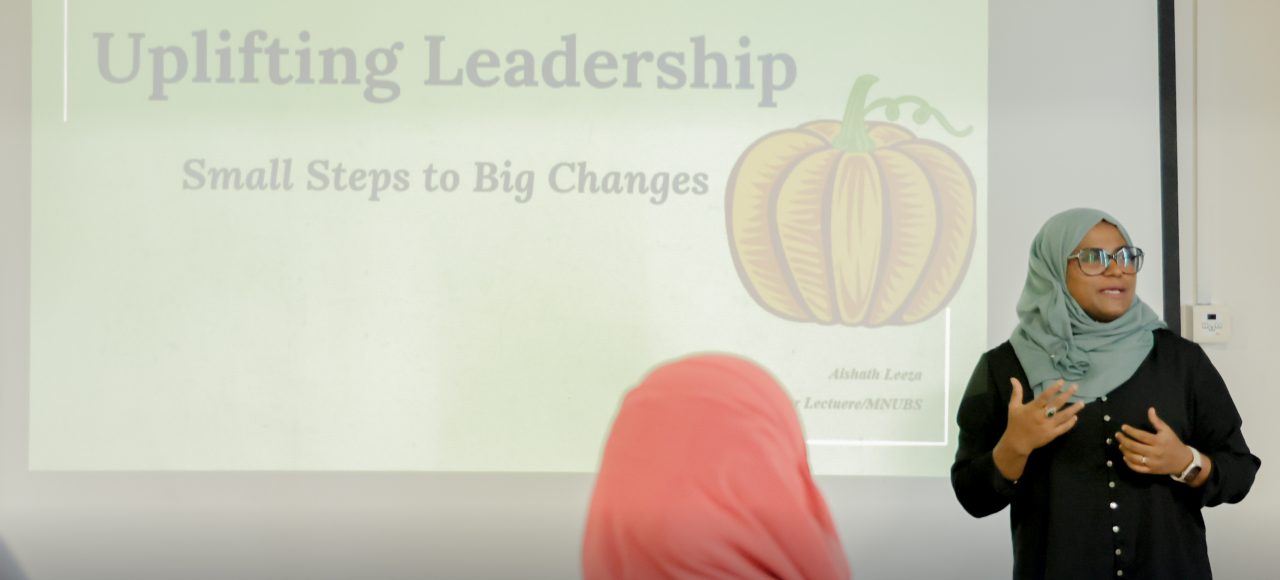
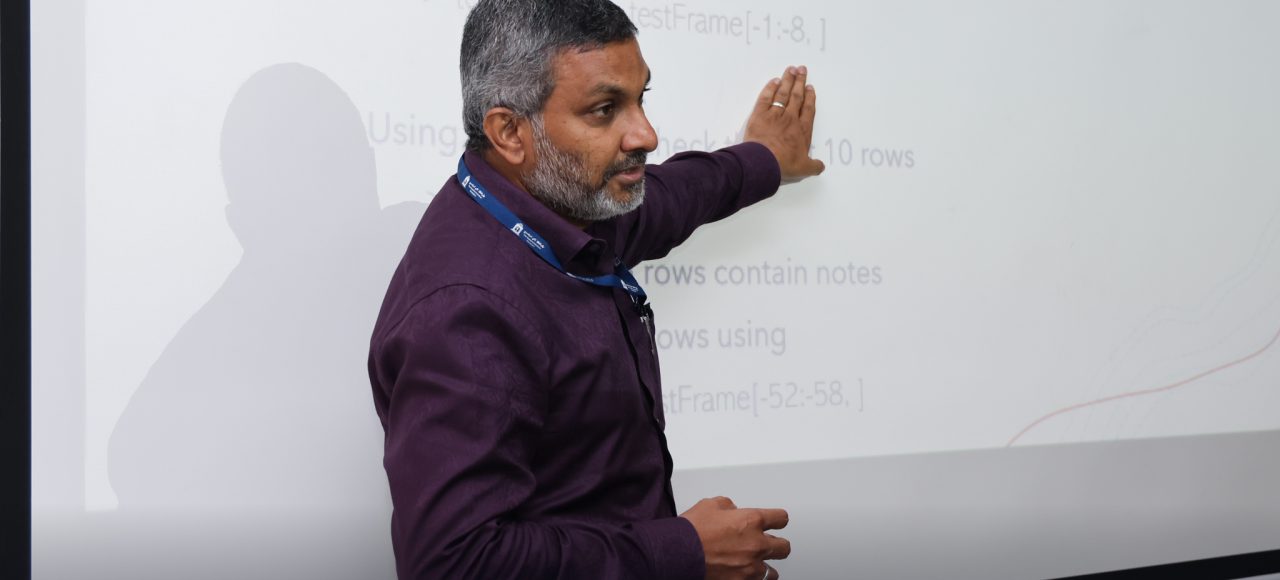
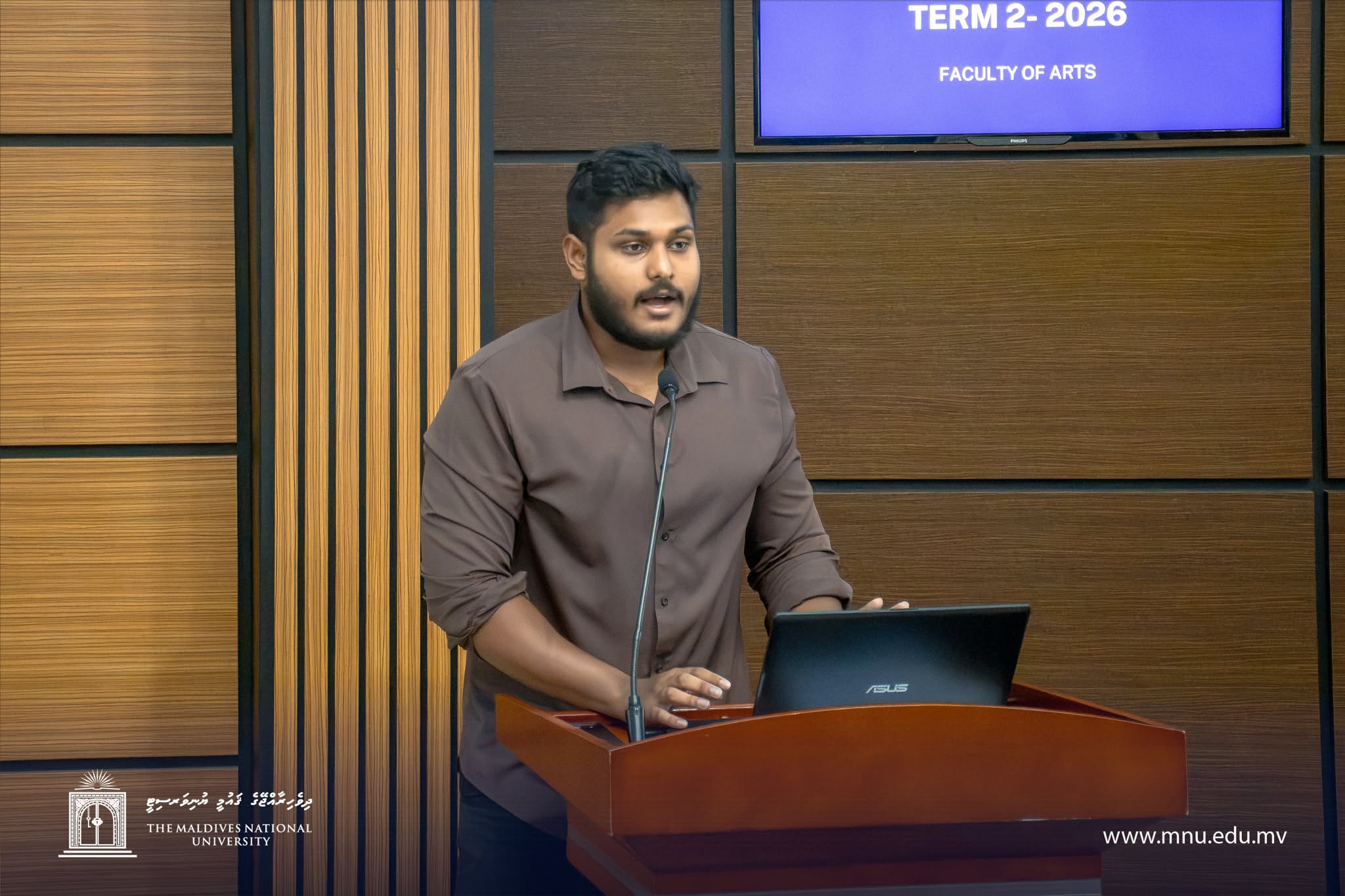
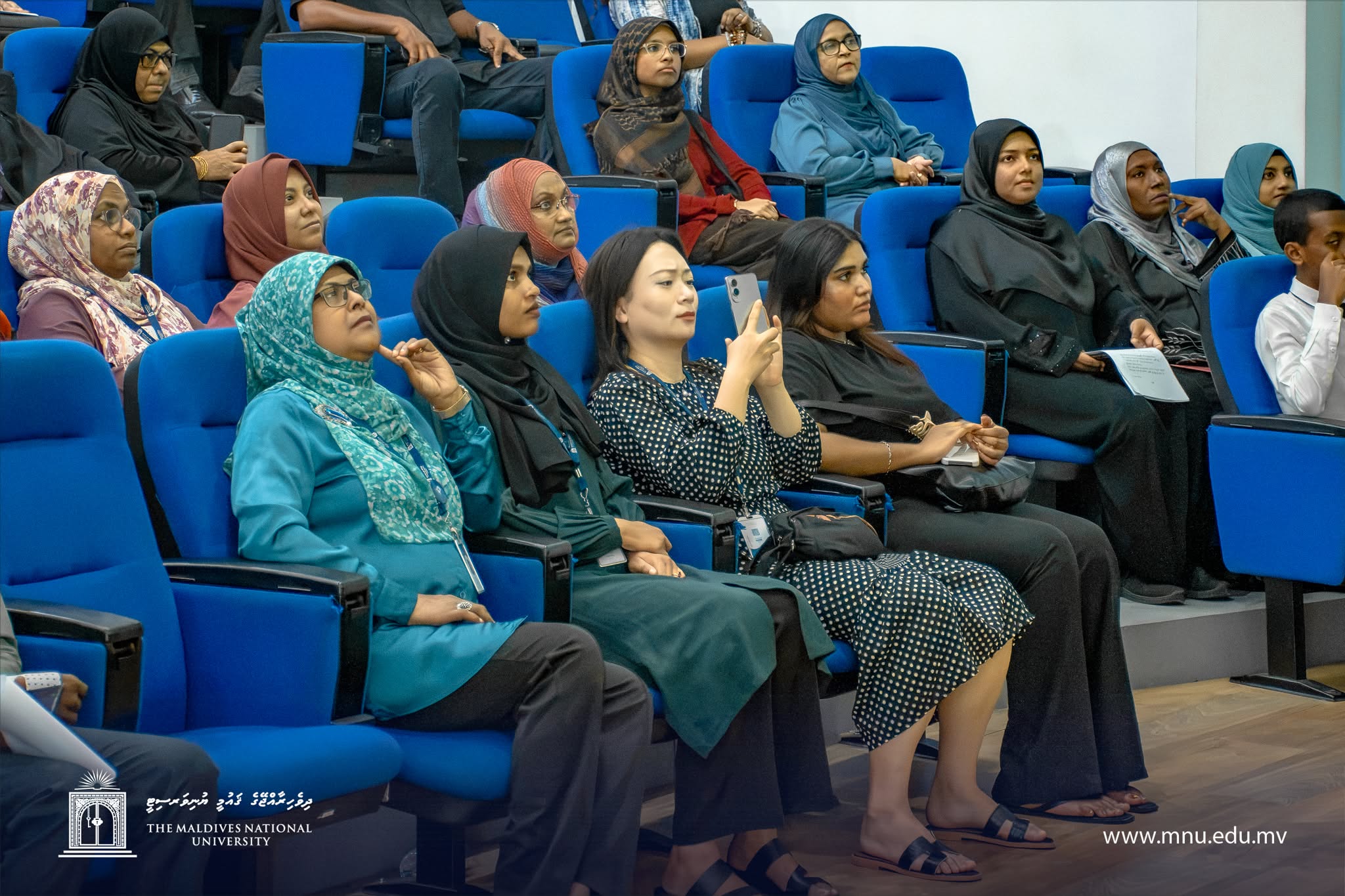
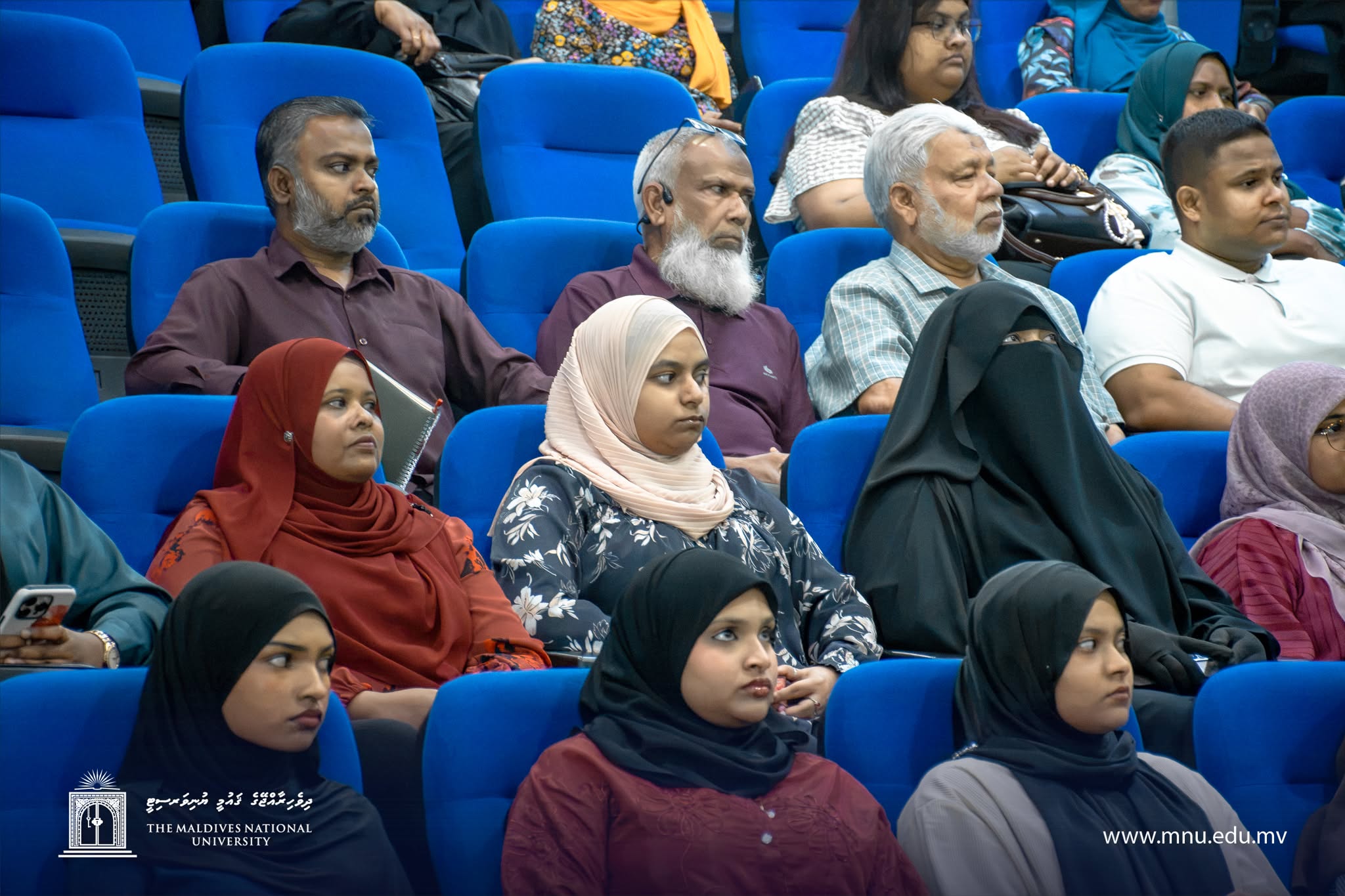
The Faculty of Arts at The Maldives National University (MNU) welcomed more than 100 new students for Term 2, 2026, through a faculty orientation programme designed to support their transition into university life. The programme introduced students to the Faculty’s academic environment, learning expectations, and available support, helping them prepare for the start of their studies.
The new intake represents a diverse range of academic programmes, including the Master of Arts in Social Policy, Master of Dhivehi Language and Culture, Bachelor of Arts in Political Science and International Relations, Bachelor of Arts in Library and Information Management, Diploma in Library and Information Services, Diploma in Visual Arts, Advanced Certificate in Visual Arts, Advanced Certificate in Journalism, and Certificate 3 in Arabic Language.
During the orientation, students received information about the Faculty’s academic offerings, timetables, class arrangements, and learning expectations. They also had the opportunity to meet their batch coordinators and lecturers, ask questions, and become familiar with the academic and campus environment.
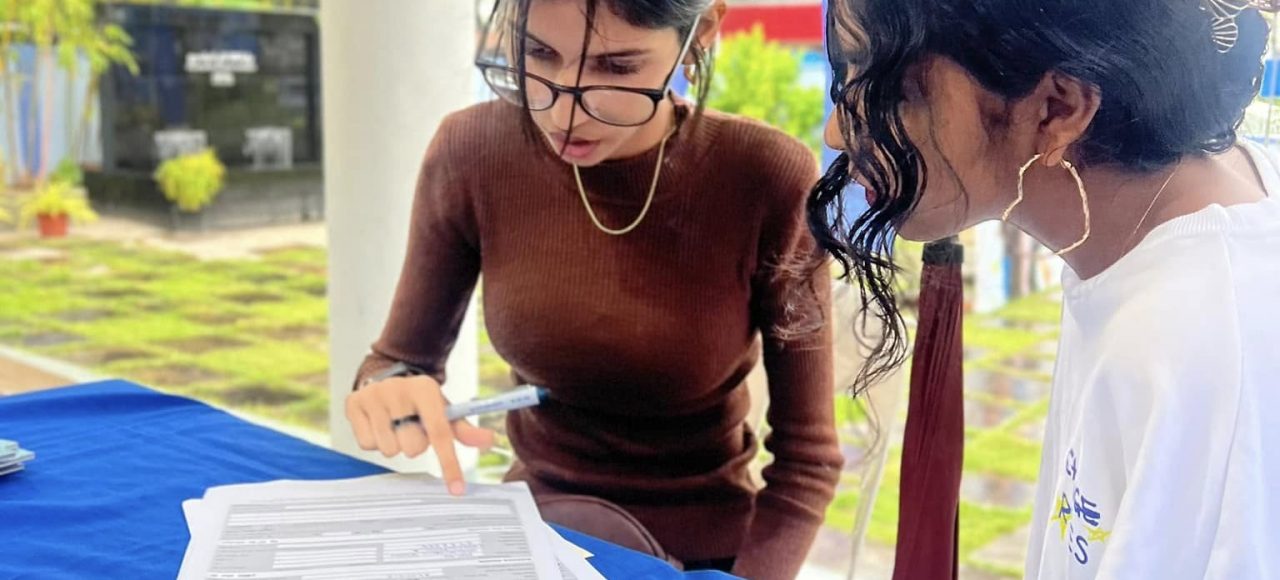
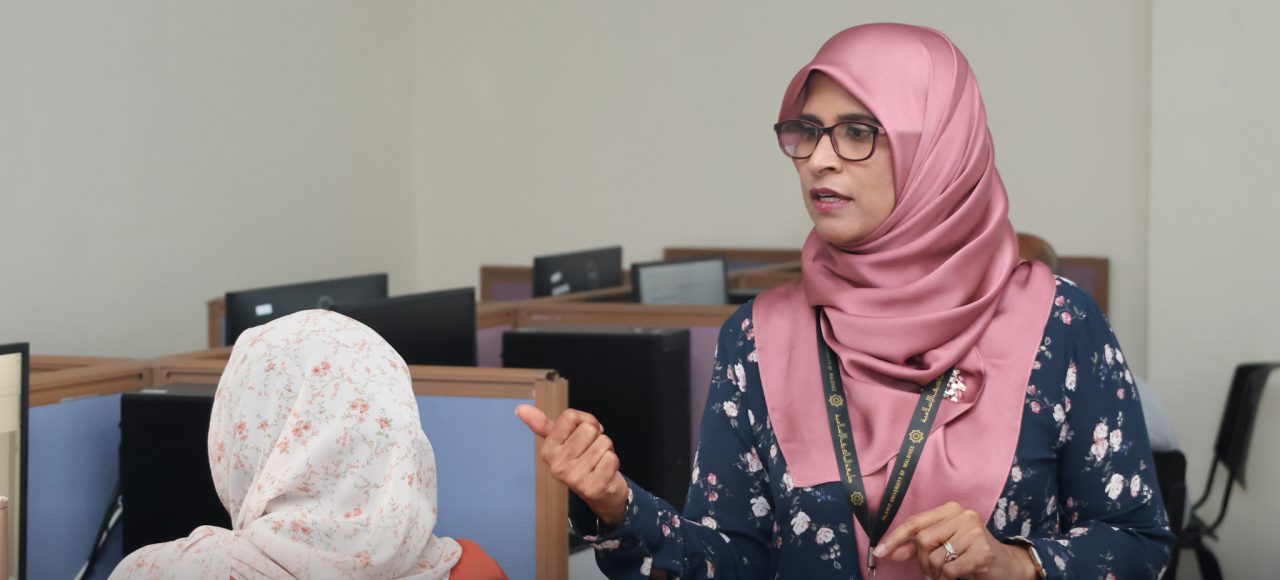
Following the formal programme, batch coordinators met with their respective student groups to provide further guidance and address programme-specific matters. Students also participated in a tour of the Faculty and campus, helping them familiarise themselves with the facilities and environment in which they will continue their studies.
The orientation reflected the Faculty of Arts’ commitment to supporting students from the beginning of their university journey. By providing essential information, opportunities for interaction, and guidance from academic staff, the programme aimed to encourage student engagement, informed participation, and a positive foundation for academic progression.
The initiative contributed to SDG 4 (Quality Education) by helping new students understand their academic pathways and access information needed to participate in higher education. It also supported SDG 10 (Reduced Inequalities) by providing students from diverse academic programmes with a common orientation and access to guidance, while its emphasis on informed participation and understanding university structures relates to SDG 16 (Peace, Justice and Strong Institutions) through the promotion of transparent communication and institutional engagement.