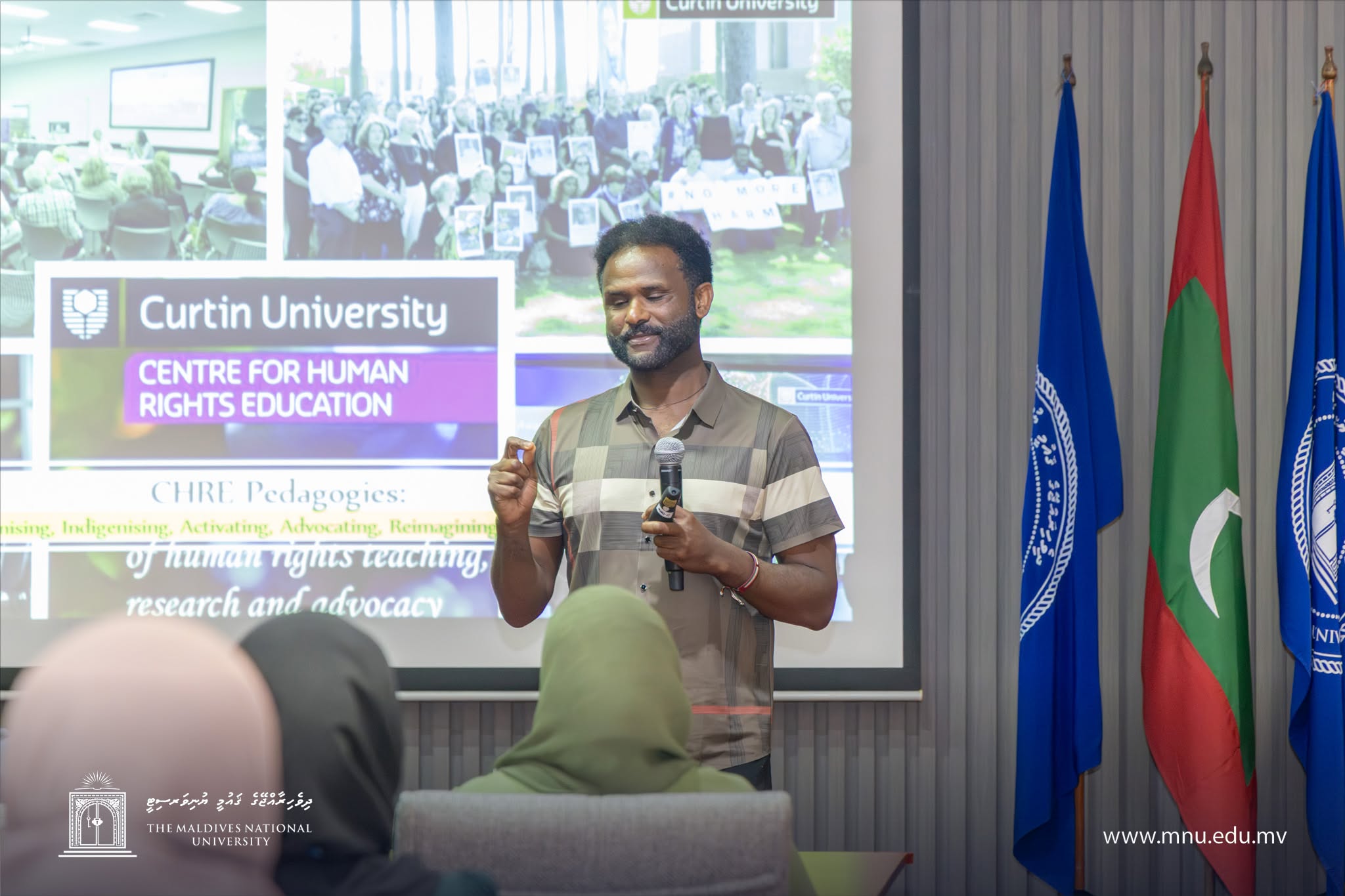
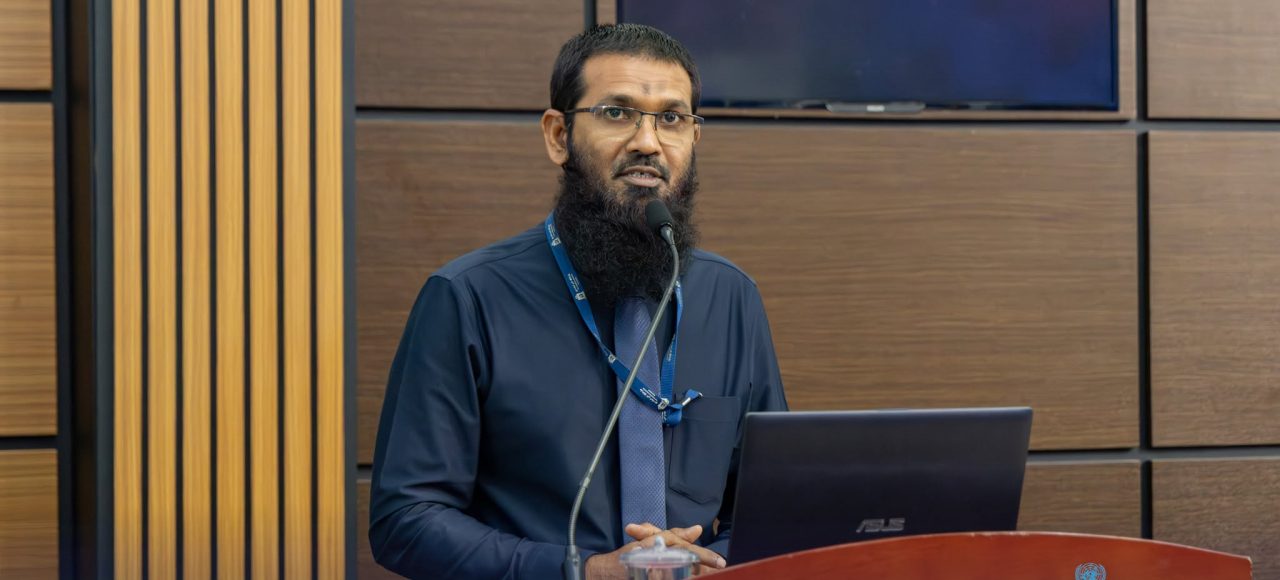
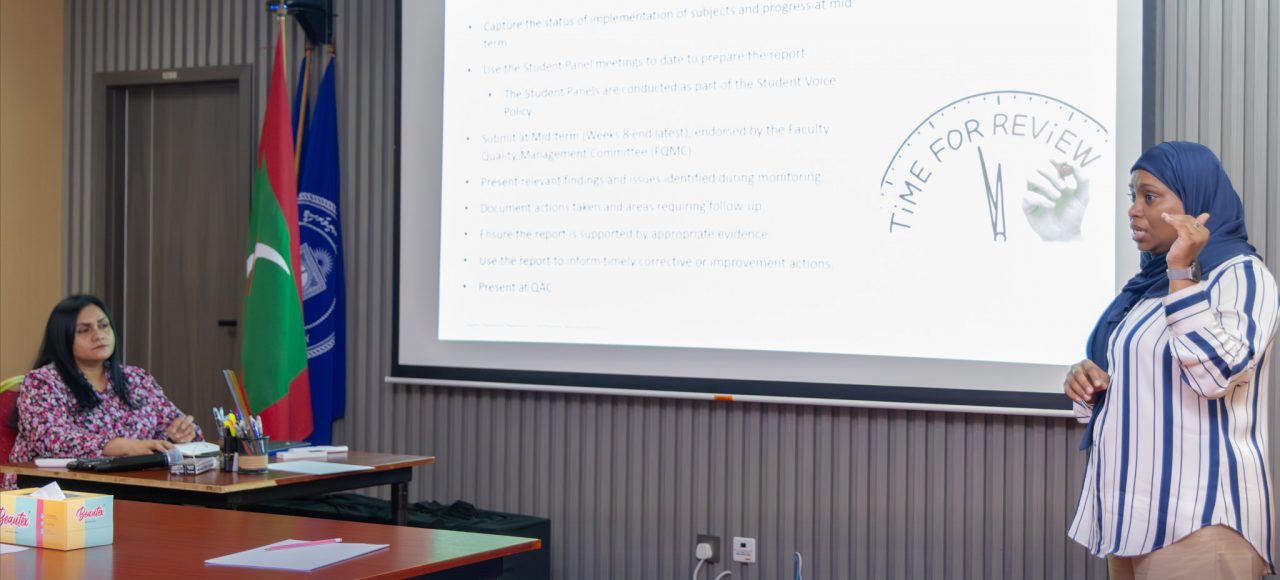
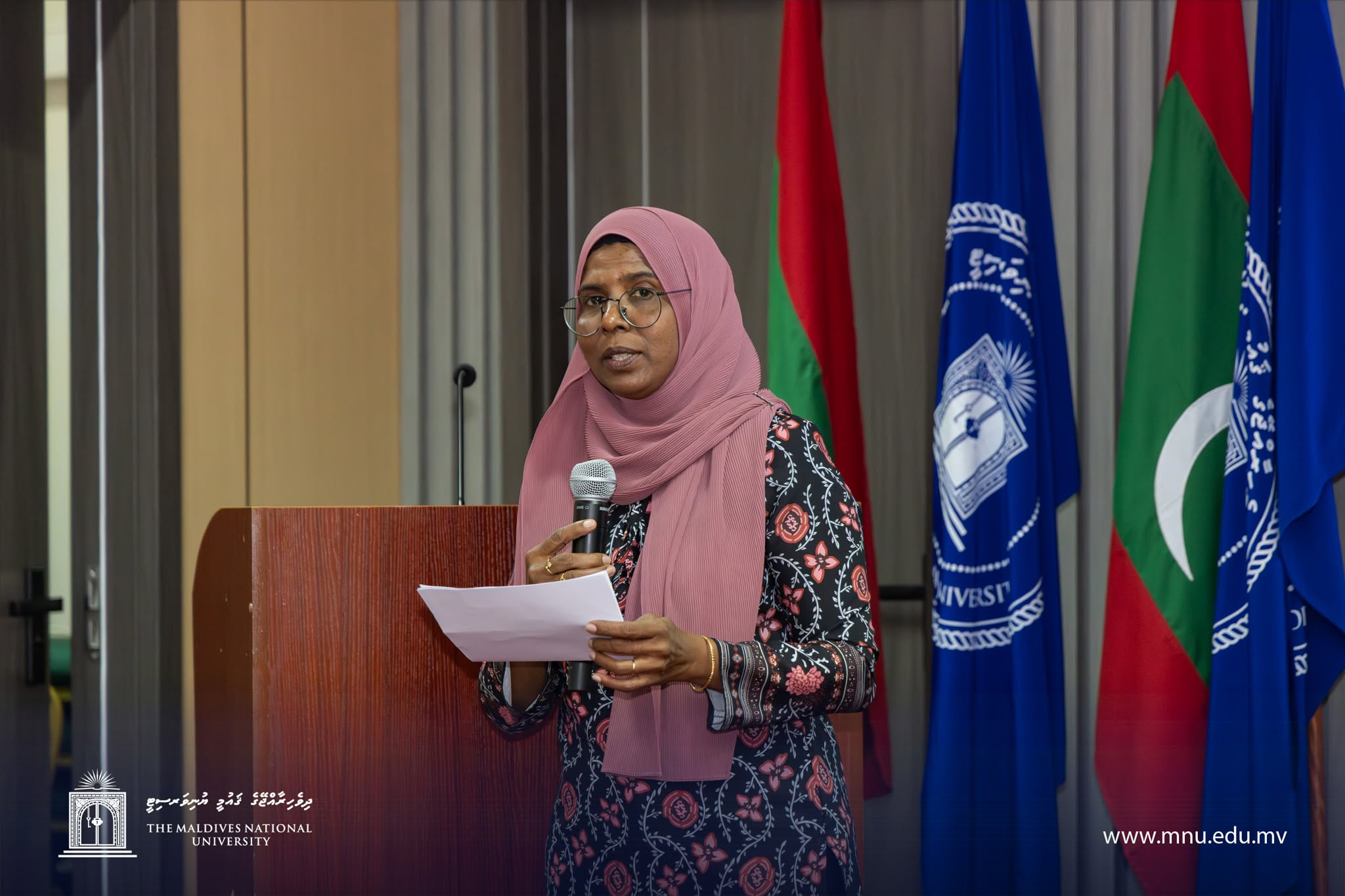
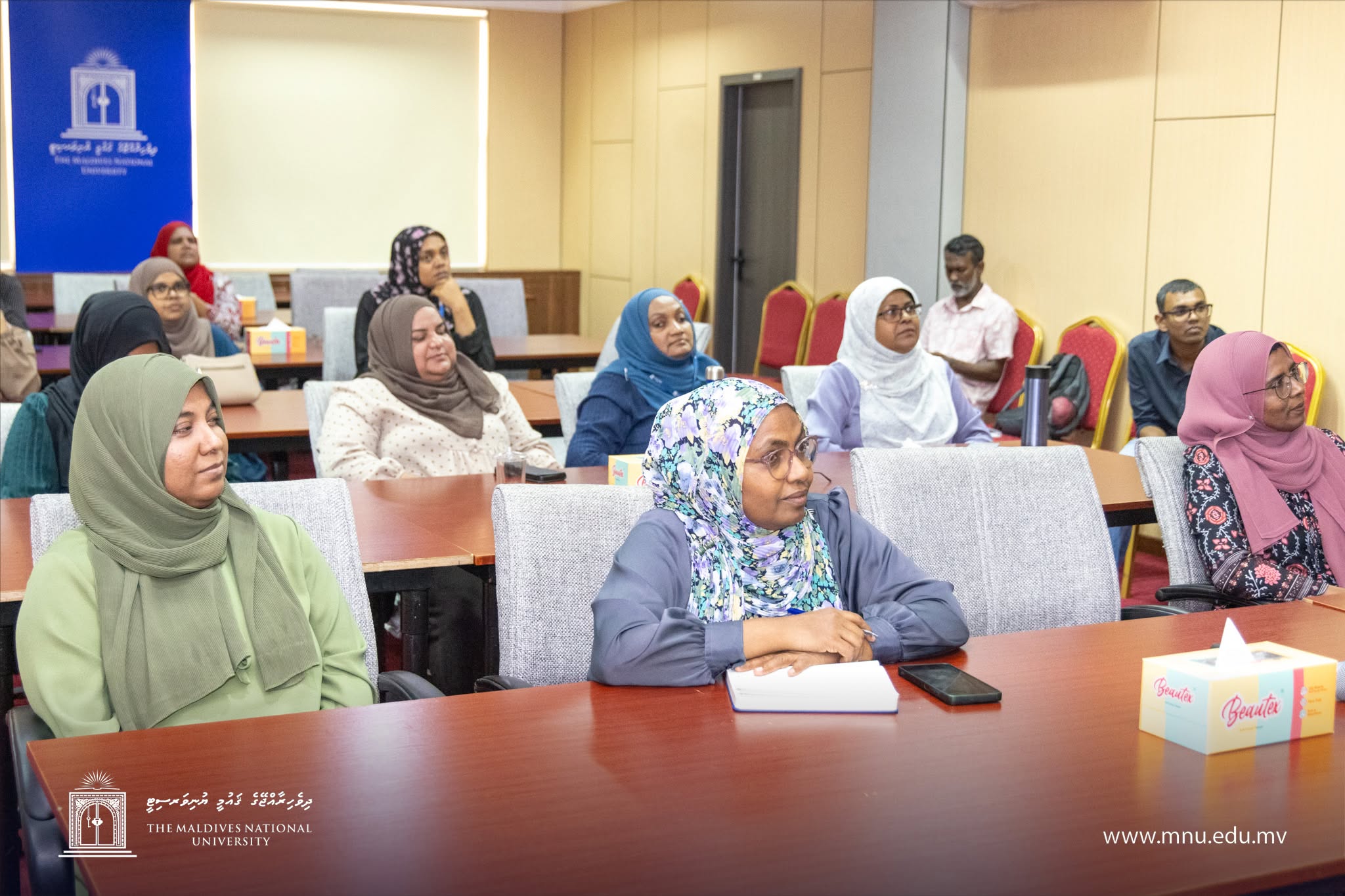
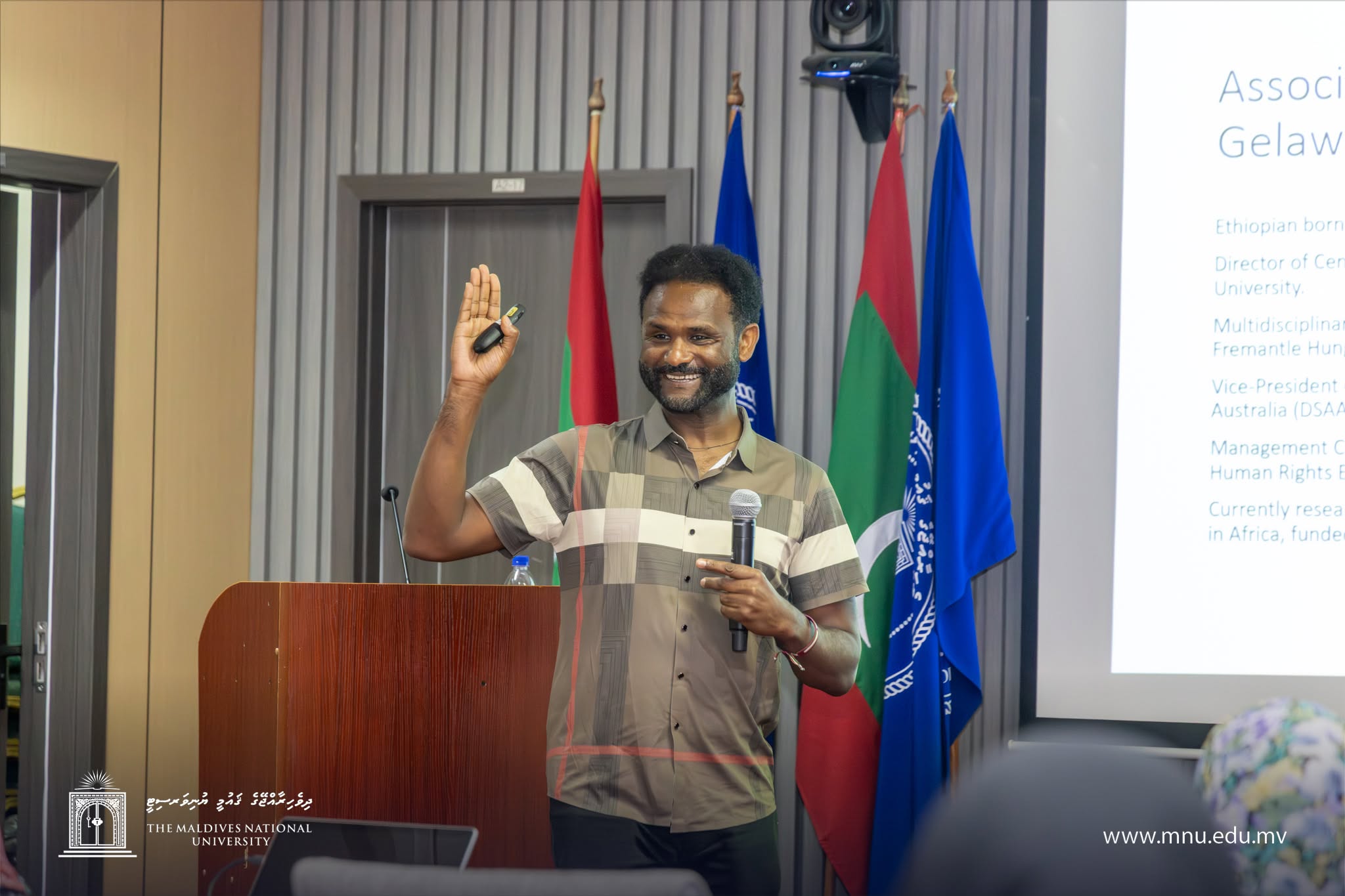
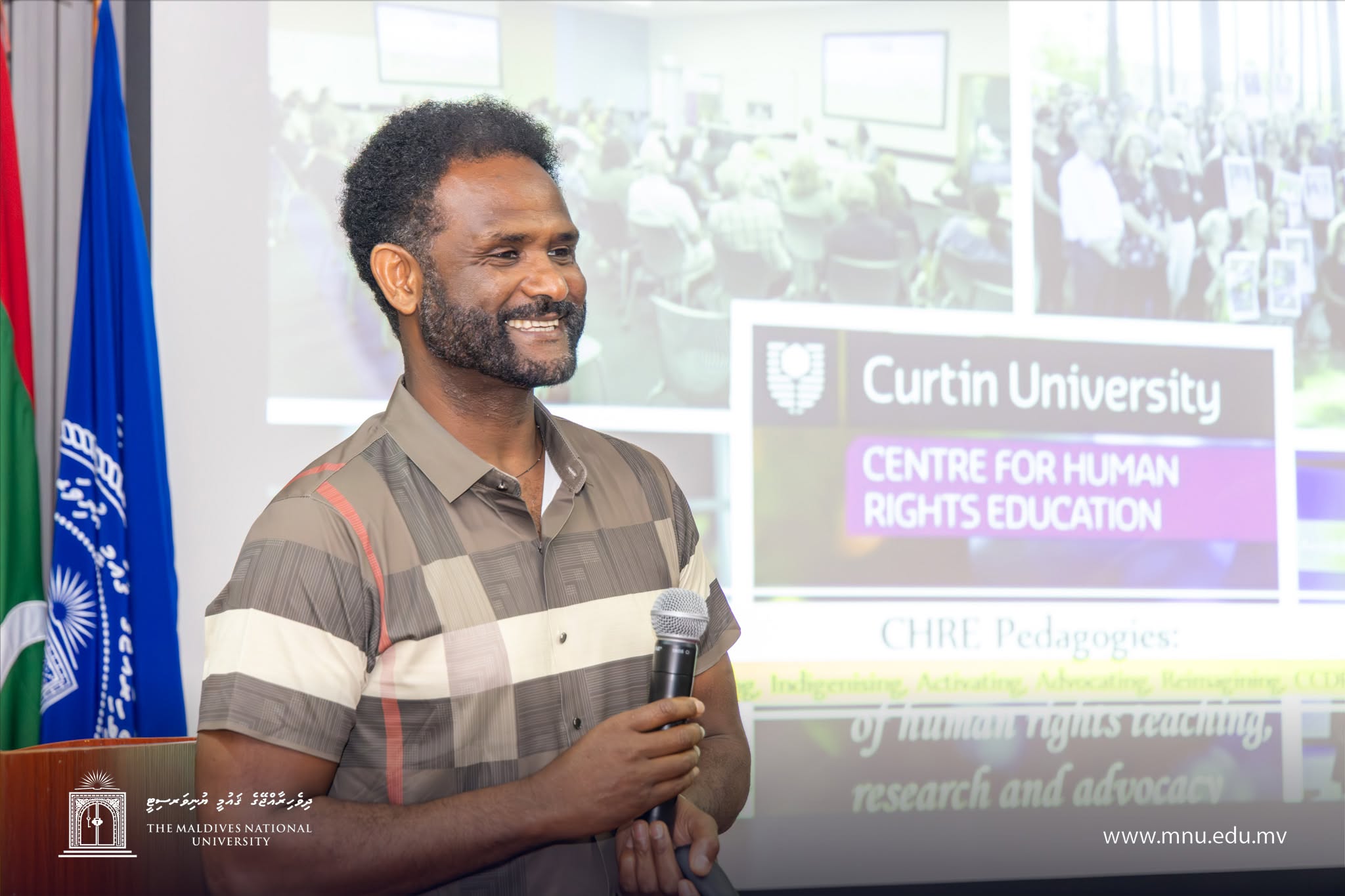
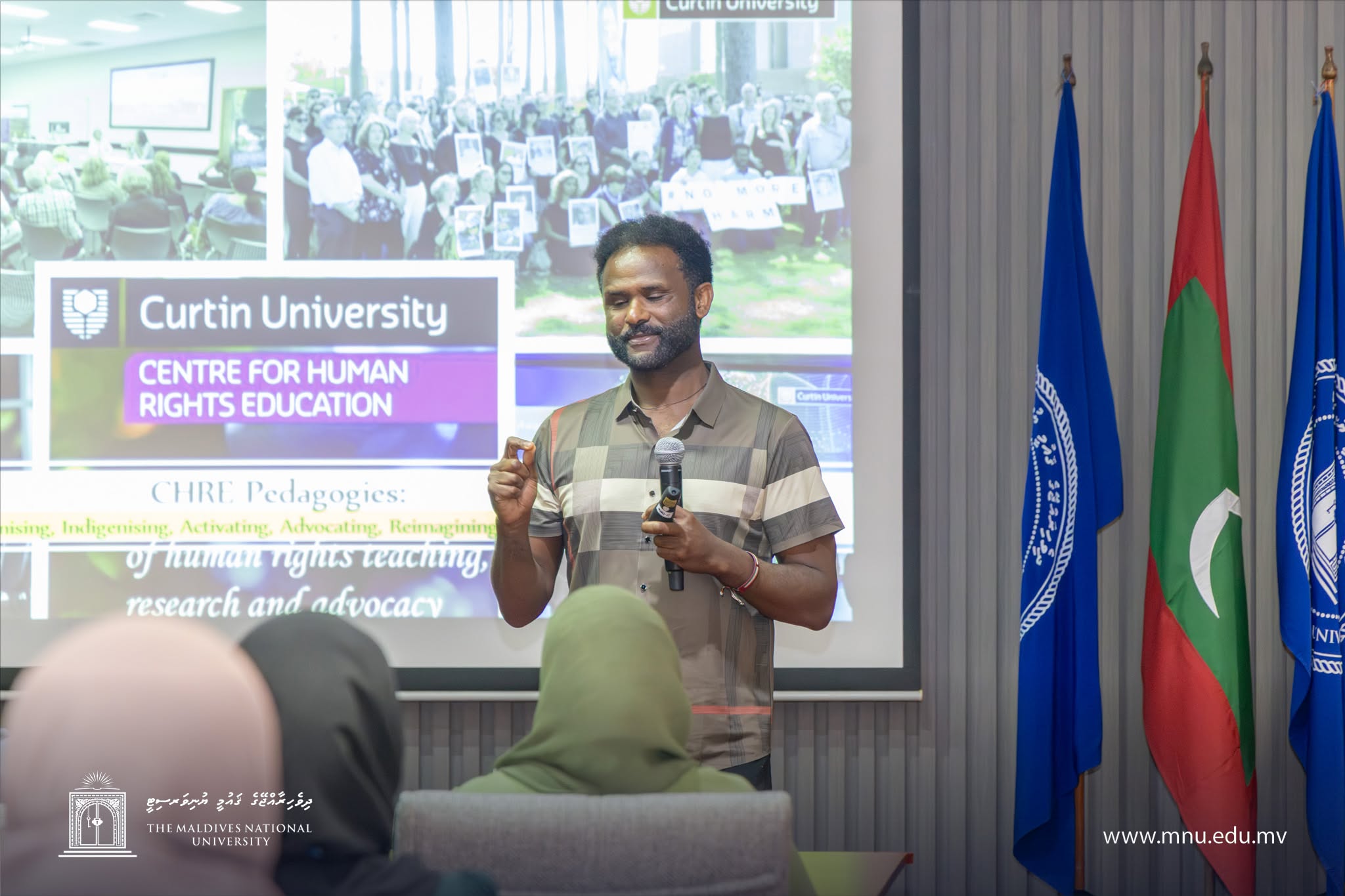
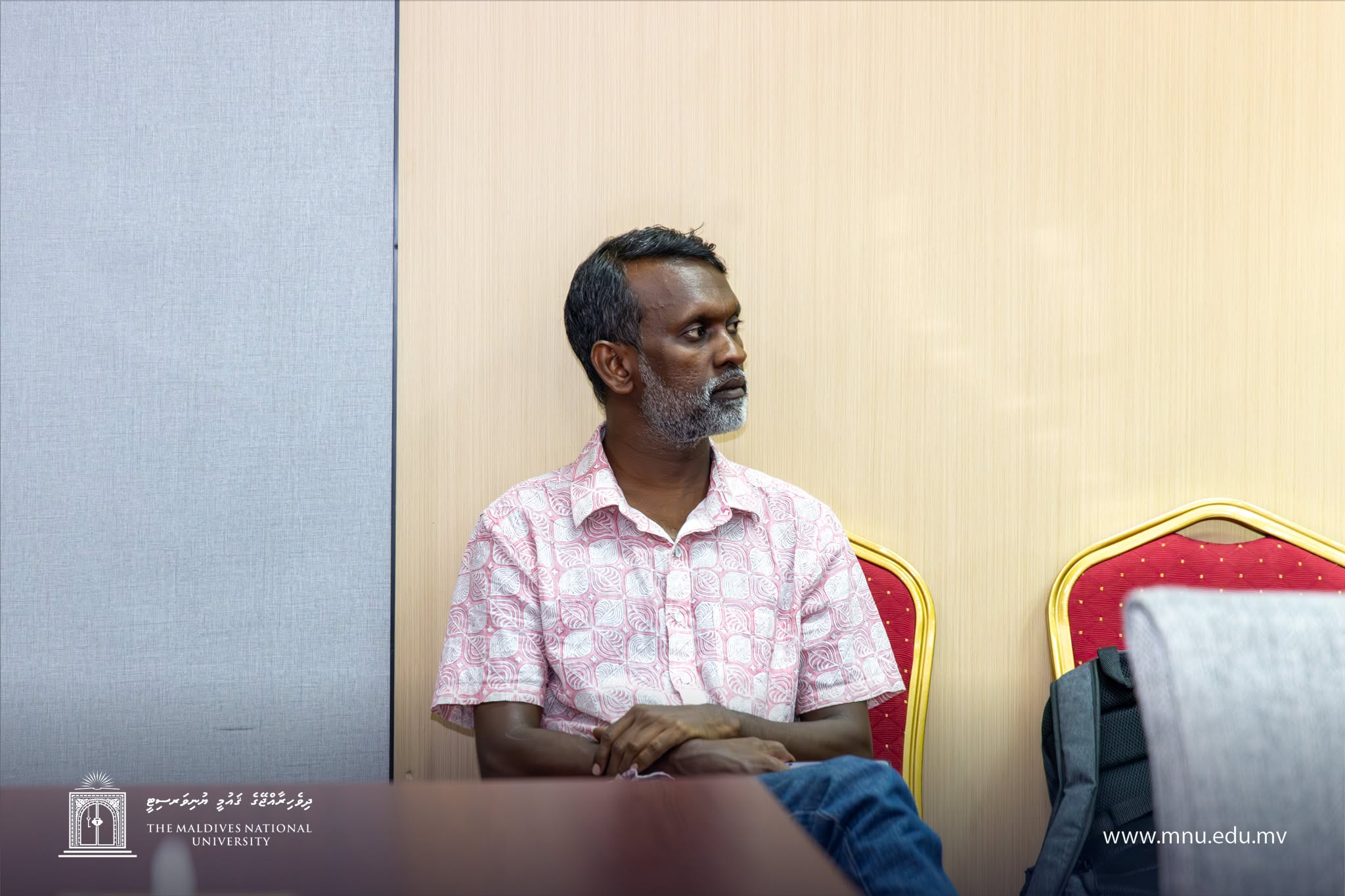
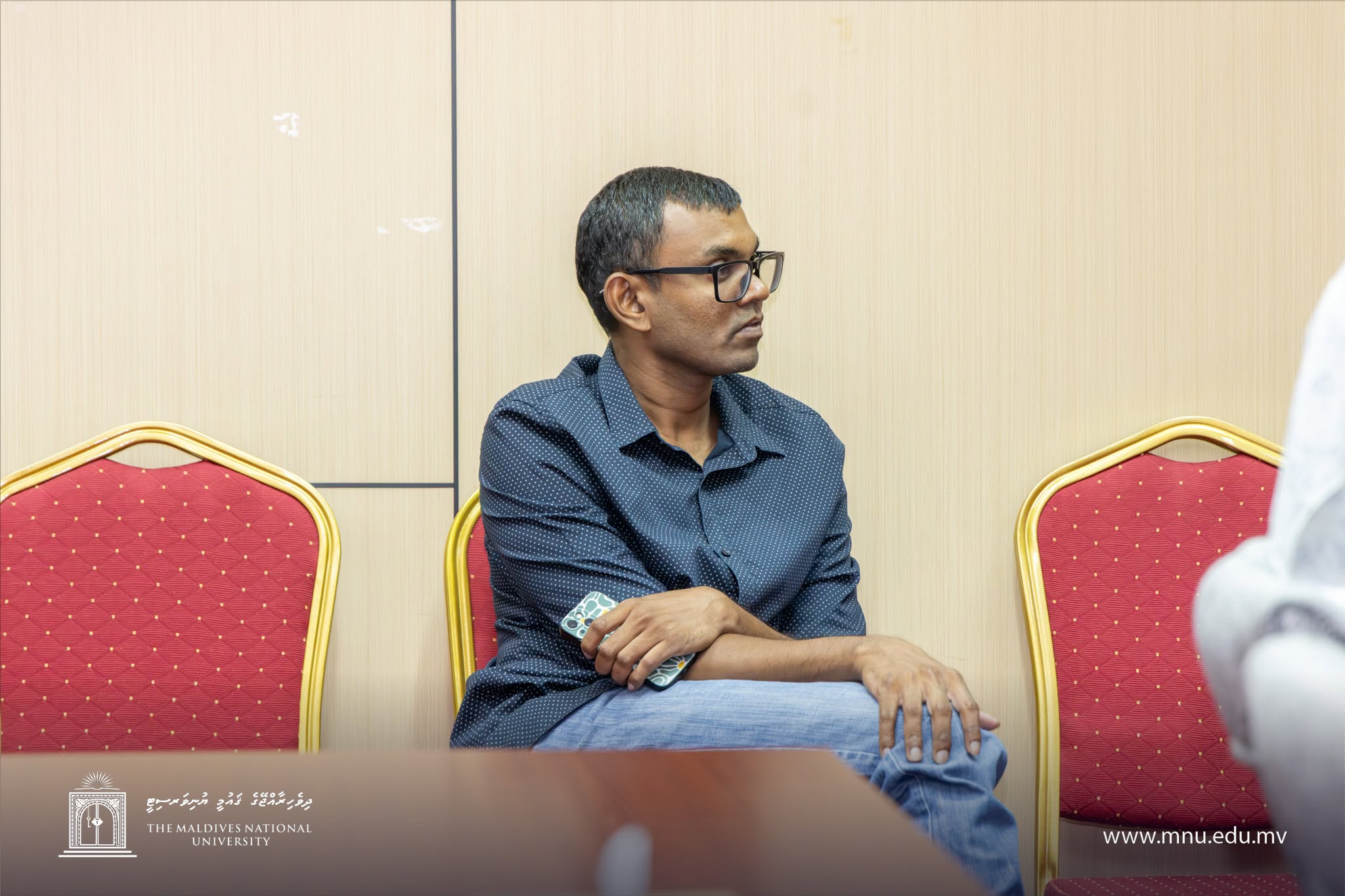
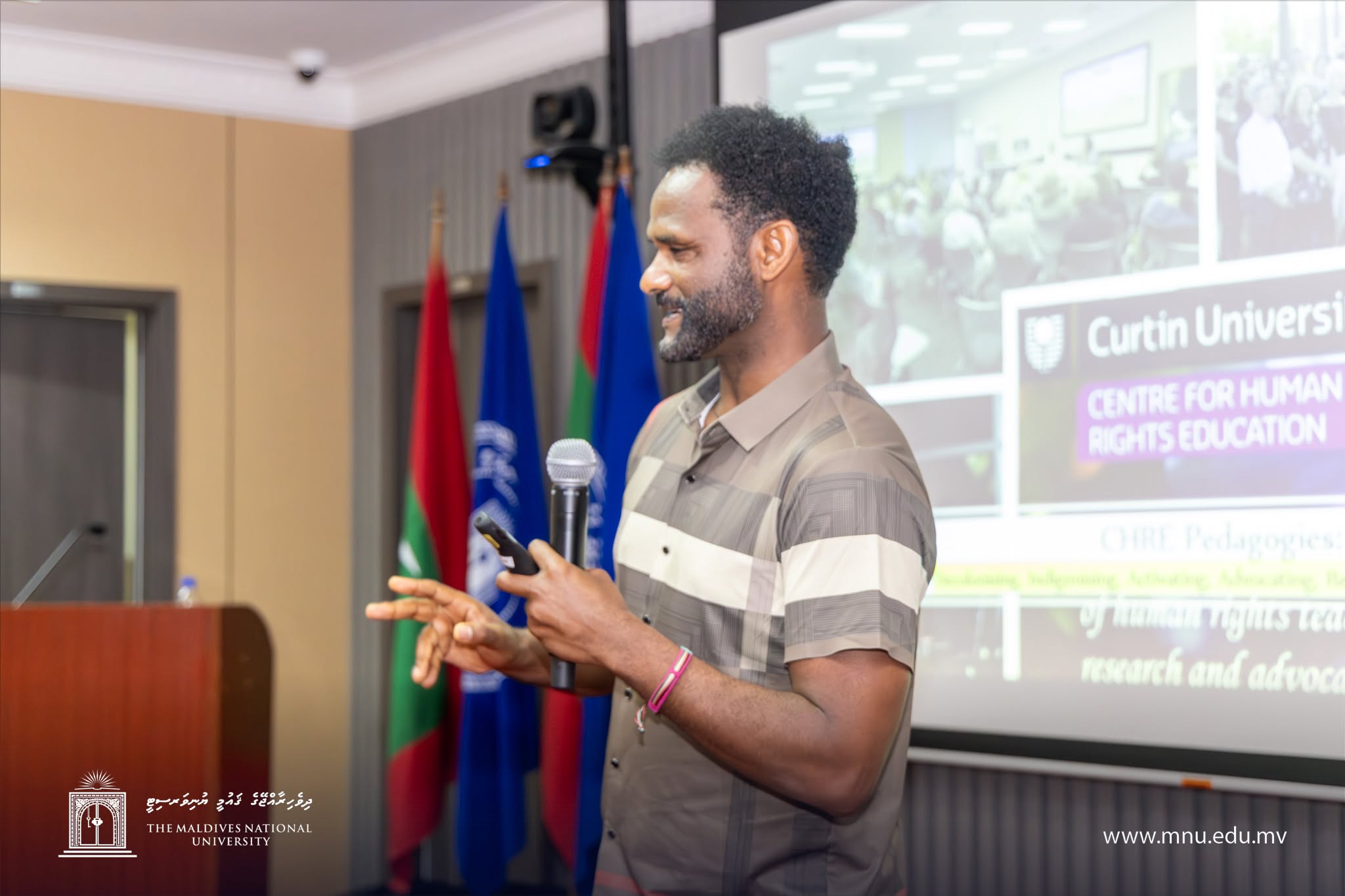
The Faculty of Arts at The Maldives National University (MNU) hosted a seminar titled “Roads to Decolonial Futures through Critical Appreciative Dialogue”, delivered by Yirga Gelaw Woldeyes, Associate Professor and Director of the Centre for Human Rights Education at Curtin University. The seminar provided an academic platform for examining decolonial perspectives and their relevance to education, research, and community engagement.
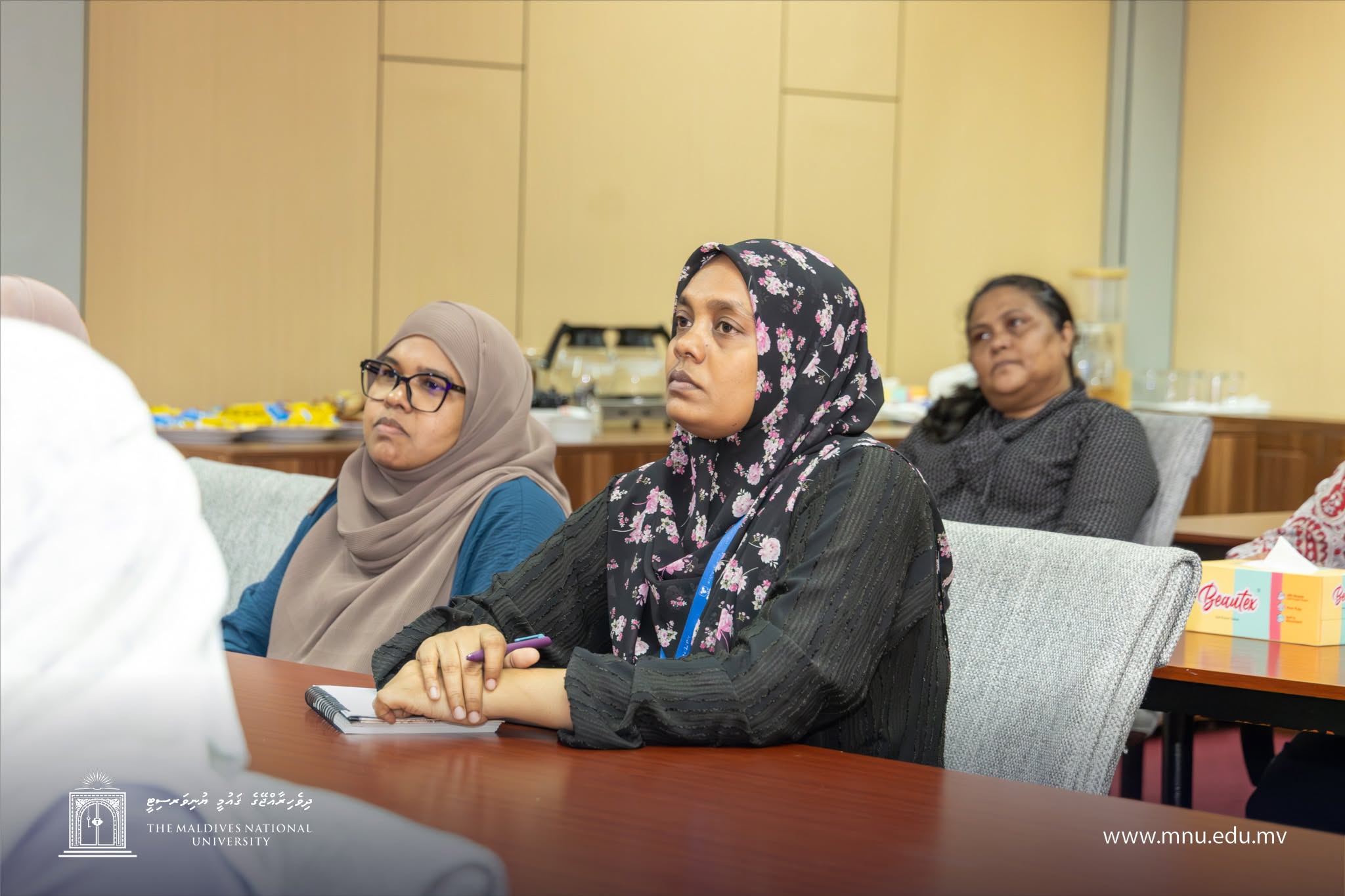
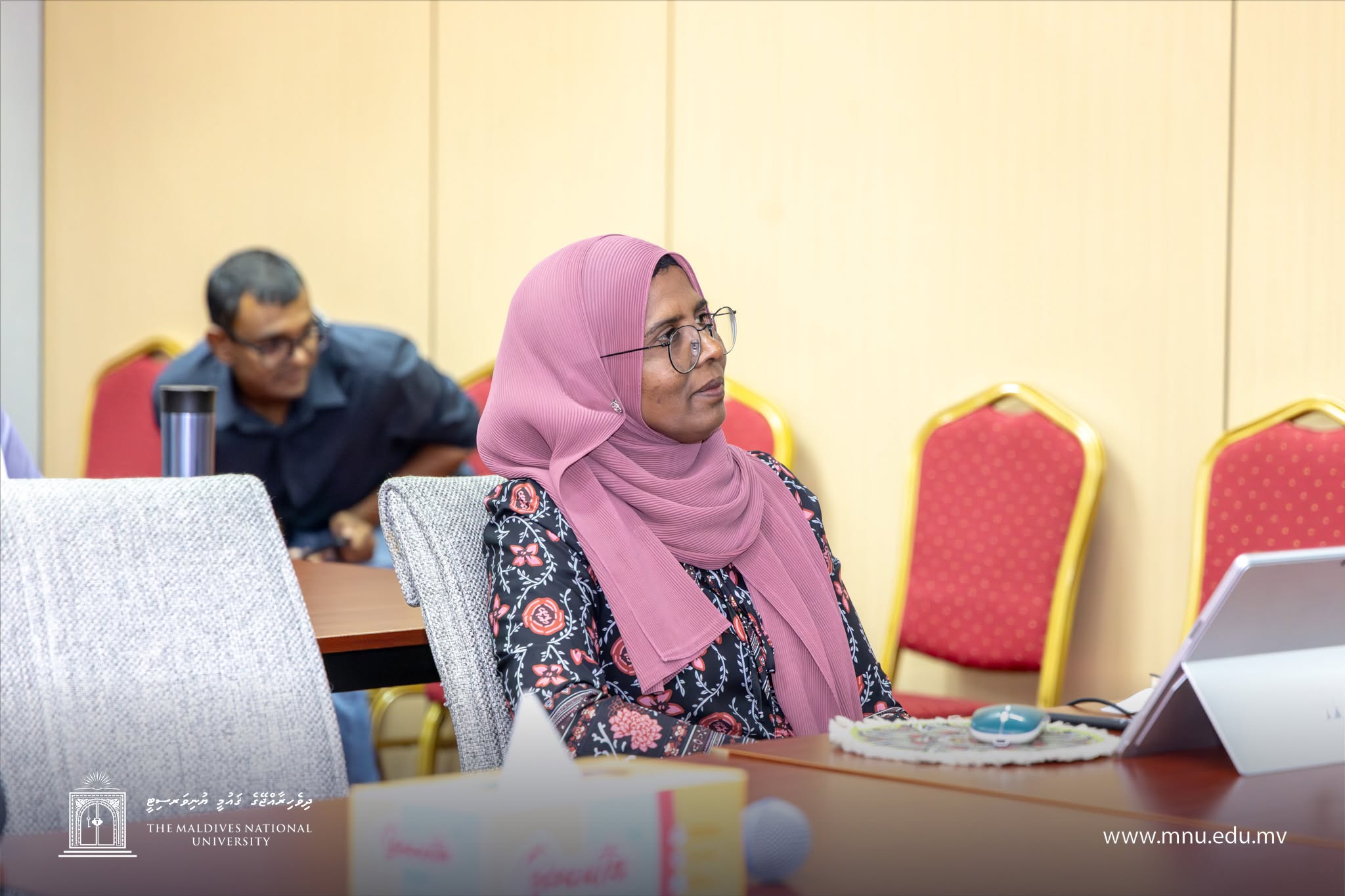
The session encouraged critical reflection on positionality, language, knowledge systems, and the ways in which knowledge is produced, shared, and understood. Through dialogue and shared learning, participants explored how different cultural and intellectual perspectives shape understandings of knowledge and influence academic and social practices.
The seminar highlighted the importance of recognising diverse ways of knowing and considering how educational and research practices can become more inclusive, equitable, and culturally responsive. It also encouraged participants to reflect critically on whose knowledge is represented, how perspectives are valued, and how linguistic and cultural diversity can enrich academic inquiry.
The engagement provided an opportunity for knowledge-sharing between MNU and an international academic expert, strengthening academic exchange and supporting broader discussion on decolonial thought and human rights education. By creating space for critical dialogue, the seminar contributed to ongoing conversations about inclusive learning, cultural recognition, and the role of higher education in addressing social and educational inequalities.
The initiative contributed to SDG 4 (Quality Education) by encouraging critical reflection and inclusive approaches to learning; SDG 10 (Reduced Inequalities) by highlighting the importance of recognising diverse perspectives and knowledge systems; and SDG 16 (Peace, Justice and Strong Institutions) by creating space for dialogue on human rights, inclusion, and the equitable recognition of different voices and experiences.