1. Hand Washing Awareness Program
A hygiene education session was conducted for 190 preschool children at Falah Preschool. Lecturers Sizna Mohamed, Shuhurath Hassan and Saushan Rasheed, together with second-semester nursing students, demonstrated proper handwashing. Children then demonstrated the technique themselves.
Reported outcome: The session improved children’s awareness and practical handwashing skills, helping reinforce hygiene practices and infection prevention.
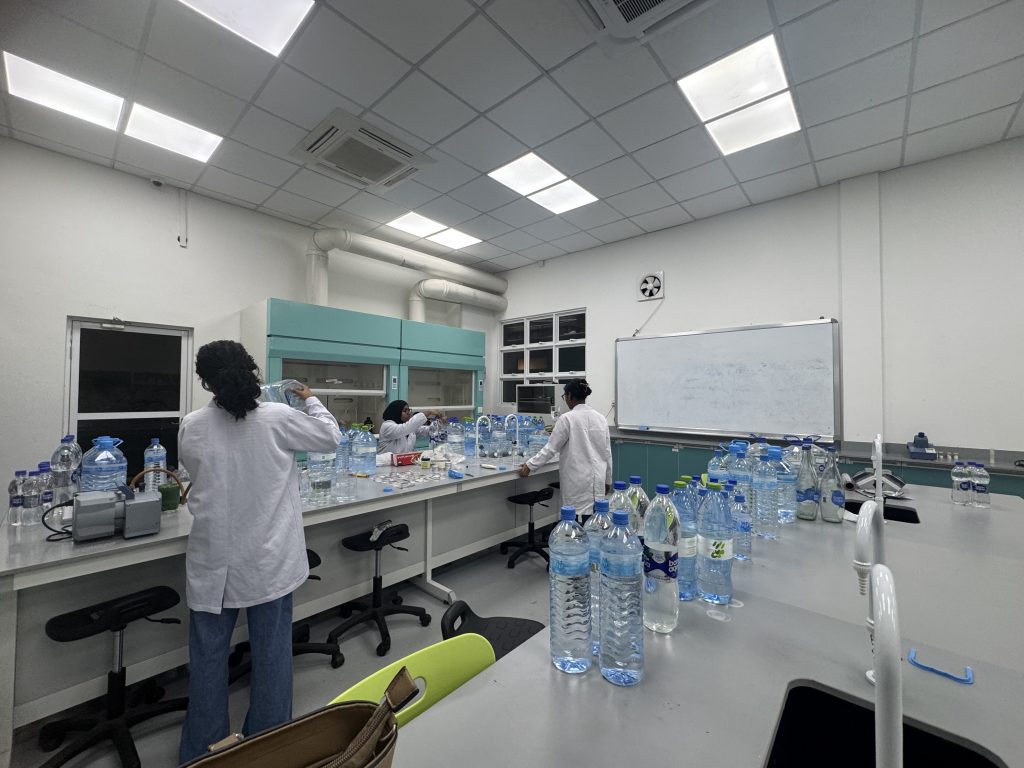
2. Investigation of Microplastics in Commercially Available Bottled Water in the Maldives
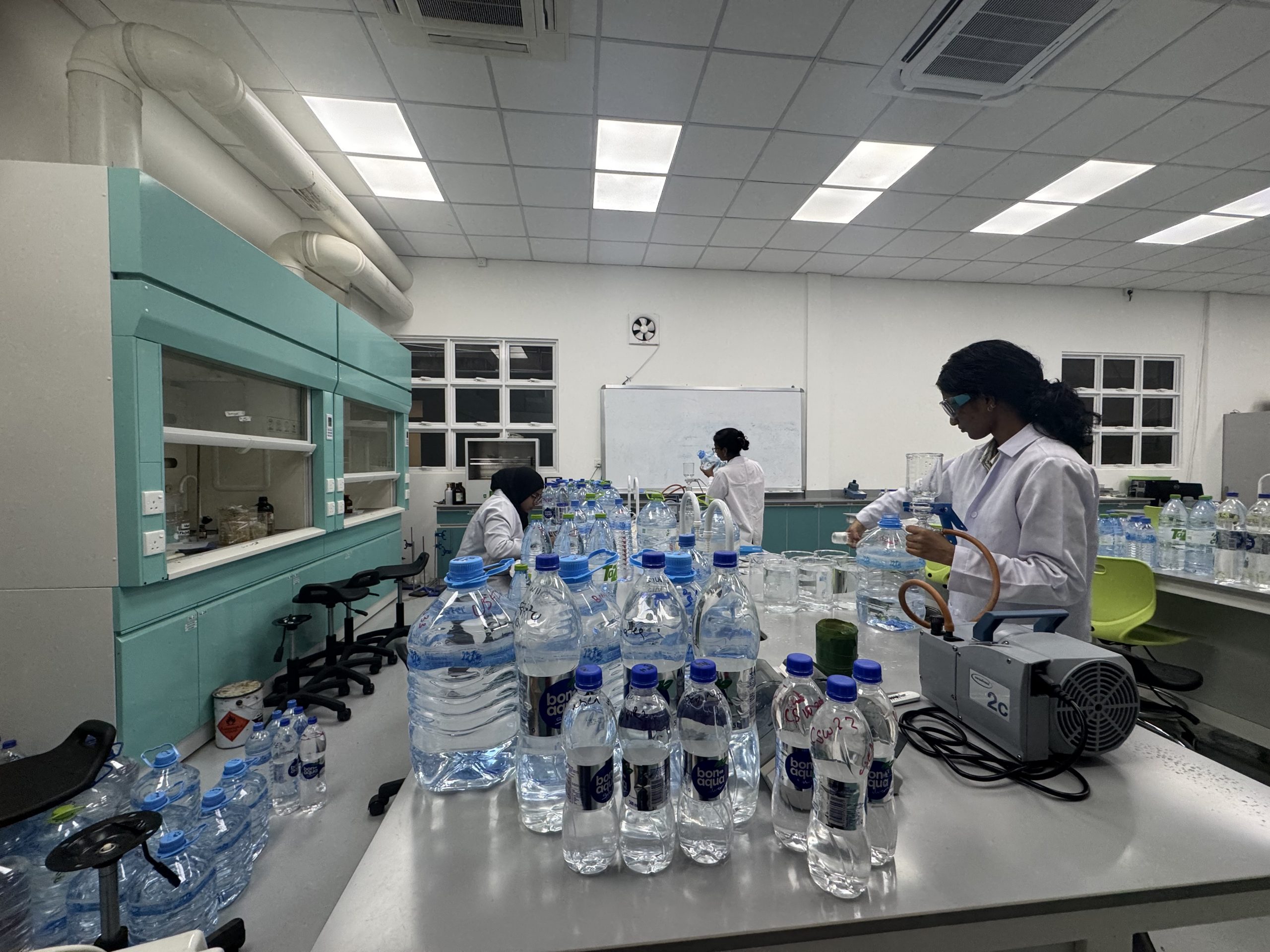
A University Research Grant project investigating microplastics in bottled water sold in the Maldives. The project is directly relevant to drinking-water quality and the potential presence of plastic particles in a water source consumed by the public.
3. Unveiling Island Water Demand Patterns: A Comparative Analysis Across Scales in the Maldives
A research publication listed under the Maldives National Journal of Research (MNJR), authored by Ibrahim Miflal Fayaz, Suma Khalid Mohamed and the Fenaka Institute for Training and Research. The title indicates a focus on water-demand patterns at different scales across Maldivian islands.https://mnu.edu.mv/research-development/mnjr
4. Household water usage survey
A household water-usage survey was designed and conducted from October to December 2025. Data analysis had been completed, and the report was still under development according to the workbook.
Relevance: Household consumption data can support water-demand forecasting, conservation measures and evidence-based water-resource management.
5. Groundwater Quality Status of Malé City, Maldives: Socio-Metabolic Risks and Vulnerabilities for Water Security and Climate Adaptation
A research paper listed as a draft in development. Its stated focus links groundwater quality with water security, environmental pressures and climate adaptation in Malé.
6. Stormwater management and flooding research in Malé
Two student research projects are listed as completed:
-
Complete SWMM for Malé — a Storm Water Management Model project.
-
Flooding Risks in Malé: From Past to Present.
Two additional related research activities are also listed:
-
How Climate Resilient is Malé’s Water System? Insights from a Hydro-Socio-Metabolic Risk (Hydro-SMR) Analysis — paper submitted for publication.
-
Rainfall Trend and Intensity–Duration–Frequency (IDF) Analysis for Malé, Maldives (1993–2024) — research paper in final-draft development.
7. Information Session for Staff by the Utility Regulatory Authority (URA)
An awareness session at MNU Kulhudhuffushi Campus introduced staff to the role of URA and related utility services. The session covered water conservation, energy conservation, effective waste management and responsible utility use.
Participants: 16 MNU staff and 9 URA staff.
Reported outcome: Participants gained practical knowledge of reducing water and energy consumption and adopting more sustainable practices.
8. Maintenance Services for Dhanaal Student Accommodation
The Facilities Department maintains toilets, plumbing, washing machines, kitchen sinks and appliances at Dhanaal student accommodation. Reported faults are handled by the maintenance team to keep facilities operational and living spaces safe and functional.
Relevance: Reliable toilet and plumbing facilities support hygiene, sanitation and student well-being. This is particularly relevant to SDG target 6.2, which addresses adequate and equitable sanitation and hygiene.
9. Building the Future: Civil Engineering Insights from IBM’s Factory
FEST civil engineering students visited Island Beverages Maldives to observe TaZa bottled-water production, quality control, manufacturing systems, building services and workplace safety. Relevant to understanding drinking-water production and quality-control processes, although the workbook does not report specific water-quality results.
10. Launch of the SCALE project
MNU and Northumbria Healthcare NHS Foundation, UK, launched a collaboration to strengthen antimicrobial-resistance surveillance, infection prevention and control, and antimicrobial stewardship in Maldivian regional hospitals. This supports public health and hygiene, but is not directly a water-supply or sanitation project.
11. CME session on Infection Prevention and Control (IPC)
A continuing medical education session was conducted for 20 healthcare workers from Hulhumalé Hospital under SCALE. The entry refers to infection prevention, healthcare training and antimicrobial-resistance awareness. Its SDG 6 connection is indirect unless water, sanitation or hygiene interventions are specifically documented.
12. Field Visit to WAMCO
Nursing students visited the WAMCO work site in Kulhudhuffushi to learn about waste collection, segregation, transportation, disposal, environmental cleanliness and public health. This has an indirect relationship to sanitation and environmental health.