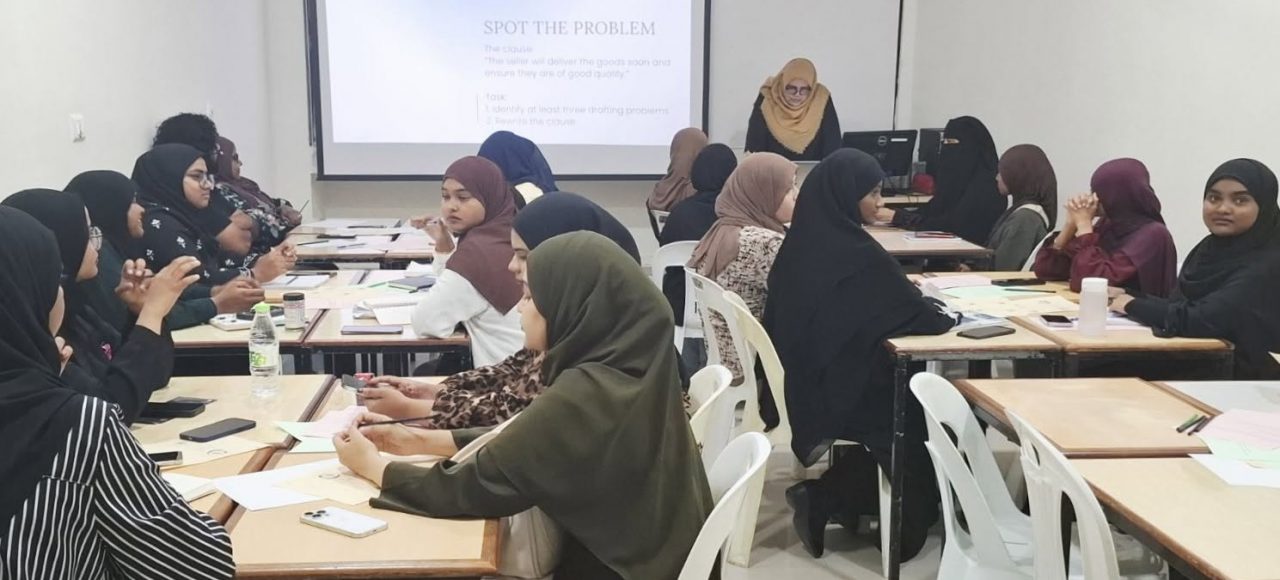
The Maldives National University (MNU) successfully concluded the ninth edition of Theveli International Conference on 19 August 2026, bringing together researchers, academics, students, practitioners and international experts to explore how science, technology and innovation can contribute to sustainable development and address complex global and societal challenges.
Held under the theme “Transformative Innovation in the 21st Century: Science, Technology, and Society,” Theveli 2026 provided a multidisciplinary platform for the exchange of research, knowledge and innovative ideas, strengthening connections between research, higher education, technology, policy and society.
The three-day conference, held from 17-19 August 2026, attracted unprecedented interest, with 364 submissions received and 288 accepted, representing an increase of 90 accepted submissions compared with the previous year. A total of 435 presenters and participants registered for the conference, with registration closing due to capacity limitations despite continued interest from local and international participants.
The conference further demonstrated the growing internationalisation of research at MNU, with 70 papers submitted by researchers from 23 countries and territories across five continents, Asia, Europe, Africa, North America, and Oceania. The participation of researchers from diverse geographical and academic backgrounds created opportunities for international research collaboration, knowledge exchange, interdisciplinary dialogue and the development of research networks.
A major strength of Theveli 2026 was its emphasis on research that contributes to the Sustainable Development Goals (SDGs). The conference brought together research across 11 interconnected areas, including Sustainable Futures and Climate Action; Innovation, Technology and Digital Transformation; Science, Health and Human Well-being; Global Governance, Peace and Development; Education, Knowledge and the Future of Work; Gender, Equity and Social Transformation; Resilient Economies and Future Markets; Interdisciplinary Research and Global Collaboration; Artificial Intelligence, Ethics and Human Futures; Patient Safety and Healthcare Quality; and Island Circular Economy for Climate Adaptation in Small Island Developing States (SIDS).
Through these themes, Theveli 2026 addressed key global priorities reflected across the United Nations Sustainable Development Goals, particularly SDG 3: Good Health and Well-being, SDG 4: Quality Education, SDG 5: Gender Equality, SDG 8: Decent Work and Economic Growth, SDG 9: Industry, Innovation and Infrastructure, SDG 10: Reduced Inequalities, SDG 11: Sustainable Cities and Communities, SDG 12: Responsible Consumption and Production, SDG 13: Climate Action, SDG 16: Peace, Justice and Strong Institutions, and SDG 17: Partnerships for the Goals.
The conference placed particular emphasis on the role of innovation and technology in advancing sustainable development. Discussions explored emerging areas such as artificial intelligence, ethical innovation, digital transformation, data-driven discovery, responsible automation, digital health, cybersecurity, sustainable manufacturing and AI governance. The conference’s dedicated focus on AI for Good also highlighted the potential of intelligent systems to contribute to the achievement of the SDGs while addressing ethical, legal and social considerations.
Climate action, environmental sustainability and resilience were also prominent areas of research. The conference examined climate change mitigation and adaptation, renewable energy, biodiversity conservation, circular economy approaches, nature-based solutions and sustainable infrastructure. Particular attention was given to the challenges and opportunities facing island communities and Small Island Developing States, including the development of circular economies and locally relevant approaches to climate adaptation and resilience.
Health and human well-being represented another significant area of engagement. Research and keynote discussions addressed public health, preventive healthcare, cancer screening, adult immunisation, healthcare quality, patient safety, biotechnology, personalised medicine, mental health, nutrition and One Health approaches, highlighting the importance of research-informed solutions for improving health outcomes and strengthening resilient health systems.
The conference also reinforced MNU’s commitment to quality education, student research and capacity building. The second edition of the Undergraduate Student Research Symposium provided a dedicated platform for bachelor’s degree students to present their research and develop academic, communication and research skills. A total of 31 undergraduate abstracts were received, reflecting the growing engagement of students in research and knowledge creation.
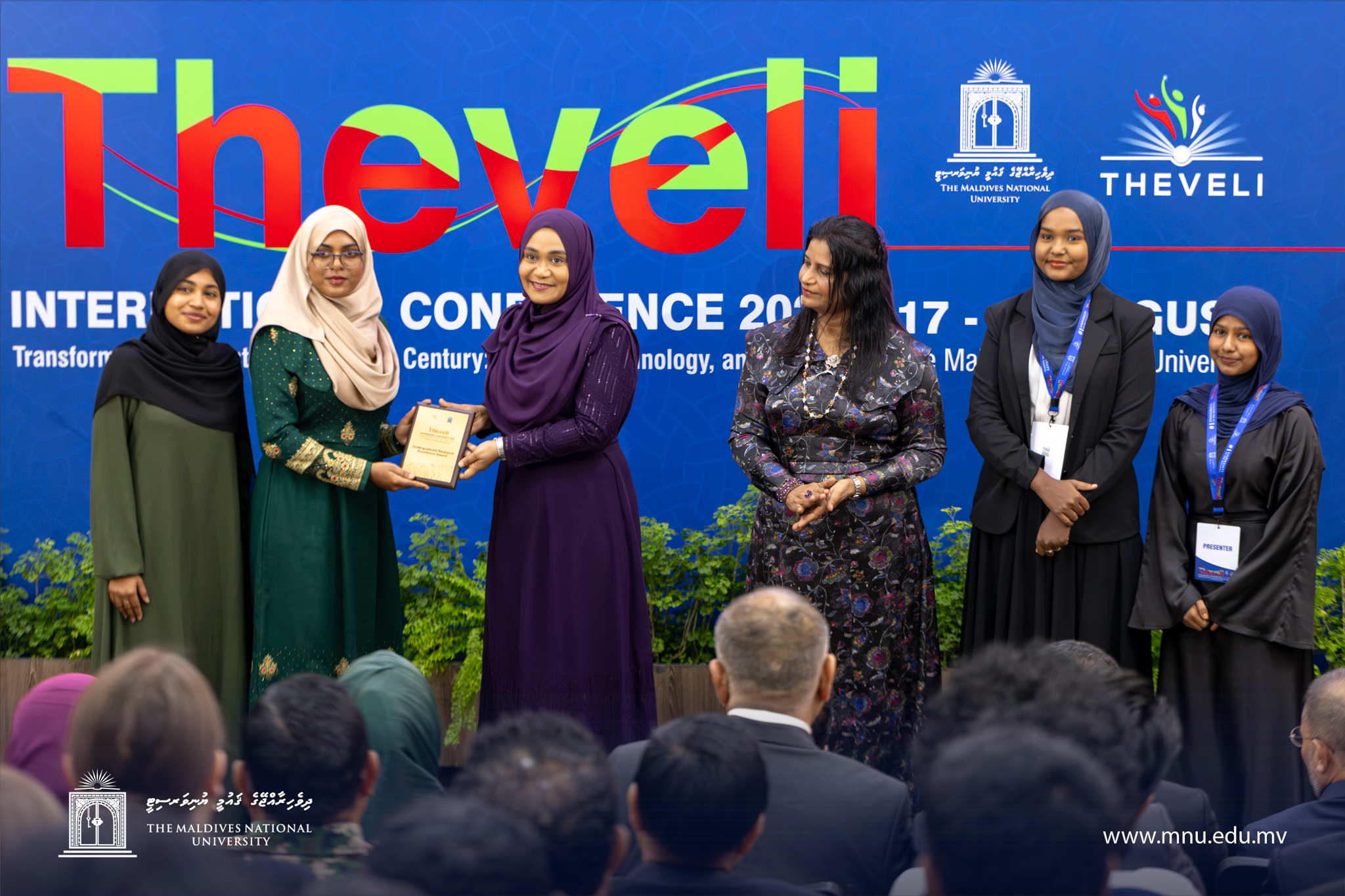
Theveli 2026 further recognised research excellence through four awards: the Outstanding Paper of the Conference Award, Early Career Researcher Award, Undergraduate Research Excellence Award and Best Faculty Award. These awards recognise outstanding scholarly contributions and support a culture of research excellence, early-career researcher development and student engagement in research.
The international and interdisciplinary character of the conference was further strengthened through five distinguished keynote speakers whose expertise covered artificial intelligence and higher education, science and technology, global affairs, preventive healthcare, environmental sustainability and innovation. Their contributions provided participants with international perspectives on how universities and researchers can respond to rapidly changing global challenges.
The conference’s focus on interdisciplinary and transdisciplinary research also created opportunities to connect knowledge across academic disciplines and translate research into meaningful societal outcomes. By bringing together researchers from different fields, Theveli seeks to encourage collaboration and the development of evidence-based solutions to challenges that cannot be addressed by a single discipline alone.
The success of Theveli 2026 demonstrates the growing role of MNU as a national and international platform for research dissemination, academic collaboration, innovation and sustainable development. The strong international participation, multidisciplinary research agenda and emphasis on the SDGs reinforce the University’s commitment to generating knowledge that contributes to societal well-being, environmental sustainability, technological advancement and inclusive development.
As Theveli draws its ninth edition to a successful close, the conference continues to embody the meaning of its name, a Dhivehi word evoking the rays of the sun or moon dispersing across the sea. Through research, collaboration and knowledge exchange, Theveli continues to spread the light of knowledge beyond disciplinary and national boundaries, connecting researchers and communities in pursuit of transformative solutions for a more sustainable and resilient future.
Theveli 2026 has therefore strengthened MNU’s contribution to research and innovation, international knowledge exchange and the Sustainable Development Goals, while creating new opportunities for partnerships and research impact in the Maldives and beyond.