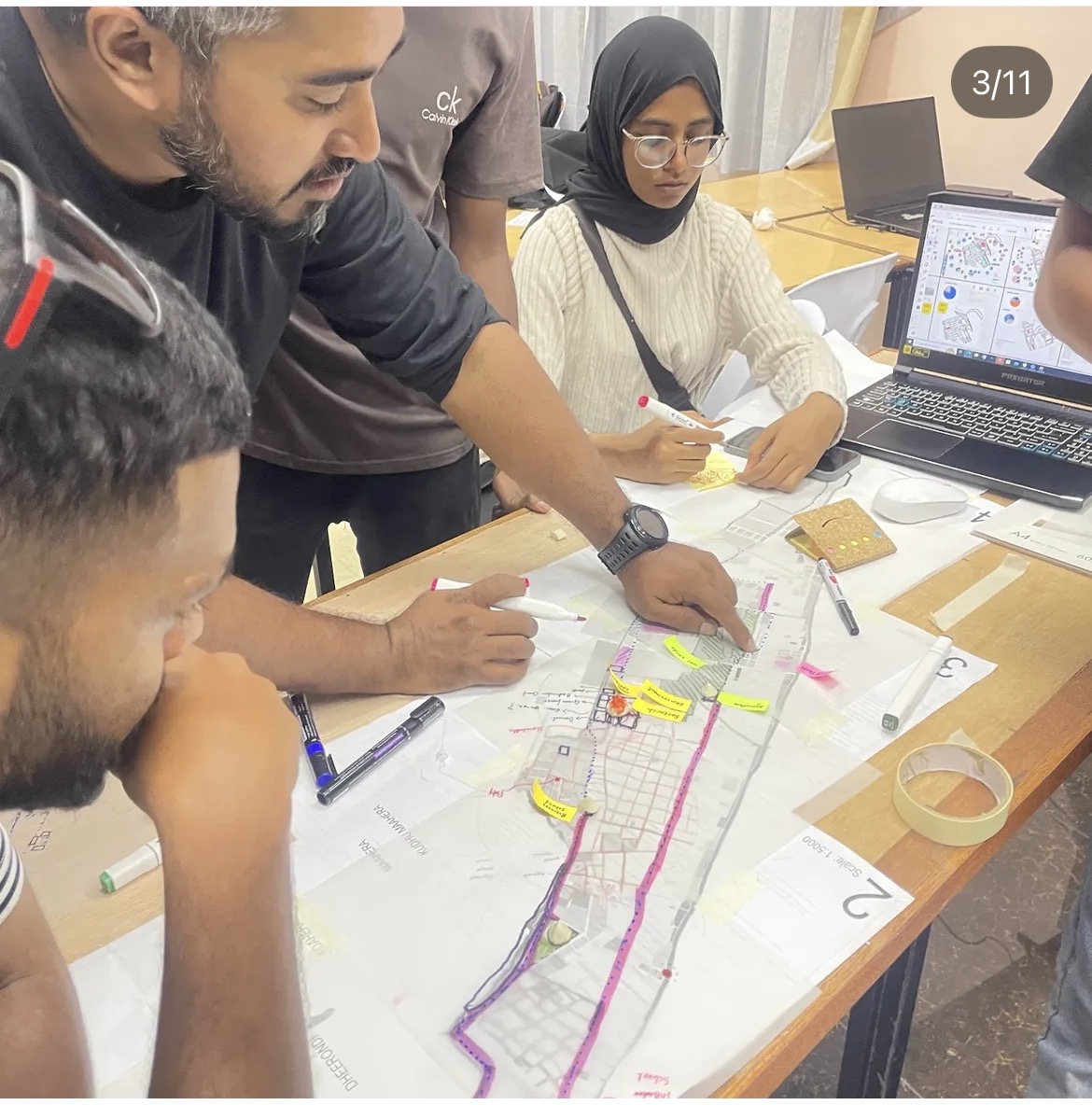
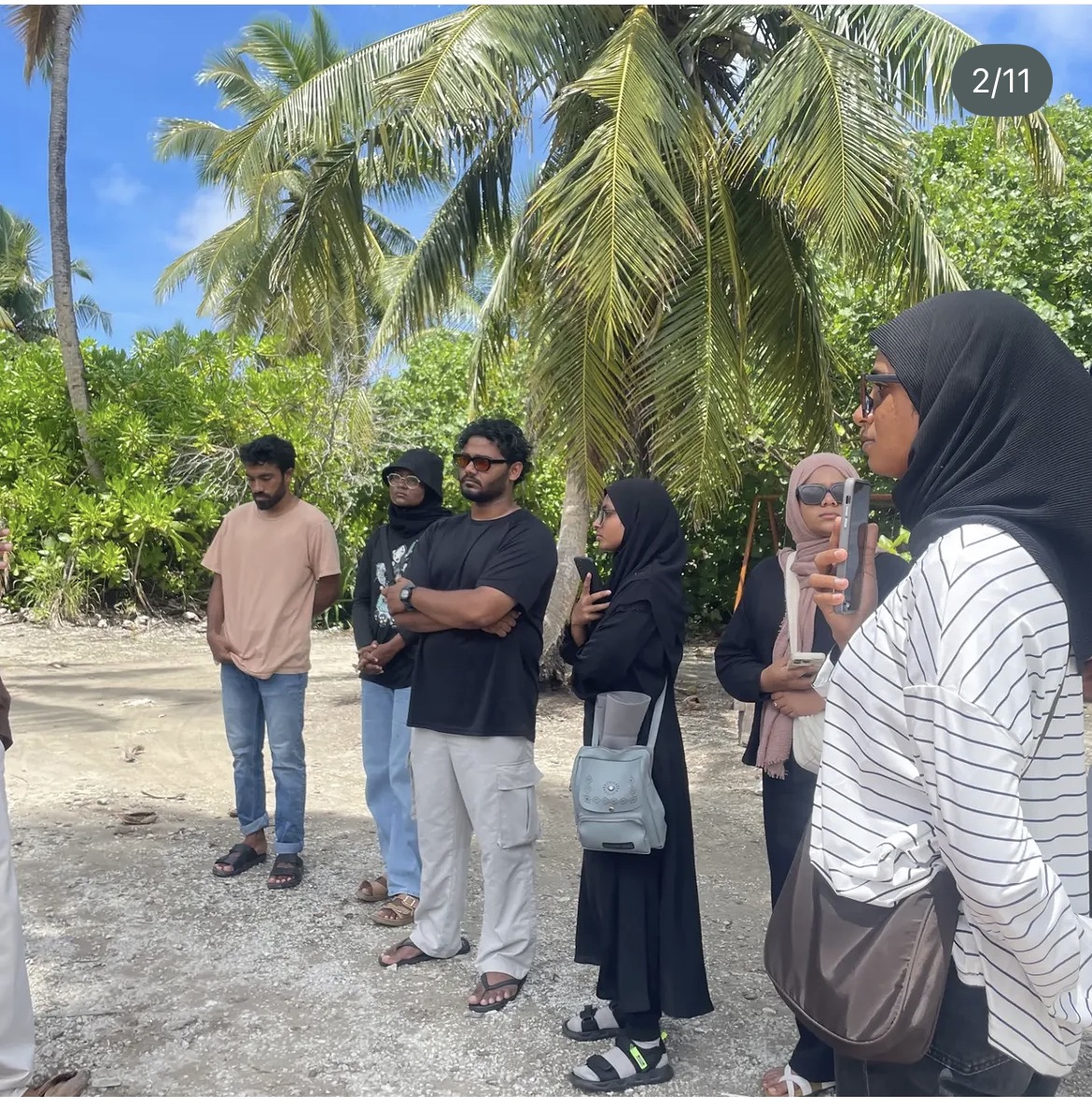
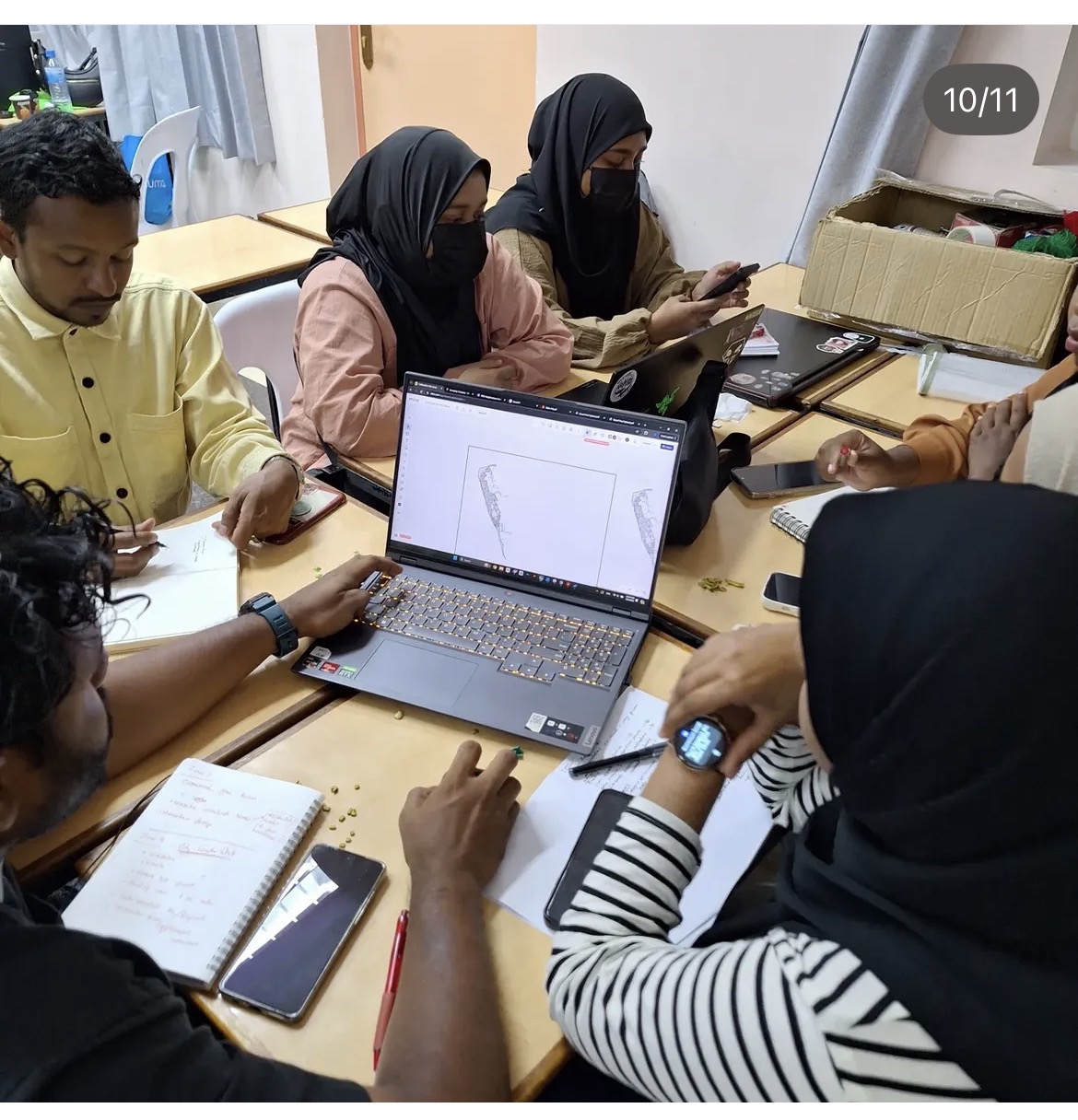
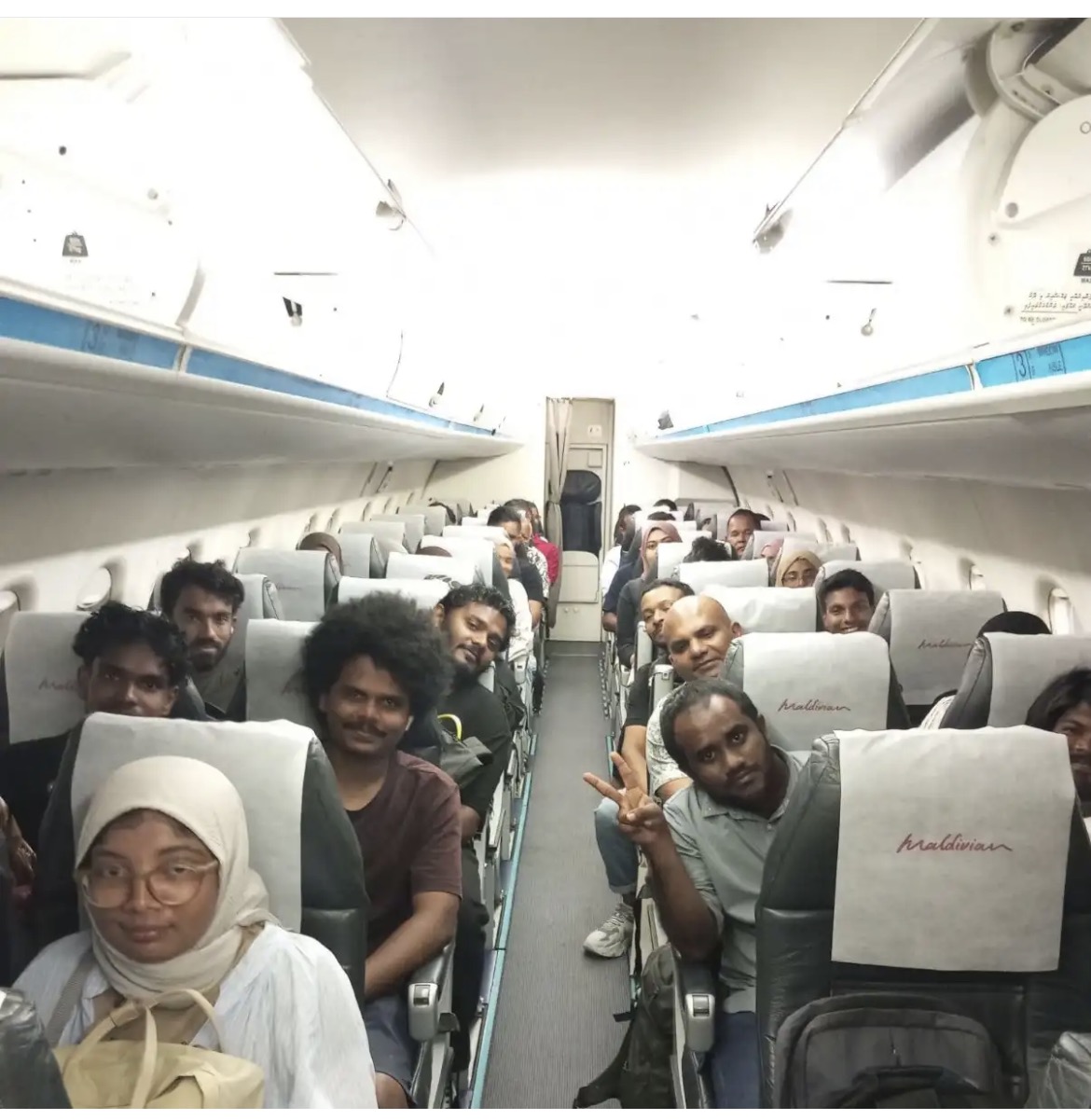
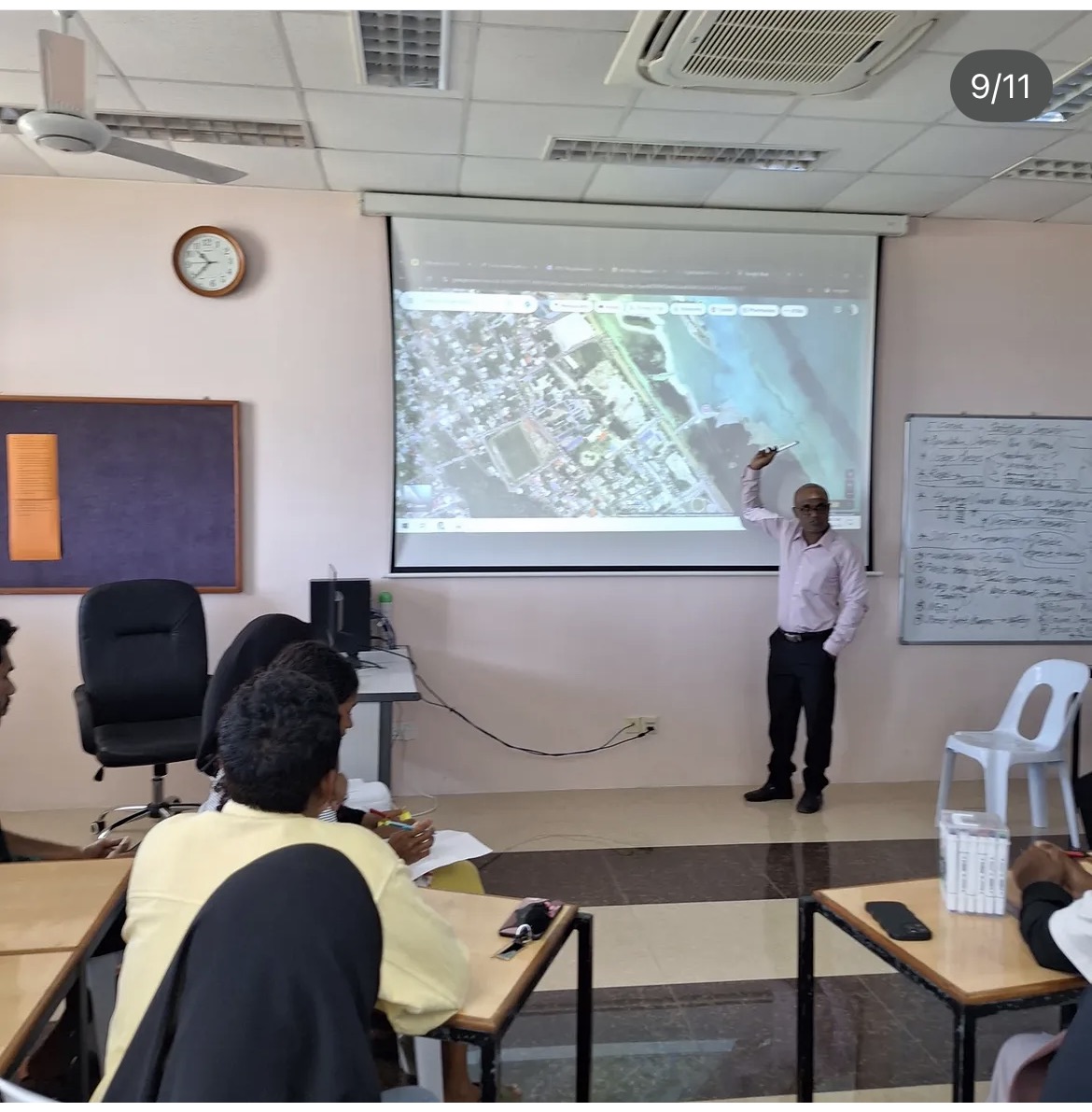
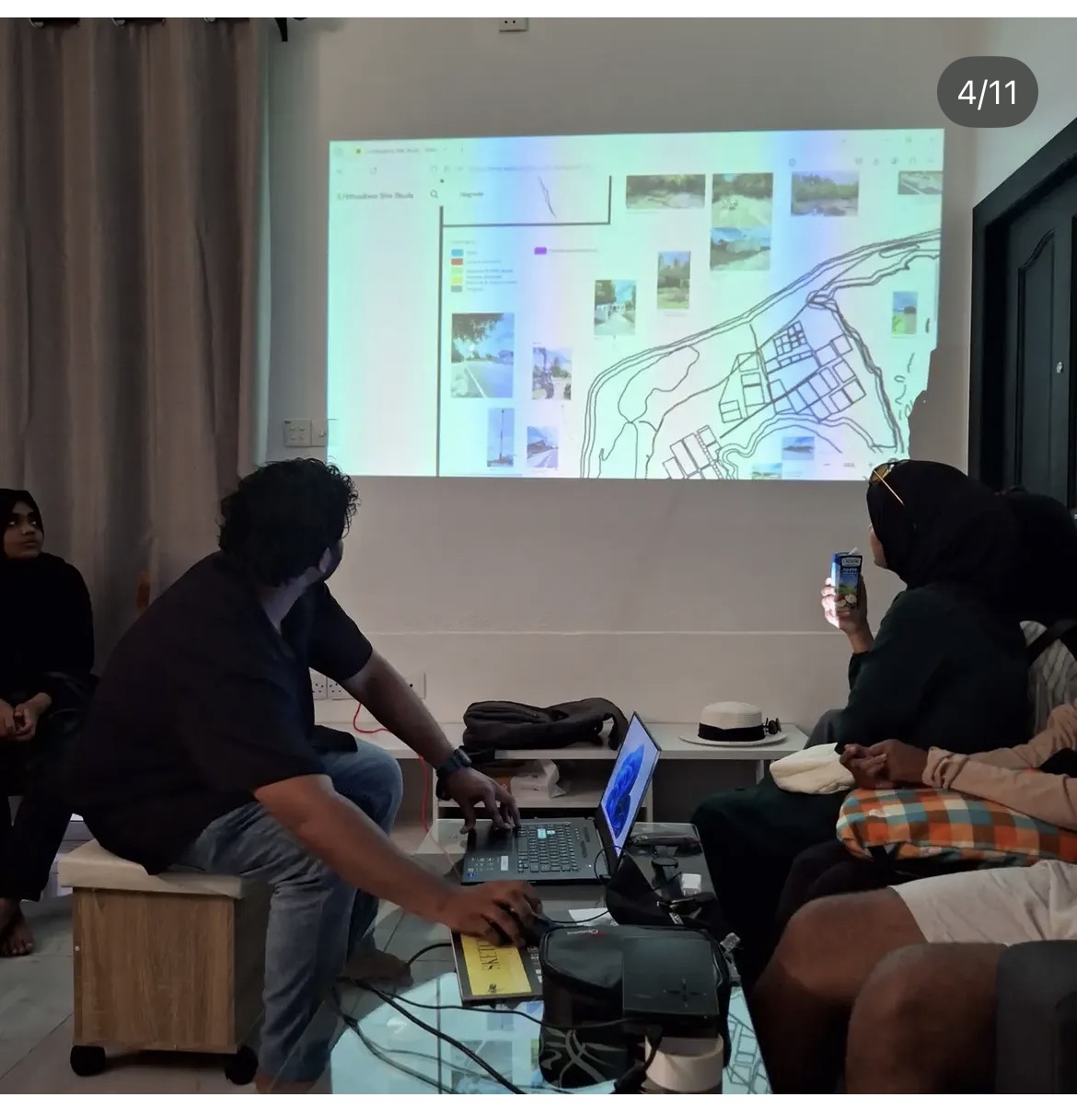
ARC 307 students undertook a field trip from 4–9 August 2024, to Adduu City as part of their design studio project. The field trip offered students an immersive and structured program of urban analysis and documentation. Students explored the island, documenting its layout, key features, and landmarks through mapping, photography, and sketching.
Over subsequent days, students conducted in-depth site analyses, examining the island’s infrastructure, including roads, sewage systems, potable water supply, and waste management, while also studying its natural and built environments. The program included observations of community life, rapid sketching sessions, and night-time site analysis to compare daytime and nocturnal activities and systems.
Students identified and analysed two study zones where old and new urban fabrics intersect, producing detailed documentation including aerial urban studies, façade details, and as-built drawings. Comparative studies of traditional and contemporary buildings were undertaken, alongside household interviews and surveys focusing on urban fabric, housing, economic activities, and the impact of tourism and academia.
The trip concluded with a synthesis session where students developed strategic plans for sustainable urban development based on their collected data and analyses.
The ARC 307 field trip aligns with SDG 4 (Quality Education) by providing students with hands-on, research-based learning in urban analysis, documentation, and sustainable design. It supports SDG 9 (Industry, Innovation and Infrastructure) through the study of urban infrastructure, building systems, and innovative approaches to sustainable development. The activity contributes to SDG 11 (Sustainable Cities and Communities) by examining urban planning, housing, public infrastructure, community needs, and the relationship between traditional and contemporary urban environments. It supports SDG 12 (Responsible Consumption and Production) by encouraging students to analyse waste management, resource use, water systems, and sustainable approaches to urban development. Finally, it advances SDG 17 (Partnerships for the Goals) through engagement with households, communities, and other stakeholders, promoting knowledge sharing and collaborative approaches to sustainable urban planning.