The Maldives National University (MNU) contributes to national policy development and public-sector decision-making through research undertaken in collaboration with government ministries, public institutions, regulatory bodies and other national stakeholders.
As the national university, MNU recognises the importance of independent, rigorous and policy-relevant research in addressing the social, economic, environmental and governance challenges facing the Maldives.
Through its faculties, schools, research centres and academic researchers, MNU undertakes research in areas including governance, law, public health, social protection, gender equality, housing, education, environmental sustainability and community development.
These research activities help generate evidence that can inform public policy, legislative discussions, institutional planning and improvements in public services.
1. Study on Senior Citizens and Ageing Well in the Maldives.
Research year: 2024
Research area: Social protection, ageing, health and well-being
MNU undertook a comprehensive national study, Study on Senior Citizens and Ageing Well in the Maldives, to examine the experiences, well-being and challenges of senior citizens and identify evidence-based recommendations for supporting healthy, active and dignified ageing.
The study employed a mixed-methods approach, combining stakeholder consultations, focus group discussions and interviews with a nationwide survey involving 1,178 respondents. Stakeholders included government ministries, local councils, health centres, women’s development committees, civil society organisations and community representatives.
The research examined physical, mental and social well-being, access to healthcare, social participation, age-friendly infrastructure and barriers experienced by older people, particularly those living in geographically dispersed island communities.
Its findings identified policy considerations relating to community-based healthcare, accessible public infrastructure, healthcare financing, social inclusion and intergenerational engagement.
The study contributes research evidence relevant to national policies and programmes addressing population ageing, social protection and the well-being of senior citizens.
Research references:
2. An Inquiry into the Elimination of All Forms of Violence Against Women in the Maldives
Government institution: People’s Majlis (Parliament of the Maldives)
Research area: Women’s rights, gender equality, violence prevention and legislative policy
MNU undertook research for the People’s Majlis examining the elimination of violence against women in the Maldives.
The study addressed issues relevant to women’s safety, protection from violence, gender equality and the legal and institutional responses required to safeguard women’s rights.
Through this research, MNU contributed academic knowledge and evidence relevant to parliamentary consideration of violence against women and the strengthening of legislative and policy responses.
The study illustrates the University’s role in supporting the national legislature through policy-focused research on issues of significant public importance.
It contributes to SDG 16, particularly promoting justice, accountable institutions, and inclusive decision-making, and to SDG 5 – Gender Equality, particularly eliminating violence against women and girls.
3. WHO STEPS Survey on Risk Factors for Noncommunicable Diseases
Government partners: Health Protection Agency and Ministry of Health
International partner: World Health Organisation
MNU conducted the Maldives STEPS Survey 2020–2021 for the Health Protection Agency, in collaboration with the World Health Organisation and the Ministry of Health.
The nationwide study examined risk factors associated with noncommunicable diseases, including tobacco use, alcohol consumption, dietary habits and other behaviours associated with cardiovascular diseases, diabetes, chronic respiratory diseases and cancer.
The research also addressed mental health, addiction, injuries and access to healthcare.
The findings provide nationally relevant evidence for public health planning, disease prevention strategies, healthcare priorities and evidence-informed health policy.
4. Comprehensive Housing Market Study for the Greater Malé Region
Government-related partner: Housing Development Corporation
Academic partners: MNU and Islamic University of Maldives
The Housing Development Corporation, MNU, and the Islamic University of Maldives collaborated on the Comprehensive Housing Market Study for the Greater Malé Region.
The research examined housing conditions, housing demand and supply, affordability, demographic and geographic trends, housing finance and the challenges of meeting housing needs in the Greater Malé Region.
The study generated evidence relevant to housing policy, urban development, infrastructure planning and the provision of affordable housing.
This collaboration demonstrates how university research can support public-sector institutions in addressing complex national development challenges.
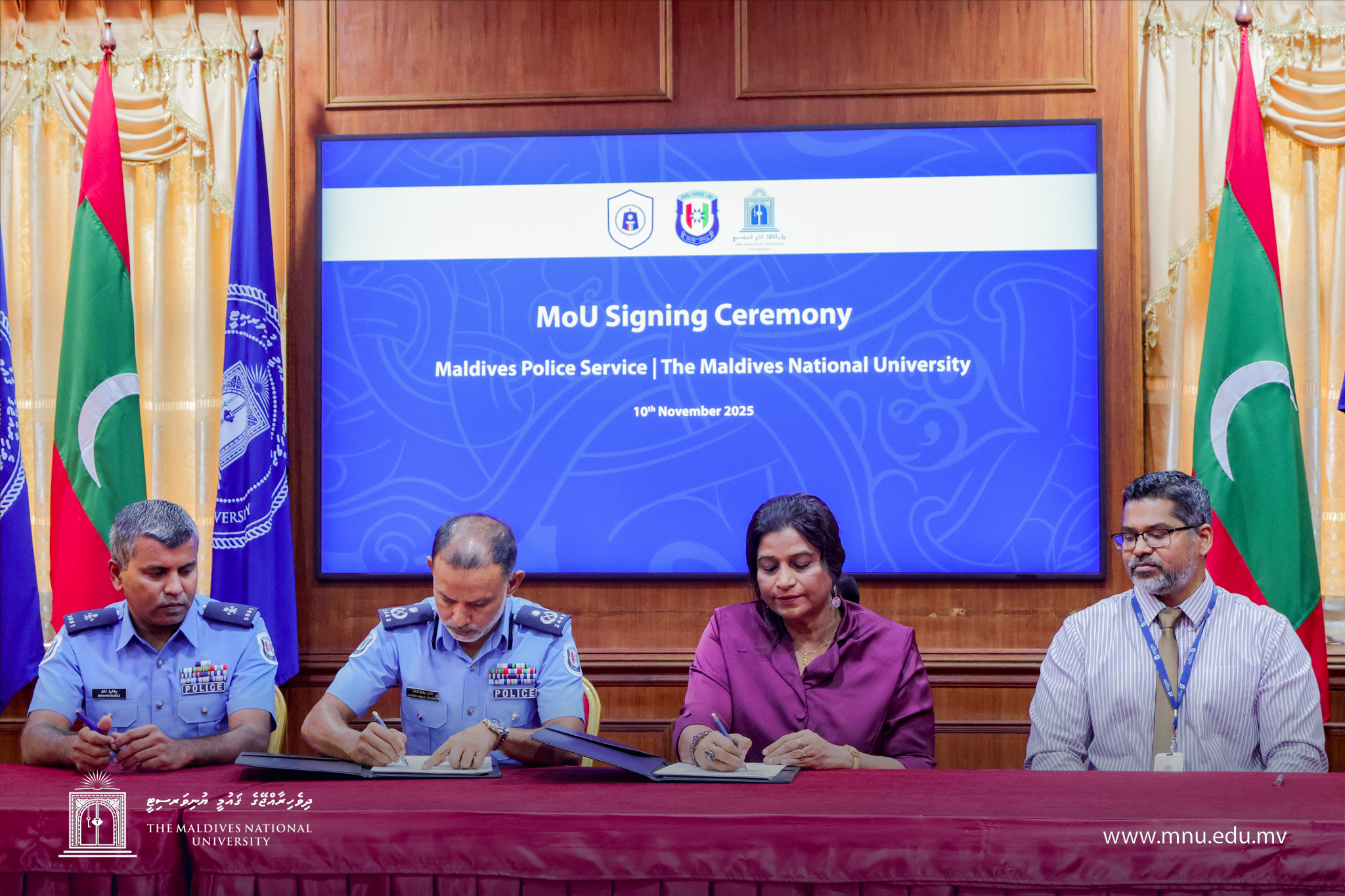
5. Maldives Police Service Public Perception Survey
Research area: Policing, public trust, institutional accountability and service delivery
MNU undertook a public perception study examining attitudes towards the Maldives Police Service and challenges experienced by members of the public in accessing police services.
The research involved document reviews, stakeholder consultations, survey design and focus-group discussions to investigate public perceptions and experiences.
The findings provide evidence relevant to police service delivery, public confidence, accessibility, institutional responsiveness and improvements in public services.
The study contributes to understanding the relationship between public institutions and the communities they serve.
6. Research on Decentralisation and Local Governance in the Maldives
Research area: Local governance, decentralisation and public administration
MNU undertook research examining perceptions, experiences and challenges associated with decentralisation in the Maldives.
The study considered the effectiveness of decentralised governance, the quality and accessibility of local services and public perceptions of local administrative arrangements.
The research provides insights relevant to strengthening local governance, improving public service delivery and supporting more responsive and inclusive decision-making.
Its findings contribute to policy discussions concerning the development of local government institutions and the effectiveness of decentralised administration.
7. Maldives Nitrogen Policy Report
Research area: Environmental policy, pollution management and sustainable development
The Maldives Nitrogen Policy Report: Scientific Evidence, Current Initiatives and Policy Landscape examines nitrogen pollution, emissions, existing policy measures and environmental management challenges in the Maldives.
The research analyses scientific evidence, policy trends and relevant national and international initiatives.
The report contributes to understanding the country’s environmental policy landscape and provides information relevant to pollution management, environmental protection and sustainable development planning.
8. Livebait Fishery of the Maldives
Research area: Fisheries policy, marine resource management and sustainable development
MNU’s research on livebait fishing grounds in the central and southern atolls examined traditional fishing locations, fisher perceptions and challenges affecting access to marine resources.
The study mapped fishing grounds and considered the implications of tourism development and competing uses of marine spaces.
The research provides evidence relevant to fisheries management, marine spatial planning, environmental impact assessment and the sustainable use of marine resources.
Strengthening the Research–Policy Connection
MNU recognises that research can make an important contribution to government decision-making when it addresses clearly identified policy challenges and produces evidence relevant to public institutions.
The University’s policy-focused research contributes to:
-
Evidence-informed policymaking: Providing research findings and analysis relevant to government decisions and national development priorities.
-
Legislative and institutional development: Supporting parliamentary and public-sector consideration of legal, social and governance issues.
-
Public service improvement: Examining community needs, institutional performance and access to essential services.
-
Social inclusion and well-being: Generating evidence on issues affecting women, senior citizens, young people and vulnerable communities.
-
Environmental sustainability: Supporting informed approaches to environmental management, climate resilience and sustainable resource use.
-
National research capacity: Strengthening collaboration between academic researchers, government institutions and other stakeholders.
Through these contributions, MNU seeks to strengthen the use of research evidence in policy development, institutional planning and public administration.
Supporting SDG 16: Peace, Justice and Strong Institutions
MNU’s policy-focused research contributes to SDG 16 – Peace, Justice and Strong Institutions, particularly:
Target 16.6: Develop effective, accountable and transparent institutions at all levels.
Target 16.7: Ensure responsive, inclusive, participatory and representative decision-making at all levels.
Research undertaken with public institutions contributes to the evidence available for informed policy development, effective governance and improvements in public services.
MNU’s research also supports other Sustainable Development Goals, including SDG 3 (Good Health and Well-being), SDG 5 (Gender Equality), SDG 10 (Reduced Inequalities), SDG 11 (Sustainable Cities and Communities), SDG 13 (Climate Action) and SDG 14 (Life Below Water).
These contributions reflect MNU’s SDG 16 commitment:
Stronger Together: Shared Voices, Shared Decisions.
MNU recognises that strong public institutions benefit from independent research, academic expertise, collaboration and evidence-informed decision-making.
Research Publications and Reports
Further information on MNU’s research projects and publications is available through:
View projects with government leading to research.
- National College of Policing and Law Enforcement (NCPLE) Professional Development Lecture
- SSSS Security Research Roundtable with Maldives’ national security agencies
- National College of Policing and Law Enforcement(NCPLE) Professional Development Lecture
- Lecture at the Australian High Commission and The Foreign Service Institute of Maldives (FOSIM)