The Maldives National University (MNU) is committed to ensuring that its research contributes meaningfully to national development, informs public policy and supports evidence-based decision-making. As the national university of the Maldives, MNU recognises its responsibility to generate knowledge that responds to the country’s unique challenges, strengthens national institutions and improves the well-being of communities.
Through its academic faculties, research centres and partnerships with government institutions, local councils and other stakeholders, MNU connects academic research with national priorities, helping bridge the gap between knowledge generation, policy development and practical solutions.
Research Aligned with National Development Priorities
MNU’s research agenda is guided by the development needs of the Maldives and the United Nations Sustainable Development Goals (SDGs). The University’s Strategic Plan 2026–2030 places particular emphasis on strengthening research and innovation that contribute to national development and address emerging societal challenges.
Research priorities encompass areas of particular importance to the Maldives, including climate change and environmental resilience, marine and coastal ecosystems, fisheries and agriculture, food and water security, public health, education, cultural heritage, governance and social development.
As a small island developing state, the Maldives faces challenges arising from its geographical dispersion, vulnerability to climate change, dependence on marine resources and the need to provide equitable services across island communities. MNU encourages interdisciplinary research that responds to these challenges and contributes locally relevant knowledge to national planning and decision-making.
Supporting Evidence-Based Government Policy
MNU contributes to national policymaking by providing research findings, technical expertise and academic perspectives to government ministries, statutory bodies and public institutions.
Academic staff participate in national councils, government committees, technical advisory groups and specialist working groups, contributing expertise in areas such as environmental protection, water security, climate change, health, education, cultural heritage and national research development.
MNU academics contribute to bodies including the National Research Council, National Health Research Council and Dhivehi Academy, as well as government committees concerned with environmental management and national development.
These engagements provide opportunities for academic knowledge and research evidence to inform policy discussions, technical assessments and institutional decision-making.
Research Funding for National Impact
MNU supports research addressing national priorities through institutional research grants and collaborative funding initiatives.
The University’s University Research Grants (URG) programme encourages academic staff and research students to undertake studies that address national development challenges and contribute to the SDGs.
In 2026, MNU awarded more than MVR 1.4 million through its University Research Grants and University Book Writing Grants programmes, supporting research and scholarly publications across disciplines.
MNU also administers
the National Research Fund: Emerging Research Grants (NRF-ERG) programme, introduced in 2025 with support from the National Research Council. The programme supports research relevant to national development, including studies addressing public health, governance, law, cybersecurity, technological innovation and other emerging priorities.
These initiatives strengthen national research capacity while creating opportunities for research findings to contribute to policy, professional practice and community development.
Collaboration with Government and National Institutions
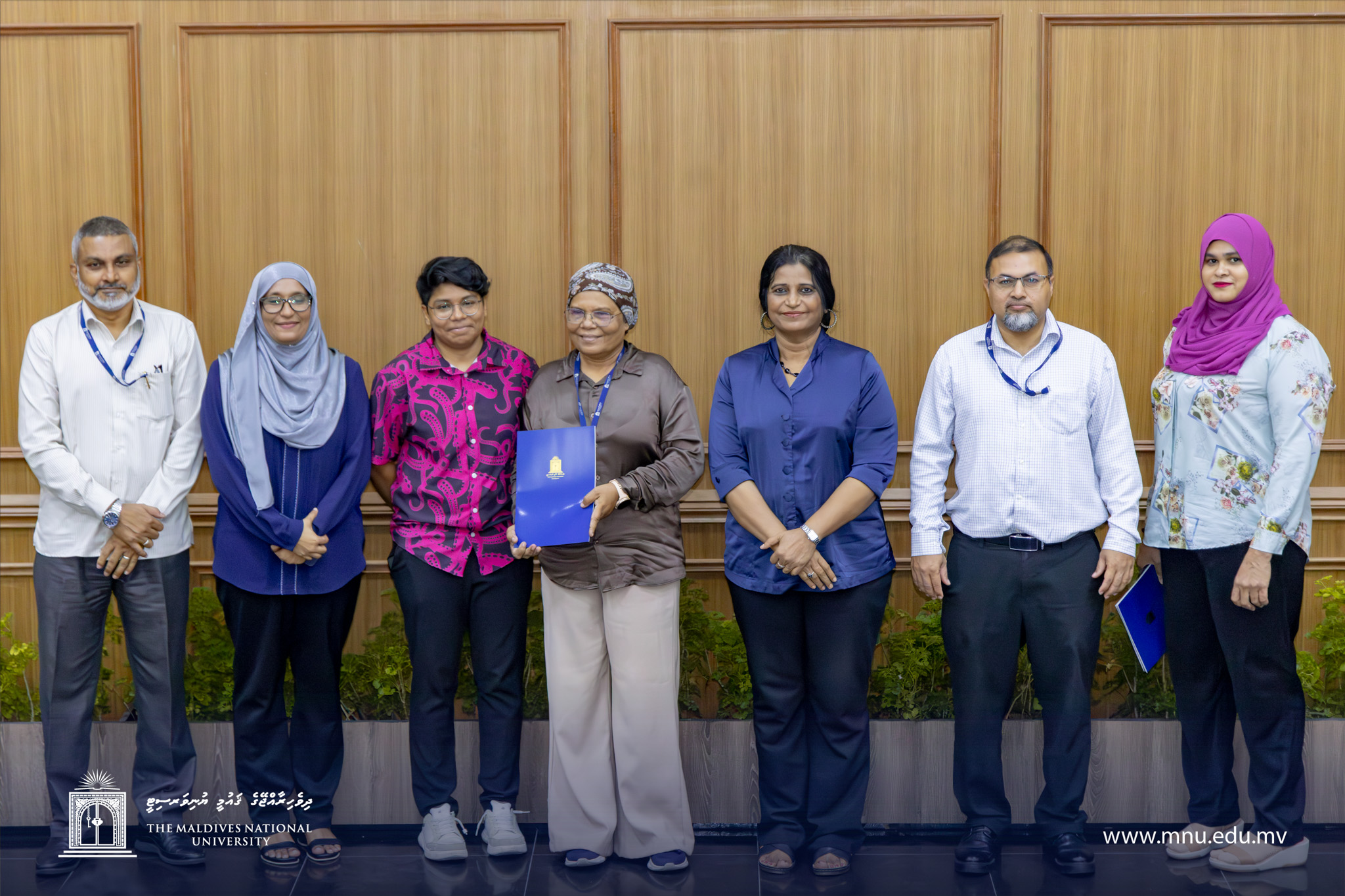
MNU works with government ministries, statutory authorities and national organisations to strengthen research collaboration, knowledge exchange and institutional capacity.
Through these partnerships, MNU seeks to strengthen connections between academic expertise and the institutions responsible for delivering public services and implementing national policies.
Research for Island Communities and Local Development
MNU recognises that national development must respond to the needs and circumstances of communities throughout the Maldives.
The University works with island and city councils to promote research, environmental conservation, community development and locally relevant solutions.
By working with local authorities and communities, MNU seeks to ensure that research reflects local knowledge, responds to island-specific challenges and contributes to sustainable development beyond the capital.
Strengthening the Connection Between Research, Policy and Society
MNU believes that the value of university research extends beyond academic publications. Research can contribute to society when findings are shared, discussed and applied to address real-world challenges.
Through policy engagement, academic publications, research conferences, public discussions and institutional partnerships, MNU promotes
the exchange of knowledge between researchers, policymakers, practitioners and communities.
These efforts contribute to SDG 16: Peace, Justice and Strong Institutions, particularly by supporting informed decision-making, strengthening institutional capacity and encouraging collaboration between academia and public institutions.
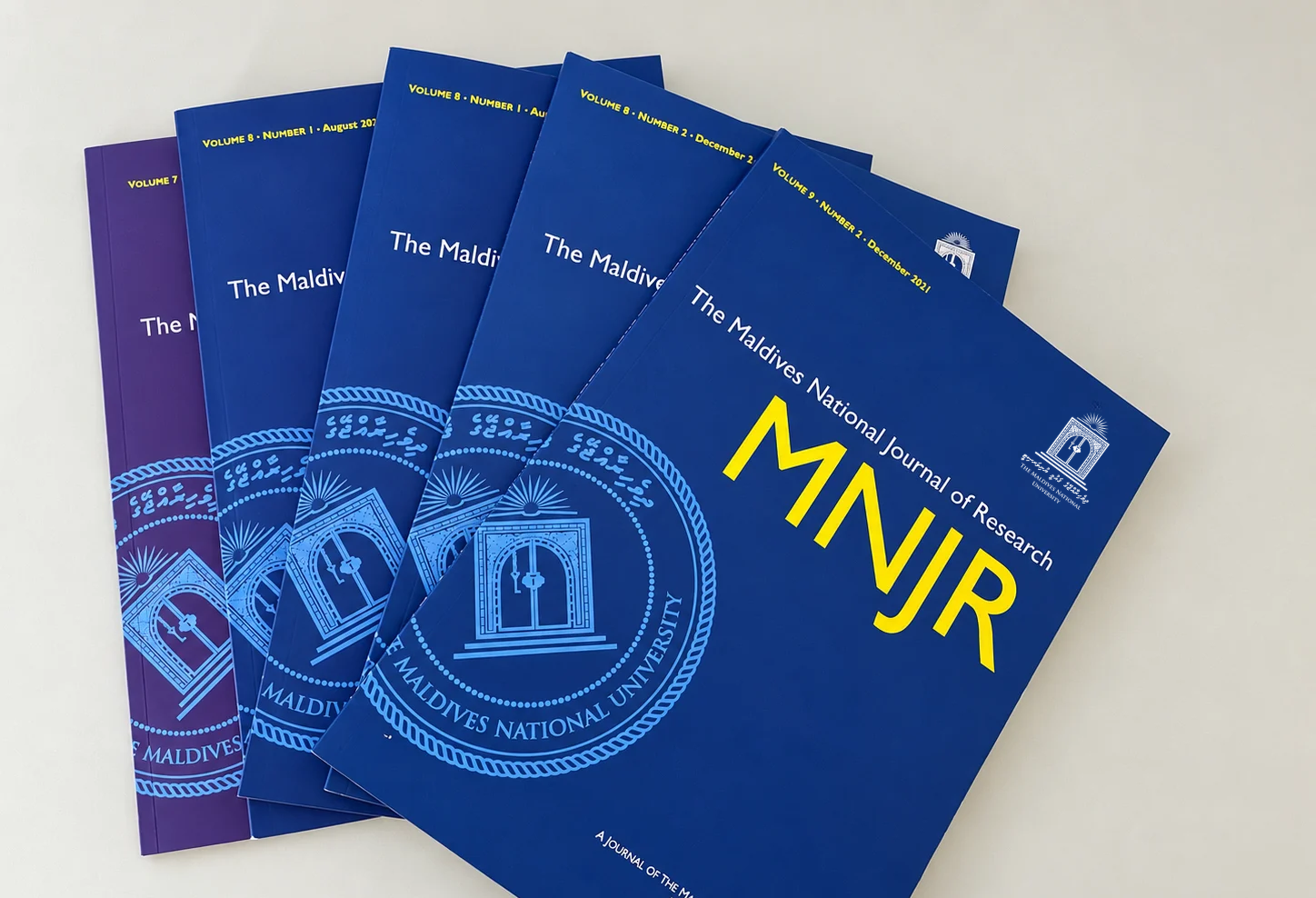
By connecting university research with national priorities, MNU seeks to contribute to a Maldives where public decisions are increasingly informed by reliable evidence, local expertise and a shared commitment to sustainable development. View MSO online journal
- Climate Resilient Agriculture for Food Security in Maldives Conference
- Strengthening Research on Climate Change
- Climate Resilient Agriculture for Food Security in Maldives Conference
- (RECOVER)
- MNU Climate and Environmental Research Framework
Research collaborations with ministries, government agencies and local councils
- National College of Policing and Law Enforcement (NCPLE) Professional Development Lecture
- SSSS Security Research Roundtable with Maldives’ national security agencies
- National College of Policing and Law Enforcement(NCPLE) Professional Development Lecture
- Lecture at the Australian High Commission and The Foreign Service Institute of Maldives (FOSIM)
Relevant funded research projects and research student work addressing Maldivian priorities.
Prevention of Marine Litter in the Lakshadweep Sea (PROMISE)is a 4-year project (2020-2024) supported by the European Union (EU) under the SWITCH Asia Programme. Tourism industries have been identified as major contributors to marine litter due to high consumption rates of fast-moving consumer goods (FMCG) and convenience products wrapped in single-use plastic packaging. In many touristic regions of the global south, this is aggravated by the absence of effective policy frameworks, a lack of consumer awareness and insufficient capacities of local authorities to handle the increasing solid waste.
The Maldives marine hypoxia and land-based pollution project is funded by the GEF with a grant of USD 4.5 million and supported by over USD 49 million USD in pledged in‑kind contributions. It is one of 13 country projects under the global USD 109 million GEF-8 Clean and Healthy Ocean Integrated Program (CHO IP), led by Food and Agriculture Organisation of the United Nations (FAO) in collaboration with Asian Development Bank (ADB), Development Bank of Latin America and the Caribbean (CAF) and European Bank for Reconstruction and Development (EBRD), and other partners.
View 2025 Research Report.