Recreational Fishers’ Seminar
 The Maldives National University (MNU), through its College of Fisheries and Ocean Sciences (CFOS), organised a Recreational Fishers’ Seminar to promote sustainable fisheries management through community engagement and knowledge exchange. The seminar brought together 32 recreational fishers and 11 researchers, providing a platform for dialogue on fisheries sustainability, responsible fishing practices and the role of local communities in marine resource management.
The seminar encouraged recreational fishers to share their experiences, local ecological knowledge and perspectives on the future of fisheries in the Maldives. By bringing together scientific expertise and community knowledge, the initiative supported a participatory approach to fisheries management, recognising the importance of local involvement in developing effective conservation strategies and addressing gaps in fisheries data.
The initiative contributes to Sustainable Development Goal 14 (Life Below Water) by promoting ocean literacy, responsible use of marine resources and community participation in fisheries conservation. It particularly supports SDG Target 14.4, which focuses on sustainable fishing and the prevention of overfishing, by strengthening awareness, dialogue and collaboration between researchers and fishing communities.
Through this engagement, MNU continues to strengthen connections between scientific research and local communities, supporting more inclusive and evidence-informed approaches to the sustainable management of marine resources in the Maldives.
MNU Research Supports Sustainable Tuna Fisheries Through Livebait Resource Assessment and Management
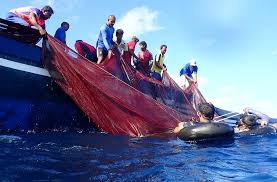
The Maldives National University (MNU) conducted a research project titled “Livebait Fishery of the Maldives: Fishing Grounds in the Central and Southern Atolls, Fisher Perception and Current Trends in Fishery”, contributing to scientific understanding of the marine resources that sustain the country’s tuna fisheries. The research was supported through MNU Research Grant URG-2021-L-AS04 and implemented in collaboration with the International Pole and Line Foundation (IPNLF), with contributions from the Maldives Marine Research Institute (MMRI). The findings were published in a comprehensive research report in September 2023.
Livebait fisheries are an essential component of the Maldives’ traditional pole-and-line and handline tuna fisheries, which provide an important source of food, income, and employment for island communities. Small pelagic and reef-associated fish collected from coral reefs, reef slopes, and atoll lagoons are used to attract tuna during fishing operations. The long-term sustainability of these livebait resources is therefore closely linked to the continued productivity and viability of the country’s tuna fisheries.
The research investigated the distribution of livebait fishing grounds, fishing practices, resource availability, and challenges affecting sustainable harvesting. Through participatory mapping involving 120 respondents, the project identified important livebait fishing areas and documented their use across different seasons, fishing methods, and target species. The resulting spatial datasets and maps provide valuable baseline information that can inform fisheries management, marine spatial planning, and environmental impact assessments of coastal development activities.
The study also incorporated a fisher perception survey involving 106 respondents, alongside analysis of fisheries observer data. The research identified several challenges affecting the sustainability of livebait resources, including restricted access to traditional fishing grounds, habitat degradation, changes in harvesting techniques, and post-harvest mortality. Fishers also highlighted concerns regarding the increasing use of powerful underwater lights and the potential effects of coastal development and reclamation on livebait fishing areas.
Importantly, the research documented existing efforts among fishers to minimise livebait mortality through improved handling and bait-holding practices. It also explored opportunities for improving resource management, reducing waste, and evaluating the potential use of cultured livebait as an alternative supply source. These findings provide scientific evidence and stakeholder perspectives that can inform future approaches to more efficient and sustainable livebait utilisation.
By combining fisheries science, spatial mapping, and local ecological knowledge, the project contributes to strengthening the evidence base for sustainable fisheries management in the Maldives. The findings are relevant to protecting productive fishing grounds, improving resource-use efficiency, and supporting the long-term availability of marine resources required for tuna harvesting.
The initiative demonstrates MNU’s contribution to sustainable food production from aquatic ecosystems through applied fisheries research, community engagement, and the generation of scientific knowledge relevant to responsible harvesting. By supporting a better understanding of the resources underpinning Maldivian tuna fisheries, the research contributes to national efforts towards sustainable seafood production, food security, and the protection of marine-based livelihoods.
A new study is now being conducted in conjunction with this research to map the livebait fishing grounds in the northern seven Atolls of Maldives -Haa Alif to Lhaviyani Atoll. The PI for this research is Mariyam Nashath.