Education and Research Supporting the Low-Carbon Transition
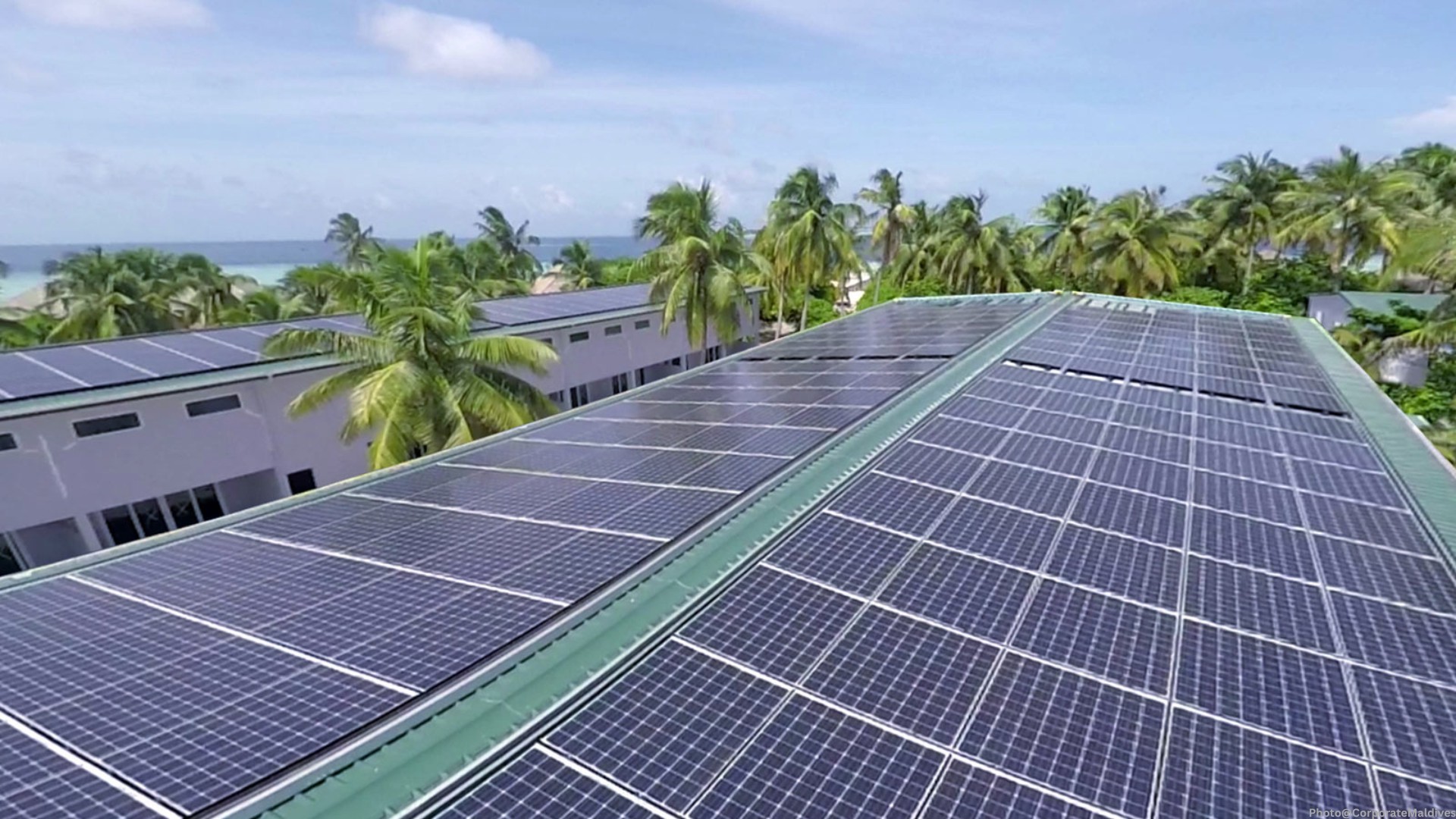
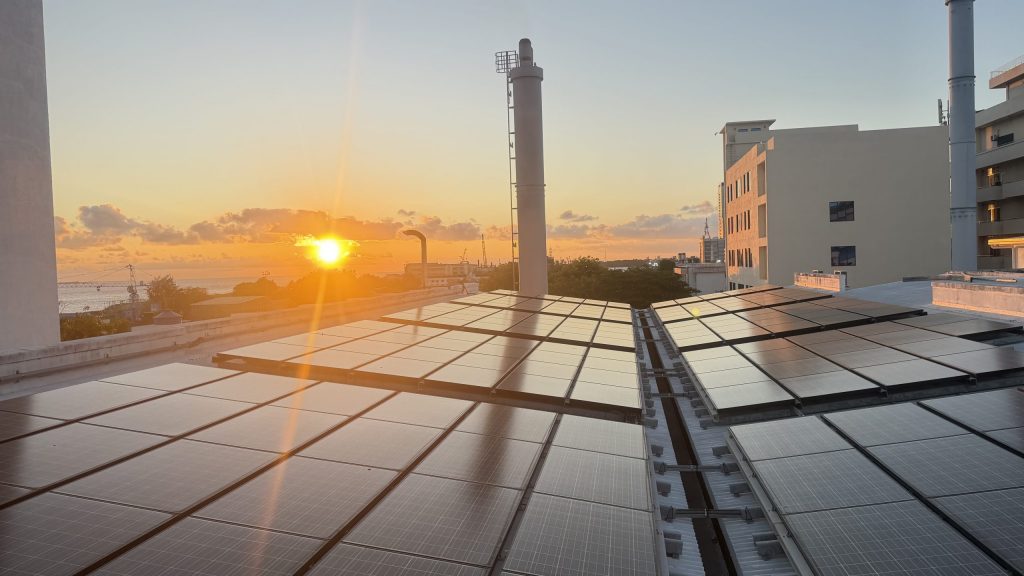
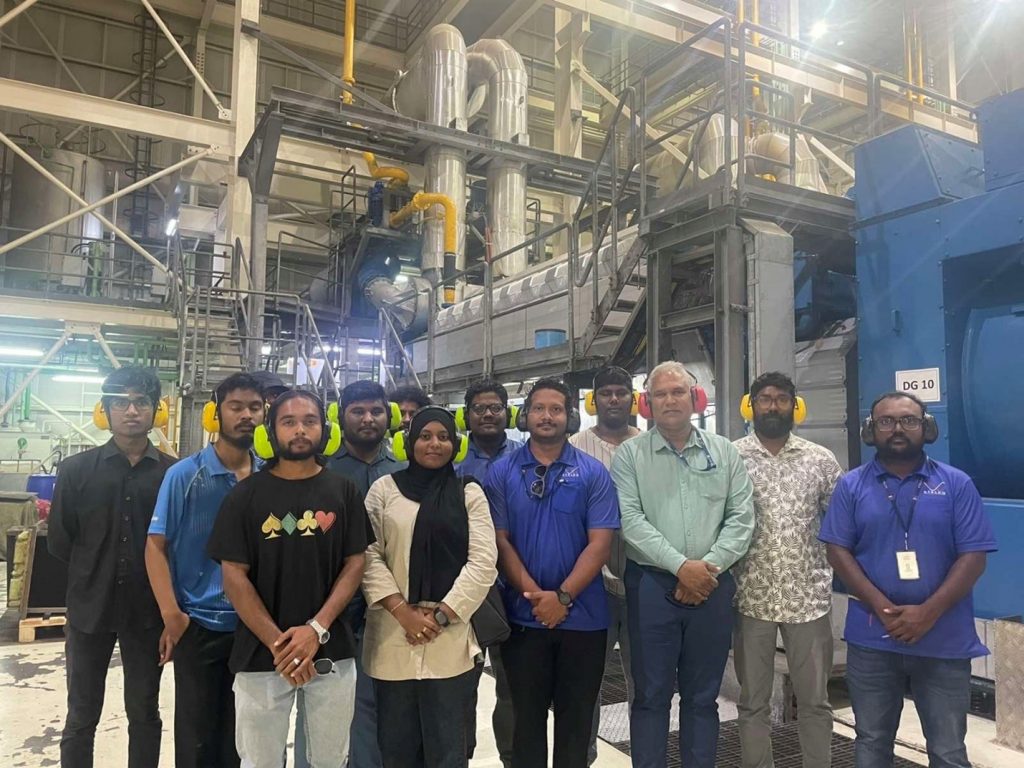
MNU integrates renewable energy and sustainable technologies into academic programmes and research activities. The Bachelor of Engineering in Electrical and Electronics Engineering (Hons), launched in 2025, provides opportunities for students to develop technical competencies in power systems, renewable energy, and related technologies. In addition, Master of Research in Engineering Science creates opporutnities for students to undertake research on renewable energy or related technologies. Practical learning is supported through industry engagement, including a March 2025 student visit to STELCO, where engineering students learned about solar photovoltaic systems, battery storage, grid stability, and renewable energy integration.
MNU also promotes research addressing energy efficiency and low-carbon development. In 2026, an MNU-led study titled “Analysis of Household Electricity Consumption for Cooling in Malé Region” received funding through the National Research Fund. The study aims to examine household cooling demand and identify opportunities for energy-efficient building design and electricity demand management, supporting more sustainable urban energy systems.
Advancing Low-Carbon Transport and Maritime Sustainability
MNU contributes to low-carbon transport research and capacity building through its Centre for Maritime Studies and other academic units. In September 2025, the Centre collaborated on a white paper on sustainable marine transport, examining the potential application of electric hydrofoil ferry technology to reduce the environmental impacts of conventional marine transport in the Maldives. MNU also participated in international training and knowledge exchange on greener shipping, including a 2025 workshop on greenhouse gas reduction and digital maritime training organised with the International Maritime Lecturers Association. The University’s Centre for Maritime Studies delivered a keynote presentation on building capacity for green and low-carbon shipping in Small Island Developing States. Earlier participation in professional training on greener shipping in 2023 further supported institutional capacity in alternative fuels, emerging maritime technologies, and the International Maritime Organization’s greenhouse gas reduction strategy.
Research Dissemination, Awareness, and International Collaboration
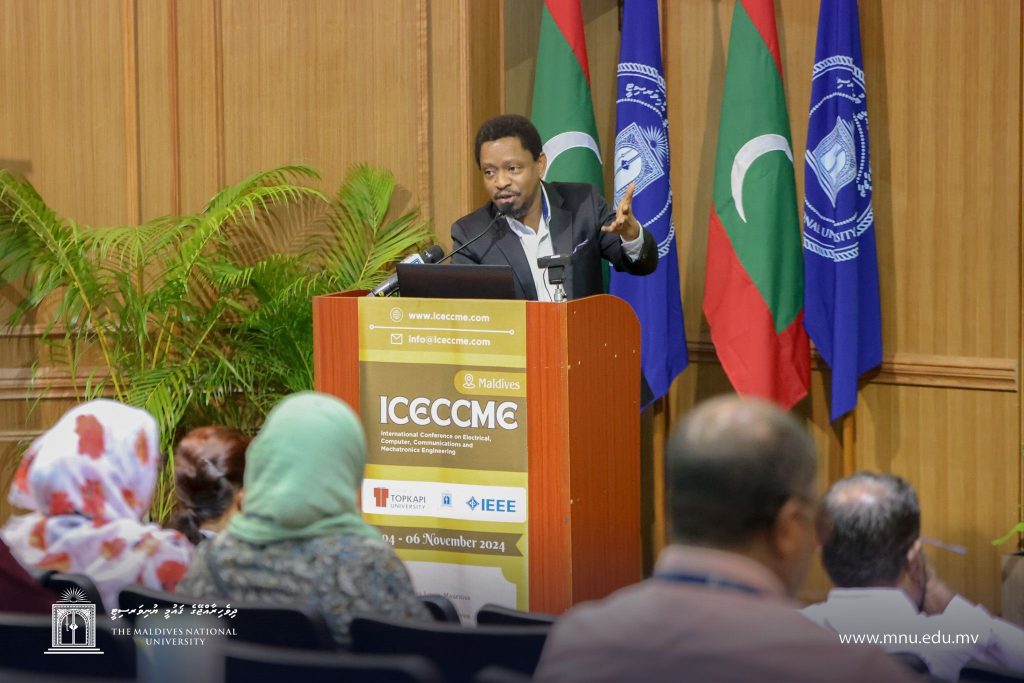
MNU promotes knowledge exchange on renewable energy and low-carbon technologies through academic conferences, public forums, and international partnerships. The International Conference on Electrical, Computer, Communications and Mechatronics Engineering (ICECCME) 2024 featured research on renewable energy systems, solar technologies, smart grids, and intelligent energy systems. The Theveli International Conference 2026 also provided a platform for research on renewable energy, sustainable development, climate action, and island circular economies.
Public engagement activities included the Ilmee Foavahi 2025 academic forum, which featured research on the adoption of green vehicles for last-mile delivery in Greater Malé, and the MNU Speaker Series featuring renewable energy pioneer Dr Ibrahim Nashid in September 2025, highlighting solar energy, clean transport, and green entrepreneurship.
In October 2025, MNU also became a member of the International Zero Carbon Island Cooperation Organisation, strengthening opportunities for international collaboration on low-carbon technologies, sustainable energy, transport, and climate-resilient island development.
Collectively, these initiatives demonstrate MNU’s commitment to supporting low-carbon development and climate change mitigation through renewable energy adoption, energy efficiency, education, research, professional training, and international collaboration.