Sustainability Policy: Green Building Standards for All New Construction
The Maldives National University (MNU) has demonstrated its commitment to sustainable infrastructure development through its Sustainability Policy, approved by the Academic Senate on 28 September 2025. The policy establishes a framework for promoting environmentally responsible campus operations and integrating sustainability principles into the university’s infrastructure development and management.
Section 4.1, Environmentally Sustainable Operations, explicitly commits MNU to “adopt green building standards for all new construction and renovations.” This commitment is further supported by provisions promoting energy efficiency, renewable energy adoption, water conservation, sustainable procurement practices, and responsible resource management, particularly in response to the environmental and resource constraints of island communities.
To strengthen institutional oversight and accountability, MNU established a Sustainability Committee, whose Terms of Reference came into effect on 26 October 2025. The Committee is responsible for developing, implementing, and monitoring sustainability initiatives, with progress reported to the Academic Senate at least annually.
These institutional commitments directly support SDG Indicator 11.4.8, demonstrating MNU’s formal commitment to ensuring that new construction and renovation projects incorporate sustainable building standards. While the policy establishes clear sustainability requirements, it does not currently specify an internationally recognised green building certification system, such as LEED, BREEAM, or EDGE, or define a formal mechanism for verifying compliance.
Sustainability Action Plan: sustainability criteria in new builds
Sustainability Action Plan: Integrating Sustainability into Infrastructure Development
The Maldives National University (MNU) reinforces its commitment to sustainable infrastructure development through its Sustainability Action Plan, a living document designed to translate institutional sustainability policies into measurable actions and implementation priorities.
Under Pillar 8, the Action Plan commits MNU to “integrate sustainability criteria into all new building projects, renovations, and maintenance contracts”, ensuring that environmental considerations are incorporated throughout infrastructure planning, development, and maintenance. The Plan also promotes green procurement practices, prioritising environmentally responsible materials, low-impact products, and local sourcing to minimise environmental impacts and support sustainable resource management.
To strengthen implementation and accountability, the Action Plan proposes the appointment of sustainability focal points across MNU campuses to coordinate initiatives, monitor progress, and facilitate institutional reporting.
These commitments directly support SDG 11.4.8 by establishing an institutional framework for applying sustainable building principles to new construction, renovations, and ongoing facilities management. Through this Action Plan, MNU demonstrates its commitment to integrating environmental sustainability into infrastructure development, procurement decisions, and campus operations.
Thinadhoo Campus Accommodation Development: Integrating Green Building Practices and Renewable Energy
The Maldives National University (MNU) demonstrates its commitment to sustainable infrastructure development through the integration of environmentally responsible building standards in its Thinadhoo Campus Accommodation Development Project.
In July 2024, MNU published an Expression of Interest (EOI) inviting proposals for the construction of accommodation facilities for more than 50 students at its Thinadhoo Campus. The project was completed in 2025, incorporating sustainability requirements into its development framework. These included green building practices, solar energy systems, and inclusive accessibility features, such as ramps, reflecting MNU’s commitment to environmentally sustainable, energy-efficient, and accessible campus infrastructure.
The development comprises a 31-room student accommodation block and a seven-room staff accommodation block, providing essential residential facilities to support the university community while promoting sustainable infrastructure development.
This initiative provides practical evidence supporting SDG Indicator 11.4.8, demonstrating MNU’s application of sustainability requirements in new campus construction projects. By incorporating green building practices, renewable energy solutions, and inclusive design principles, MNU strengthens its commitment to environmentally responsible infrastructure, resource efficiency, and the development of sustainable and inclusive learning environments.
Embedding Sustainability in Architectural Design: Research and Education
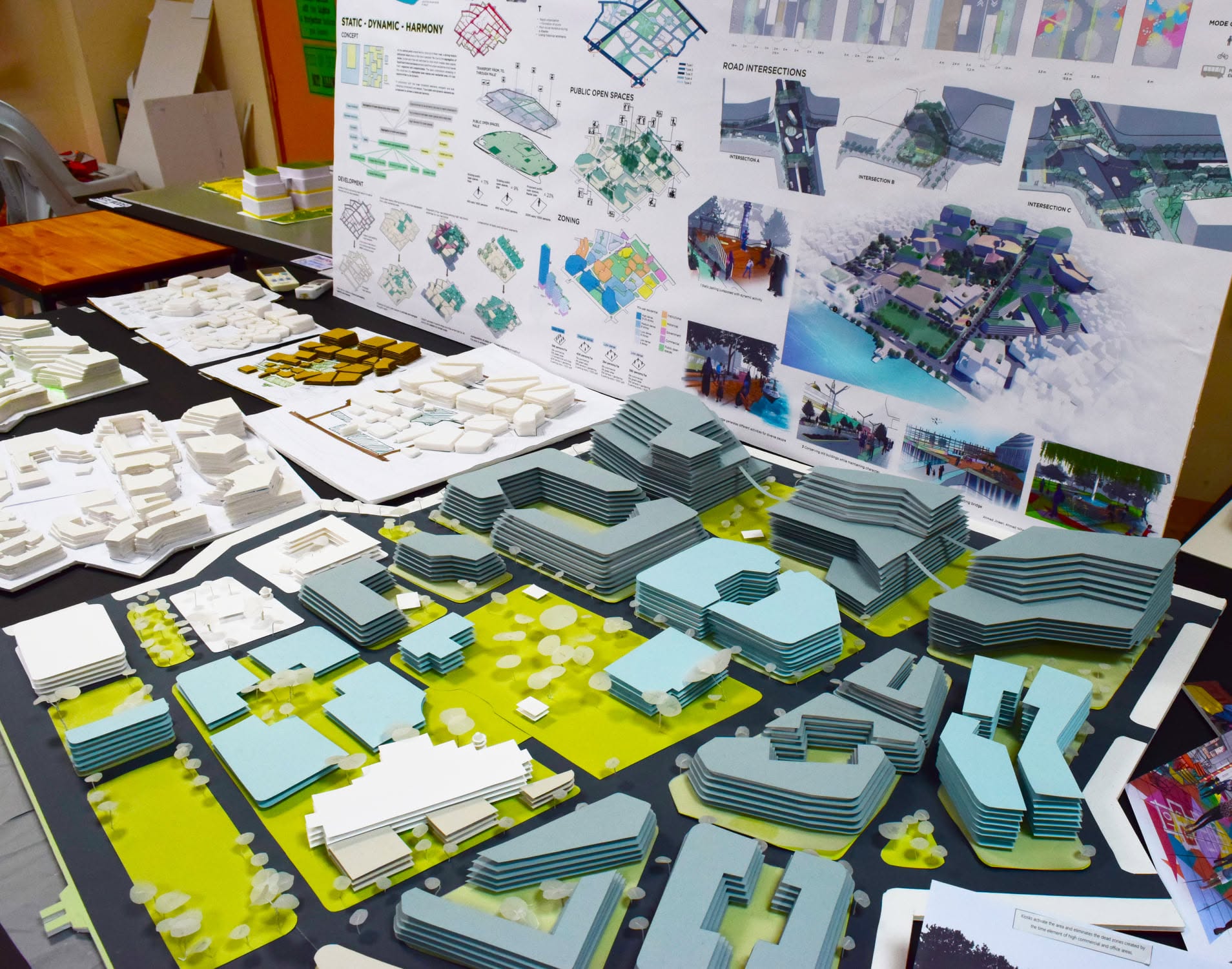
The Maldives National University (MNU) promotes sustainable building practices through research and architectural education. A study by Mohamed Shareef of the Faculty of Engineering, Science and Technology (FEST), titled “Embedding Sustainability in Architectural Design”, published in the Maldives National Journal of Research on 31 December 2025, examines the integration of sustainability principles into architectural design education. The study contributes to strengthening knowledge and skills in environmentally responsible building design, preparing future architects to advance sustainable construction practices in the Maldives.