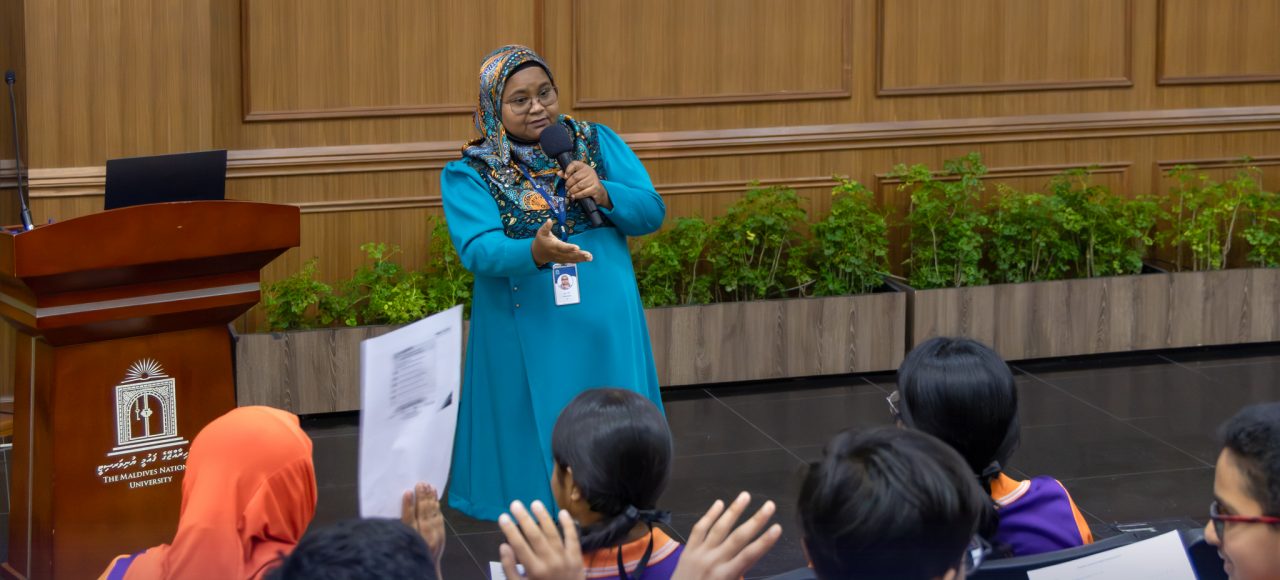
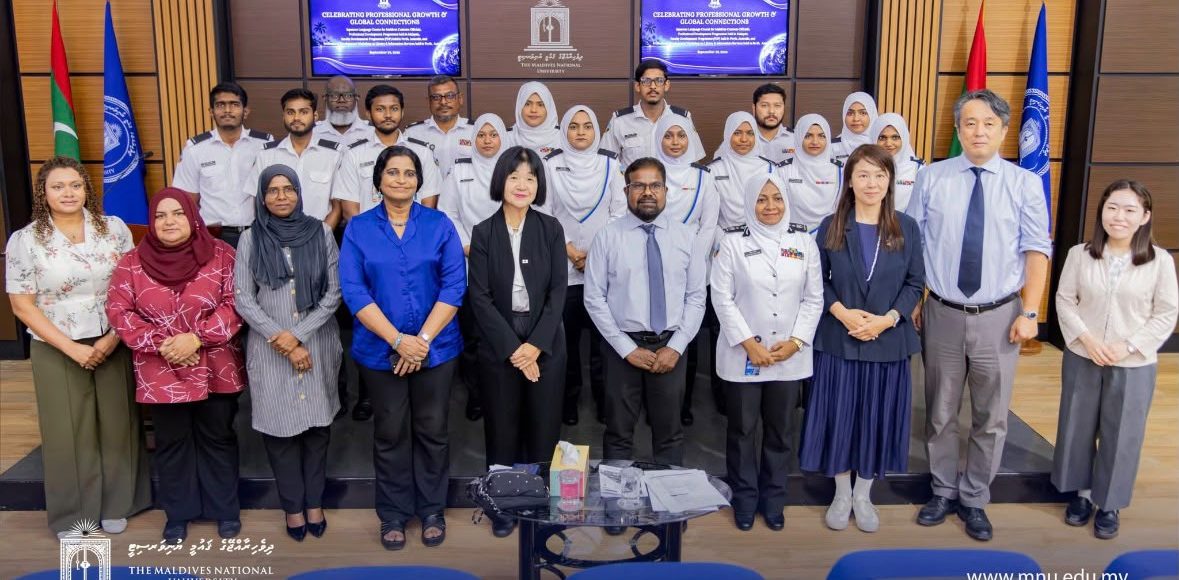
The Maldives National University (MNU) has opened its first internal conference dedicated specifically to teaching and learning, MNU-EDGE 2026, strengthening the University’s commitment to quality education, evidence-informed teaching and continuous improvement.
Delivering the keynote address, Vice Chancellor Aishath Shehenaz Adam challenged academics to look beyond what is taught and focus more closely on what students are actually learning.
Under the theme “How Do We Know They Are Learning?”, the keynote highlighted the importance of using evidence from student work, assessment, classroom participation, feedback and research to better understand learning and continuously improve teaching.
The Vice Chancellor emphasised that evidence-informed teaching does not mean allowing research to dictate how academics should teach. Rather, research and scholarship should be considered alongside professional judgement, disciplinary expertise, knowledge of students and the particular context in which learning takes place.
A key message of the address was the importance of academics remaining actively engaged with current research in their disciplines. As knowledge, professional practices and technologies continue to evolve, academics must regularly review not only how they teach, but also what they teach, to ensure students are learning from current knowledge and scholarship.
The keynote also addressed the rapidly changing higher education environment brought about by artificial intelligence. Rather than viewing AI simply as something to ban or embrace, academics were encouraged to reconsider what they want students to learn and whether existing assessments continue to provide reliable evidence of that learning.
The Vice Chancellor also encouraged staff to approach teaching innovation with purpose, stressing that new technologies, platforms or teaching methods do not automatically lead to better learning. The principle highlighted during the keynote was: “Innovate with purpose. Evaluate with evidence.”
A significant announcement during the keynote was the introduction of an MNU Teaching Innovation Grant. The new grant will support academics to investigate teaching and learning challenges, introduce approaches informed by evidence, and evaluate their impact on student learning. Collaboration across faculties and MNU campuses will be particularly encouraged.
The University will formalise the Teaching Innovation Grant scheme and issue a call for proposals shortly.
The Vice Chancellor also encouraged academics to view questions arising from their classrooms as opportunities for scholarly inquiry. Classroom-based questions can develop into collaborative investigations, presentations, research and publications, strengthening the relationship between teaching and research at MNU.
MNU-EDGE is envisioned as a platform where academics can openly share not only successful practices, but also approaches that did not work as expected and the lessons gained from them. Through reflection, research and collaboration, the University aims to build a culture in which colleagues learn from one another across disciplines and campuses.
Advancing the Sustainable Development Goals
MNU-EDGE 2026 directly contributes to the United Nations Sustainable Development Goals, particularly SDG 4 – Quality Education, by strengthening the quality and effectiveness of teaching and learning at MNU. Its emphasis on evidence-informed practice, current scholarship, reflective teaching, meaningful assessment and continuous improvement supports the University’s commitment to providing relevant and high-quality higher education.
The focus on teaching innovation and the new MNU Teaching Innovation Grant also supports SDG 9 – Industry, Innovation and Infrastructure, by encouraging innovation and research-informed approaches within higher education. The emphasis on collaboration among academics across faculties and campuses further reflects SDG 17 – Partnerships for the Goals, promoting interdisciplinary cooperation and the sharing of knowledge and good practice.
Through MNU-EDGE, the University is also strengthening its broader commitment to MNU for ALL – Learning Without Barriers, its institutional focus on SDGs 4 and 10, by encouraging academics to examine how students learn, recognise different learning needs, and use evidence to improve learning experiences across the University.
Concluding the keynote, the Vice Chancellor invited academics to keep three questions at the centre of their teaching:
What are my students learning?
How do I know?
What can I do better?
MNU-EDGE 2026 marks the beginning of a University-wide platform for strengthening teaching and learning through evidence, research, innovation, collaboration and continuous reflection, while advancing MNU’s contribution to the Sustainable Development Goals.