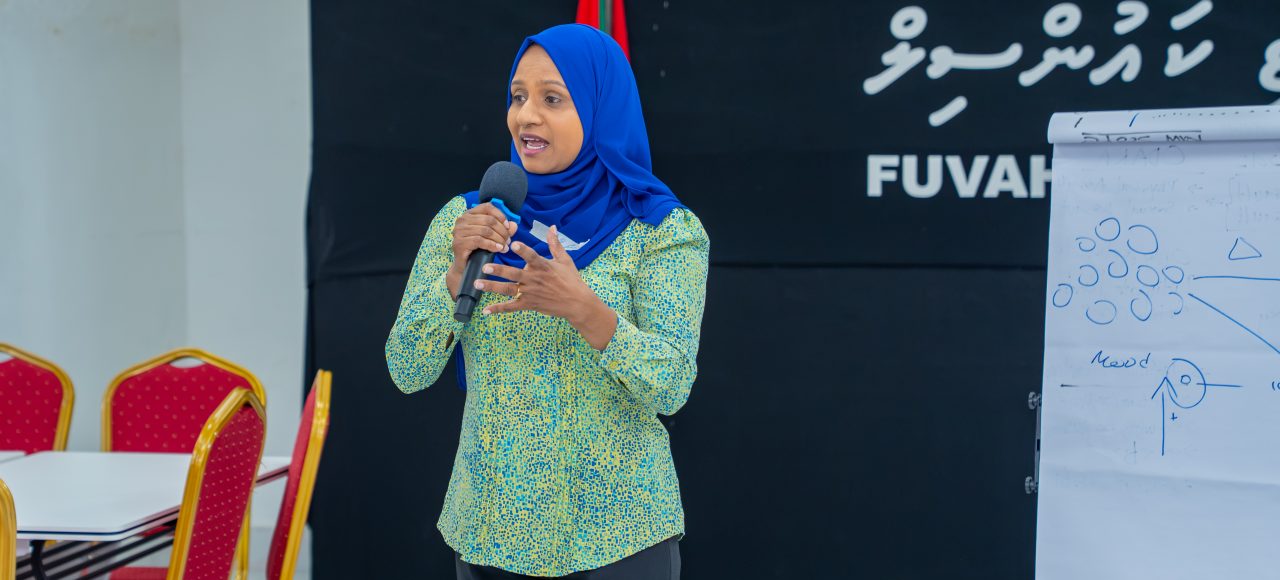
The Maldives National University (MNU) participated in the Japan-Maldives Arts Event 2025, a cultural initiative that brought together artistic expressions and cultural perspectives from Maldives and Japan. The event provided a platform for cultural exchange, creative expression, and greater appreciation of cultural diversity and shared heritage.
Students from the Bachelor of Arts in Political Science and International Relations at the Faculty of Arts participated in the event and contributed to its organisation and activities. Their involvement provided an opportunity to apply academic knowledge and develop practical skills through engagement in a public cultural event.
The event was supported by the Embassy of Japan, the National Art Gallery, and the National Centre for the Arts, bringing together national and international cultural partners. The collaboration enabled students and other participants to engage with diverse cultural perspectives and artistic expressions.
Through their participation and involvement in the event, MNU students gained practical experience in leadership, teamwork, communication, coordination, and event management. The experience complemented classroom learning by providing students with opportunities to engage with external organisations and participate in a community-facing cultural activity.
The event also encouraged intercultural dialogue and mutual understanding by creating opportunities for participants to engage with Maldivian and Japanese cultural perspectives. Such exchanges support appreciation of cultural diversity and provide a platform for strengthening connections between communities through arts and cultural engagement.
MNU’s participation also reflected the role of higher education institutions in facilitating collaboration with cultural, national, and international partners. Through engagement with the Embassy of Japan, the National Art Gallery, and the National Centre for the Arts, the university contributed to a shared platform for student learning, cultural exchange, and community engagement.
The participation contributed to SDG 4 (Quality Education) by providing students with experiential learning and opportunities to develop leadership, communication, teamwork, and event management skills; SDG 10 (Reduced Inequalities) by facilitating intercultural participation and engagement; SDG 11 (Sustainable Cities and Communities) by promoting appreciation of cultural diversity and heritage; SDG 16 (Peace, Justice and Strong Institutions) by supporting dialogue and mutual understanding; and SDG 17 (Partnerships for the Goals) through collaboration with national and international cultural partners.