Introduction
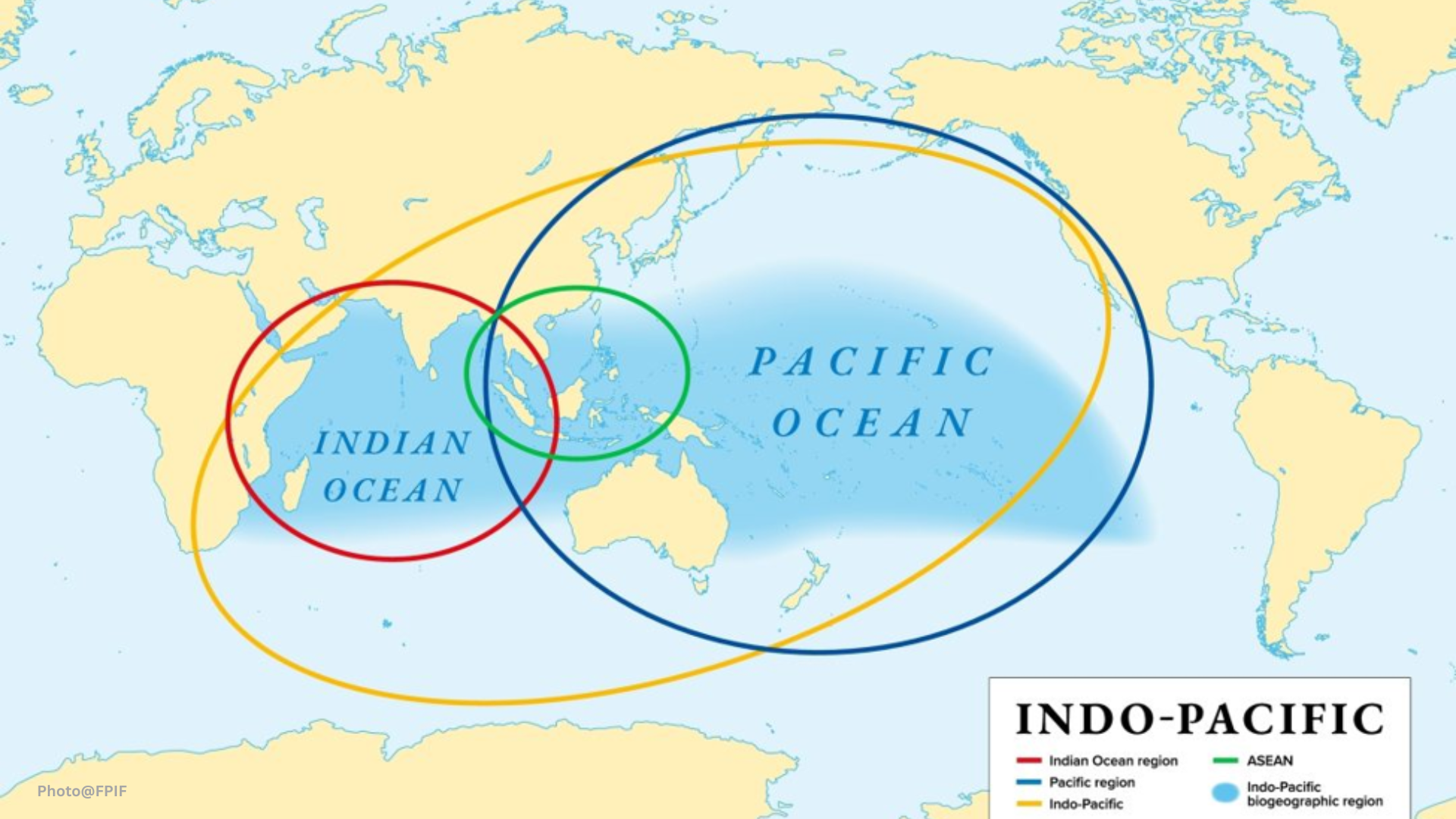
It was recently reported that India and the United States (US) would come together to enhance regional cooperation in the Indian Ocean Region (IOR) through the Indian Ocean Strategic Venture (IOSV) that was launched by India and the United States in February 2025. The initiative also aims to enhance strategic cooperation with small island states, such as Maldives. The IOSV is likely to see the joint development of critical civilian infrastructure, such as ports and telecommunication networks, within the IOR states by India and the US, improving capacity-building and capability-enhancement efforts and thereby achieving development through a top-down approach. Whether small island states such as Maldives can benefit, and on what terms, is an open question.
This article argues that small states often aspire to a bottom-up approach to security, and they want larger states to consider collective security at the regional level. The article also explores the small island state response in the context of regional development initiatives such as IOVS. It does so by considering existing great and middle-power engagement in the region. Our initial research did not find a Maldivian government statement on IOSV as of October 2026; hence, the article draws on regional literature.
The US and Small Island States’ Engagement
The US has a broad foreign policy objective when engaging with small island states. This policy engagement encompasses the realm of development, financial assistance as well as collective defence and security. With small island states, the US understands their concerns and interests, including the UN climate efforts, and has traditionally supported the development of small island states. The same can be observed with India’s engagements as far as small island states are concerned: India has provided developmental assistance to Maldives and Sri Lanka, for example, and has been their preferred security partner.
Moreover, US interest in maritime South Asia is linked with the holistic advancement of these small island states as the US continues to build its presence in the region, keeping the Diplomatic, Information, Military and Economic (DIME) paradigm in mind. The IOSV is a manifestation of this expanding US interest in the region.
Contours of US-India Partnership in IOR
India-US ties are rooted in their shared maritime security interests, making the maritime domain a cornerstone of their strategic engagements in the IOR. This includes engaging with Maldives as a maritime state. For instance, the US and India can pursue bilateral and regional efforts to build critical maritime infrastructure in the Maldives and support the three mutual security interests in the IOR. On regional telecom connectivity, India has already taken the lead with a leading conglomerate that has improved telecom networks in Maldives through high-speed fibre optic cables, especially the Ocean Connect Maldives-India Asia Express (OCM-IAX) Submarine Cable System. Such an initiative enables India to improve Underwater Domain Awareness (UDA), a subset of Maritime Domain Awareness (MDA).
Furthermore, India and the US can make both Maldives and Sri Lanka, and potentially major stakeholders within the project, since a common operational picture for MDA is a shared priority.
For example, India has expertise in port-led infrastructure development and, with the US’ assistance can upgrade the small island states and connect them with their own in Kochi, Vizhinjam and Thoothukudi.
A Small-State Lens – Maldives’ Case
Public awareness of the IOSV is still limited. This section uses general perceptions of foreign aid concerning Maldives.
For most Maldivians, the idea of India and the US jointly financing ports and telecommunications is judged on the premise as to whether it improves the quality of their daily life. This view may not tally with the Government’s view.
For example, the country’s main concerns right now mainly lie with increasing costs of living, a sustainable supply of fuel and essentials in the wake of regional conflicts, and the Government’s ability to manage the state’s finances.
In April 2026, the Maldivian government redeemed a US$ 500 million sukuk, and Fitch, a leading credit ratings agency, noted that a further US$ 535 million in external obligations fell due in the second half of the year. Offers of infrastructure investment are likely to be welcomed by the Maldivian citizens, in principle; however, they will want accountability on ‘who’ pays and on what terms.
On the official side, political will for the betterment of ties exists in both the United States, India and Maldives. b. For example, the US Secretary of State Marco Rubio has expressed his keenness to expand the maritime security partnership with the Maldives. Similarly, during her official visit to India, Maldives’ Foreign Minister Iruthisham Adam described the ties between the two countries as close and long-standing. In July 2025, Maldives’ President Muizzu said that India and Maldives were steadfast partners in the IOR and said in August 2026 that ties with India would receive special priority, with the incoming free trade agreement potentially paving the way for greater economic engagement in the maritime sector.
India has also reciprocated and allocated US$ 66 million to Maldives in its 2026-27 budget to further build the bilateral ties.
A joint India-US initiative therefore arrives in a favourable diplomatic climate – i.e., a regional approach can enhance resource pooling and coordinate mutual outcomes.
The port development imperative of the IOSV is where regional experience offers a useful comparative lens. Colombo and Vizhinjam show neighbouring ports compete for cargo: around 84.5 per cent of Colombo’s container throughput is transhipment cargo, much of it linked to India, and a Sri Lankan parliamentary committee has recently raised concerns that the delays in expanding Colombo port could erode its position as India accelerates Vizhinjam’s development. The lesson is that the ports built without coordination risk undercutting one another, whereas a cluster in which each port has a defined role could benefit all sides as the earlier discussion of a Colombo-Vizhinjam arrangement suggests.
Malé Commercial Harbour’s single cargo berth operates beyond capacity. Gulhifalhu’s planned port envisaged 400,000 TEUs and US$ 400 million through India’s Exim Bank, but the government has since opted for Thilafushi; in his February 2026 address, President Mohamed Muizzu said that the harbour would shift there, with operations possible by November 2027.
Strategically located, Maldives could build and strengthen existing diplomatic channels to enhance and leverage its maritime geographic location to shape regional efforts led by the US and India’s initiatives. Three elements shaping Maldives’ engagement include:
Civilian purpose and dual-use reality. Reports present the venture as infrastructure, connectivity and maritime security together. One report calls maritime security “a central pillar” and says monitoring foreign vessels operating “under the guise of research missions” could be a focus; the ANI report in the Tribune lists it alongside infrastructure and connectivity. Maritime infrastructure thus has a dual potential, so the line between civilian and military or defence use could be written into agreements and could be open to scrutiny.
Ownership, financing and local benefit. Given its recent debt experience, Maldivian citizens and civil society are likely to ask whether facilities are grants, concessional loans or commercial deals, and as to who operates them and whether Maldivians firms, workers, and regulators are involved.
Balance among partners. While Maldives shares a close partnership with India in both strategic and cultural terms, its foreign policy is oriented towards maintaining strategic partnerships with all foreign countries in keeping with Maldives’ foreign policy objectives. In this case, Maldives may attempt to increase regional integration within South Asia by participating in this initiative.
Conclusion
Small Island States are likely to read the IOSV positively if it is a consultative partnership aligned with national and regional priorities, and warily if it resembles externally designed strategic projects with local costs and limited local say. For Maldives, port development and resilient telecommunications could be transformative, but the terms of mutuality will matter as much as the infrastructure.
Authors
Ms Anuttama Banerji is an Associate Fellow at the Centre for Aerospace Power and Strategic Studies (CAPSS) in New Delhi. She is also an Honorary Adjunct Fellow at the National Maritime Foundation, New Delhi. She graduated with a Masters in International Relations from the London School of Economics in 2018. Her research focuses on water and maritime security as well as South Asian geopolitics.
Ms Fathmath Shumany Shamin is the Acting Programmes and Seminars Coordinator at the School of Security and Strategic Studies, The Maldives National University (MNU), Malé. She also works as a research assistant to the School’s Dean. She has a background in business administration and project management, and previously worked at the university’s Secretariat and library.