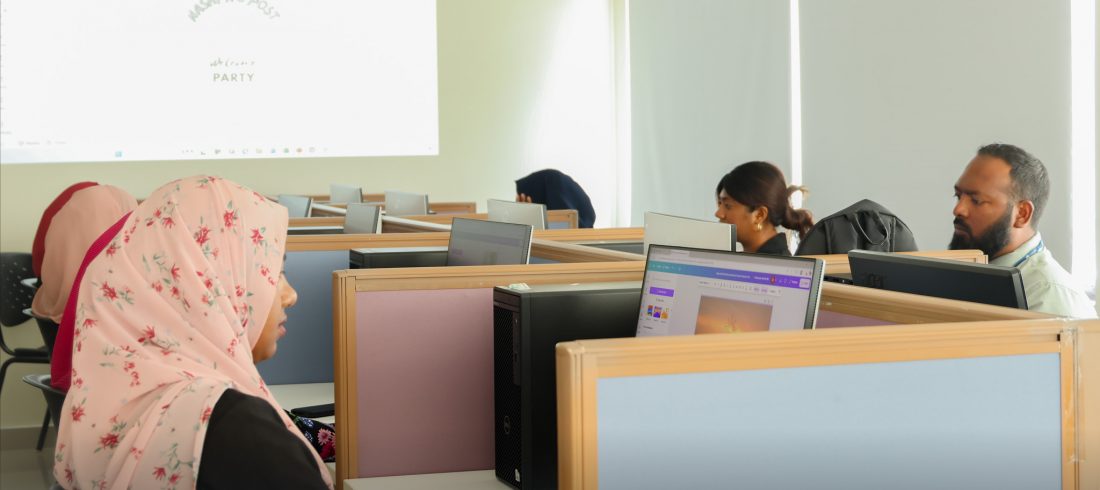
The Maldives National University (MNU) has strengthened its focus on digital literacy and effective institutional communication through a “Canva Basics for Administrative Staff” training session, designed to equip employees with practical skills to create professional, visually engaging materials for everyday university operations.
The introductory programme addressed the growing importance of clear and visually consistent communication in university administration. From event announcements and invitations to reports and digital notices, well-designed materials play an important role in presenting information effectively and strengthening the university’s professional image.
A central focus of the training was familiarising administrative staff with Canva’s user-friendly design platform. The session introduced the platform’s interface, ready-made templates, and essential tools for working with text, images, icons, and shapes, providing participants with a foundation for preparing visual materials without requiring advanced graphic design experience.
The programme explored practical applications relevant to administrative responsibilities, including the preparation of posters, invitations, reports, worksheets, and social media graphics. By demonstrating how existing templates and design elements can be adapted for different communication purposes, the training aimed to make routine design tasks more manageable and efficient.
Particular emphasis was placed on creating materials that communicate information clearly while maintaining a professional appearance. The session highlighted how thoughtful choices in layout, typography, imagery, and visual organisation can improve readability and help audiences identify important information more easily.
Collaboration was another key component of the training. Staff were introduced to Canva’s sharing and collaborative features, exploring how colleagues can work together on designs, exchange feedback, and coordinate the preparation of communication materials across university offices.
Beyond developing basic technical skills, the initiative encouraged staff to adopt more confident and independent approaches to visual communication. Greater familiarity with accessible design tools can help reduce the time required to prepare routine materials while supporting consistency across administrative publications.
The programme also reinforced the value of continuous professional development in responding to changing workplace expectations. As universities increasingly rely on digital platforms to communicate with students, staff, and external stakeholders, strengthening employees’ design and communication competencies can contribute to more responsive administrative services.
Through this training, MNU aims to build a digitally capable administrative workforce and promote practical innovation in everyday office operations. The initiative supports the university’s efforts to improve communication quality, encourage collaboration, and maintain a consistent institutional identity.
Aligned with priorities of quality education, digital literacy, decent work, professional capacity development, technological innovation, effective communication, and lifelong learning, the programme reflects MNU’s commitment to strengthening administrative competencies and delivering clearer, more accessible, and professional university communications.