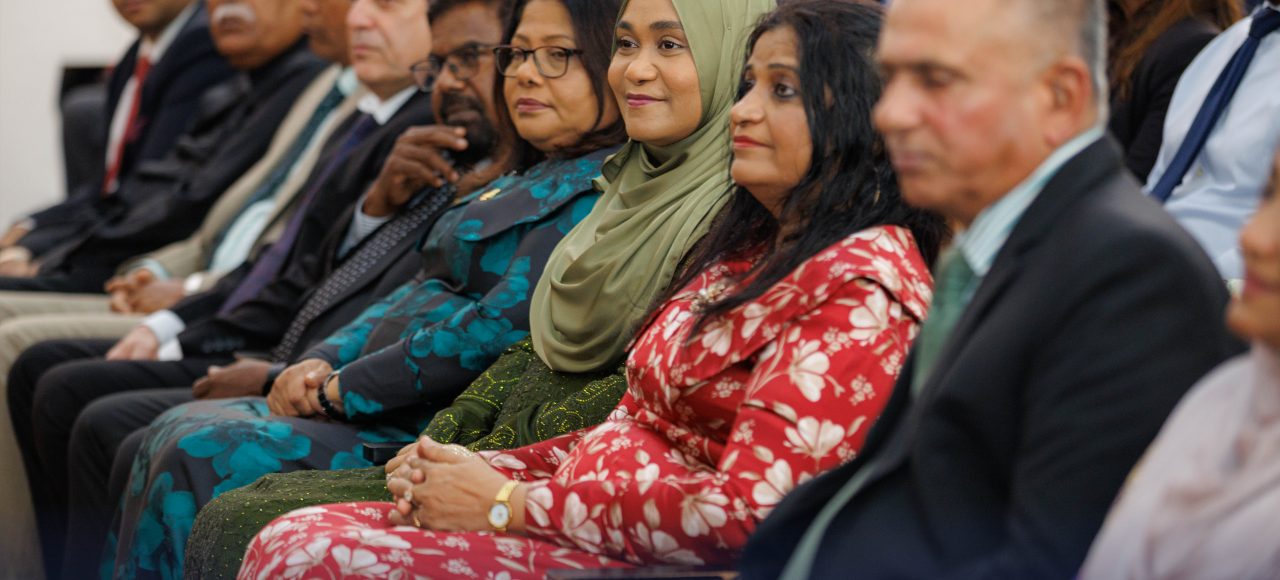
The Maldives National University (MNU) has reinforced its commitment to academic excellence and responsible technology integration through a professional development workshop titled “Assessment Strategies in the Era of AI,” aimed at strengthening assessment practices that uphold academic integrity, fairness, and educational standards in an increasingly AI-driven learning environment.
Facilitated by Ibrahim Adam from the Centre for Educational Technology and Excellence, the workshop addressed the evolving challenges and opportunities associated with artificial intelligence in higher education assessment. The programme highlighted the importance of designing assessments that accurately reflect students’ knowledge, skills, and learning achievements while responding effectively to emerging technological developments.
A central focus of the training was exploring diverse assessment formats and approaches that place greater emphasis on students’ learning processes rather than relying solely on final submissions. The workshop encouraged educators to consider assessment designs that promote critical thinking, independent reasoning, and meaningful demonstrations of learning, helping maintain the credibility and educational value of academic evaluations.
The programme also examined the importance of establishing clear expectations regarding students’ use of artificial intelligence in assessed work. Participants explored how explicit AI-use statements can communicate permitted and restricted applications of AI tools, promote transparency, and help students understand their responsibilities in maintaining academic honesty.
A key component of the workshop was the introduction of the AI Assessment Scale and its relationship with MNU’s Guideline on AI in Assessments. The session explored how these frameworks can support educators in making informed decisions about appropriate levels of AI involvement in assessment activities while maintaining consistency with university expectations and academic standards.
The training further emphasised the importance of fairness and inclusivity in assessment design. As access to and familiarity with AI tools may vary among students, the workshop encouraged consideration of assessment approaches that support equitable learning opportunities without compromising the validity or reliability of academic evaluation.
Interactive discussions and idea-sharing formed an important part of the programme, providing opportunities to examine concerns surrounding AI-assisted academic work and consider practical responses. This collaborative approach encouraged participants to reflect on existing assessment practices and identify strategies that balance technological innovation with sound educational principles.
Beyond individual assessment design, the initiative highlighted the wider importance of institutional guidance and continuous professional development in responding to technological change. By strengthening academic staff’s understanding of AI-responsive assessment strategies, MNU aims to support more transparent, consistent, and academically rigorous evaluation practices across its programmes.
Aligned with priorities of quality education, inclusive and equitable learning, lifelong learning, digital literacy, responsible innovation, academic integrity, ethical technology use, and institutional accountability, the workshop reflects MNU’s continued efforts to safeguard educational standards while preparing its academic community to navigate the opportunities and challenges of artificial intelligence in higher education.