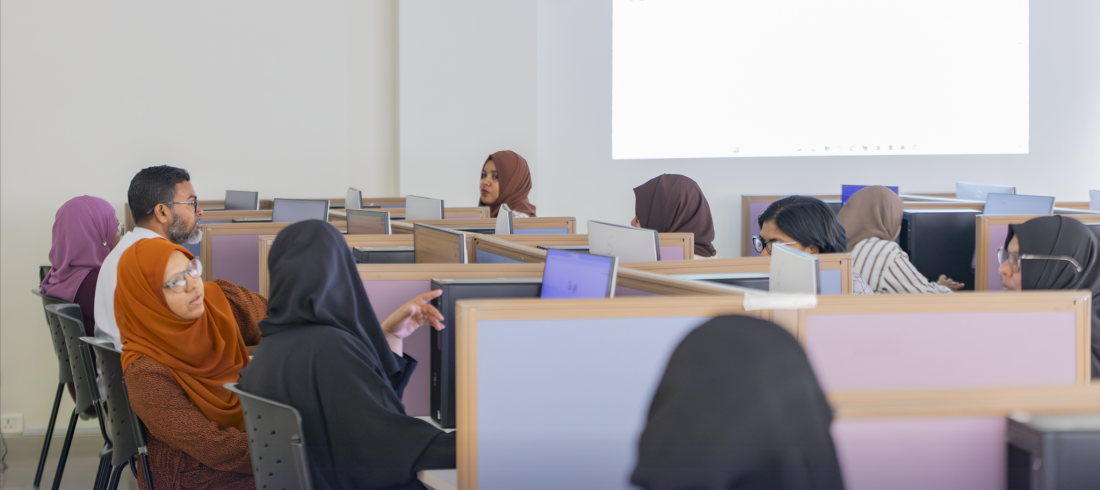
The Maldives National University (MNU) has strengthened its focus on digital transformation and administrative efficiency through an advanced workshop on office management using Google applications, aimed at equipping staff with practical skills to streamline workflows, improve collaboration, and reduce repetitive administrative tasks.
Facilitated by Aimaan Abdulla, the workshop explored how integrated digital tools can improve everyday office operations and support more organised, responsive, and efficient university services. The programme introduced practical approaches to managing information, coordinating responsibilities, and automating routine processes using Google Workspace applications.
A key focus of the training was the effective use of Gmail, Calendar, Drive, Sheets, Forms, Docs, Tasks, and Groups. Participants explored how these applications can work together to support communication, document management, task coordination, data collection, and collaborative planning across university departments.
The workshop placed particular emphasis on improving shared file management and document collaboration. Topics included organising digital folders, managing access permissions, tracking document changes, and maintaining shared resources. These practices are important for reducing duplication, improving information accessibility, and supporting accountability in administrative processes.
Another major component focused on using reusable templates and structured data management to improve consistency and reduce manual work. The programme explored features such as data validation in Google Sheets, helping staff understand how standardised processes can improve the accuracy and reliability of information collected and maintained by university offices.
Participants were also introduced to opportunities for automating routine administrative activities, including automated responses, email notifications, and simple workflows using Google Apps Script. These features demonstrated how repetitive tasks can be streamlined, potentially allowing staff to devote more time to responsibilities that require coordination, judgement, and direct service delivery.
Beyond individual applications, the workshop highlighted the value of connecting digital tools into coordinated workflows. By bringing together document sharing, scheduling, data collection, and automated communication, university teams can develop more consistent approaches to managing administrative responsibilities and collaborating across departments.
The training also reinforced the importance of effective digital information management. Clear folder structures, appropriate access controls, and reliable document-tracking practices can help strengthen transparency, protect institutional information, and support continuity in office operations.
Through this professional development initiative, MNU aims to build staff confidence in using digital technologies and encourage practical innovation in administrative services. The workshop reflects the university’s commitment to developing a digitally capable workforce equipped to respond to changing institutional needs.
Aligned with priorities of decent work, digital literacy, technological innovation, efficient resource management, professional capacity development, responsible information management, and effective and accountable institutions, the initiative supports MNU’s efforts to modernise administrative practices and strengthen collaboration, productivity, and service quality across the university.