Thoddoo in Alif Alif Atoll is set to become the first location to trial an innovative technology that uses a process inspired by lightning to convert untreated sewage into liquid fertiliser. The initiative aims to reduce marine pollution, protect coral reefs, and support sustainable farming in the Maldives.
Developed by Norwegian company N2 Applied, the technology uses air and electricity to produce nitrogen compounds that can enrich wastewater for agricultural use. Expected to arrive in December 2026, the system will undergo its first real-world trial on human sewage to assess the safety and effectiveness of the treated liquid as a fertiliser for crops.
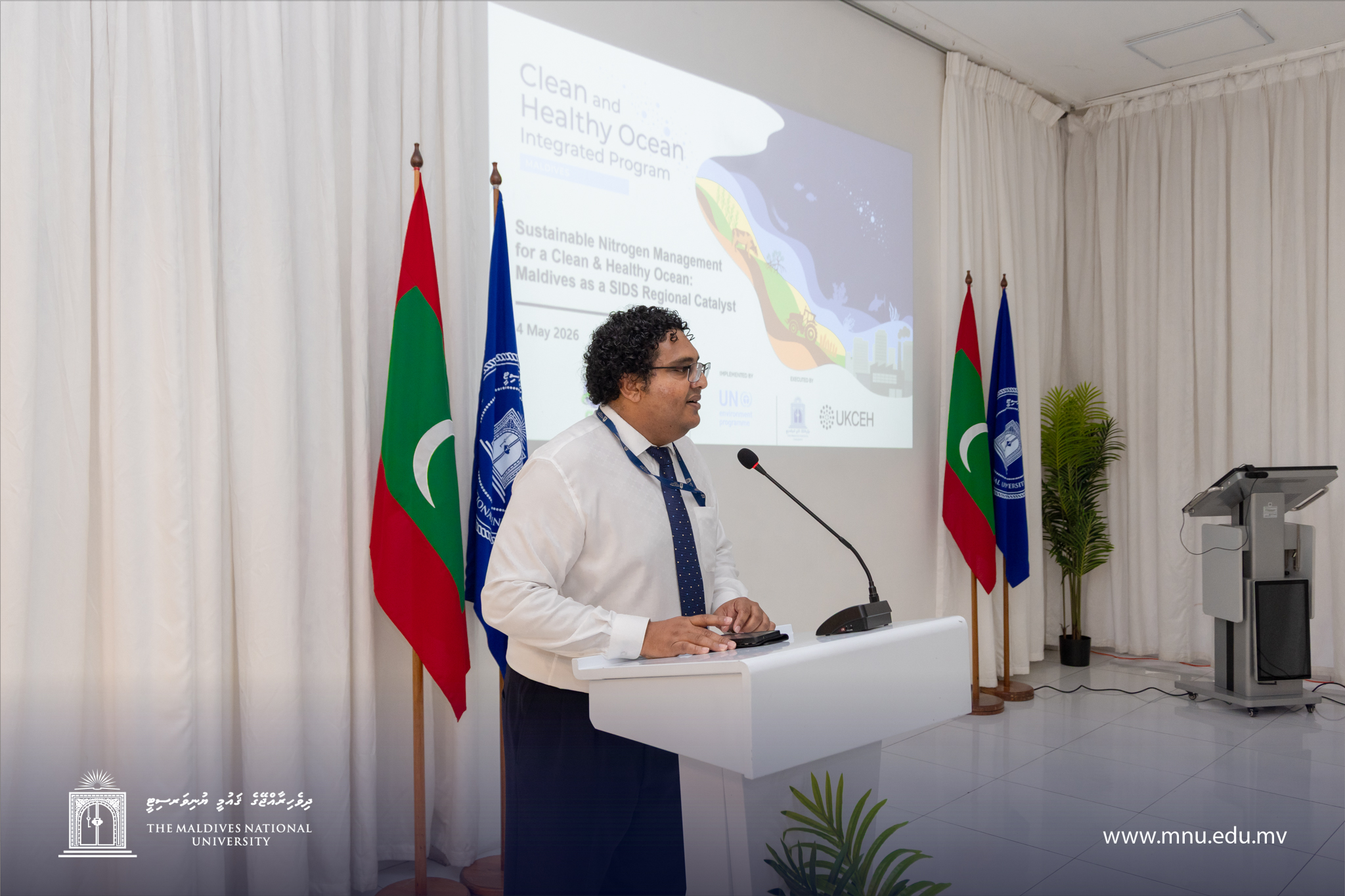
The trial forms part of the five-year Clean and Healthy Ocean Integrated Program Maldives country project, implemented by the United Nations Environment Programme (UNEP), supported by the Global Environment Facility (GEF), and jointly led by The Maldives National University (MNU) and the UK Centre for Ecology & Hydrology (UKCEH).
The initiative could help reduce untreated sewage discharge into coral reefs, protect limited groundwater resources and reduce dependence on imported fertilisers, offering a sustainable solution for island communities.
Through this initiative, MNU contributes to SDG 14 (Life Below Water) by supporting efforts to reduce marine pollution and protect ocean ecosystems. The project also supports SDGs 2, 6, 7, 13 and 17, promoting food security, clean water, renewable energy, climate resilience and international collaboration.
For more information, please visit:
UNEP – “Lightning in a Box” Sets Sail for the Maldives