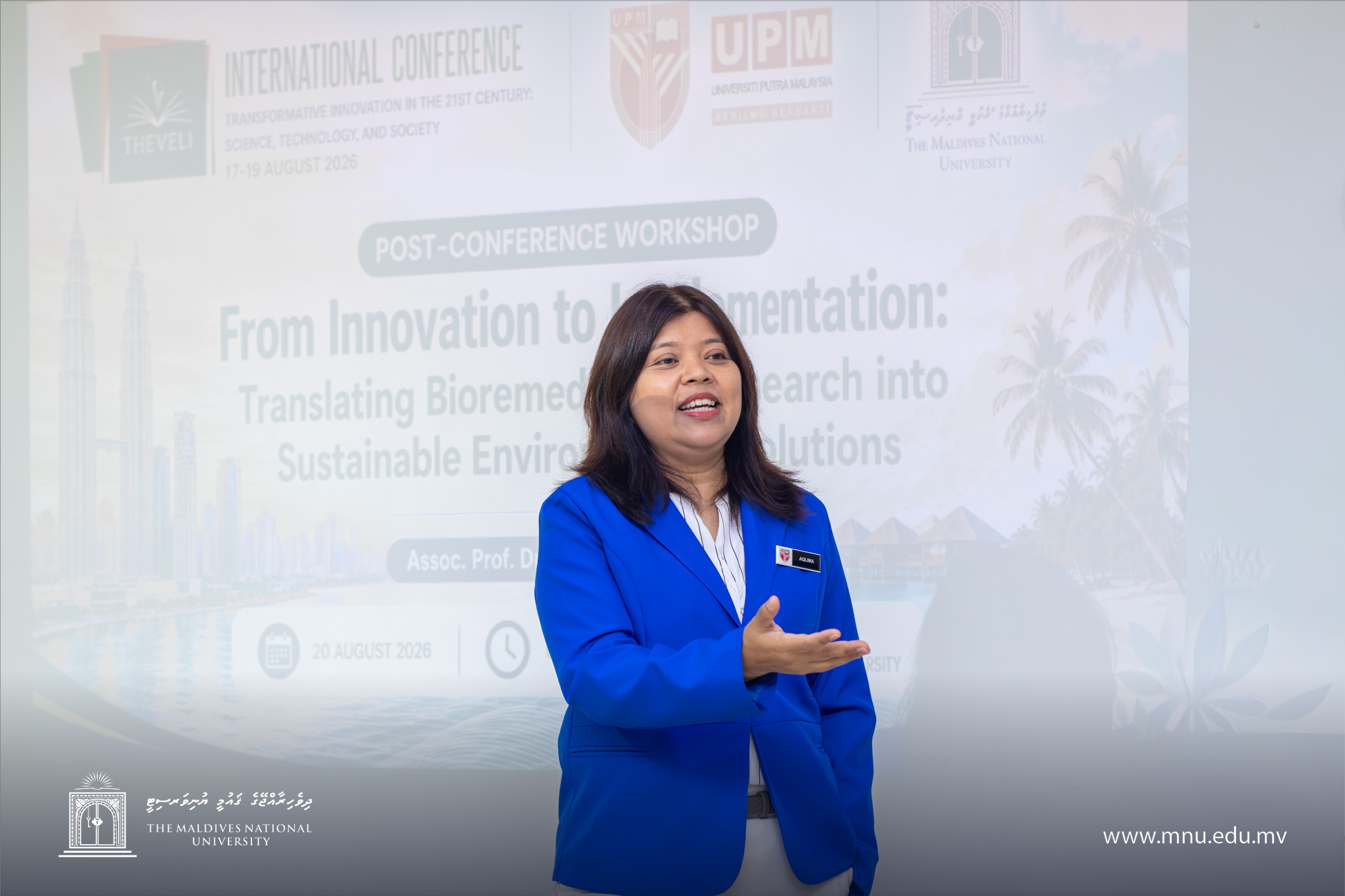
The potential of bioremediation technologies to address environmental pollution, restore ecosystems and strengthen climate resilience was explored during a post-conference workshop held on 20 August 2026 as part of The Maldives National University’s (MNU) Theveli International Conference 2026.
Titled “From Innovation to Implementation: Translating Bioremediation Research into Sustainable Environmental Solutions”, the workshop focused on transforming scientific research into practical solutions for environmental restoration and sustainable development.
The workshop was led by Associate Professor Dr. Siti Aqlima Ahmad from the Department of Biochemistry, Faculty of Biotechnology and Biomolecular Sciences at Universiti Putra Malaysia (UPM).
Participants examined real-world applications of bioremediation through case studies from Antarctica, Malaysia and the Maldives. Discussions covered the use of microorganisms to treat diesel pollution, natural biosorbents and nanobiotechnology in developing environmentally sustainable solutions. Interactive group activities also encouraged participants to identify opportunities for research collaboration and partnerships between academia, industry and local communities.
The objectives of the workshop were to:
- Explore practical applications of bioremediation technologies in environmental restoration, sustainable aquaculture and climate resilience.
- Examine the roles of microorganisms, natural biosorbents and nanobiotechnology in developing sustainable, nature-based environmental solutions.
- Identify strategies for translating bioremediation research into practical applications through collaboration between academia, industry and local communities.
- Explore opportunities for interdisciplinary research and international partnerships that support environmental innovation and the Sustainable Development Goals.
A total of 6 participants attended the workshop, which provided an opportunity to explore the application of scientific innovations to environmental challenges.
Through this initiative, MNU contributes to SDG 14 (Life Below Water) by promoting research and innovation aimed at reducing marine pollution, protecting aquatic ecosystems and supporting sustainable aquaculture. The workshop also supports SDG 6 (Clean Water and Sanitation), SDG 13 (Climate Action), SDG 15 (Life on Land) and SDG 17 (Partnerships for the Goals), reflecting MNU’s commitment to environmental sustainability, ecosystem restoration and international research collaboration.