Reducing emissions through energy and sustainable campus operations
MNU promotes environmentally responsible campus operations through energy efficiency, renewable energy adoption, resource conservation and sustainable infrastructure development. The University’s MNU Procurement Policy incorporates sustainability considerations into procurement evaluation, encouraging energy-efficient appliances, energy-saving equipment, solar energy, environmentally friendly and recycled materials, waste reduction, responsible disposal, environmental certifications and locally sourced products. The policy also provides for monitoring and reporting purchases made under these sustainability criteria. Complementing these provisions, the MNU Environment and Climate Action Plan 2026–2030 promotes energy-efficient building design, passive cooling, natural ventilation, rooftop solar photovoltaic systems and sustainable transport solutions. Together, these institutional frameworks support resource efficiency, environmentally responsible purchasing and the reduction of the University’s environmental footprint.
For example, sustainable design standards are integrated into the new Faculty of Agriculture & Food Sciences Campus at AA. Thoddoo island. As part of the design and tender documentation for the new Faculty of Agriculture & Food Sciences and student accommodation (Dhanaal) campus in AA. Thoddoo, MNU has embedded a set of sustainable design standards into the building brief. The design incorporates open spaces to support student and staff health and wellbeing; solar panels, passive lighting and passive cooling/heating systems to reduce energy consumption ; wheelchair-accessible ramps, pathways and inclusive facility layouts; greenery, planters and sustainable building materials with integrated waste management; and water-efficient utilities, sanitation and drainage systems for water conservation.
These measures aim to reduce electricity consumption, minimise dependence on fossil fuels, and improve resource efficiency across MNU campuses in Malé and the atolls.
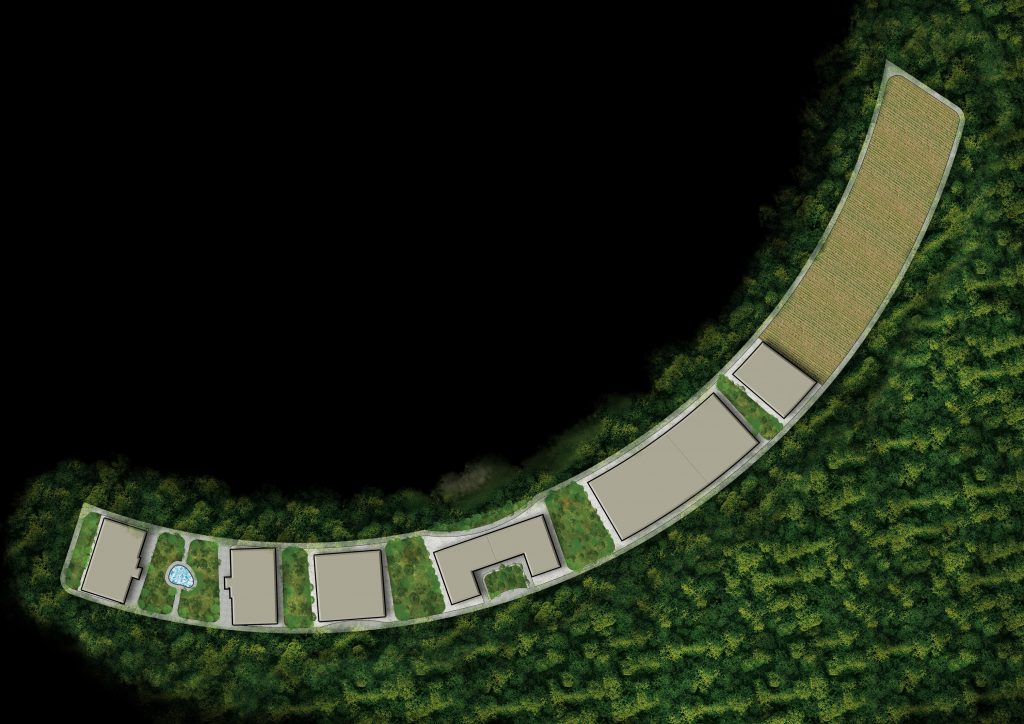
Concept plan of the new Faculty of Agriculture & Food Sciences Campus site at AA.. Thoddoo island
Renewable energy initiatives
MNU has undertaken initiatives to support the transition towards cleaner energy through the installation of solar photovoltaic systems at selected university facilities, including its Central Administration building and Health Sciences building in Malé and Hithadhoo Campus in Addu Atoll. The MNU Central Campus in Malé is equipped with a solar photovoltaic system of a total installed capacity of 40.32 kW, comprising 192 panels rated at 210 W each. Based on typical solar generation conditions in the Maldives, this system generates approximately 60,000–65,000 kWh of renewable energy annually. The Health Science Building has a 35 kW system, while Hithadhoo Campus is equipped with a solar photovoltaic system with a total capacity of 10KW. MNU also plans to expand its investment in solar energy across all its campuses in the near future. These initiatives contribute to renewable electricity generation and demonstrate the University’s efforts to integrate low-carbon energy solutions into campus operations. MNU also promotes renewable energy education, research, and international collaboration to support the development of sustainable energy solutions appropriate for small island developing states.
Promoting paperless operations and digital sustainability
MNU promotes digitalisation across its academic and administrative activities to reduce paper consumption, minimise waste, and improve operational efficiency. The University uses Moodle as its digital learning platform, facilitating the electronic distribution of lecture materials, learning resources, assignments, and other academic documents. This reduces reliance on printed teaching and learning materials. Similarly, administrative operations also utilise emails, electronic correspondence, and digital documentation in place of printed letters and documents. These practices support resource conservation and contribute to reducing the environmental impacts associated with paper consumption, printing, and waste generation.
Measuring and reporting greenhouse gas emissions
As part of its approved GHG Emissions Reduction Commitment, MNU will establish an institutional greenhouse gas inventory aligned with the GHG Protocol Corporate Accounting and Reporting Standard. The inventory will cover the following emission categories:
- Scope 1 – Direct emissions: Emissions from sources owned or controlled by MNU, including fuel consumption in university vehicles, generators, cooking gas (LPG) used in hospitality training facilities, student accommodation kitchens and laboratories, and relevant refrigerant leakage from cooling systems.
- Scope 2 – Indirect emissions: Emissions associated with purchased electricity consumed across MNU campuses and facilities.
- Scope 3 – Other indirect emissions: Emissions associated with business travel, staff and student commuting, waste management, procurement, and other relevant activities, to be progressively assessed where data and institutional capacity permit.
MNU currently does not maintain a completed institutional GHG emissions inventory. The University has established a system to collect and analyse electricity consumption, fuel use, and other relevant activity data to calculate emissions in tonnes of carbon dioxide equivalent (tCO₂e). The University has estimated its total Gross Internal Area (GIA) at 45,975 m², covering buildings across its campuses in Malé and the atolls. This information will support future assessment of building-related emissions intensity, expressed as tCO₂e/m². The establishment of a baseline inventory will enable MNU to quantify its emissions, monitor progress towards the 25% reduction target by 2035, and strengthen institutional emissions reporting.
Environmental sustainability through teaching, research and innovation
MNU recognises that universities play a significant role in addressing climate change through education, research, innovation, and knowledge dissemination. The University integrates environmental sustainability and climate change into relevant academic programmes and supports interdisciplinary research addressing climate mitigation, adaptation, renewable energy, resource management, and environmental resilience. Through its Climate and Environment Research Framework 2025–2030, MNU promotes locally relevant research and international collaboration to generate scientific evidence and practical solutions for environmental challenges facing the Maldives and other small island developing states. These initiatives complement the University’s operational emissions reduction commitments and contribute to national climate action and the SDGs, particularly SDG 7 (Affordable and Clean Energy) and SDG 13 (Climate Action).
Monitoring, accountability and future direction
MNU’s GHG Emissions Reduction Commitment establishes a framework for monitoring emissions and mitigation progress. The University will progressively strengthen data collection, environmental performance monitoring, and reporting mechanisms to ensure transparency and accountability. Emission reduction measures will be integrated into institutional planning, procurement, infrastructure development, and sustainability initiatives. Progress will be periodically reviewed, and targets and implementation measures updated where appropriate to reflect national climate commitments, available resources, and institutional capacity.
Through its approved 25% Scope 1 and Scope 2 emissions reduction target by 2035 and carbon neutrality target for 2040, MNU demonstrates its commitment to measurable institutional climate action, contributing to the Maldives’ national mitigation goals and advancing a more environmentally sustainable university.
Supporting documents: