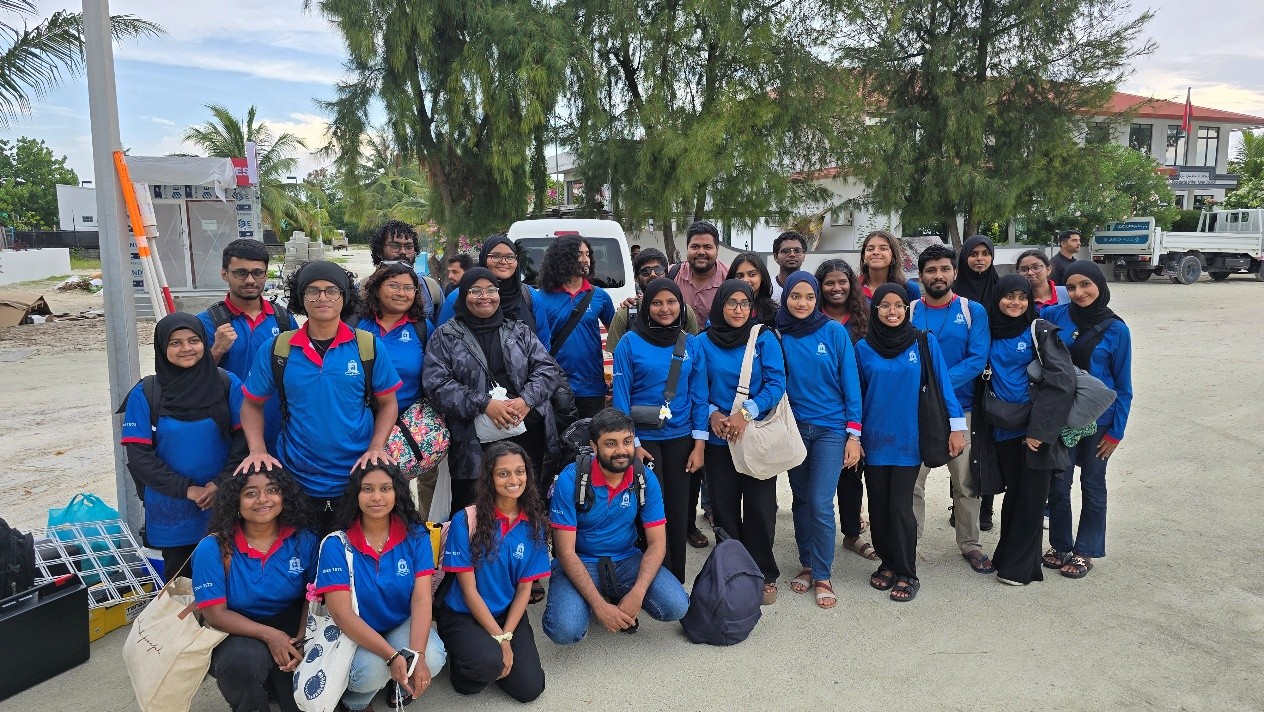
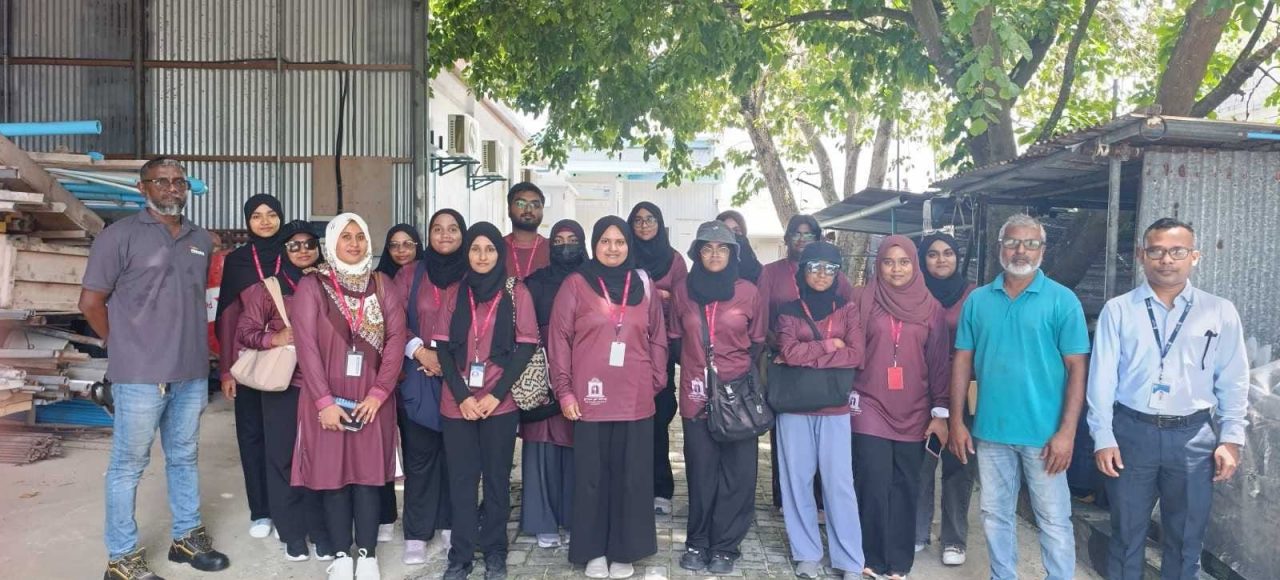
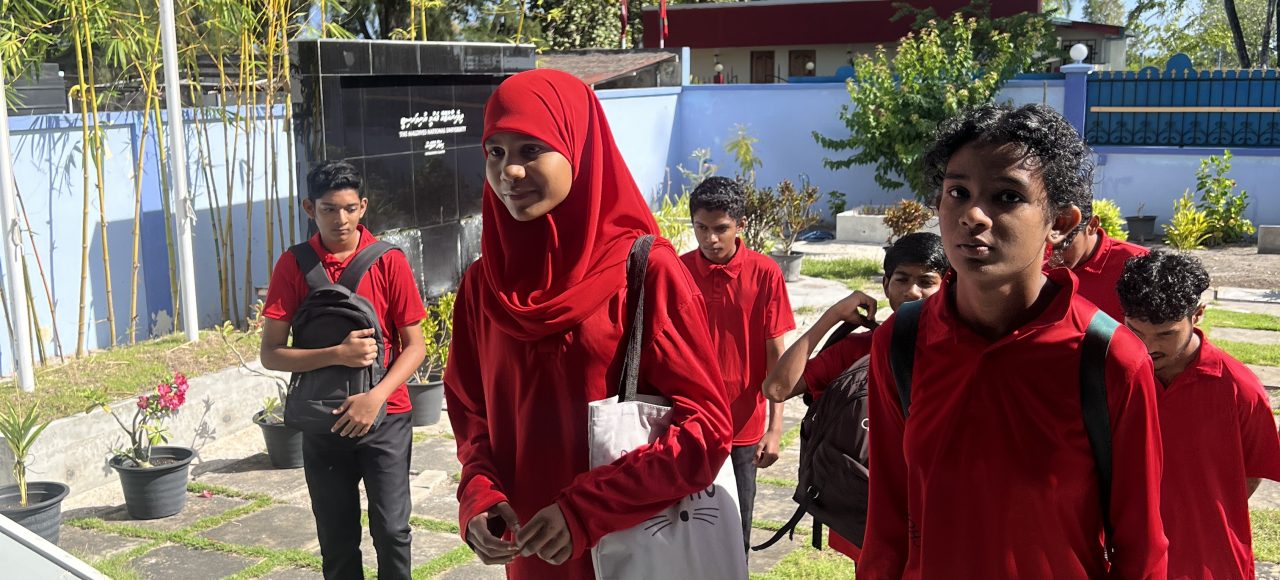
CFOS students conducted ecological surveys in Huraa island, gaining hands-on experience in one of the Maldives’ most significant mangrove ecosystems. The island, located approximately 21km northeast of Malé, is home to a protected mangrove area spanning 5.3 hectares, declared under the Environmental Protection and Preservation Act.
During the field visit, students surveyed the mangrove’s diverse habitats, which support over 4,000 genuine mangrove trees and four distinct mangrove species. The surveys covered key ecological indicators including species composition, mangrove health and regeneration, and the abundance of associated fauna. The Huraa mangrove is particularly notable for its population of fiddler crabs and mangrove crabs, which play a crucial role as ecosystem engineers by aerating the muddy mangrove floor through their burrowing activities.
The fieldwork forms part of CFOS’s commitment to place-based learning, where students apply ecological monitoring techniques in real-world settings. Huraa has long served as a living classroom for marine science students, offering diverse ecosystems including mangroves, seagrass meadows, and sandy beaches. The experience not only strengthens students’ practical survey skills but also deepens their understanding of the threats facing Maldivian mangroves, including habitat modification and over-exploitation of keystone species. The Huraa mangrove holds particular conservation significance, having been identified as a site with research gaps that MNU’s ongoing work can help address, supporting broader mangrove conservation efforts in the Maldive.