Supporting Evidence-Based Government Policymaking for Climate Action
The Maldives National University (MNU) is committed to supporting evidence-based government policymaking by contributing scientific research, technical expertise, and institutional capacity building to address national challenges associated with climate change, disaster risk reduction, and environmental sustainability.
Through strategic partnerships with government institutions, international organisations, and development partners, MNU actively contributes to policy discussions, national consultations, research initiatives, and capacity-building programmes that support climate adaptation and disaster resilience. Initiatives such as the RECOVER project, the ESCAP Risk and Resilience Portal collaboration, and participation in national disaster risk management framework consultations demonstrate the University’s role in generating and sharing scientific knowledge to inform government planning and decision-making.
By connecting academic research with national policy priorities, MNU seeks to strengthen institutional capacities, promote the integration of climate-risk information into development planning, and support the formulation of informed and sustainable policies. These efforts contribute to Sustainable Development Goal 13, particularly by strengthening resilience and adaptive capacity to climate-related hazards and natural disasters across the Maldives.
The Maldives National University (MNU) contributes to strengthening climate resilience in the Maldives through scientific research, oceanographic modelling, environmental monitoring, and the development of accessible climate-risk information systems. These initiatives aim to strengthen the scientific information available to local and regional government authorities for understanding coastal hazards, assessing environmental risks, and supporting evidence-based disaster preparedness and climate adaptation planning.
Supporting Local Government through Coastal Wave Monitoring and Forecasting
In 2025, MNU supported research on island-scale coastal wave forecasting through the research project “Estimating Ocean Wave Heights Using Atmospheric Model Forcing and Buoy Observations at Dhaalu Atoll, Maldives – Towards an Island-Scale Wave Forecasting Model.” The research aimed to advance understanding of ocean wave behaviour around Maldivian islands and strengthen scientific capabilities for monitoring and forecasting coastal conditions.
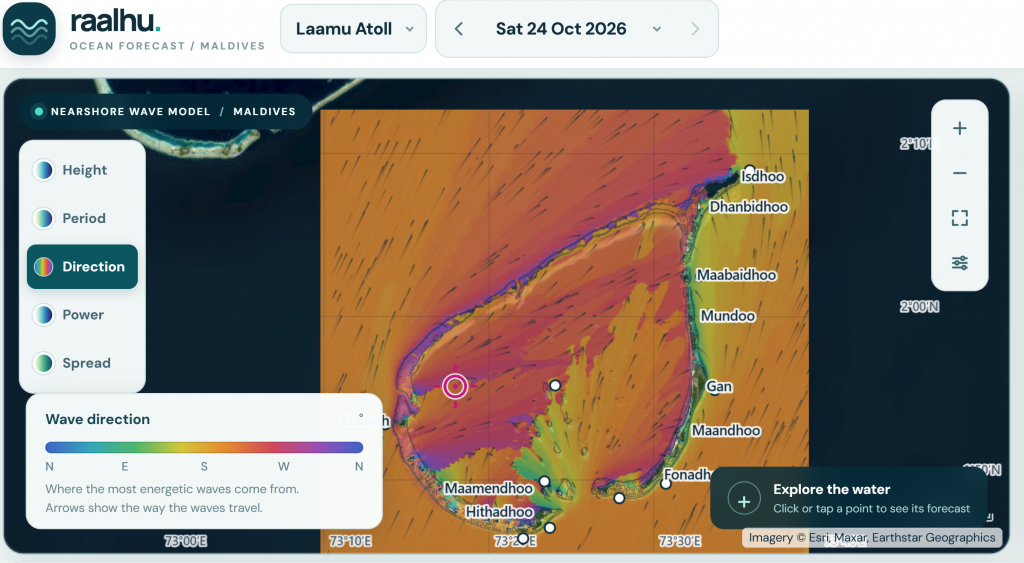
The related research initiative, the Maldives Experimental Wave Forecast System (MEWFS), provides an interactive web-based forecasting platform known as Raalhu Ocean Forecast. The system uses the SWAN (Simulating WAves Nearshore) numerical wave model, combined with global wind and swell forecast data, to simulate wave conditions around selected Maldivian atolls.
The platform provides spatially detailed information on significant wave height, wave period, wave direction, wave power, and nearshore wave behaviour. Its interactive maps allow users to explore forecast conditions at specific coastal locations and examine changes across the forecast period. The system also incorporates reef and seabed characteristics to model how waves interact with shallow coastal environments.
Making Coastal Hazard Information Accessible to Local Government
Through the publicly accessible Raalhu Ocean Forecast Portal, experimental wave forecasting information is available for locations including Laamu Atoll. The platform provides a scientific information resource relevant to local government authorities, including Laamu Atoll Council, for understanding nearshore wave conditions and identifying areas potentially exposed to elevated wave activity.
By providing location-specific wave information in an accessible visual format, the initiative contributes to developing the scientific knowledge base required for coastal hazard assessment, climate adaptation planning, and disaster-risk reduction. Such information may assist local authorities in understanding changing marine conditions and informing longer-term coastal management strategies.
The forecasting system uses an automated modelling workflow to process global marine forecast data, generate hourly wave simulations, and publish results through an interactive online platform. This approach strengthens the accessibility of research-based environmental information and supports the development of locally relevant coastal forecasting capabilities.
As an experimental research tool, the system remains under development and requires further validation against observed wave measurements before it can be relied upon for operational early-warning or emergency-response decisions. Nevertheless, it represents an important contribution towards developing scientific tools that could strengthen future coastal hazard monitoring and preparedness capabilities in the Maldives.
Through this research initiative, MNU demonstrates its commitment to translating scientific knowledge into accessible information resources that can support local and regional climate resilience. By advancing island-scale wave modelling, promoting access to environmental information, and developing the technical foundations for future coastal early-warning capabilities, the University contributes to climate-risk awareness, evidence-based coastal management, and sustainable development in vulnerable island communities.
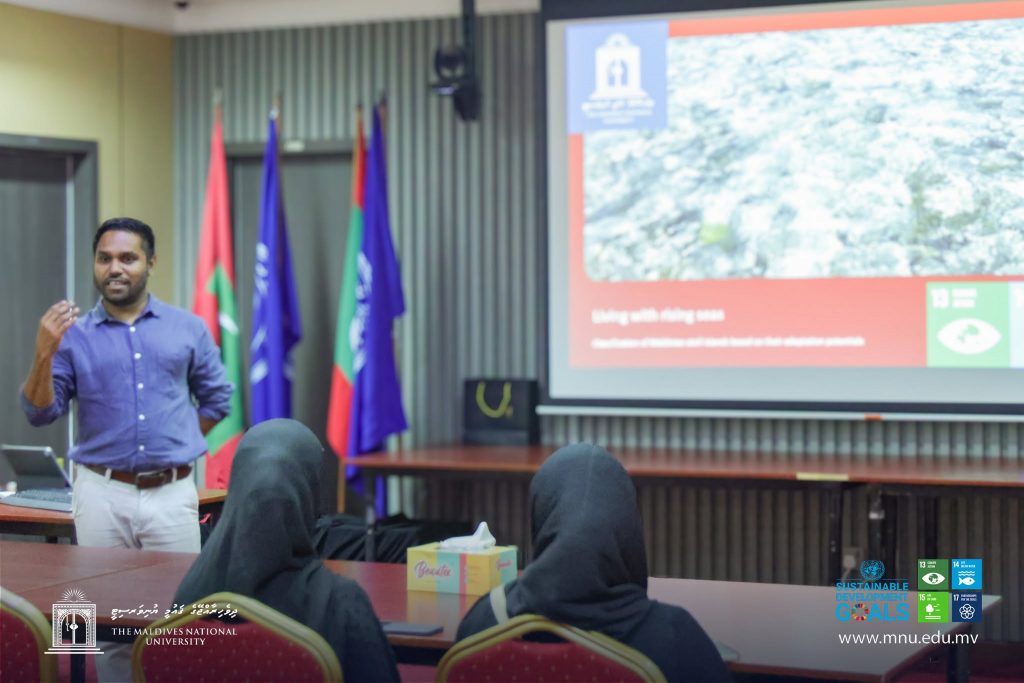
This research applies statistical clustering techniques to classify Maldivian islands according to key demographic, environmental, and infrastructure-related indicators. The analysis identifies four distinct island typologies, each characterised by different vulnerabilities, coastal conditions, and opportunities for climate adaptation. The findings highlight the importance of moving beyond uniform approaches to island adaptation and adopting strategies that reflect the specific characteristics and needs of individual islands. By recognising differences in natural coastal dynamics, exposure to ocean waves, development pressures, and existing coastal defences, the research provides a scientific basis for identifying appropriate adaptation pathways.
The research provides valuable evidence that can inform national climate adaptation strategies, coastal management policies, infrastructure planning, and the prioritisation of adaptation investments across the Maldives. Its findings could support government institutions in developing more targeted, equitable, and cost-effective adaptation approaches, ensuring that interventions respond to the varying vulnerabilities and adaptive capacities of island communities.
Classification of Maldivian Atoll Islands Based on Adaptation Potential
RECOVER Project: Advancing Climate Research and Evidence-Based Policy for Climate Adaptation in the Maldives
MNU in collaboration with the University of Waterloo, Canada, contributes to climate change research and evidence-based policy development through the international RECOVER (Resilience to Climate Vulnerability and Environmental Risk) project (2023-2025), funded under the Climate Adaptation and Resilience (CLARE) programme. The project examines climate vulnerabilities, resource security and adaptation challenges in the Maldives, generating scientific evidence to inform government policies and strengthen climate resilience.
The findings are particularly relevant to national policies addressing water security, coastal protection, infrastructure resilience, food and energy security, and the equitable distribution of adaptation resources. By identifying interconnected vulnerabilities and reviewing existing adaptation responses, the research strengthens understanding of climate risks and provides a foundation for coordinated, evidence-based adaptation strategies.
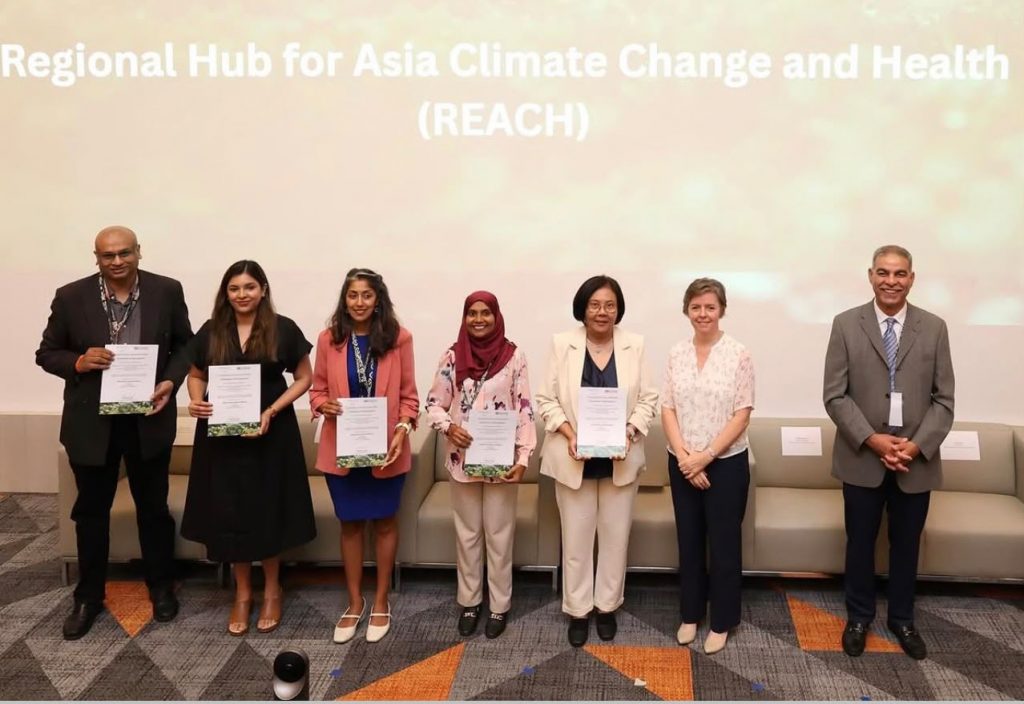
Advancing Climate-Resilient Health Policies through the Regional Hub for Asia Climate Change and Health (REACH)
REACH supports regional research and capacity-building activities focusing on two principal areas:
Community-Based Climate Adaptation: Developing locally appropriate interventions to address climate-related health risks, including extreme heat and natural disasters, while strengthening community awareness, preparedness, and resilience.
Climate-Resilient Health Systems: Strengthening the capacity of healthcare institutions and professionals to anticipate, prepare for, and respond to climate-related health challenges through research, training, practical tools, and institutional improvements.
The programme promotes interdisciplinary collaboration, community participation, gender equity, and the development of scalable solutions that can be adapted to different national and regional contexts. Through its participation, MNU contributes expertise in research, education, and community engagement to support the generation and dissemination of scientific evidence on climate-related health vulnerabilities and adaptation needs in the Maldives and wider region. A central objective of REACH is to bridge the gap between scientific research and policymaking by generating evidence that can inform climate adaptation strategies, public health planning, and the development of climate-resilient healthcare systems.
The initiative aims to develop a regional roadmap for addressing the health impacts of climate change, supporting collaboration among researchers, government institutions, healthcare professionals, and communities.
Building Capacity to Improve Air Quality in South Asia: Reducing PM2.5 Through Low-Cost Sensor Network Driven Policy Decisions
MNU’s nationwide PM₂.₅ monitoring network generates data to inform air-quality standards and environmental health policies.
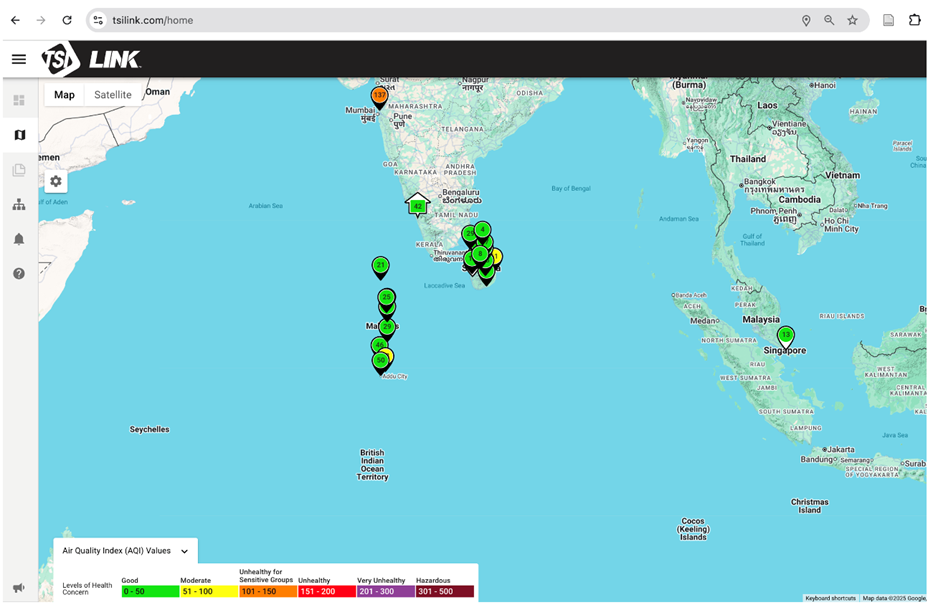
Under the project “Building Capacity to Improve Air Quality in South Asia: Reducing PM2.5 Through Low-Cost Sensor Network Driven Policy Decisions”, led by Duke University, funded by the US Department of State, MNU has installed 18 low cost sensors across the Maldives. This makes it the largest air quality sensor network to exist so far in the country. This pilot project in the Maldives aims to monitor PM2.5 levels in South Asian countries by deploying and maintaining low-cost sensors, continue monitoring PM2.5 levels and generate recommendations to reduce PM2.5 to healthier levels. TSI BlueSky sensors (model 8143) are used for monitoring PM₂.₅ concentration. The 18 sensors were deployed in several deployment projects from September 2021 to May 2023. There are currently 14 sensors in operation, which continues to monitor PM2.5 levels. The sensors were first harmonised through inter-sensor colocation, and then one of the sensors was calibrated against a BAM instrument operated at the U.S. Embassy in Colombo. This calibrated sensor was subsequently used to calibrate the rest of the network across the Maldives.
Real-time PM₂.₅ levels can be accessed by registering at tsilink.com and logging into the site. You can zoom in or out to view PM₂.₅ levels in your neighborhood using the mouse or the navigation buttons located below your username on the right-hand side.The Air Quality Index (AQI), displayed at the bottom-left corner, indicates the level of health concern based on the color of the pin at each location.
Advancing Ocean Governance and Evidence-Based Policymaking through the Second Ocean Governance Symposium 2026
The Maldives National University (MNU), through its Faculty of Arts, organised the Second Ocean Governance Symposium on 4 February 2026, with the support of the Embassy of Japan in the Maldives. Held under the theme “Regional Approach to Ocean Governance,” the symposium aimed to strengthen academic research, institutional capacity, and regional cooperation in addressing emerging challenges in ocean governance.
The symposium brought together policymakers, government representatives, academics, researchers, and regional experts to examine challenges associated with the governance and sustainable management of marine and ocean resources. It highlighted the importance of developing coordinated governance approaches, strengthening institutional frameworks, and promoting evidence-based decision-making to address the complex environmental, economic, and regulatory challenges facing the Maldives and the wider Indian Ocean region.
The event was inaugurated by the Minister of State for Fisheries and Ocean Resources, Dr. Amzath Ahmed, with addresses delivered by MNU Vice Chancellor Dr. Aishath Shehenaz Adam and the Ambassador of Japan to the Maldives, H.E. Ishigami Rumiko. The keynote address was delivered by Dr. Masanori Kobayashi, Senior Research Fellow at the Ocean Policy Research Institute of the Sasakawa Peace Foundation.
The symposium facilitated knowledge exchange between MNU and key national institutions, including the Ministry of Fisheries and Ocean Resources, Ministry of Environment and Tourism, Ministry of Transport and Civil Aviation, Ministry of Foreign Affairs, Attorney General’s Office, and the Maldives National Defence Force Coast Guard. International perspectives were provided through research presentations by delegates from Bangladesh, India, Pakistan, and Sri Lanka, alongside contributions from Parley Maldives.
The symposium provided a platform for dialogue between academic researchers and government institutions on strengthening ocean governance frameworks, institutional coordination, and sustainable marine resource management. By bringing together scientific research, legal perspectives, government priorities, and regional experiences, the initiative supported the exchange of knowledge relevant to the development of informed and coordinated ocean policies.
The discussions highlighted opportunities for strengthening national governance arrangements and regional collaboration in responding to shared maritime and environmental challenges. The symposium also provided a foundation for considering how ocean governance policies can address emerging environmental pressures, including those associated with climate change.
Supporting National Development Planning through Fisheries and Ocean Resources Sector Consultations
The Maldives National University (MNU), through its College of Fisheries and Ocean Sciences (CFOS), contributed to national policy development by facilitating fisheries sector roundtable discussions as part of the Maldives’ 20-Year National Development Plan (NDP) 2045 consultation process, coordinated by Nexia Maldives in 2025.
The consultations aimed to gather perspectives from government institutions, industry stakeholders, technical experts, and other relevant sectors to inform a comprehensive, evidence-based strategic framework for the sustainable management and development of fisheries and ocean resources over the next two decades.
The national consultation process adopted a participatory and citizen-centred approach, bringing together stakeholder perspectives, expert knowledge, and sectoral evidence to inform the Maldives’ long-term development priorities. A total of 20 sectoral roundtable discussions covering 62 thematic areas were conducted, including consultations addressing economic diversification, fisheries, ocean resources, and agricultural transformation.
The Dean of CFOS facilitated the fisheries sector roundtable discussions, contributing academic expertise and supporting dialogue among stakeholders on the challenges, opportunities, and long-term development priorities of the fisheries and ocean resources sector.
MNU’s involvement in the consultation process demonstrates the University’s role in connecting academic expertise with national development planning and government policymaking. By facilitating stakeholder engagement and contributing sector-specific knowledge, CFOS supported the identification of strategic priorities relevant to the sustainable utilisation, governance, and development of the Maldives’ fisheries and ocean resources.
The consultations provided an opportunity to incorporate scientific perspectives, industry experiences, and stakeholder priorities into the formulation of long-term national development strategies. Sustainable management of marine resources is also relevant to strengthening the environmental and economic resilience of island communities facing climate-related challenges.
Through its participation, MNU contributed to evidence-based national policy dialogue, supporting the development of informed, inclusive, and sustainable approaches to fisheries and ocean resource management.
Promoting Sustainable Marine Waste Management and Evidence-Based Policy through the PROMISE Project
The Maldives National University (MNU), as a lead implementing partner of the Prevention of Marine Litter in the Lakshadweep Sea (PROMISE) project, contributed to strengthening environmental policy development, sustainable waste management, and regional cooperation in the Maldives, Sri Lanka, and India. Funded by the European Union under the SWITCH-Asia Programme, the project was implemented from 2020 to 2025, with a total budget of approximately EUR 3.7 million. It aimed to reduce marine litter originating from land-based activities, particularly within tourism-related businesses, by promoting sustainable consumption and production, waste minimisation, improved waste management practices, and stronger policy frameworks.
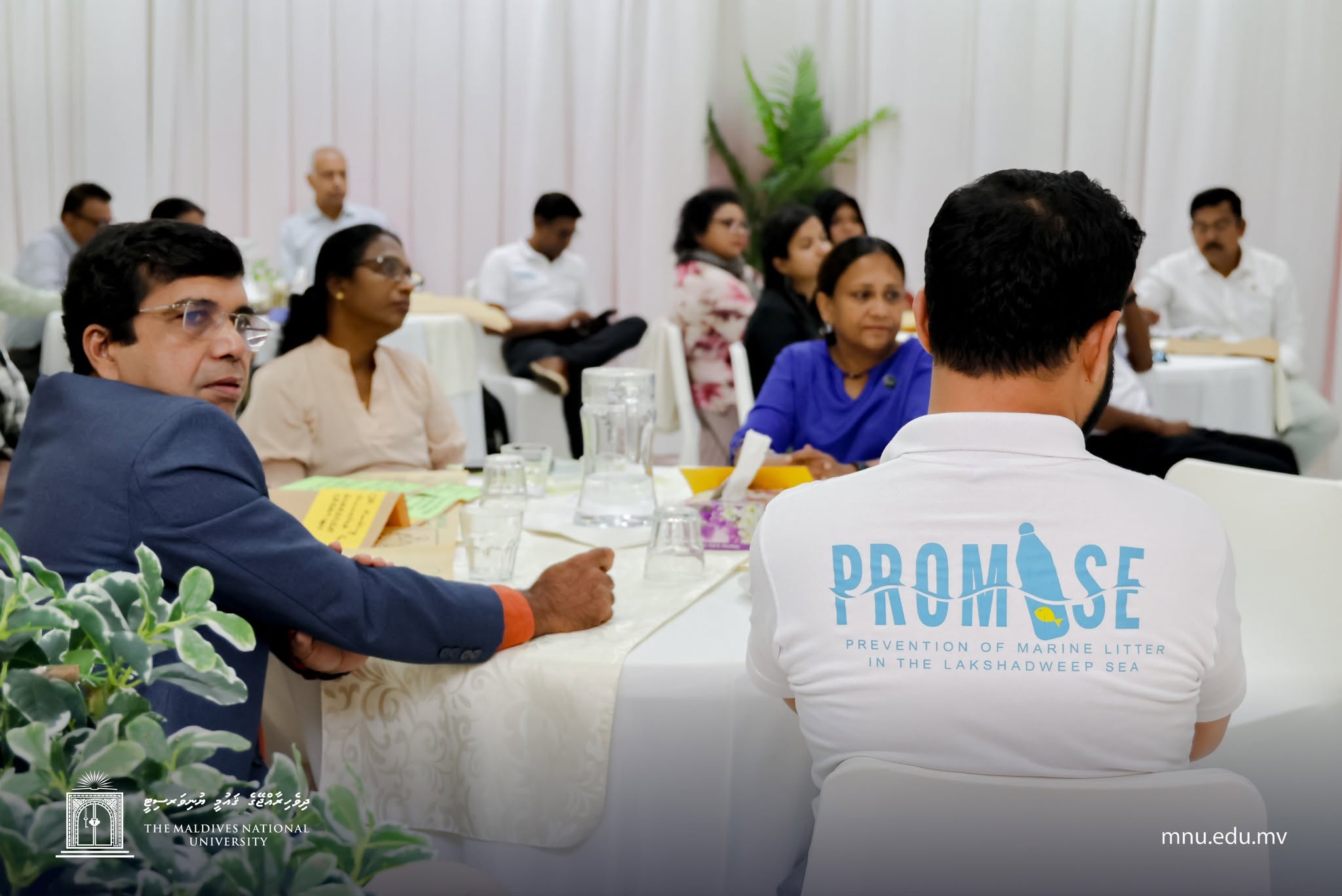
A key component of the PROMISE project was supporting the development of evidence-based policies and practical solutions to prevent marine pollution. The project facilitated 10 policy roundtable discussions involving more than 100 policymakers across the three participating countries, bringing together government representatives, industry stakeholders, researchers, and environmental organisations.
These consultations provided opportunities to identify regulatory challenges, examine existing waste management practices, and develop practical policy recommendations. The collaborative process resulted in 10 policy solution prototypes aimed at strengthening marine litter prevention, improving waste governance, and supporting sustainable resource management. In the Maldives, MNU hosted a policy roundtable on 22 March 2022, involving 26 representatives from government institutions, the tourism industry, environmental organisations, academia, and development partners. The project also produced policy briefs and country-specific recommendations to inform government discussions on marine pollution prevention and sustainable waste management.
Supporting Sustainable Business Practices and Regional Cooperation
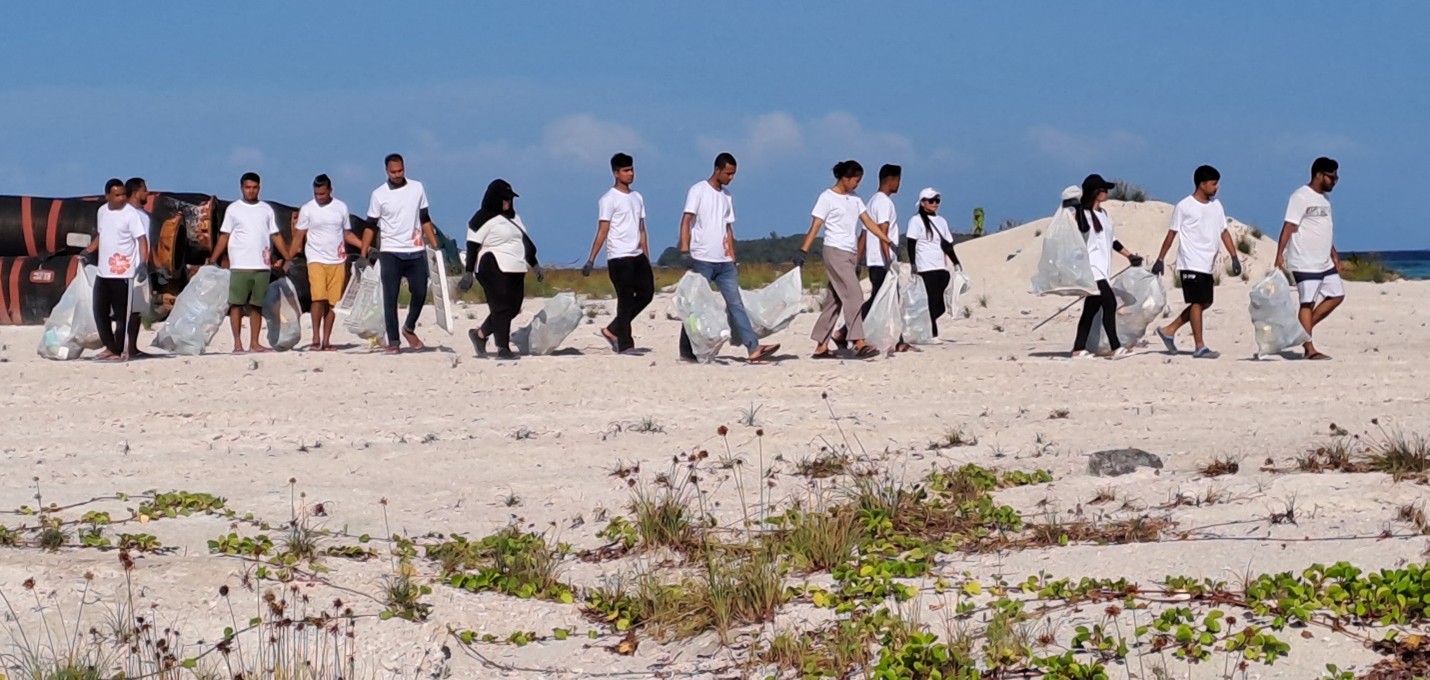
Beyond policy development, PROMISE supported the implementation of waste minimisation measures among 300 micro, small, and medium-sized enterprises (MSMEs) across the participating countries. The project also engaged more than 50 financial-sector representatives to increase awareness of financing opportunities for sustainable business practices. Community engagement activities involved more than 3,000 tourists and citizens in beach clean-up initiatives, with over 750 tonnes of waste collected and directed towards closed-loop recycling.
Another significant outcome was the establishment of the Lakshadweep Zero Waste Alliance (LOWA), launched at MNU on 5 June 2024. The alliance provides a regional platform for continued cooperation among institutions, businesses, and environmental organisations to advance marine litter prevention and sustainable waste management. A number of training sessions for the professionals from the industry, government agencies and other stakeholders were conducted in the year 2025.
Through its leadership in the PROMISE project, MNU contributed to the development and dissemination of policy-relevant evidence, stakeholder consultations, and practical recommendations supporting sustainable waste management and marine environmental protection. The project’s policy briefs, roundtable discussions, and policy solution prototypes provided governments and relevant institutions with recommendations for strengthening regulatory approaches, reducing land-based marine pollution, and promoting sustainable consumption and production.
These contributions reinforce MNU’s role in connecting academic expertise, government institutions, industry stakeholders, and international partners to address environmental challenges through evidence-based policymaking.
Strengthening National Environmental Policy through Sustainable Nitrogen Management for Clean and Healthy Oceans
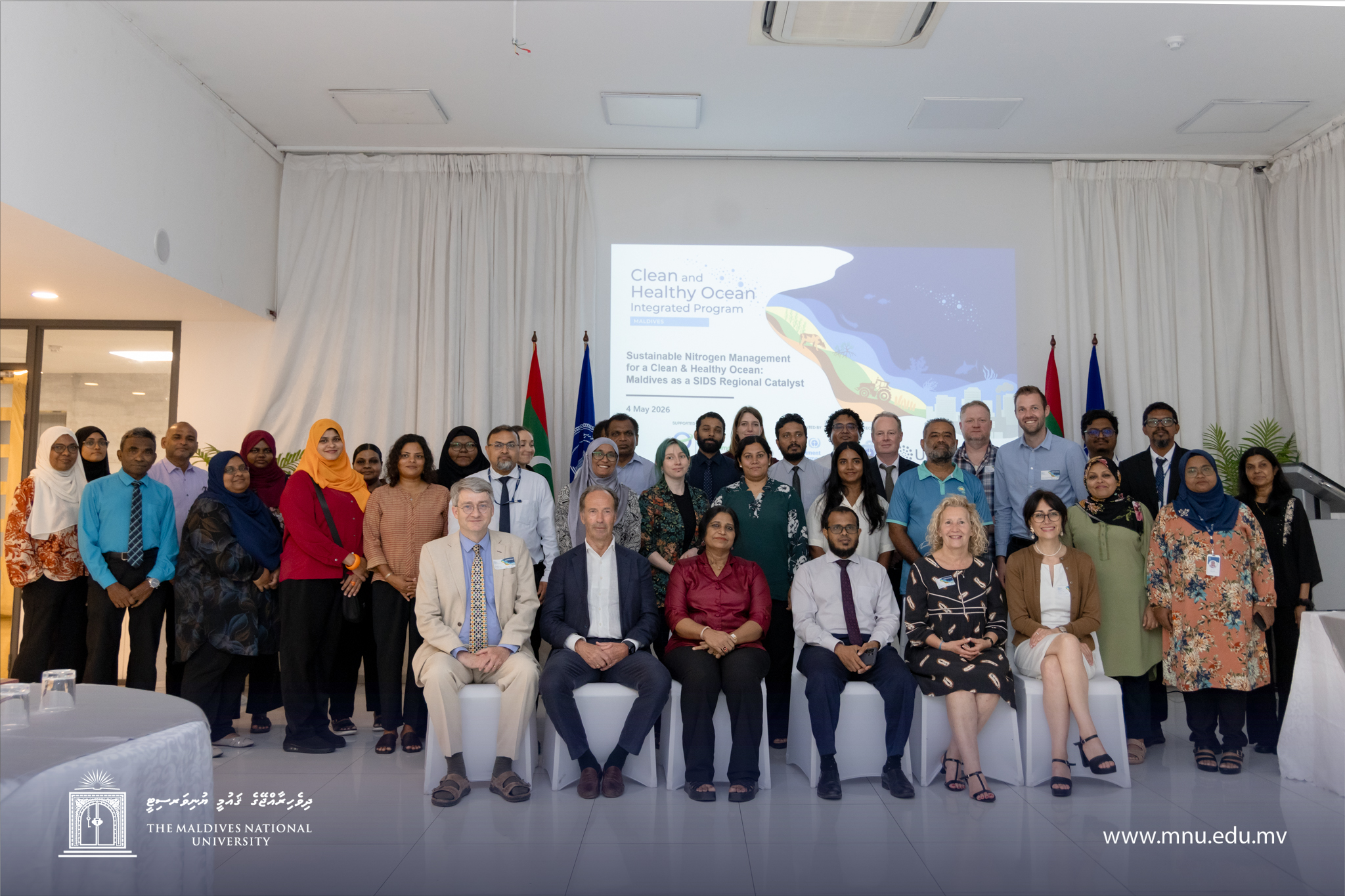
The Maldives National University (MNU), in collaboration with the UK Centre for Ecology & Hydrology (UKCEH), is jointly executing the Sustainable Nitrogen Management for a Clean and Healthy Ocean: Maldives as a SIDS Regional Catalyst (CHOMV) project (June 2025–July 2031). Implemented through the United Nations Environment Programme (UNEP) and supported by the Global Environment Facility (GEF), the initiative forms part of the international Clean and Healthy Ocean Integrated Programme, coordinated by the Food and Agriculture Organization of the United Nations (FAO). The project aims to strengthen national policies, institutional capacities, and sustainable environmental management practices to address nitrogen and other nutrient pollution originating from agricultural, industrial, and municipal sources. By reducing excessive nutrient inputs into coastal waters, the initiative seeks to safeguard marine ecosystems, improve environmental quality, and support sustainable livelihoods in the Maldives.
Strengthening National Policies and Environmental Governance
A major component of the project is the development of the Maldives’ first National Nitrogen Action Plan, which will provide a strategic framework for reducing nitrogen losses, strengthening environmental regulations, and promoting sustainable nutrient management across different sectors. The initiative seeks to support government institutions through scientific research, stakeholder consultations, policy development, and technical expertise. The National Nitrogen Action Plan is expected to help guide coordinated action to address nutrient pollution from agriculture, wastewater, industrial activities, and other land-based sources affecting the marine environment. The project also aims to demonstrate approaches to sustainable nitrogen management that can be shared with other Small Island Developing States (SIDS), supporting regional and international cooperation on marine pollution prevention and environmental governance.
Advancing Research, Environmental Monitoring and Sustainable Practices
MNU and its partners will contribute to strengthening national capabilities for monitoring, assessing, and managing nitrogen pollution through improved environmental data collection, quantitative assessments, and scientific analysis. The initiative will develop evidence on nutrient flows, pollution sources, and their impacts on coastal and marine ecosystems, providing information to support environmental policy decisions and sustainable resource management. The project will also promote sustainable nitrogen management practices, including nutrient recovery, resource-efficient approaches, and investment opportunities through Nitro-Finance. Planned activities include demonstrating sewage recycling approaches that recover nutrients for agricultural use, reducing nutrient waste while supporting resource efficiency.
Strengthening Institutional Capacity and Public Awareness
Capacity building and knowledge dissemination are central to the project. Through research, technical training, stakeholder engagement, and educational initiatives, the programme aims to improve understanding of nitrogen pollution, its environmental consequences, and practical measures for sustainable nutrient management. These activities will support government institutions, researchers, businesses, and local communities in adopting environmentally responsible practices and applying scientific evidence to environmental planning and management. Through the CHOMV project, MNU contributes to strengthening the scientific and institutional foundations for evidence-based environmental policymaking in the Maldives.
The development of the National Nitrogen Action Plan, alongside research on nutrient pollution, environmental monitoring, and sustainable management practices, is expected to provide government institutions with technical evidence and policy recommendations to improve marine environmental protection and resource governance.