Goal 13: Climate Action
Local Education Programmes on Climate
The Maldives National University > Sustainability 2025 > SDG 13 > Local Education Programs on Climate

Environment and Climate Change Education at MNU

The Maldives National University (MNU) is the leading higher education institution in the Maldives, offering specialised academic programmes and training in environmental sustainability and climate change. The University contributes to climate action by providing local education programmes and awareness campaigns on climate change risks, impacts, mitigation, adaptation, impact reduction and early warning. Through its academic programmes, training opportunities and capacity-building initiatives, MNU equips students, professionals and the broader community with the knowledge, skills and competencies needed to address climate change, strengthen resilience and contribute to national climate mitigation and adaptation priorities. Central to its institutional mission is an extensive public outreach programme designed to promote widespread climate literacy. The University regularly hosts specialised workshops, public talks, forums and events open to the general public and provides free online educational resources for local island communities and other stakeholders.

Climate change education and environmental sustainability are integrated into academic programmes across various faculties and disciplines, including climate science, environmental management, environmental education, policy, law, economics, agriculture, engineering, and marine science. These programmes strengthen understanding of climate change impacts and responses, covering areas such as climate mitigation and adaptation, biodiversity conservation, sustainable resource management, renewable energy, geospatial technologies, and disaster risk reduction.

MNU offers specialised programmes at diploma, undergraduate, and postgraduate levels, covering climate science, environmental management, marine conservation, disaster management, and related fields that are tuition free. These programmes contribute to SDG 13 by strengthening knowledge, technical skills, and research capacity to address climate change mitigation, adaptation, and resilience.

Specialized programmes in the area of environmental sustainability and climate change include:

These programmes support the development of national expertise in understanding climate-related risks, assessing environmental impacts, developing adaptation strategies, and applying scientific and technical approaches to climate change and environmental challenges.

In addition to specialised programmes, MNU incorporates climate change education and sustainability-related competencies into programmes across various faculties. This interdisciplinary approach promotes climate awareness and strengthens the capacity of graduates from different professional fields to contribute to climate action. Examples include: 

  • Education: Bachelor of Teaching Secondary programmes in Biology, Marine Biology, Economics, and Travel and Tourism, supporting environmental and climate-related education.
  • Science: Bachelor of Science programmes in Biology, Chemistry, and Physics, providing scientific knowledge relevant to environmental and climate-related challenges.
  • Architecture: Bachelor of Arts in Architectural Design, covering content on green buildings and sustainable infrastructure.
  • Civil Engineering: Bachelor of Civil Engineering (Hons), covering sustainable building concepts, hydrology, coastal and wastewater management, and sustainable transport engineering.
  • Electrical and Electronics Engineering: Bachelor of Engineering in Electrical and Electronics Engineering (Hons), incorporating subjects on renewable energy, Geographic Information Systems (GIS), Green buildings and sustainability.
  • Agriculture: Diploma in Agricultural Science, covering soil science, sustainable agriculture, and precision agriculture, alongside the Advanced Certificate in Horticulture.
  • Hospitality and Tourism: Advanced Diploma, Bachelor’s and Master’s programmes in Hospitality and Tourism Management, integrating environmental sustainability in tourism and related competencies.
  • Economics and Statistics: Bachelor of Economics and Management and Bachelor of Statistics, offering the subject environmental economics.
  • Postgraduate Research: Related Doctor of Philosophy programmes offered by the Faculty of Engineering, Science and Technology, providing opportunities for advanced environmental and climate-related research.

By integrating climate change education into both specialised and broader academic programmes, MNU contributes to SDG 13 by improving education, awareness, and human and institutional capacity for climate action while supporting the long-term climate resilience and sustainable development priorities of the country.

MNU Strengthens Climate Action through Short Courses and Professional Training

The Maldives National University contributes to national climate action by providing short courses, professional training, and capacity-building opportunities in environmental sustainability, climate change, and related fields. Below are some examples of short relevant short courses offered by MNU.

In 2025, MNU College of Fisheries and Ocean Sciences (CFOS), introduced the country’s first Basic Ranger Training Course under the ENDhERI Project, following an agreement signed with the Ministry of Climate Change, Environment and Energy on 30 January 2025. The course aimed to strengthen national capacity in environmental conservation, biodiversity protection, and sustainable protected area management by developing a skilled workforce capable of safeguarding the Maldives’ vulnerable terrestrial, coastal, and marine ecosystems. Conducted at MNU’s Laamu Gan Campus, the 12-week free programme successfully trained 17 participants through a combination of theoretical instruction and practical fieldwork to support effective protected area management and community-based conservation initiatives. The initiative contributed to strengthening environmental education, professional competencies, and local capacity for ecosystem-based climate adaptation and resilience. Speaking at the certificate awarding ceremony, Dr Ahmed Riyaz Jauharee, Dean of CFOS, and Deputy Minister of Tourism and Environment Hassaan Mohamed highlighted the urgent need for skilled rangers to manage the Maldives’ extensive network of protected areas, which numbers over 90 sites but has historically faced a shortage of trained personnel. 

Building on this initiative, MNU is expanding its specialised environmental education and training programmes. Under a newly signed agreement, CFOS plans to introduce a Diploma in Marine Protected Areas, with training scheduled to commence in 2026. The programme aims to develop technical expertise in marine biodiversity conservation, protected area management, environmental monitoring, and sustainable marine resource management. MNU also plans to expand ranger training to other regions and develop a Certificate Level 4 programme, Advanced Certificate in Protected Areas Management and Ranger Training.

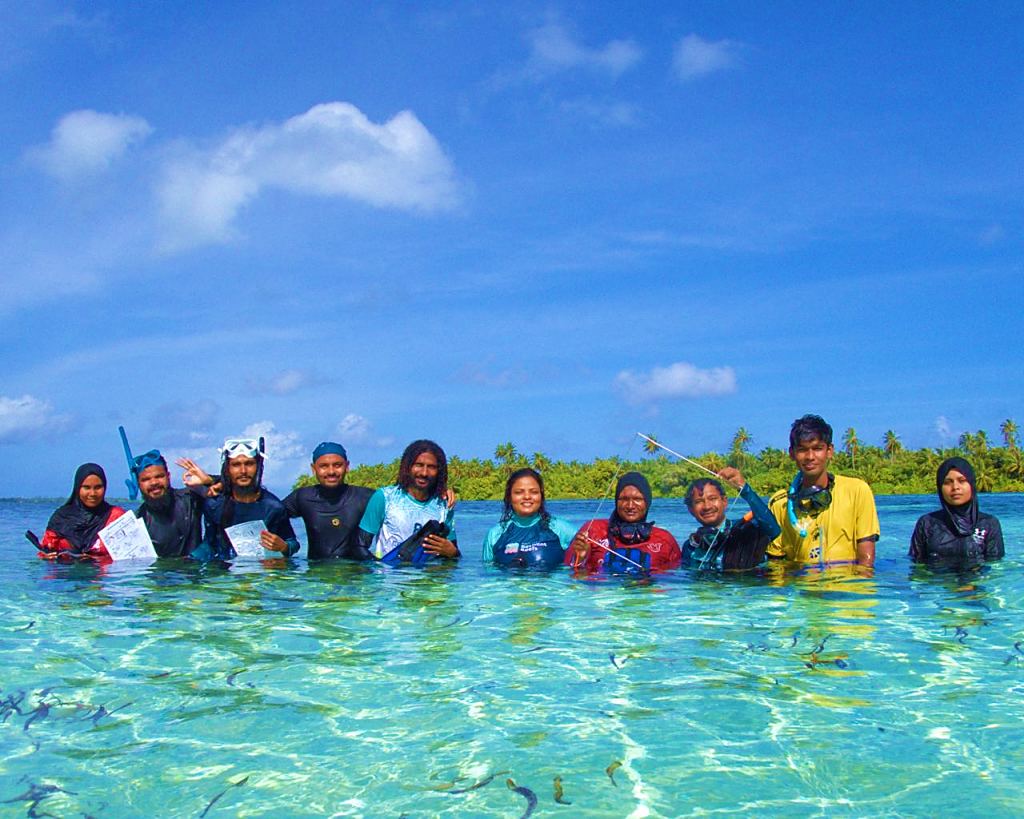
As part of the Basic Ranger Training Course conducted by MNU in Laamu Atoll, Maldives Resilient Reefs (MRR), a Maldives-registered NGO collaborating with MNU delivered practical training on seagrass and coral reef monitoring techniques. Participants from Laamu, Addu, Alif Dhaalu, Shaviyani, and Baa atolls gained hands-on experience in marine ecosystem monitoring and conservation, strengthening their practical skills in environmental protection and sustainable marine resource management.

In 2025, MNU also conducted a 13-week course titled Coastal Hydrodynamic Simulations for technical staff of Hulhumalé Development Corporation (HDC) to strengthen their capacity in coastal modelling and analysis. The course introduced participants to the fundamentals of coastal processes and hydrodynamic modelling, with practical training in Python and specialised modelling tools, including SWASH, SWAN and XBeach. Participants developed skills in setting up and running coastal simulations, analysing coastal processes, and interpreting and visualising model outputs. The course contributed to strengthening technical competencies in coastal hazard assessment, shoreline management and evidence-based planning for climate adaptation and resilient coastal infrastructure development in the Maldives.

MNU in collaboration with the Ocean Country Partnership Programme (OCPP), conducted a free short course on Marine Protected Area (MPA) Management from 13 to 23 May 2024. The course strengthened participants’ knowledge and practical skills in marine conservation, biodiversity protection, and sustainable management of Marine Protected Areas, with particular relevance to the Maldives. The initiative contributed to strengthening environmental education and professional capacity in marine ecosystem management, supporting ecosystem-based approaches to climate adaptation and resilience. Through this collaboration, MNU supported national efforts to develop skilled professionals in marine conservation and promote the sustainable management of coastal and marine ecosystems.

Student Projects and Field-Based Learning Contributing to Climate Action 

The Maldives National University (MNU) promotes climate change education and capacity building through student projects, practical coursework, field activities, and interdisciplinary collaboration. These initiatives provide students with opportunities to apply theoretical knowledge to real-world climate challenges, develop technical and problem-solving skills, and explore innovative solutions for climate adaptation and resilience. Some examples of such activities conducted are presented below. 

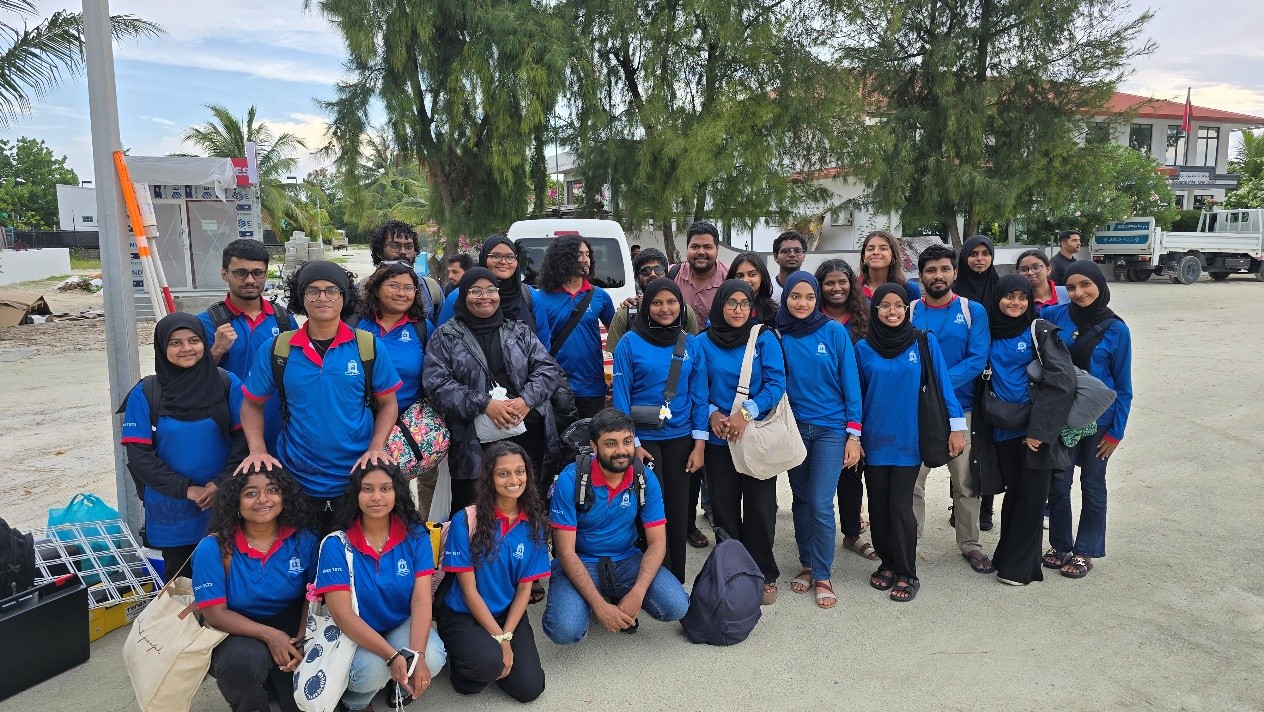
In 2024, 30 Bachelor of Architecture students undertook a field trip to AA. Mathiveri, Bodufolhadhoo, and Nika Island Resort from 25 February to 2 March as part of their design studio. Through site observations, stakeholder interviews, and comparative studies, students examined the natural and built environments, tourism infrastructure, and vulnerabilities to climate change and coastal hazards. The visit to Nika Island Resort provided insights into traditional Maldivian architecture, passive cooling, and climate-responsive design practices. Engagement with the AA. Mathiveri Island Council enabled students to incorporate local knowledge and community perspectives into their proposed designs. In September 2024, 50 Bachelor of Architecture students travelled for a field trip to F. Magoodhoo to explore sustainable architecture and community-responsive design. Through site observations, stakeholder interviews, and comparative studies, students examined the island’s built environment, infrastructure, cultural heritage, traditional architectural practices, passive design techniques, and community needs. Engagement with local communities enabled students to integrate local knowledge, cultural values, and environmental considerations into their architectural proposals. These activities strengthened students’ practical skills in sustainable architecture, climate-responsive design, and community-centred approaches to resilient island development.

In February 2024, Bachelor of Marine Science students participated in coastal field studies in Kaafu Huraa island, assessing coastal ecosystems, water quality, mangroves, biodiversity, and shoreline conditions to develop a coastal zone management plan. These activities strengthened students’ practical competencies in coastal environmental monitoring and ecosystem management relevant to climate change adaptation and resilience.
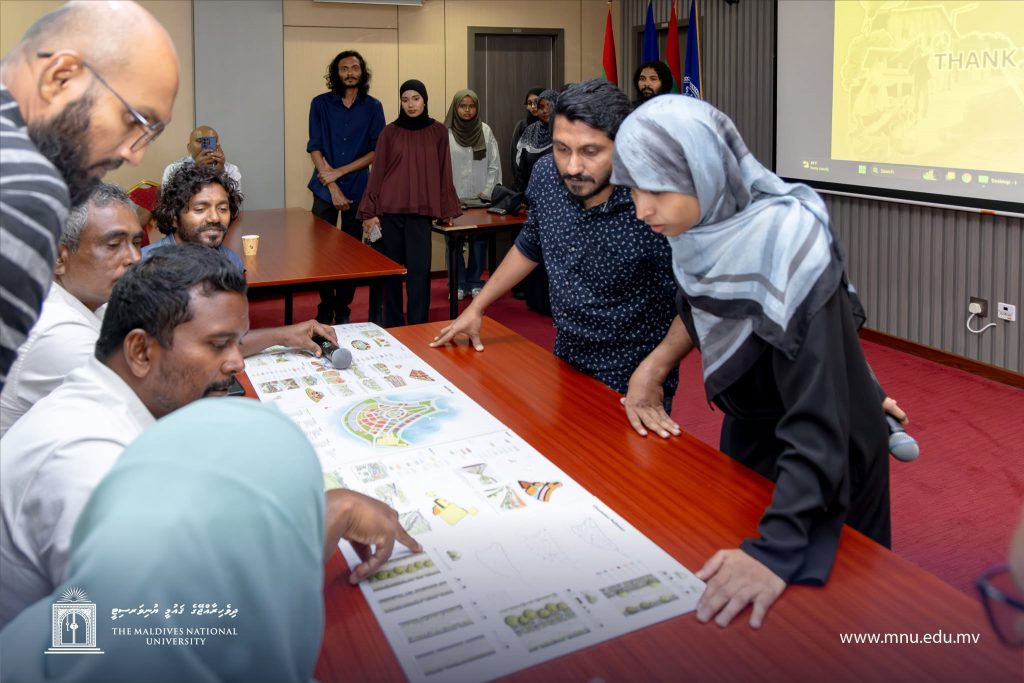
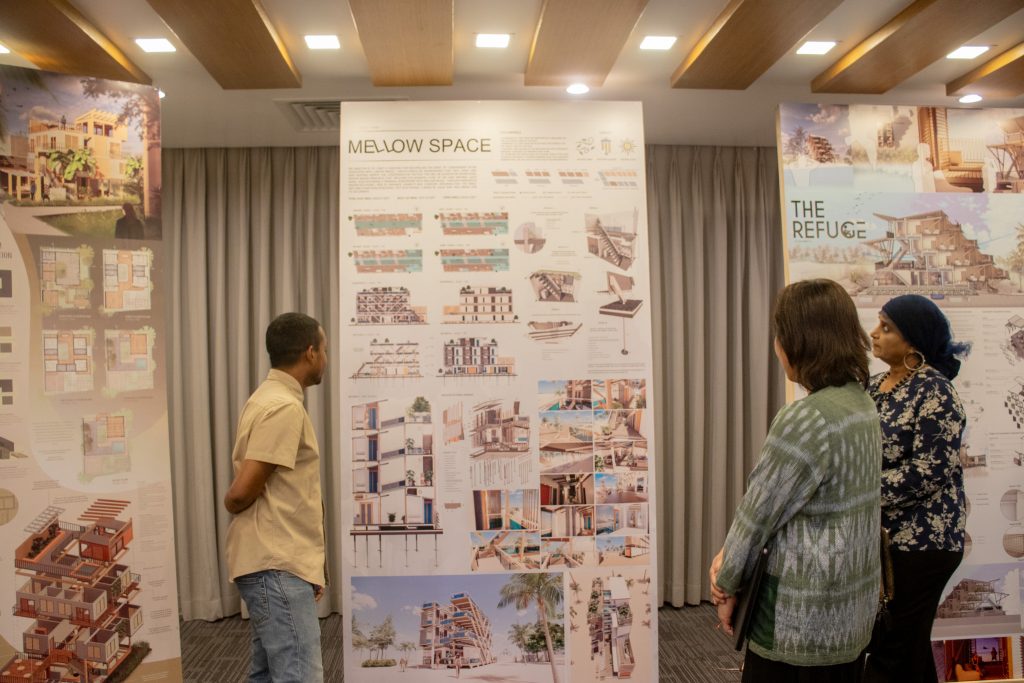
The Resilient Retreats: Design Prototypes for Climate-Resilient Guesthouses initiative, developed in collaboration with the local NGO SIGS Maldives, provided students with practical opportunities to explore climate change adaptation through architectural design. Architecture students developed prototype designs for climate-resilient guesthouses suited to the Maldivian context, while students from the MNU Business School collaborated with SIGS Maldives to conduct cost-benefit analyses of the proposed designs. The student designs were subsequently presented at the Resilient Retreats Exhibition in December 2024, promoting wider awareness of climate-resilient infrastructure. The exhibition showcased climate-resilient building technologies, construction techniques, and materials, focusing on key design considerations such as building foundations, insulation, passive cooling, and building orientation. The displays highlighted traditional Maldivian construction practices alongside modern local and international approaches and emerging technologies for sustainable and climate-resilient building design. 
The College of Fisheries and Ocean Sciences (CFOS) contributed to climate-related education through practical field-based learning. In February 2024, Marine Science students undertook coastal studies in K. Huraa, assessing coastal ecosystems, water quality, mangroves, biodiversity, and shoreline conditions to develop a coastal zone management plan. These activities strengthened students’ competencies in coastal environmental monitoring and ecosystem management relevant to climate adaptation. 

In 2025, MNU continued to integrate environmental sustainability and climate change adaptation through field-based learning and practical activities. Bachelor of Environmental Management students enrolled in the Sustainable Human Development course undertook fieldwork in K. Thulusdhoo, examining the relationships between human development, environmental sustainability, livelihoods, and community resilience. Through household surveys, livelihood assessments, transect walks, GPS mapping, and consultations with the Island Council and other local institutions, students collected data to assess development conditions, environmental challenges, and community wellbeing in a small island context. Similarly, 49 Architecture students conducted field studies in AA. Thoddoo, examining the island’s natural and built environments, environmental risks, architectural characteristics, and community needs. Through site assessments, data collection, and stakeholder engagement, students gathered evidence to inform their Design Studio projects on climate-resilient housing and sustainable island masterplanning. In September 2025, students from the College of Fisheries and Ocean Sciences (CFOS) visited the Maldives Marine Research Institute (MMRI) aquaculture facility at K. Maniyafushi island to gain practical insights into sustainable aquaculture and mariculture development. The visit provided exposure to hatchery operations, broodstock management and species-specific rearing techniques, highlighting the role of research and innovation in reducing pressure on wild fish stocks. The activity supported environmental education through its contribution to sustainable marine resource management and the development of a more resilient fisheries sector in the Maldives.


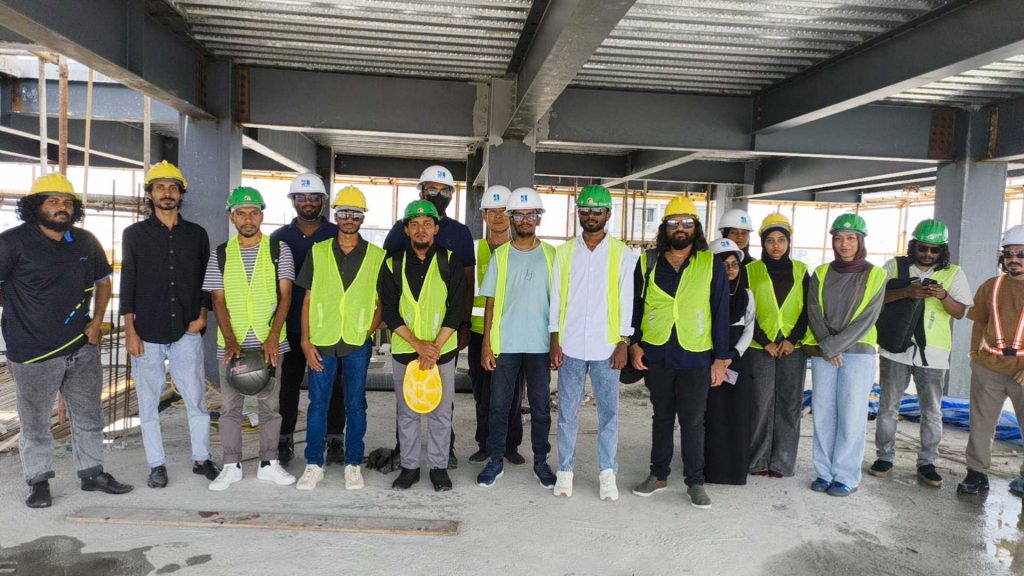
On 18 September 2025, 20 Civil Engineering and Architecture students visited land reclamation and shore protection sites associated with the Future Infrastructure Project in Hulhumalé Phase 3. The visit provided practical exposure to coastal development, shoreline protection, and engineering approaches relevant to managing coastal hazards and strengthening climate-resilient infrastructure. Engineering students also visited STELCO to gain practical insights into power plant operations, electricity generation, grid stability, load management, and renewable energy integration. The visit highlighted the expansion of solar photovoltaic systems across the Maldives and the role of battery storage in supporting reliable renewable electricity supply, strengthening students’ understanding of sustainable energy technologies and the transition towards low-carbon energy systems.

In November 2025, Bachelor of Marine Science students participated in a practical learning visit to Soneva Conservation and Sustainability Maldives in Baa atoll, gaining hands-on knowledge of coral reef restoration techniques, including coral micro-fragmentation, coral nurseries, and larval propagation. The activity strengthened students’ understanding of coral reef resilience and ecosystem restoration in the context of environmental change and coral bleaching. They also visited the Baa Atoll Biosphere Reserve Office to learn about marine biodiversity conservation, protected area management, and sustainable tourism. The visit highlighted conservation efforts at Hanifaru Bay, including environmental regulations, ranger monitoring, scientific research, and community engagement. Bachelor of Teaching (Secondary) students participated in fieldwork at Hulhumalé Central Park and beach area. The activity provided practical experience in ecological observation, biodiversity assessment and environmental education, strengthening the students’ capacity to incorporate environmental learning into future teaching.
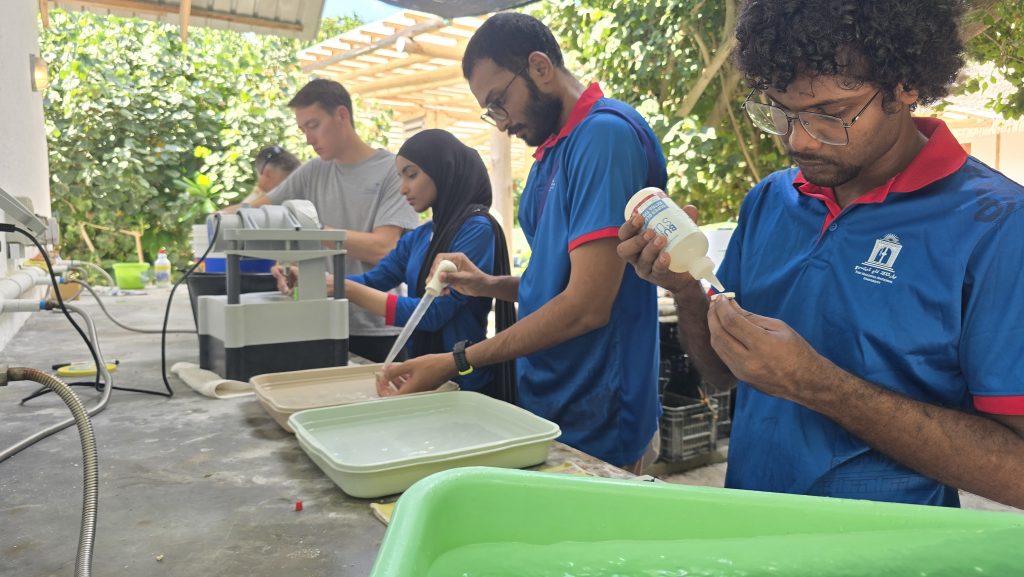
 

In 2026, climate-related teaching were strenthened through for example Sea-Level Rise and Coastal Adaptation module, which provided scientific and applied knowledge on sea-level rise, coastal vulnerability, and adaptation strategies. Students enrolled in Coastal Engineering module participated in fieldwork in ADh. Dhigurah, conducting beach profiling, sediment sampling, shoreline assessments, and inspections of coastal protection structures. The activity strengthened their technical competencies in coastal hazard assessment, erosion monitoring, and climate-resilient engineering. As part of field-based learning, Bachelor of Science in Climate Change students participated in an introductory drone technology workshop on K. Huraa Island. The workshop introduced students to drone operations, aviation safety practices, and relevant local regulations, while providing supervised hands-on flying experience. Students also learned how aerial imagery can be processed into maps and spatial data to support environmental monitoring and analysis. The activity strengthened students’ practical understanding of drone technology and its potential applications in coastal monitoring, environmental assessment, and climate change research.

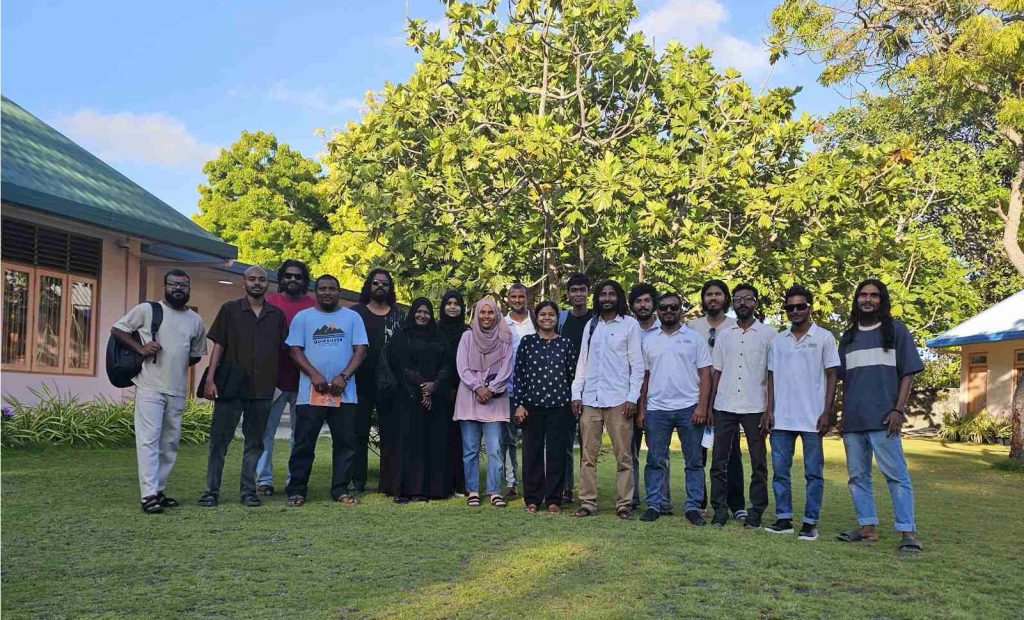
From 30 April to 2 May 2026, students from Faculty of Engineering, Science and Technology (FEST) undertook a field trip to ADh. Dhigurah as part of the Coastal Engineering course. Through practical activities, including beach profiling, sediment sampling, shoreline assessments, and inspections of coastal protection structures, students examined coastal processes, erosion and accretion patterns, and engineering approaches to shoreline protection. The fieldwork enabled students to apply theoretical knowledge to real-world coastal challenges while strengthening their technical skills in environmental assessment, data collection, and coastal infrastructure evaluation. The activity enhanced students’ understanding of coastal vulnerabilities, sustainable shoreline management, and engineering solutions for climate adaptation and resilience in small island communities.


Seminars, Talks and Forums Supporting Climate Change Education

A range of seminars, public lectures and academic talks promoted climate change education, environmental awareness and knowledge exchange. These activities supported communicating scientific knowledge, discussing climate-related challenges and strengthening understanding of mitigation and adaptation measures relevant to the Maldives. Below are some examples of such activities held recently. 

Public Lecture: Scaling Coral Reef Restoration and Adaptation (2026): MNU’s College of Fisheries and Ocean Sciences, in collaboration with the Australian High Commission, organised a public lecture and film screening on coral reef restoration and adaptation. The event provided opportunities for students, researchers and other participants to learn about scientific approaches to restoring degraded reefs and strengthening marine ecosystem resilience.

Guest lecture on coral reef research (2026): College of Fisheries and Ocean Sciences (CFOS) organised a guest lecture by Fathimath Hana Amir, a Maldivian marine biologist specialising in coral reef research. The session introduced students to practical approaches to coral reef monitoring and restoration, including standardised data collection methods, long-term monitoring programmes and emerging research on coral trophic strategies. It also highlighted the environmental challenges facing Maldivian coral reefs and the importance of scientific research in informing conservation and restoration efforts. The lecture

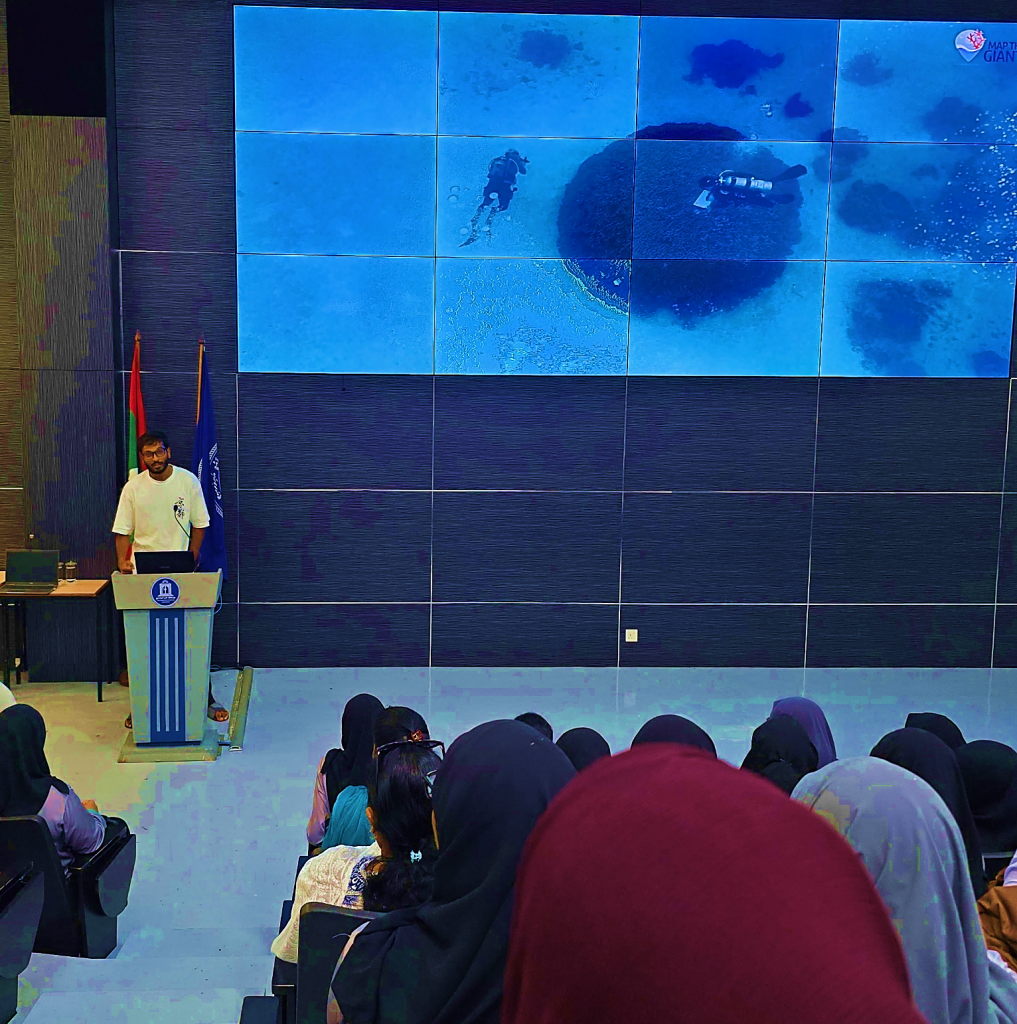
Seminar on Mapping the Giants (2025): The College of Fisheries and Ocean Sciences hosted a seminar highlighting Map the Giants, a citizen-science initiative supported by the MaRHE Center to identify, document and protect exceptionally large coral colonies. The seminar explored the importance of giant corals as ecological resources and potential indicators of long-term environmental conditions. It also highlighted threats from climate change and human activities, encouraging scientific and public participation in coral conservation. 

Seminar on Ocean Forecasting (2025): MNU organised a seminar on ocean forecasting and its applications to marine resource management, maritime safety and coastal planning. The session highlighted the use of oceanographic information, including currents, waves, tides and weather conditions, to support decision-making in fisheries, tourism and shipping. It demonstrated how ocean forecasting can strengthen preparedness for marine hazards and support coastal resilience.

Seminar on Artificial Intelligence for Marine Environmental Data Analysis (2025): MNU hosted a seminar involving international researchers on the use of artificial intelligence to analyse acoustic data collected from marine environments. The session introduced students to emerging technologies for processing environmental observations and supporting marine research. It strengthened awareness of digital methods for environmental monitoring and demonstrated their potential applications in understanding changing marine ecosystems. Its contribution to climate education is indirect, through developing scientific and technical knowledge relevant to environmental research.

In November 2025, The Faculty of Engineering, Science and Technology (FEST) organised a public exhibition showcasing the semester-end projects of more than 60 architecture students. The exhibition featured residential design projects, community-based tourism homestay proposals for N. Kendhikulhudhoo, and regenerative urban planning and mixed-residential housing strategies for Malé City. Through site analysis, conceptual development and innovative design solutions, students demonstrated approaches to sustainable architecture, environmentally responsive design and resilient urban development. The exhibition also provided opportunities for professional feedback, industry engagement and public awareness of sustainable design practices. Open to the wider community, the event promoted knowledge exchange on sustainable architecture, resource-efficient design and planning approaches relevant to climate-resilient island development.

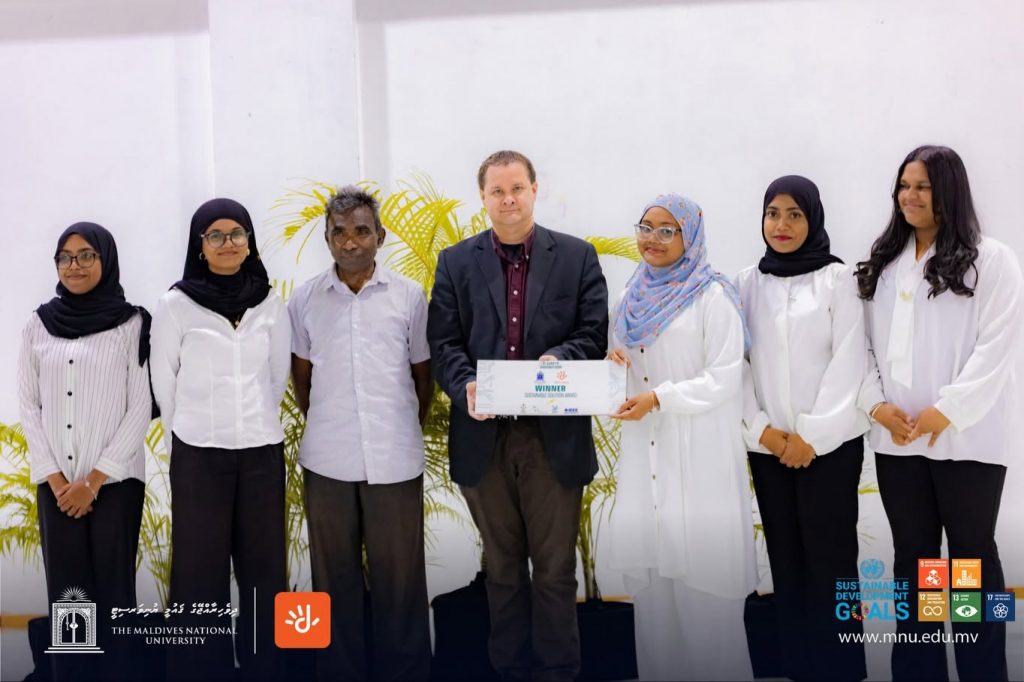
From 5 to 7 September 2025, the Faculty of Engineering, Science and Technology (FEST) organised an E-Waste Hackathon under the theme “Innovating for a Circular Economy: Tackling the E-Waste Crisis” in partnership with Dhiraagu, the Ministry of Environment, WAMCO, IEEE Maldives Subsection, and ICEST2025. The event brought together high school, college and university students to develop innovative technological solutions for electronic waste management. Working in interdisciplinary teams, participants explored approaches to e-waste recycling, upcycling, waste reduction and public awareness, culminating in presentations of their proposed solutions to a panel of judges. The hackathon promoted environmental responsibility and collaborative problem-solving among young people while raising awareness of resource efficiency, circular economy practices and sustainable waste management.

Promoting Climate Change Awareness and Community Engagement

MNU actively promotes environmental awareness and community participation in climate action through educational campaigns, tree-planting programmes, coastal clean-ups, school outreach and practical sustainability activities. Between 2024 and 2026, MNU organised and participated in initiatives across its campuses, engaging students, staff, schools, local councils, NGOs and community organisations. These activities contributed to SDG 13 by encouraging environmentally responsible behaviour, promoting sustainable resource management and strengthening community engagement in environmental protection and climate action.

In 2024, MNU Kulhudhuffushi Campus observed Earth Hour to raise awareness of climate change, energy conservation and responsible electricity consumption. The University also organised World Environment Day activities, including tree planting and environmental awareness initiatives, encouraging students, staff and communities to participate in environmental stewardship. World Ocean Day activities at Thinadhoo Campus further promoted awareness of marine conservation, coastal ecosystems and sustainable island environments.

During 2025, MNU expanded its environmental awareness activities through practical learning and community engagement. In August, the Utility Regulatory Authority conducted an information session at Kulhudhuffushi Campus, promoting awareness of energy conservation, water efficiency and responsible resource use. Tree-planting activities were organised across MNU campuses in support of the Government’s Five Million Trees Project. In September, Hithadhoo Campus collaborated with Addu City Council on tree planting, while the MNU Student Union organised a tree-planting event at Thinadhoo Campus, bringing together students, staff and community partners. Gan Campus also participated in the national tree-planting initiative in October. These activities encouraged environmental responsibility, biodiversity conservation and awareness of the contribution of urban greenery to healthier and more resilient island environments. In addition, the Veshisaafu 2025 initiative at Hithadhoo Campus engaged more than 50 participants in practical environmental care and community stewardship.

In 2026, MNU continued its environmental outreach through school awareness programmes, community clean-ups and sustainable resource management activities. In August, the College of Fisheries and Ocean Sciences (CFOS) conducted a marine environmental awareness session for students at Jamaaludheen School, introducing coral reef ecosystems, marine biodiversity and environmental threats, including coral bleaching, pollution and overfishing. In June, CFOS collaborated with Sonee Fishing to deliver a session on responsible sports fishing for school students, highlighting sustainable fishing practices, species identification and marine conservation.

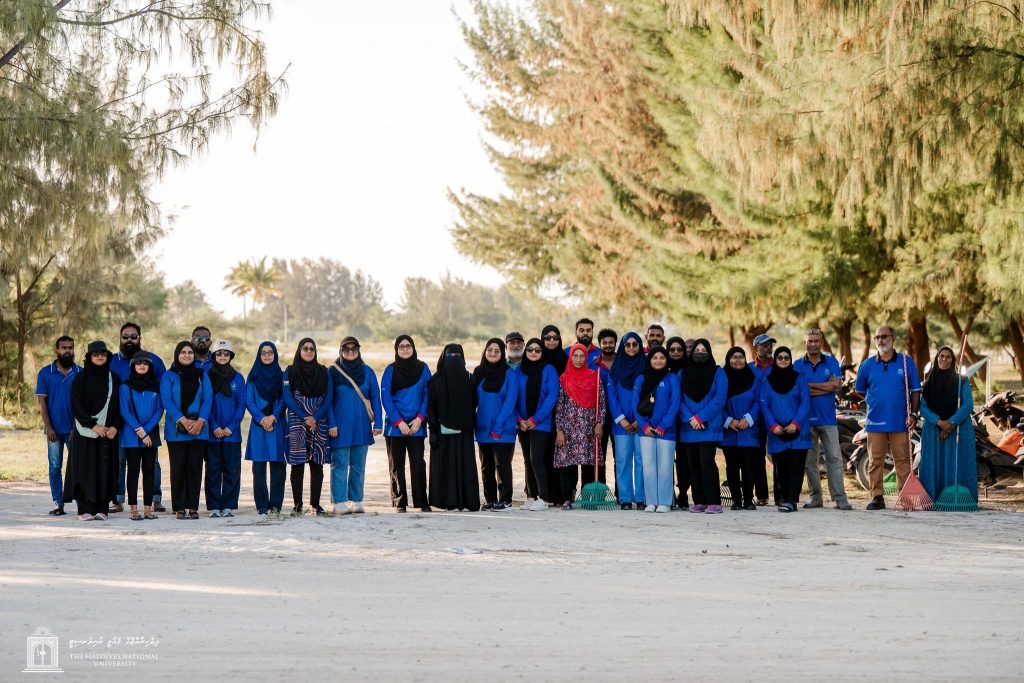
Community-based environmental activities also formed an important component of MNU’s awareness initiatives. In February 2026, 40 students and staff from Thinadhoo Campus participated in a beach-cleaning activity to promote coastal conservation and responsible waste management. In September, the Allied Biologists and Young Scientists of the Sea (ABYSS), the student wing of CFOS, collaborated with environmental NGOs and youth organisations to mark World Cleanup Day through a coastal clean-up at Hulhumalé Phase II. The event mobilised more than 120 volunteers and collected approximately 283 kg of waste, including recyclable plastics and aluminium. MNU Thinadhoo Campus students and staff also joined Neyka and Scout leaders for a World Cleanup Day beach-cleaning initiative, strengthening community participation in environmental protection.

Additional environmental initiatives included an island-wide clean-up in collaboration with the Kulhudhuffushi Dengue Task Force in April 2026, promoting environmental hygiene and community health. Hithadhoo Campus organised a Gardening and Compost Day in May, engaging 29 participants in sustainable gardening, soil management and organic waste recycling. Tree-planting activities continued at Thinadhoo Campus in September, involving students and staff in campus greening and environmental stewardship.

Collectively, these initiatives demonstrate MNU’s commitment to extending environmental education beyond the classroom through community engagement and practical sustainability activities. By collaborating with students, staff, NGOs, government agencies and local communities, MNU strengthened environmental awareness, promoted sustainable practices and encouraged climate-conscious behaviour, contributing to SDG 13.3 and broader environmental sustainability goals.

Free Online Resources for Climate Action

Sustainability Literacy for Everyone – Free Online Course

The Maldives National University (MNU) through Sustainability Literacy for Everyone offers a free, self-paced online course open to everyone, with no prior knowledge or academic qualifications required. Anyone, regardless of age, background or location, can enrol, access the learning materials and complete the course at their own pace.

Link to course: Sustainability Literacy for Everyone


Free Short Course on Climate Change & Health

MNU in collaboration with Université Paris Cité, University of Heidelberg and the University of Liège developed MOOC style life long learning materials for climate and environmental health education. These free video lessons explore the relationship between climate change, human health, and environmental sustainability, with particular emphasis on the vulnerabilities and challenges faced by Small Island Developing States (SIDS), including the Maldives.

Link to course:  Climate Change and Health

Explore all 17 goals