Academic and personal support
MNU provides academic and pastoral support to help students navigate their university experience. Monthly academic workshops cover essential study skills, including planning, reading, note-taking and academic writing. Fortnightly Help and Guidance Sessions provide students with opportunities to seek assistance and discuss challenges affecting their academic journey and wellbeing. Students can also contact the University’s Student Support Services for guidance.
Support for students with disabilities
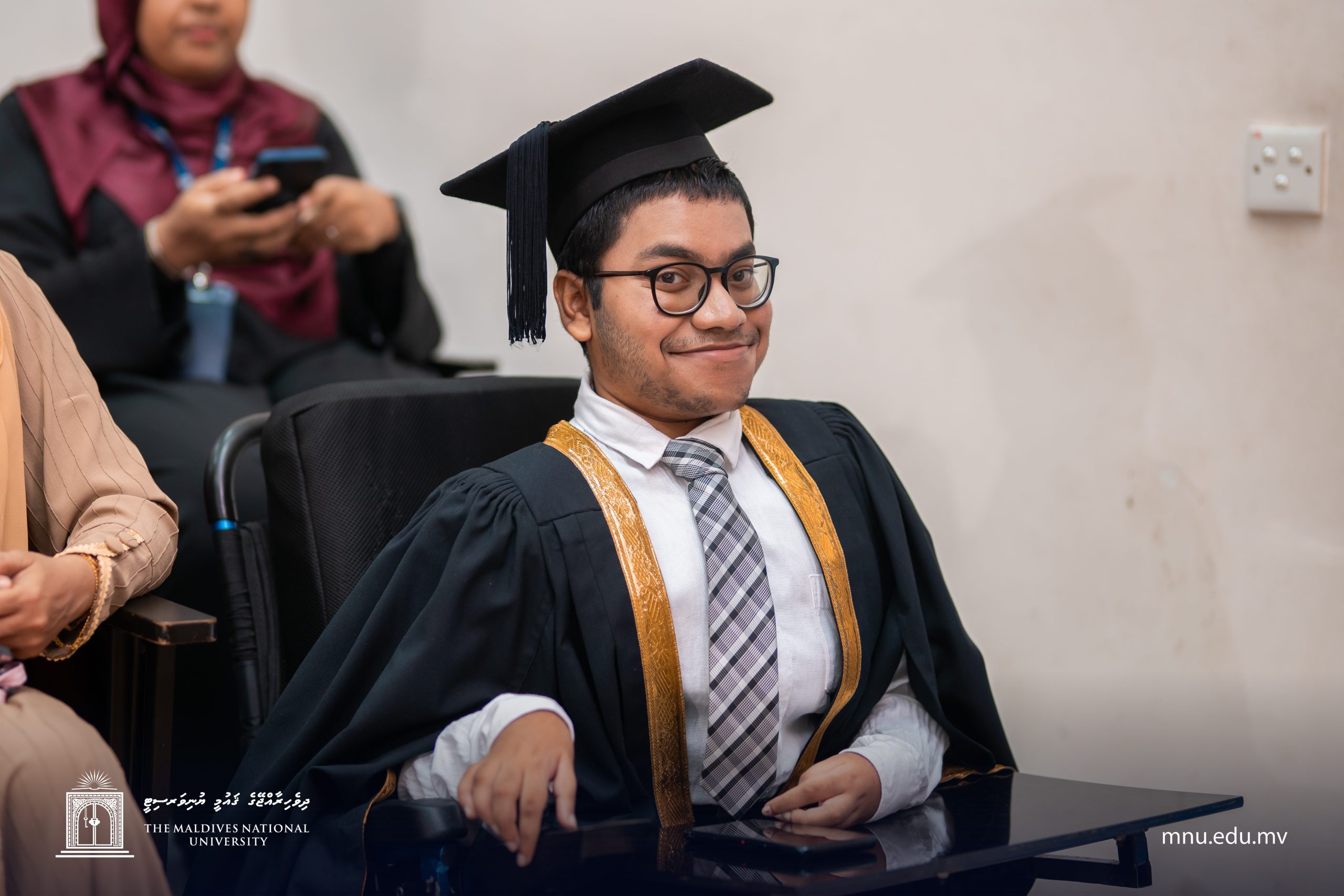
Through its Supporting Students with Disability Policy and Education for All initiative, MNU promotes an accessible learning environment that respects the rights and dignity of students with disabilities. The University provides a process for students to disclose their support requirements and request reasonable adjustments, including examination accommodations. The policy also provides for financial assistance of up to a 50% reduction in tuition fees in relevant circumstances, subject to its provisions.
Financial assistance and scholarships
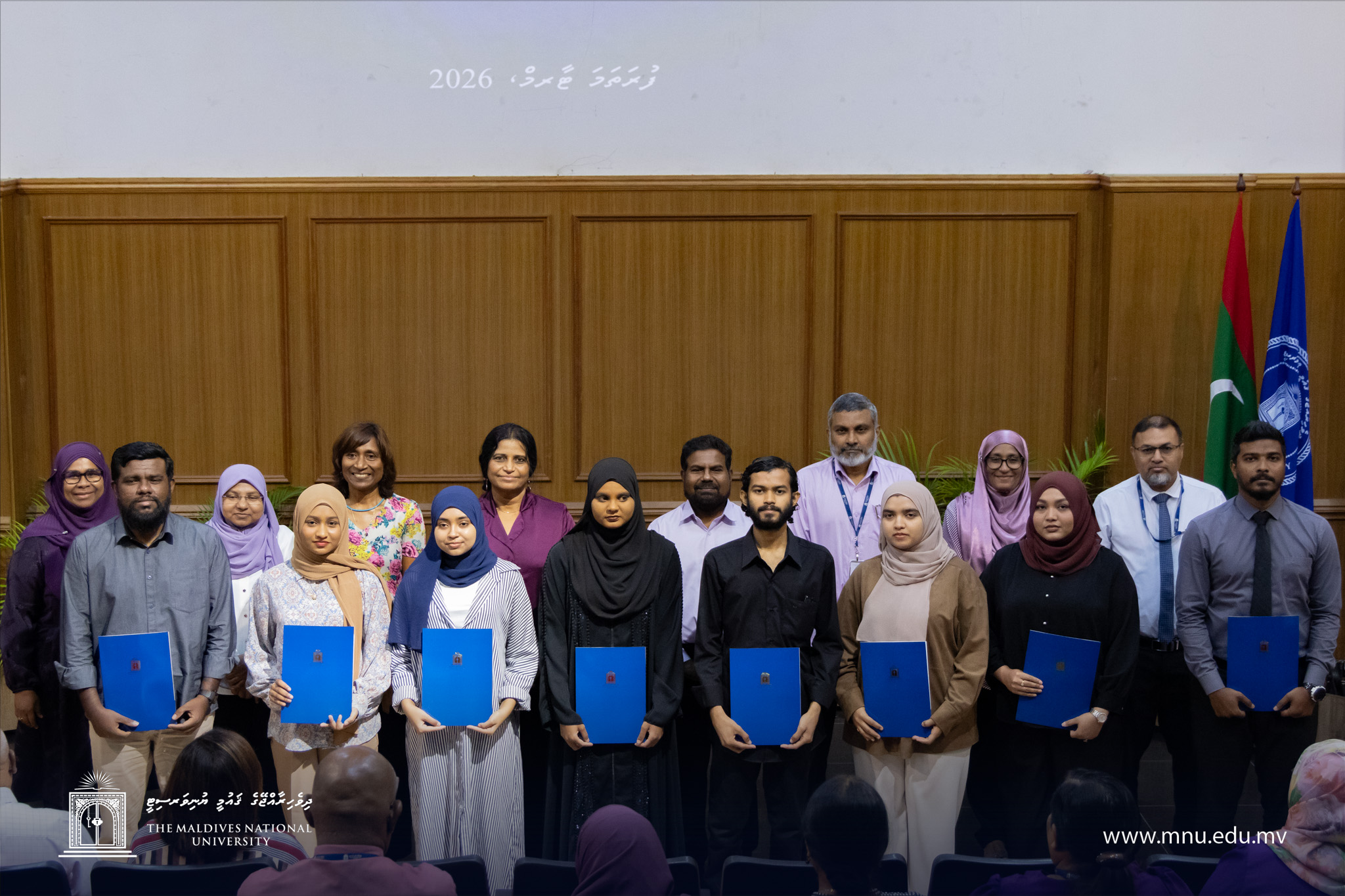
MNU provides University-funded scholarships for eligible Maldivian students, including undergraduate and postgraduate full scholarships, tuition fee scholarships, Shaheed Awards and special scholarships. Full scholarships include programme fees and a monthly stipend, while tuition fee scholarships cover eligible course fees. These schemes support students in pursuing higher education and help reduce financial barriers to study.
Access to education across the Maldives
MNU contributes to widening educational opportunities through learning programmes and delivery models that support participation beyond the capital. Its 2025 SDG report highlights blended and distance-learning opportunities, including the Master of Arts in Social Policy, which enable participation by students from outer atolls and different age groups. MNU remain committed to increase its blended delivery courses to increase its educational provision coverage across the country.
MNU extended its outreach to geographically disadvantaged communities through Fahi MNU Atoll Visits, providing career guidance to young learners and their parents to support informed educational and career choices. The initiative also included professional development sessions for staff of government institutions in the regions, extending learning and capacity-building opportunities beyond the capital. MNU remains committed to expanding blended-learning programmes and strengthening its geographical reach to ensure wider and more equitable access to higher education and lifelong learning opportunities across the country.
Impact: These initiatives help reduce geographical and socio-economic inequalities by bringing educational guidance, professional development, and learning opportunities closer to underserved communities, ensuring that access to education and skills development is not limited by geographical location.
Student participation and wellbeing
MNU’s Student Voice Policy places students at the centre of university governance and decision-making. The University also provides student leadership development opportunities that encourage confidence, responsibility and active participation in university life. Together with its academic and pastoral support framework, these initiatives contribute to a respectful and supportive university community.
Through these established policies, services and programmes, MNU supports students who may encounter financial, geographical, accessibility or academic barriers. These efforts contribute to more inclusive participation in higher education and advance SDG 10: Reduced Inequalities, alongside SDG 4: Quality Education.