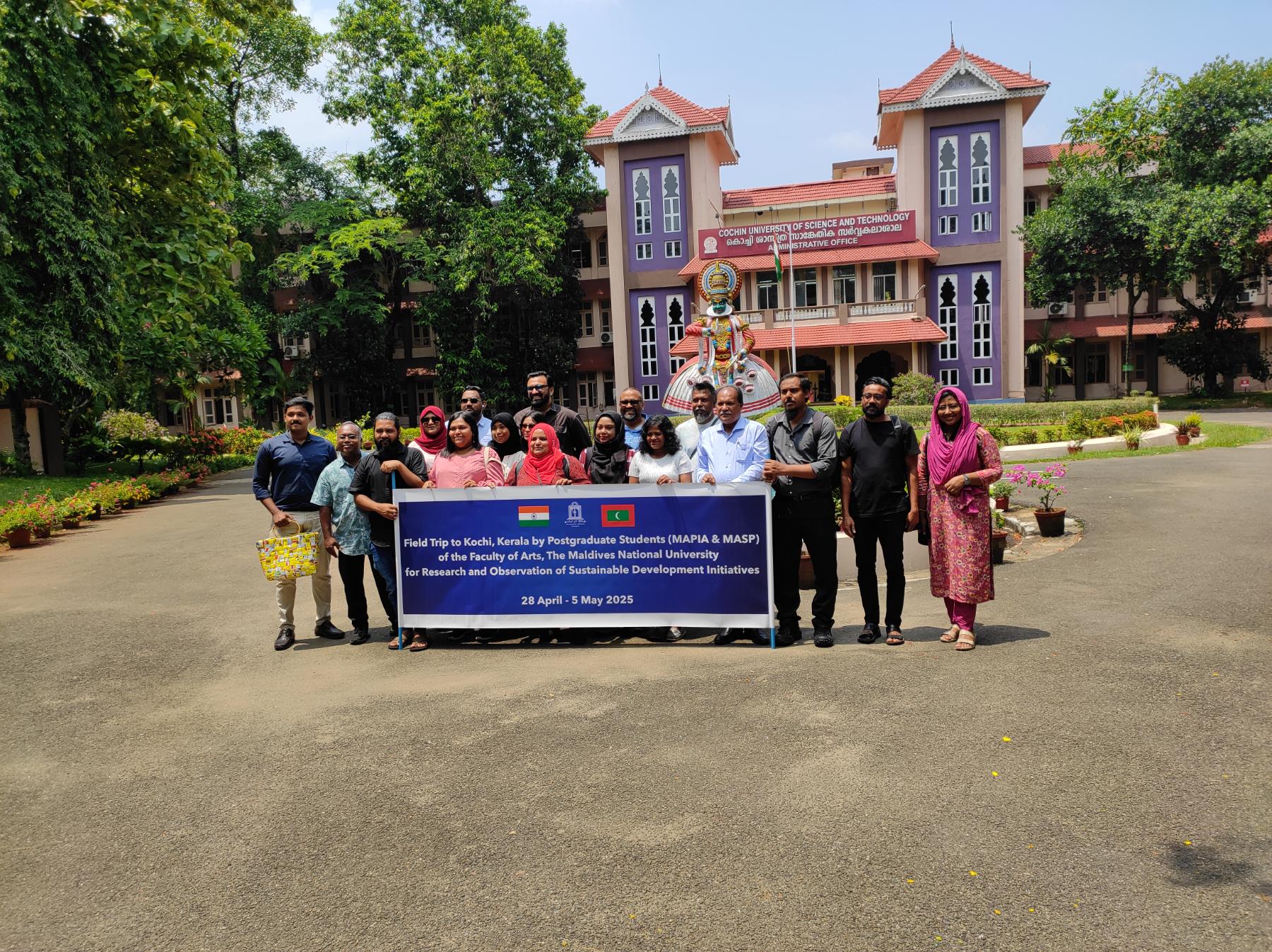
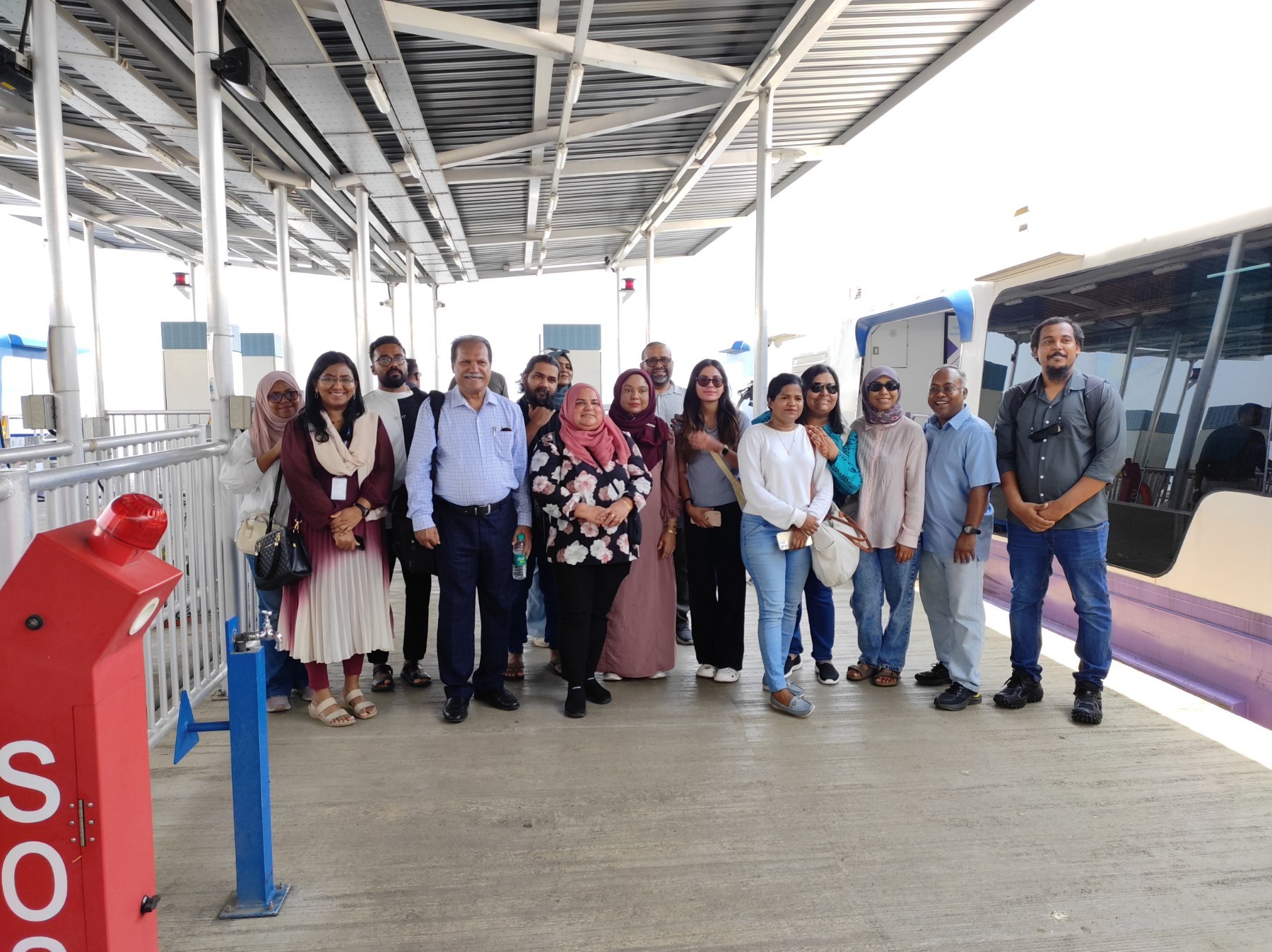
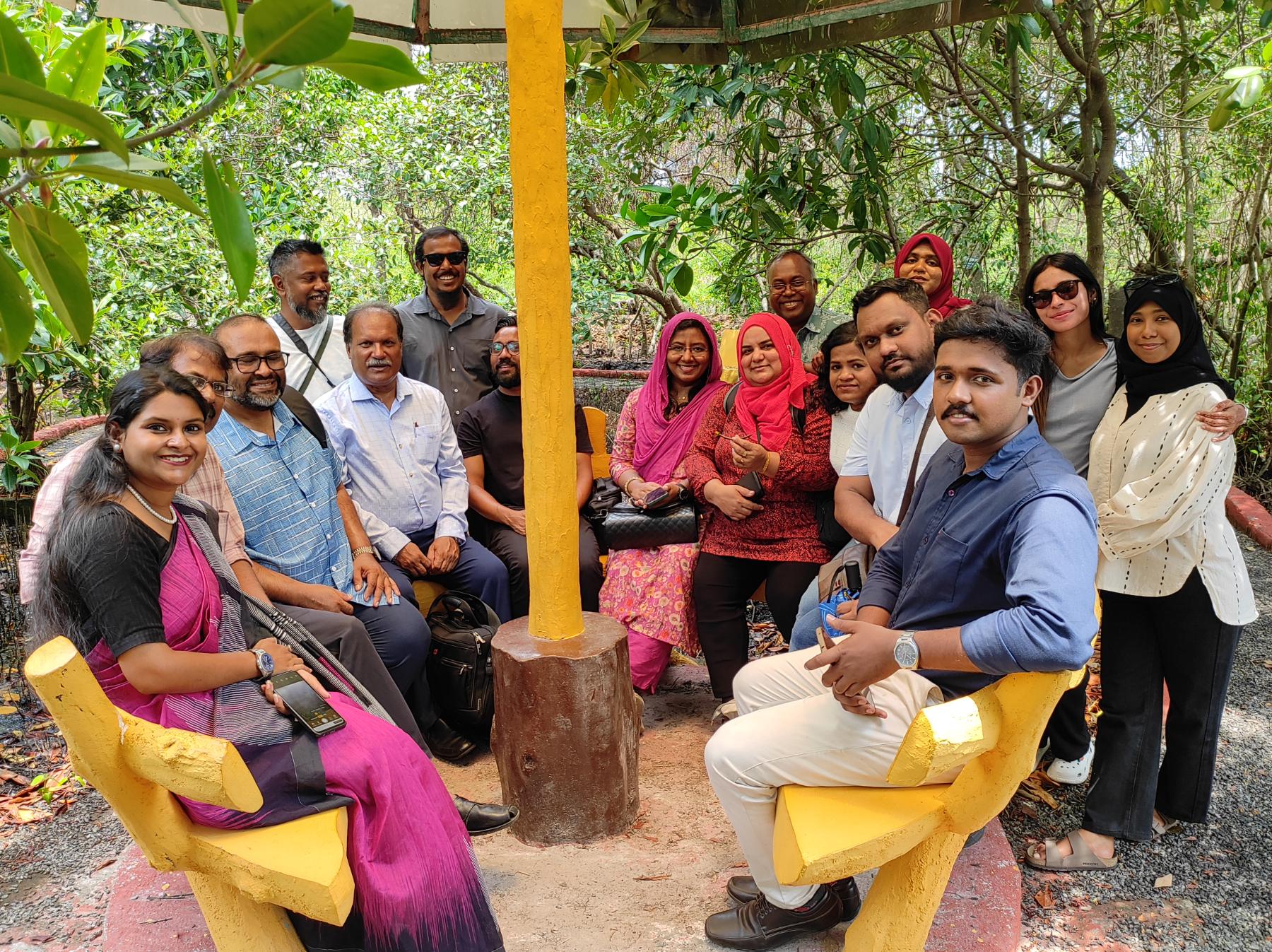
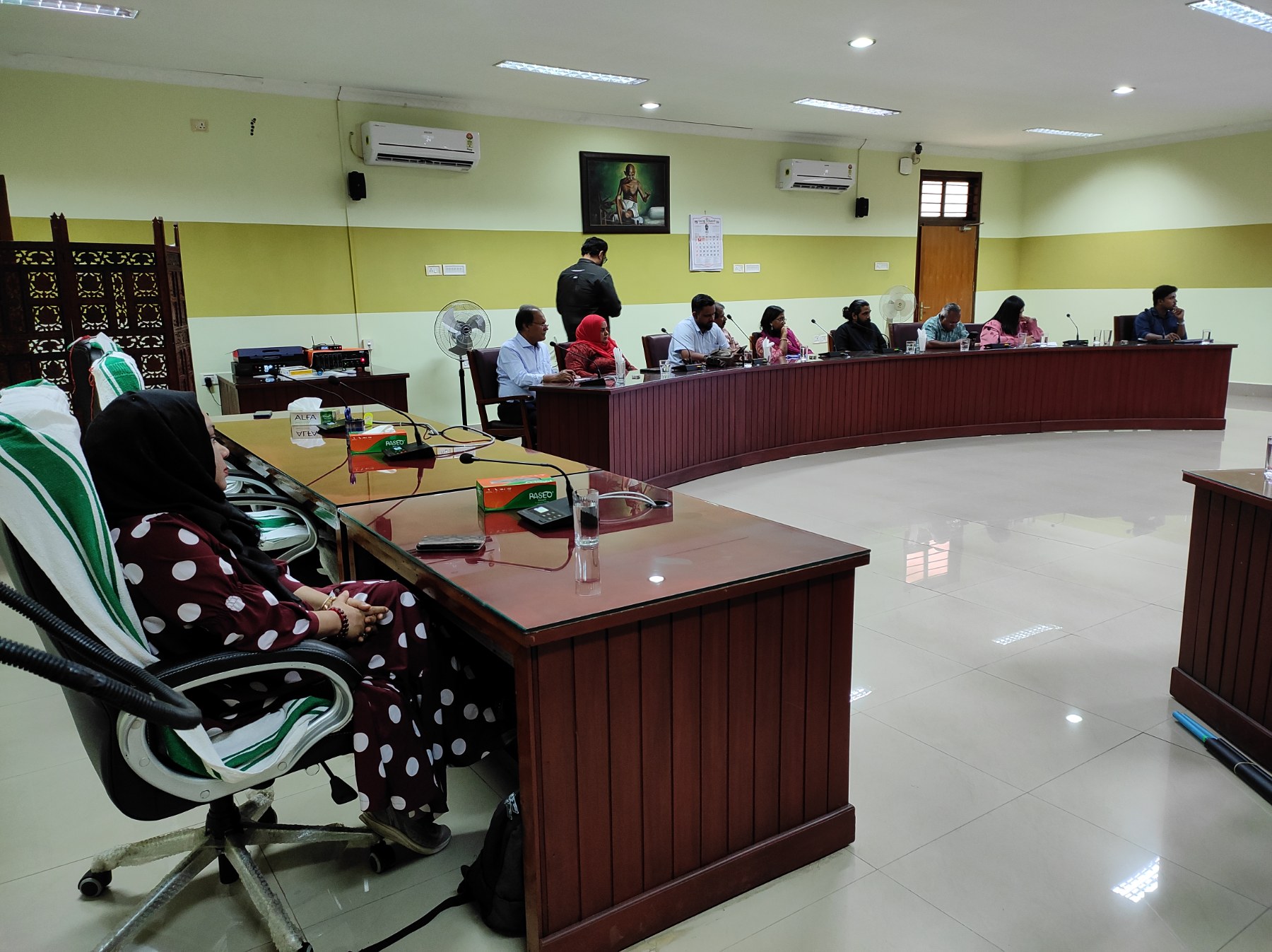
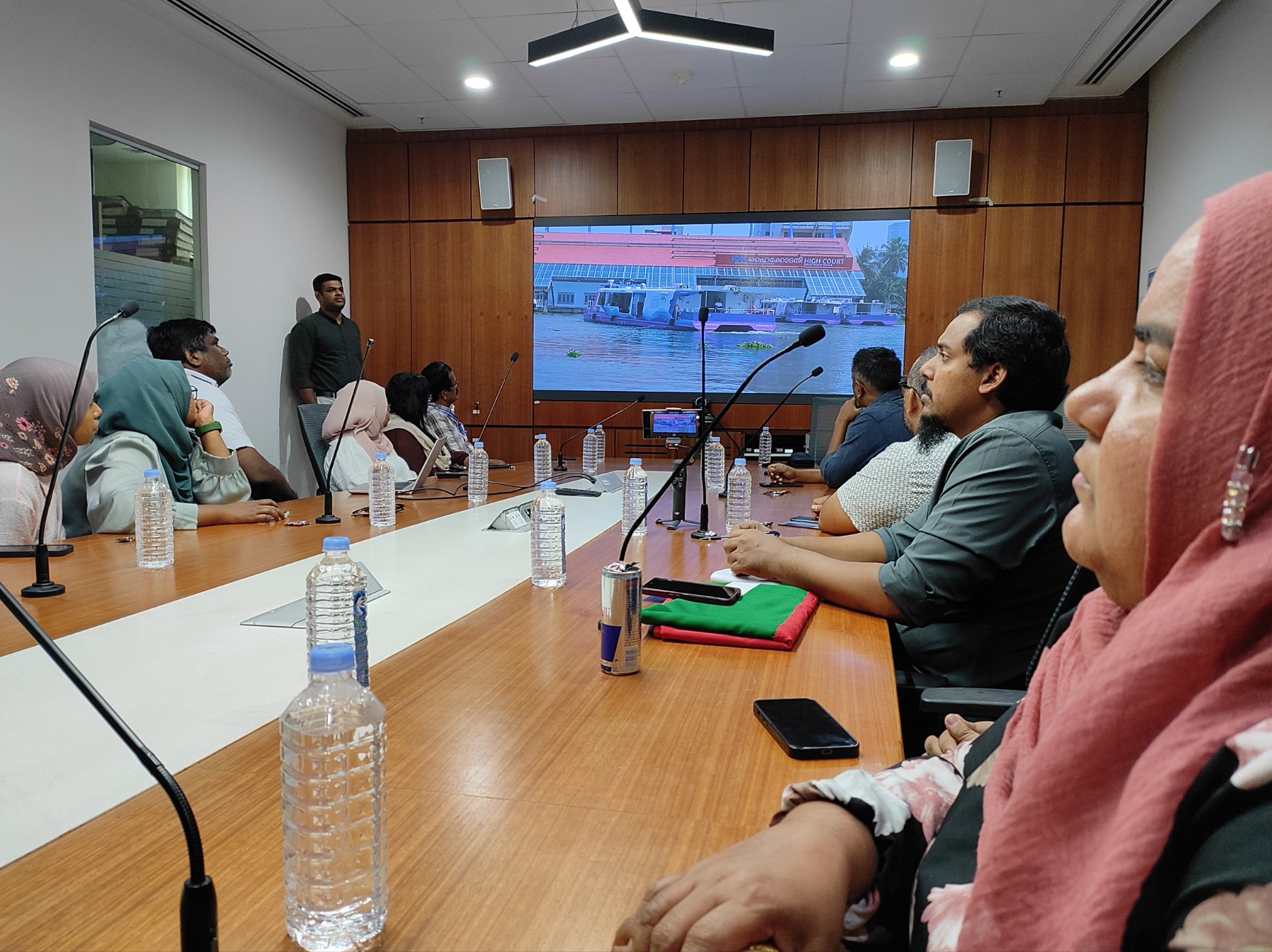
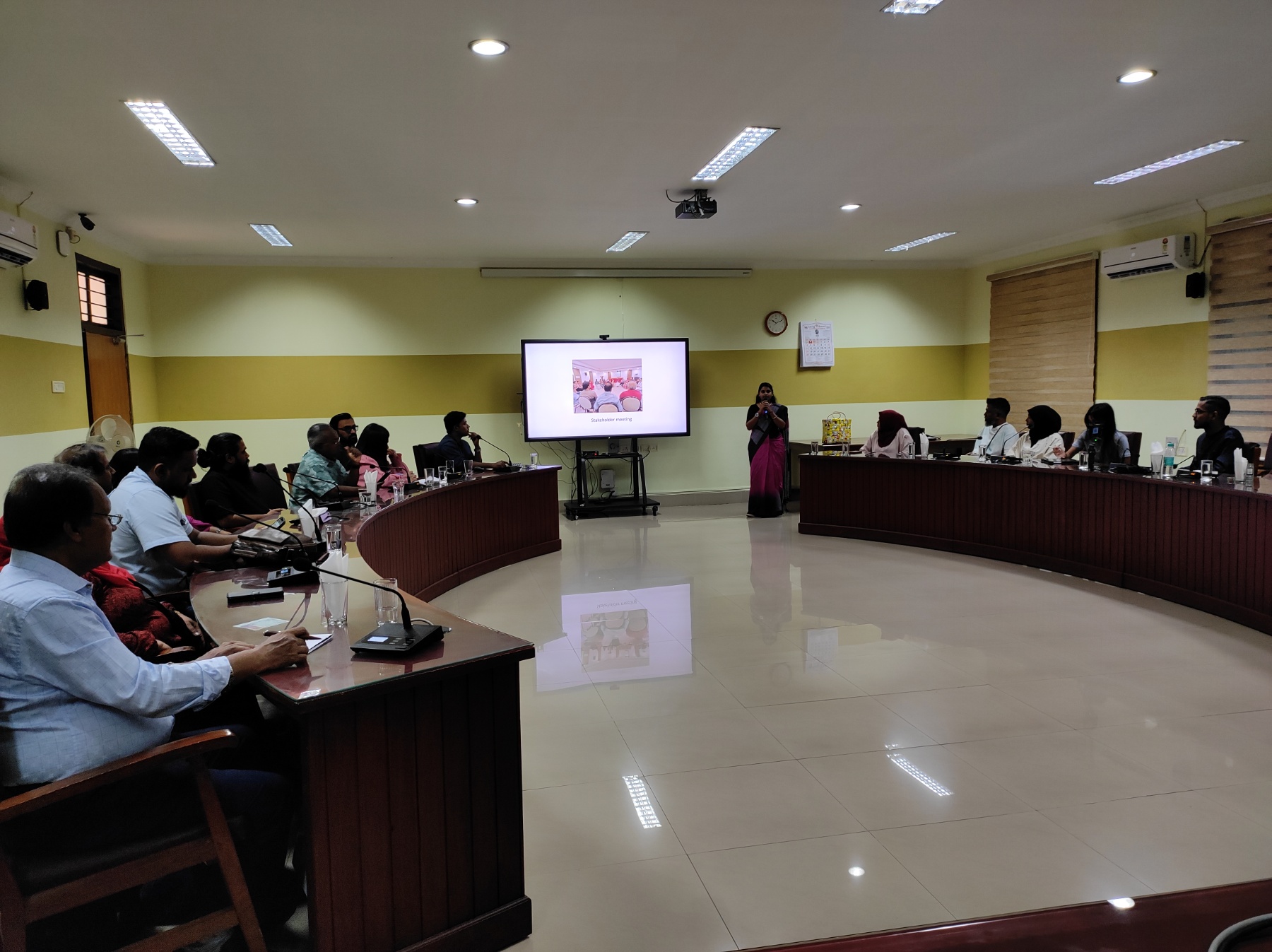
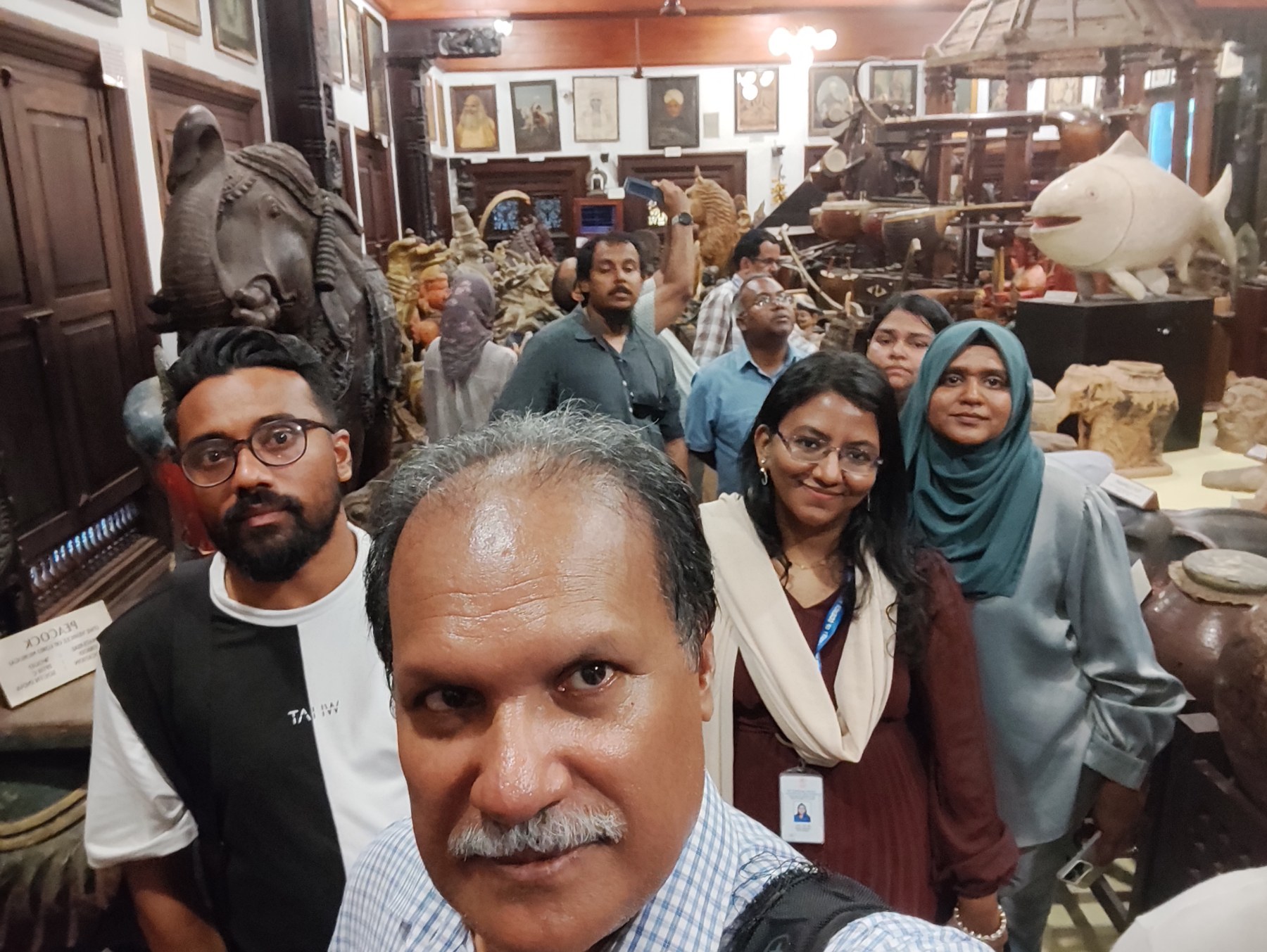
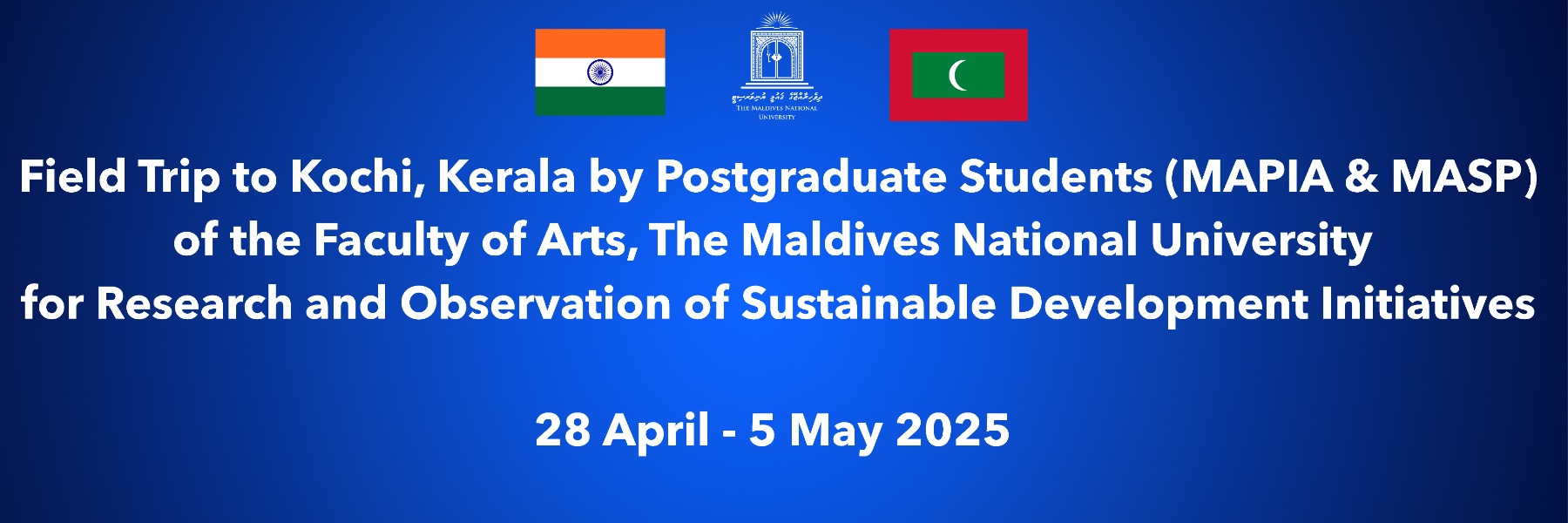
The Faculty of Arts at The Maldives National University (MNU) conducted an experiential learning field trip to Cochin, Kerala, India, from 21 to 27 May 2025, providing Master’s students with opportunities to connect academic learning with practical approaches to sustainable development.
The field trip was undertaken by students studying POL 605 – Sustainable Development: Issues & Challenges under the Master of Arts in Political Science and International Affairs and POL 501 – Human Rights-Based Approach to Development under the Master of Arts in Social Policy.
Designed as an experiential learning initiative, the field trip provided students with opportunities to explore how concepts related to sustainable development, human rights-based approaches and community development can be applied beyond the classroom. The programme enabled students to strengthen their understanding of the planning, implementation, monitoring and evaluation of sustainable development initiatives.
The field trip was coordinated in collaboration with Cochin University of Science and Technology (CUSAT), building on the existing institutional partnership between MNU and CUSAT under a Memorandum of Understanding. The collaboration provided a platform for academic exchange, knowledge sharing and networking between students and lecturers from the two institutions.
As part of the learning experience, students explored areas relevant to sustainable development, including renewable energy, climate change adaptation and mitigation, resource conservation, recycling, aquaculture and fisheries conservation, ecosystem and biodiversity protection, and waste management. These areas provided students with opportunities to examine sustainability challenges and consider approaches for addressing them in different community and development contexts.
The programme also promoted education for sustainable development by encouraging students to apply theoretical knowledge through observation, investigation and engagement with practical development approaches. Students were expected to reflect on their experiences and prepare group reports demonstrating their learning and knowledge gained through the field visit as part of their academic assessment.
Beyond academic learning, the field trip supported cross-cultural learning and international partnership-building. Students had opportunities to interact with counterparts and lecturers in India, exchange knowledge and ideas, and gain exposure to the culture and traditions of Kerala while sharing aspects of Maldivian culture.
The initiative also provided a platform for strengthening people-to-people connections and institutional cooperation between Maldives and India, while giving students an international learning environment to develop knowledge, skills and networks relevant to sustainable development.
Through this field-based learning experience, the Faculty of Arts continued to integrate experiential education, sustainability and international collaboration into postgraduate learning, supporting students in developing knowledge and practical perspectives relevant to sustainable development. The initiative aligns with UN Sustainable Development Goal 4 (Quality Education) through experiential learning and education for sustainable development, and SDG 17 (Partnerships for the Goals) through academic collaboration and knowledge exchange between MNU and CUSAT. The field trip also addressed areas relevant to SDG 13 (Climate Action), SDG 12 (Responsible Consumption and Production), SDG 14 (Life Below Water), and SDG 15 (Life on Land) through its focus on climate change, resource conservation, recycling, waste management, fisheries conservation, ecosystems and biodiversity.