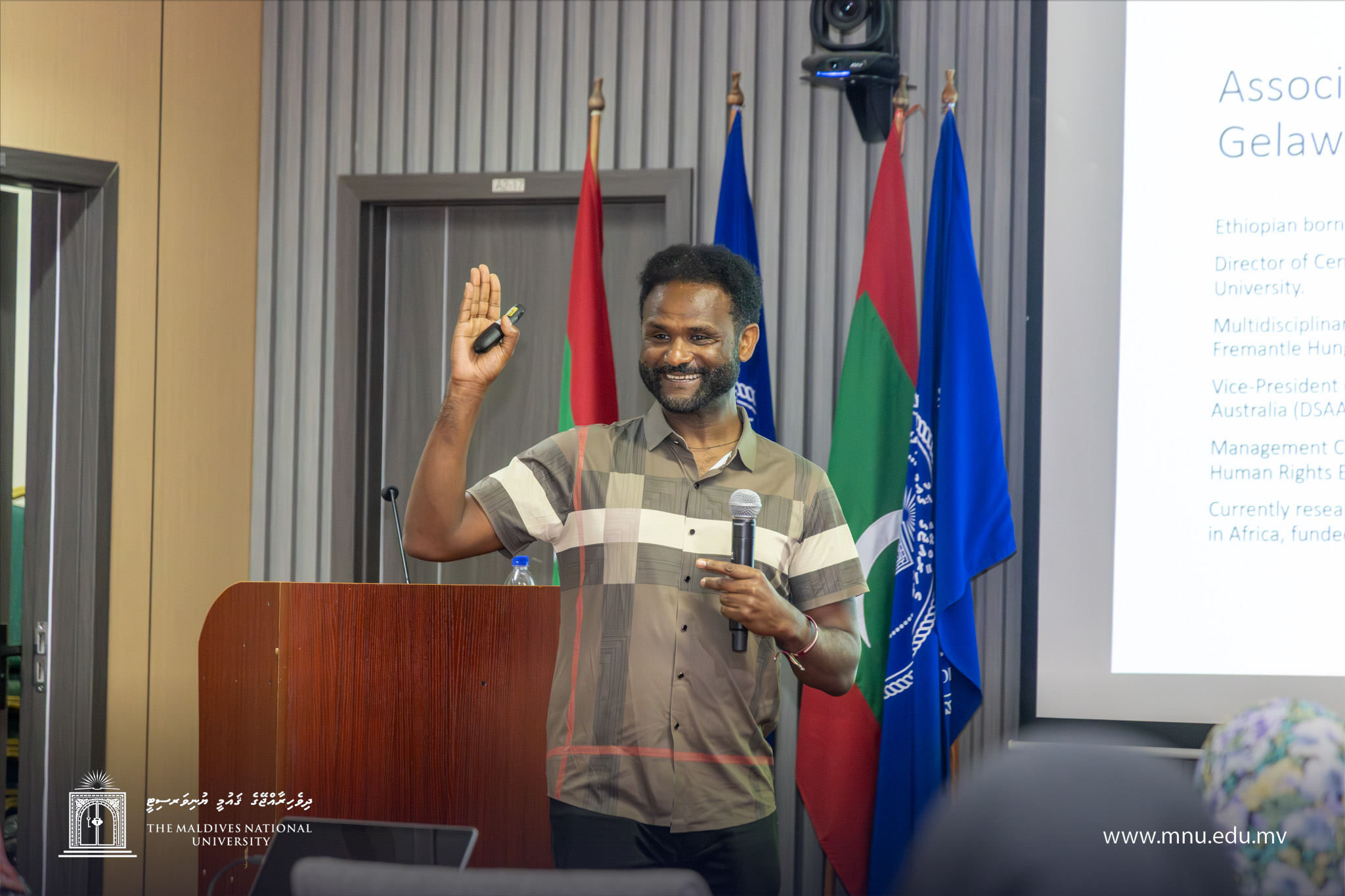
Today’s MNU seminar, Roads to Decolonial Futures through Critical Appreciative Dialogue, was delivered by Associate Professor Yirga Gelaw Woldeyes, Director of the Centre for Human Rights Education at Curtin University.
The seminar provided an engaging platform for academics to reflect on how our positionality—including our epistemic, social, and power locations—influences the knowledge we create, value, and share. Through thought-provoking dialogue and interactive discussions, participants explored the colonisation of the mind, language imperialism, the politics of language, and the importance of recognising that every language embodies its own histories, cultural memories, and ways of knowing. The session encouraged participants to critically examine their assumptions while appreciating the richness and diversity of global knowledge traditions.
The seminar was attended by 19 participants and featured lively discussions and active audience engagement, reflecting the academic community’s strong interest in decolonial perspectives and inclusive approaches to research and education.
The seminar contributes to Sustainable Development Goal 4 (Quality Education) by promoting inclusive, equitable, and transformative learning; Sustainable Development Goal 10 (Reduced Inequalities) by recognising and valuing diverse knowledge systems; and Sustainable Development Goal 16 (Peace, Justice and Strong Institutions) by fostering critical dialogue, mutual understanding, and respectful engagement across cultures.