Other events relating to this Section
The Maldives National University (MNU), in collaboration with the UK Centre for Ecology & Hydrology (UKCEH), officially launched the Clean and Healthy Ocean Maldives (CHOMV) Project on 4 May 2026. The launch followed an inception workshop attended by project partners and key national stakeholders and was officiated by the Minister of Climate Change, Environment and Energy.
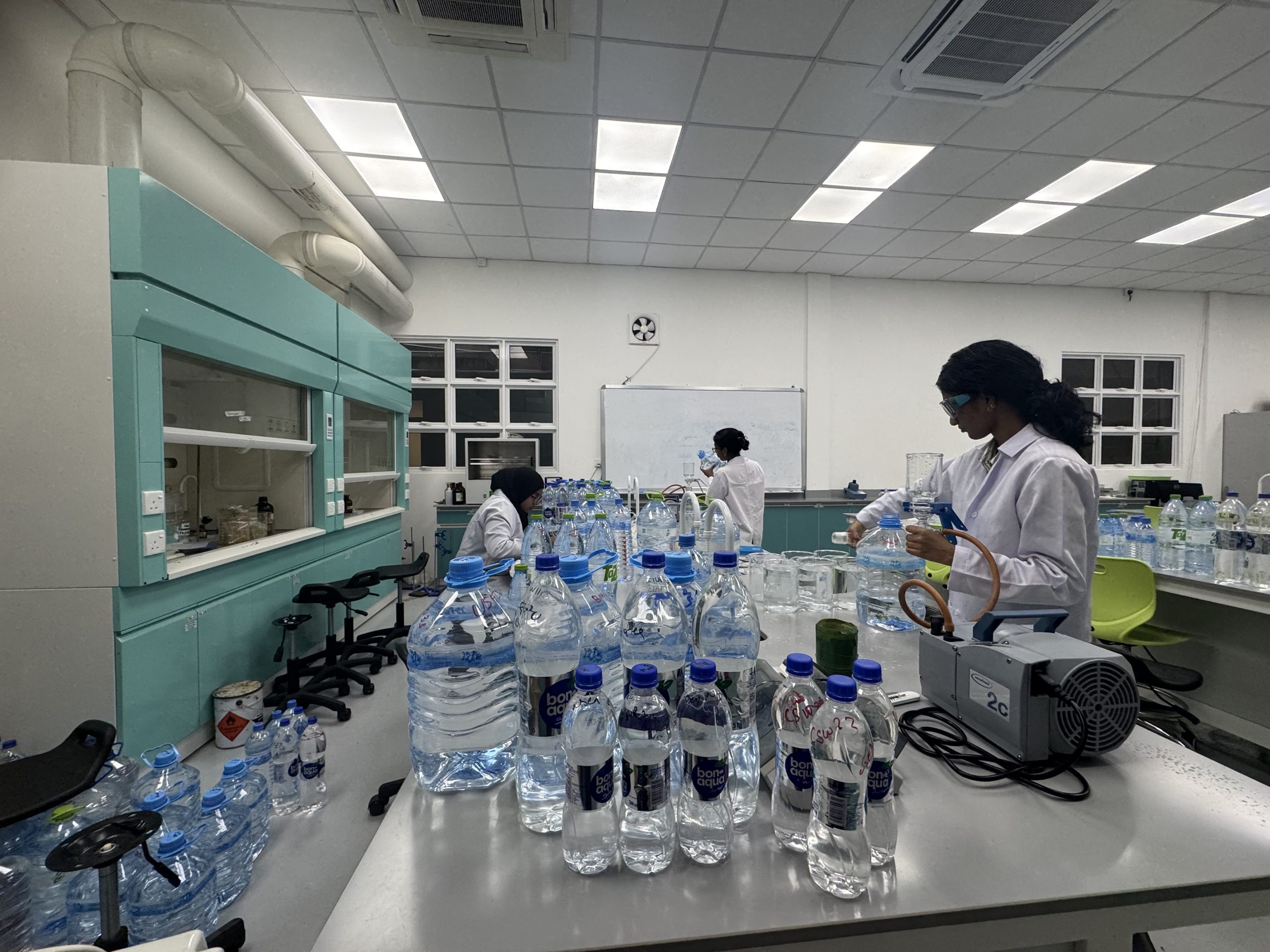
Funded by the Global Environment Facility (GEF), with a grant of USD 4.5 million, the five-year project is implemented by the United Nations Environment Programme (UNEP) and jointly executed by MNU and UKCEH. One of its important activities is the development of an operational sewage-recycling system to recover nutrients from untreated sewage and convert them into nutrient-enriched liquid fertiliser for agricultural use.
This initiative represents an important step towards improving wastewater management, reducing the release of excess nutrients into coastal waters and promoting resource recovery. By linking wastewater treatment with agricultural reuse, the project supports sustainable sanitation and contributes to protecting the Maldives’ freshwater and marine environments.
As part of the Clean and Healthy Ocean Maldives (CHOMV) Project, the Maldives National University is working with the UK Centre for Ecology & Hydrology to develop a system that recovers valuable nutrients from untreated sewage and converts them into liquid fertiliser for agricultural use.
The proposed system aims to address two interconnected environmental challenges: inadequate wastewater management and nutrient pollution entering the marine environment. Excess nitrogen and phosphorus from sewage can contribute to algal blooms and oxygen depletion in coastal waters, threatening coral reefs, fisheries and marine biodiversity.
By recovering nutrients from wastewater and returning them to productive use, the initiative promotes a circular approach to resource management. The project will also support partnerships with local communities and businesses, strengthen technical capacity and encourage the adoption of sustainable nutrient-management practices.
The initiative is expected to contribute to improved wastewater management, reduced nutrient discharge into the environment and the sustainable reuse of resources in the Maldives.
Researchers from the Maldives have investigated sustainable and cost-effective wastewater treatment technologies suitable for small islands. The study assessed wastewater quality in HA. Dhidhdhoo, HA. Hoarafushi and HA. Ihavandhoo and identified membrane bioreactors (MBR) and sequencing batch reactors (SBR), combined with UV disinfection, as feasible treatment options. The findings provide scientific evidence to support improved wastewater management, protect marine ecosystems and promote sustainable sanitation practices in the Maldives.