Events and activities identified in the MNU data sheet
1: Utility Regulatory Authority (URA) information session
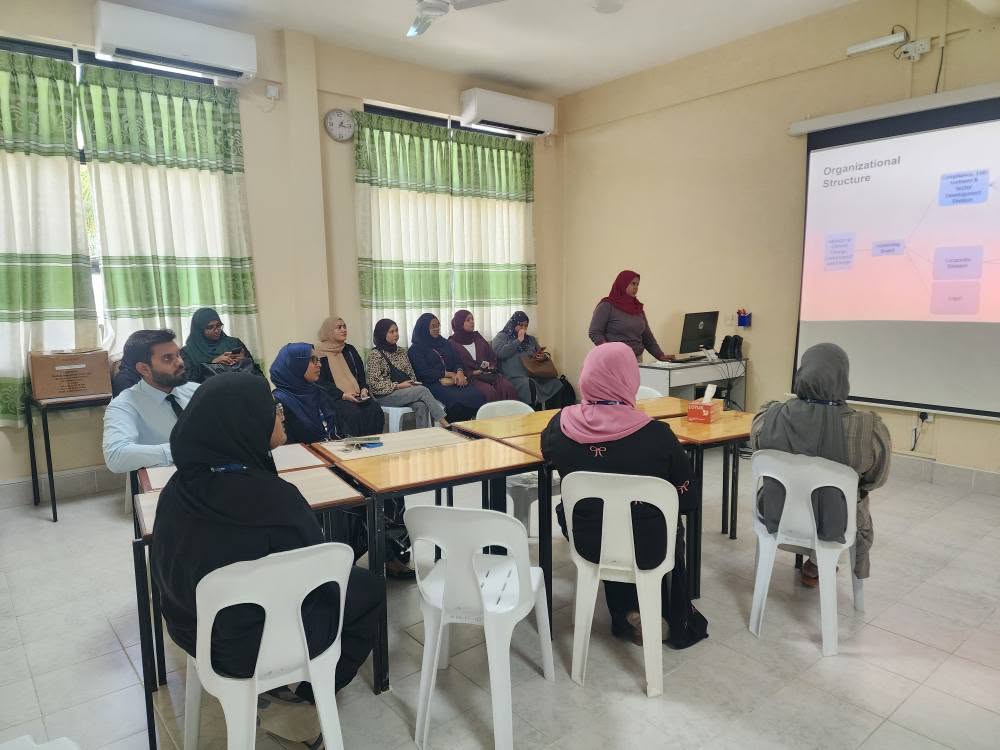
On 17 August 2025, MNU Kulhudhuffushi Campus facilitated an information session with the Utility Regulatory Authority (URA), raising awareness among university staff about water conservation, responsible utility consumption and sustainable resource management at island level. There were 16 MNU staff and 9 URA staff who took part in the session. This promotes water-conservation awareness, responsible water consumption and the adoption of sustainable water-use practices beyond the university campus, within the wider island community.
2. RECOVER project — Water security and accessibility in Malé
MNU participated in the international RECOVER project, led by the University of Waterloo and supported by the CLARE programme. The Maldives case study focuses on water metabolism and water security in Malé. The data sheet records Real-World Lab activities and stakeholder consultations in early 2025, including engagement with vulnerable groups to understand water availability and accessibility, particularly during climate crises. A policy brief was prepared and finalized following stakeholder feedback.
This supports inclusive water governance, community participation in water-related decision-making, improved understanding of water-access challenges and the development of evidence-based strategies for sustainable water management and climate-resilient water security. https://clareprogramme.org/project/resilience-to-climate-vulnerability-and-environmental-risk-recover-focus-on-small-islands/?utm_source=chatgpt.com
3. Household water-use survey and urban water-system research
As an ongoing research a household water-use survey conducted from October to December 2025 by RDO, with data analysis completed and the report under development. Related student research examined stormwater management, flooding risks, climate resilience of Malé’s water system, rainfall patterns and groundwater quality.
This generates local evidence to support water-use assessment, sustainable water-resource planning, improved understanding of groundwater vulnerabilities and more resilient urban water management.