The Maldives National University (MNU) recognises the importance of open, respectful and evidence-informed dialogue in strengthening democratic participation, public understanding and accountable institutions.
As the national university, MNU is committed to providing an independent and politically neutral academic environment where policymakers, political representatives, academics, students, civil society organisations, community leaders and members of the public can engage in constructive discussions on issues of national importance.
Through public lectures, moderated discussions, debates, seminars, conferences and policy forums, MNU provides opportunities to examine different perspectives on governance, public policy, social development, environmental sustainability and other matters affecting the Maldives.
The University recognises that complex national challenges benefit from the consideration of diverse viewpoints, rigorous evidence and respectful discussion. Its role is not to promote a particular political position, but to facilitate informed dialogue and encourage critical thinking, mutual understanding and constructive engagement.
Creating Opportunities for Open and Inclusive Dialogue
MNU promotes public dialogue through a range of academic and community engagement activities.
- Public Lectures and Policy Discussions
MNU’s public lectures, seminars and academic discussions provide opportunities to examine important national and international issues through research, expert perspectives and informed debate.
These activities encourage engagement among academics, public officials, professionals, students and other stakeholders, contributing to a broader understanding of complex policy and governance challenges.
- Debates and Student-Led Discussions
MNU recognises the importance of debate in developing critical thinking, informed citizenship and respect for differing perspectives.
Through student debates, public speaking activities and academic discussions, the University encourages participants to examine competing arguments, evaluate evidence and communicate their views respectfully.
Such activities contribute to a culture of reasoned discussion and constructive engagement on matters of public interest.
- Academic Conferences and Knowledge Exchange
MNU hosts academic conferences and research forums that bring together researchers, policymakers, professionals, community representatives and other stakeholders to discuss contemporary challenges.
The University’s international research conferences, including THEVELI, provide opportunities for knowledge exchange on issues such as governance, education, economic development, public health, environmental sustainability and social change.
These academic platforms support evidence-informed discussion and the exchange of diverse perspectives.
- Engagement with Government, Civil Society and Communities
MNU recognises that public dialogue benefits from the participation of stakeholders representing different experiences, interests and perspectives.
Through engagement with government institutions, local councils, professional organisations, civil society and communities, the University seeks to encourage inclusive discussion of issues affecting national and local development.
These engagements contribute to mutual understanding, informed decision-making and the consideration of community perspectives.
Principles Supporting Neutral and Respectful Dialogue
MNU’s approach to public dialogue is guided by the following principles:
Political Neutrality
Providing an academic environment that does not promote or favour a particular political party or political position.
Academic Freedom
Supporting independent scholarly inquiry, critical analysis and evidence-based discussion of public policies and national issues.
Diverse Perspectives
Encouraging participation by stakeholders with different views, experiences and professional backgrounds.
Respectful Dialogue
Promoting constructive discussion, professional conduct and respect for differing opinions.
Evidence-Informed Discussion
Encouraging arguments and recommendations grounded in research, credible evidence and reasoned analysis.
Inclusive Participation
Creating opportunities for students, academics, policymakers and wider society to contribute to discussions on matters of public interest.
View collaborative engagements.
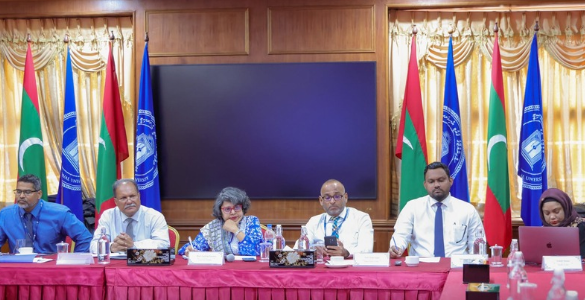
- SSSS Security Research Roundtable with Maldives’ national security agencies
Supporting SDG 16: Peace, Justice and Strong Institutions
MNU’s commitment to providing opportunities for neutral and inclusive public dialogue contributes to SDG 16 – Peace, Justice and Strong Institutions, particularly:
Target 16.7: Ensure responsive, inclusive, participatory and representative decision-making at all levels.
Target 16.10: Ensure public access to information and protect fundamental freedoms.
By encouraging open discussion, diverse perspectives, critical inquiry and respectful debate, MNU contributes to a culture of informed participation and constructive engagement on national challenges.
These commitments reflect MNU’s SDG 16 focus:
Stronger Together: Shared Voices, Shared Decisions.
MNU believes that strong institutions are supported by informed communities, independent academic inquiry and opportunities for different voices to be heard.