MNU Strengthens Commitment to Reducing Marine Pollution through Environment and Climate Action Plan 2026–2030
The Maldives National University (MNU) has strengthened its commitment to protecting marine ecosystems and reducing environmental pollution through the adoption of its Environment and Climate Action Plan 2026–2030, approved by the MNU Sustainability Committee on 20 October 2026.
The Plan establishes institutional commitments to preventing pollution, improving waste management, promoting sustainable resource use and strengthening environmental responsibility across university campuses, teaching, research and community engagement activities.
Recognising the vulnerability of the Maldives’ marine ecosystems to pollution and climate change, MNU has identified environmental protection as a key priority. The Plan specifically commits the University to preventing pollution of marine environments, freshwater, land and air, while monitoring potential sources of pollution and discharges associated with university operations.
A central component of the Plan is the promotion of responsible waste management. MNU aims to foster a zero-waste culture through waste reduction, reuse, recycling and environmentally responsible disposal practices. These measures seek to minimise the generation of waste and reduce the risk of pollutants entering coastal and marine environments.
The Plan also emphasises improved water management, including reducing unnecessary water consumption, strengthening resource efficiency and exploring opportunities for water reuse where appropriate. Alongside these commitments, MNU will work to ensure compliance with applicable national environmental legislation and regulatory requirements.
To support implementation, the University will progressively strengthen environmental monitoring, incident reporting and institutional procedures. The Plan also provides for the development of Codes of Practice, Standard Operating Procedures and guidance to support environmentally responsible activities across its facilities.
Beyond campus operations, MNU aims to advance marine environmental protection through education, research and partnerships with government institutions, local councils, non-governmental organisations and communities. These efforts will contribute to greater environmental awareness, pollution prevention and the conservation of marine biodiversity.
Through the Environment and Climate Action Plan 2026–2030, MNU reinforces its role as a national institution committed to reducing environmental impacts and supporting the long-term health and resilience of the Maldives’ marine ecosystems.
MNU Joint Research with Milano Bicocca Highlights Marine Plastic Pollution in Maldivian Mangrove Ecosystems
The Maldives National University (MNU) contributed to advancing scientific knowledge on marine plastic pollution through collaborative research investigating the accumulation of plastic litter in mangrove ecosystems across the Maldives. The study, titled “Mangrove Forests as a Natural Trap for Marine Plastic Litter: Insights from the Maldives,” was published in the international peer-reviewed journal Marine Pollution Bulletin in February 2025.
The research was conducted by Federico Cerri and Paolo Galli of the University of Milano-Bicocca and the Marine Research and Higher Education (MaRHE) Center, in collaboration with Shazla Mohamed of the Maldives National University. The study provides the first published evidence specifically documenting plastic debris accumulation in Maldivian mangrove ecosystems, highlighting an important but previously understudied dimension of marine pollution.
During three mangrove research expeditions in 2024, researchers surveyed 28 islands across 10 atolls, documenting plastic debris accumulation in mangrove habitats on four islands: Funadhoo, Dhiguvarufinolhu, Maaddoo, and Goidhoo. The observations revealed that dense mangrove vegetation and complex root structures act as natural traps for floating marine litter, particularly single-use plastic water bottles and discarded fishing nets.
The findings highlight the vulnerability of mangrove ecosystems to marine plastic pollution and the importance of addressing waste accumulation beyond conventional beach environments. The research also identified the potential influence of wave exposure, coastal topography, and vegetation density on plastic debris retention, providing valuable scientific insights for identifying areas requiring targeted pollution monitoring and management.
Importantly, the study emphasised the need for improved waste management, regular removal of accumulated plastic debris, and targeted conservation strategies to prevent further degradation of mangrove habitats. These recommendations provide a scientific foundation for policymakers, conservation practitioners, and environmental management authorities to develop more effective approaches to reducing marine litter and protecting vulnerable coastal ecosystems.
Assessing Coastal Water Quality and Marine Pollution at Rasfannu Beach, Malé
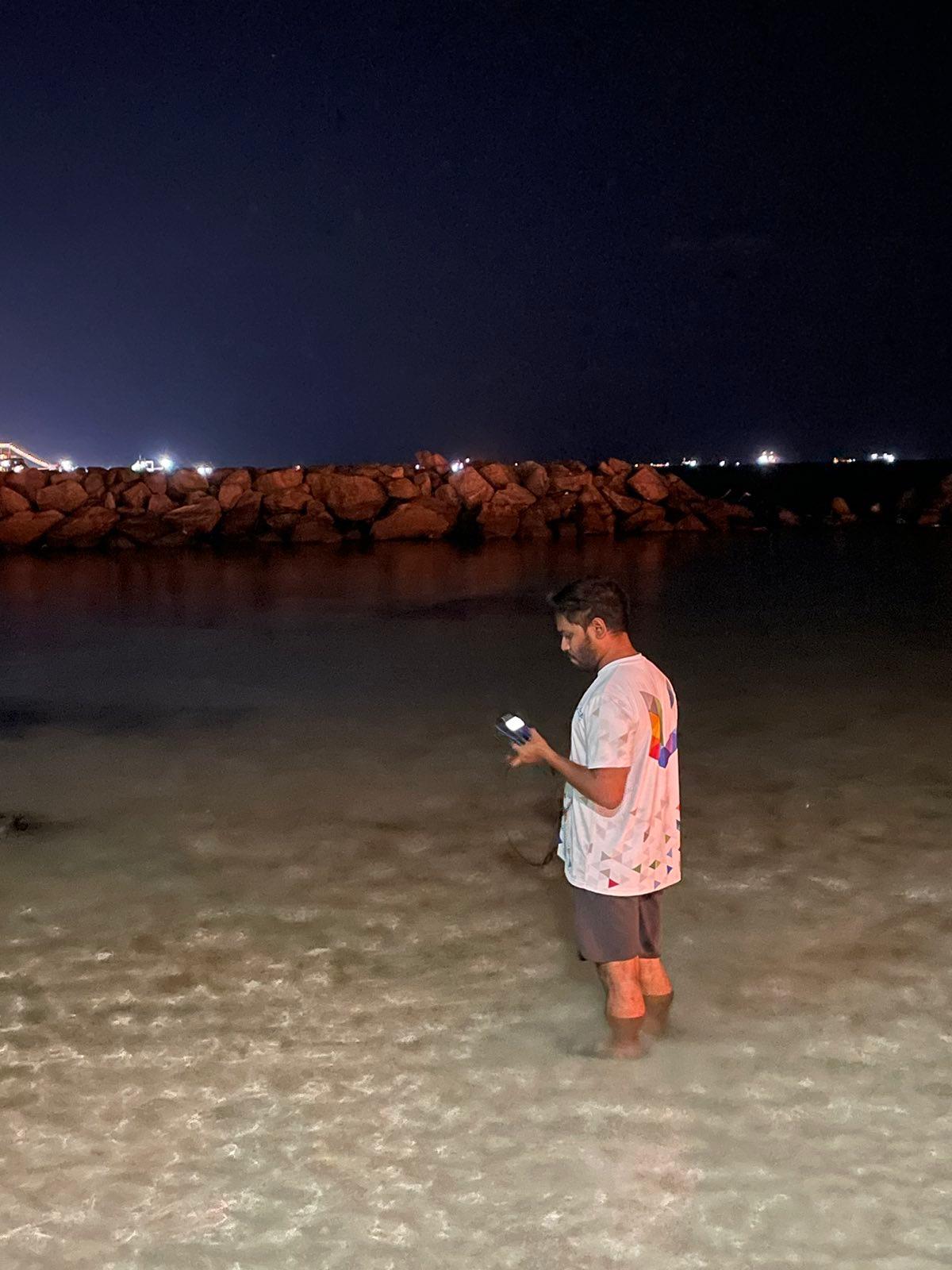
Research on coastal water quality at Rasfannu Beach in Malé contributes to the scientific understanding of marine pollution and the importance of environmental monitoring in safeguarding recreational coastal waters. The study examined potential water contamination associated with urban wastewater discharge, limited coastal water circulation, and human activities in one of the Maldives’ most densely populated urban environments.
Malé’s coastal waters face environmental pressures from sewage discharge and wastewater management challenges. With limited natural beach environments, artificial recreational beaches such as Rasfannu provide important public spaces for swimming and recreation. However, concerns regarding nearby sewage outfalls and restricted water circulation highlight the importance of regular water quality assessments to protect public health and coastal ecosystem conditions.
The study assessed physicochemical and microbiological water quality parameters through weekly sampling over four weeks. Measurements included pH, turbidity, conductivity, nitrate, nitrite, and ammonia nitrogen, alongside bacterial indicators such as Escherichia coli (E. coli), faecal coliforms, and total coliforms. Laboratory analyses employed membrane filtration, absorption spectroscopy, and standard water quality measurement techniques.
The results were evaluated against international recreational water quality guidelines, including those established by the World Health Organization (WHO), United States Environmental Protection Agency (USEPA), European Union (EU), and relevant Canadian and Californian authorities. Contrary to the initial hypothesis of contamination, all measured parameters were within the acceptable ranges of the referenced guidelines during the sampling period. The National Sanitation Foundation (NSF) Water Quality Index also classified the sampled water as having good quality.
These findings provide valuable baseline information on coastal water quality at Rasfannu Beach and demonstrate the importance of scientific assessment in evaluating potential marine pollution risks. Although the results indicated acceptable recreational water quality during the study period, continued monitoring remains important for identifying seasonal changes, pollution events, and potential impacts from urban wastewater discharges.
The research contributes to evidence-based coastal environmental management by demonstrating the application of water quality monitoring and laboratory analysis to assess pollution risks in urban marine environments. Such scientific assessments can inform future monitoring programmes, wastewater management decisions, and efforts to protect recreational waters and coastal ecosystems in the Maldives.