MNU–University of Washington Collaboration Advances Oceanographic Monitoring in the Maldives
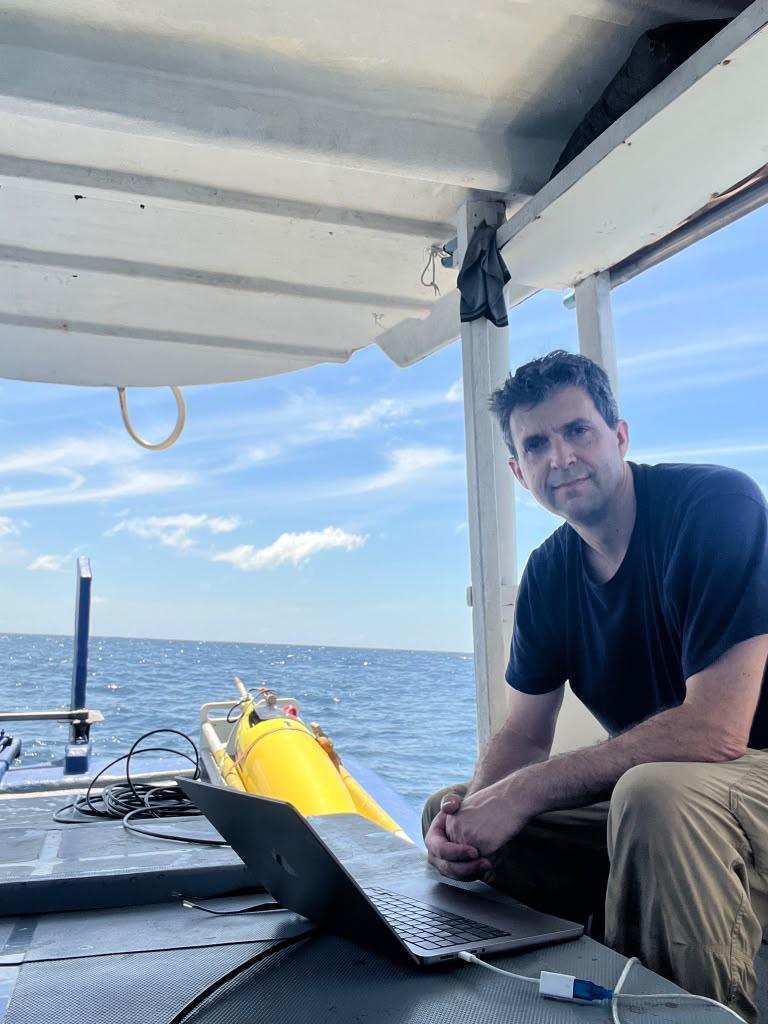
The Maldives National University (MNU), in collaboration with the Applied Physics Laboratory at the University of Washington, USA, is undertaking oceanographic monitoring using autonomous underwater gliders to improve scientific understanding of ocean conditions and marine ecosystem dynamics around the Maldives. The collaborative research, titled “Glider-Based Observations of Temperature, Salinity, and Chlorophyll Variability Near the Maldives,” is conducted by Ahmed Aslam Waheed of MNU and Luc Rainville of the University of Washington.
Since 2024, the partnership has completed five autonomous Seaglider missions, collecting more than 4,000 oceanographic profiles in the deep ocean east of the Maldives. The gliders collect high-resolution measurements of ocean temperature, salinity, chlorophyll, and dissolved oxygen, reaching depths of approximately 1,000 metres. These observations provide valuable information on physical and biological ocean conditions across different seasons, supporting sustained monitoring of environmental variability in Maldivian waters.
The research has identified significant spatial and temporal variability in ocean temperature and salinity, as well as strong vertical water movements associated with internal tides. Observations also highlight the influence of ocean mixing and other physical processes on subsurface chlorophyll distributions, an important indicator of phytoplankton biomass and marine primary productivity. Comparisons with satellite-derived observations demonstrate the added value of direct underwater measurements in detecting small-scale ocean variability that may not be fully captured by satellite monitoring.
By generating continuous, high-resolution oceanographic datasets, the initiative strengthens the scientific evidence available to understand environmental changes affecting marine ecosystems. Measurements of ocean temperature, salinity, and chlorophyll provide essential baseline information for investigating ocean warming, seasonal variability, marine productivity, and the physical conditions influencing aquatic ecosystem health.
The collaboration demonstrates MNU’s contribution to long-term ocean monitoring, marine scientific research, and the application of advanced environmental observation technologies. Through international scientific cooperation, the University supports the development of oceanographic knowledge that can inform future marine ecosystem assessments, conservation research, and climate-related environmental monitoring in the Maldives.
Strengthening Coral Reef Monitoring and Restoration Knowledge Through Expert-Led Student Engagement
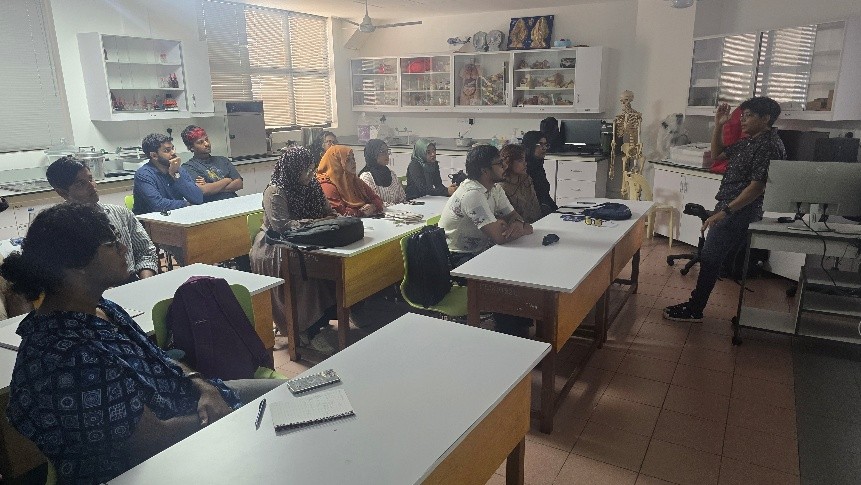
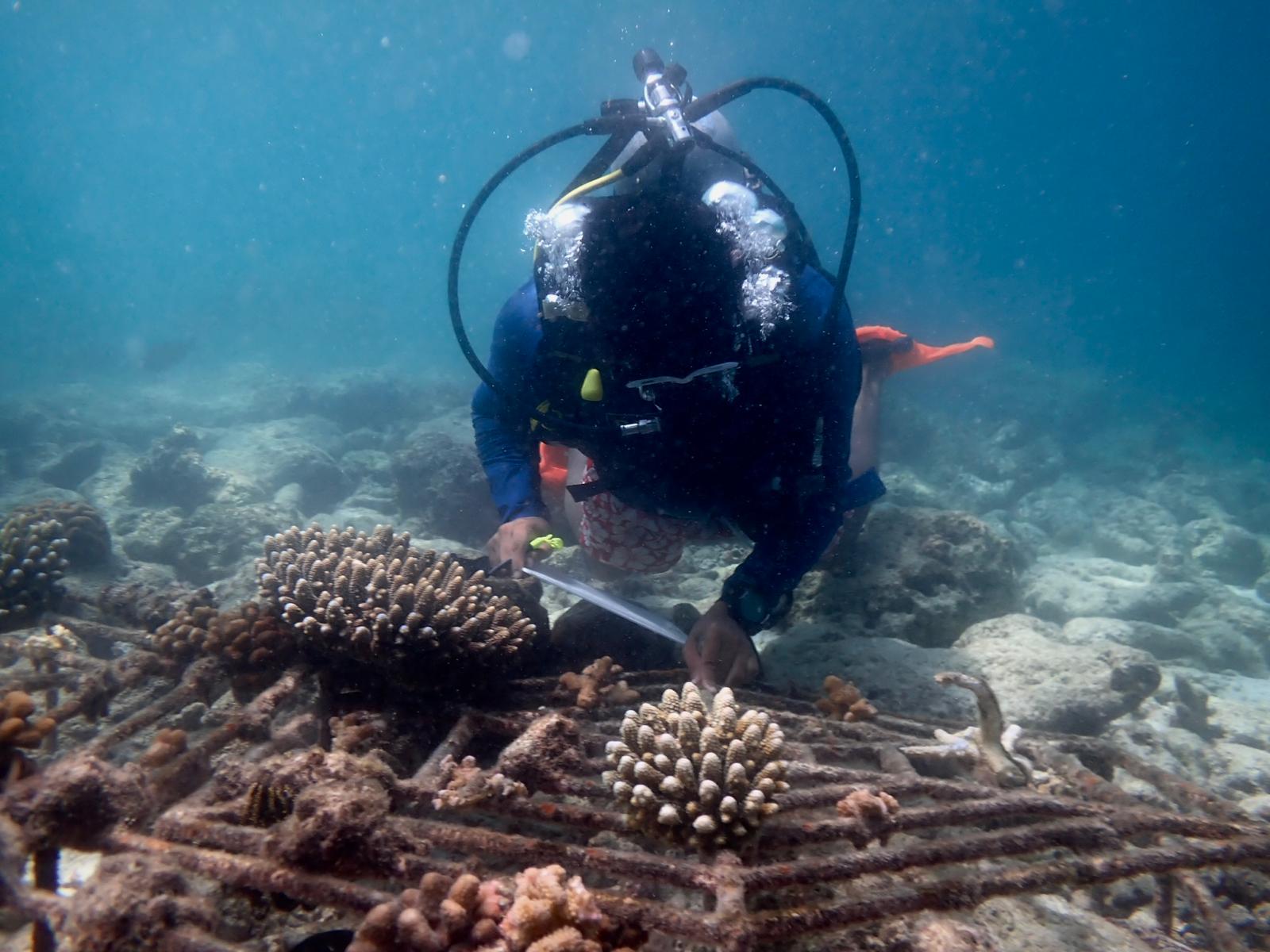
The College of Fisheries and Ocean Sciences (CFOS) at the Maldives National University (MNU) organised a special session on coral reef monitoring and restoration, delivered by Maldivian marine biologist Fathimath Hana Amir. The session provided students with insights into coral reef assessment methodologies, long-term ecosystem monitoring, and scientific approaches to reef conservation and restoration.
Fathimath Hana Amir shared her professional and research experience, including her previous role at the Maldives Marine Research Institute (MMRI), where she led the National Coral Reef Monitoring Programme and the National Coral Reef Restoration Programme. Her work has involved assessing coral reef conditions across the Maldives through collaborative monitoring initiatives, as well as conducting international research in locations including Palmyra Atoll and the Red Sea. Her research examines how resource availability influences coral nutritional strategies across different reef environments, contributing to scientific understanding of coral ecology and responses to environmental variability.
During the session, students were introduced to standardised coral reef monitoring methodologies, ecological data collection techniques, and the importance of long-term monitoring programmes in assessing changes in reef condition. Discussions also addressed environmental pressures affecting Maldivian coral reefs and the potential application of research on coral nutritional strategies to inform reef management and restoration approaches.
The session contributed to strengthening students’ understanding of practical coral reef assessment and the role of scientific monitoring in evidence-based conservation. By connecting academic learning with national monitoring programmes and contemporary marine research, the initiative supported knowledge exchange and capacity development among future marine science professionals.
Through such educational and research engagement activities, MNU continues to strengthen marine science education and promote the scientific knowledge and technical competencies needed to support coral reef monitoring, biodiversity conservation, and sustainable management of marine ecosystems in the Maldives.