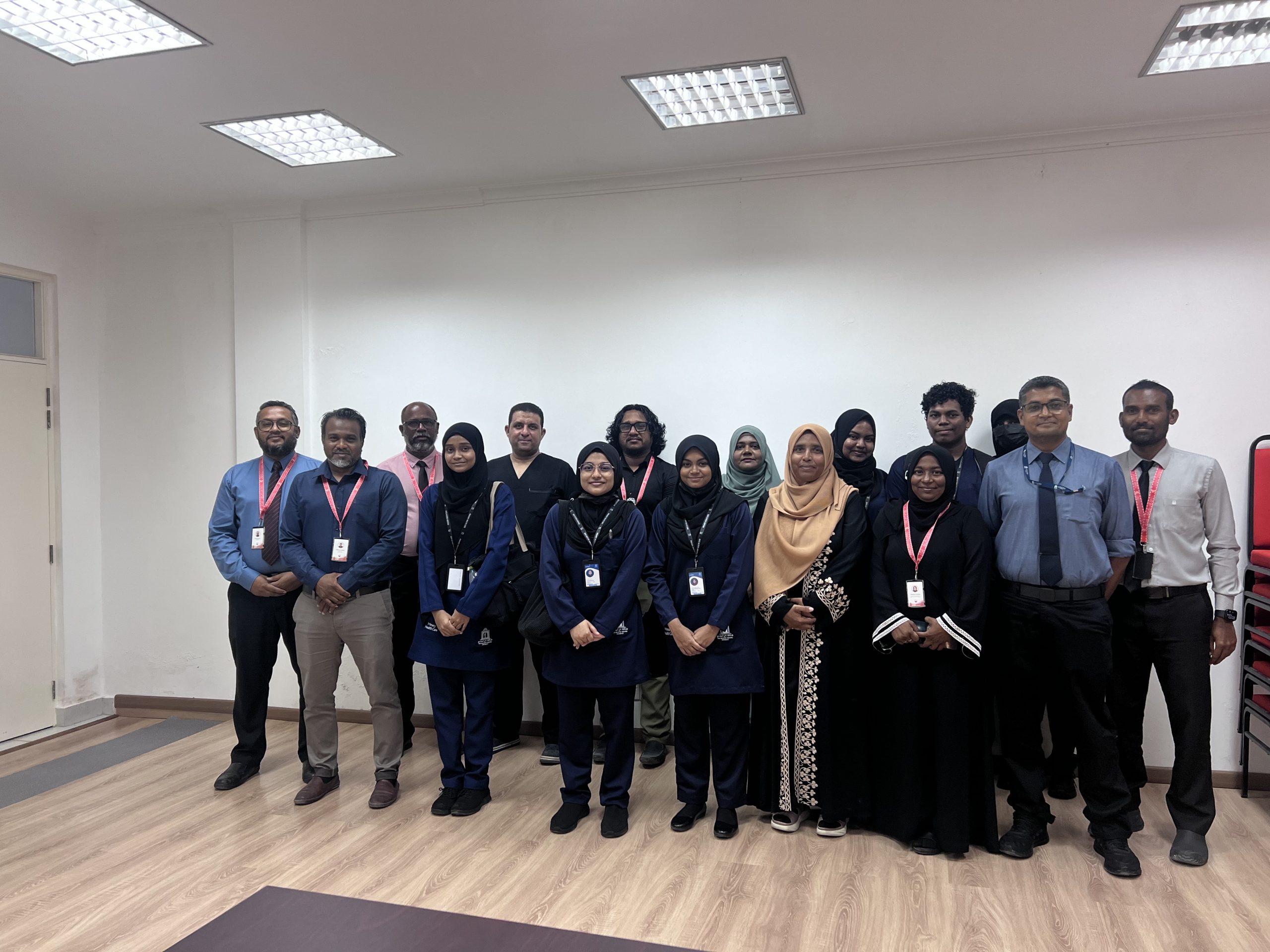
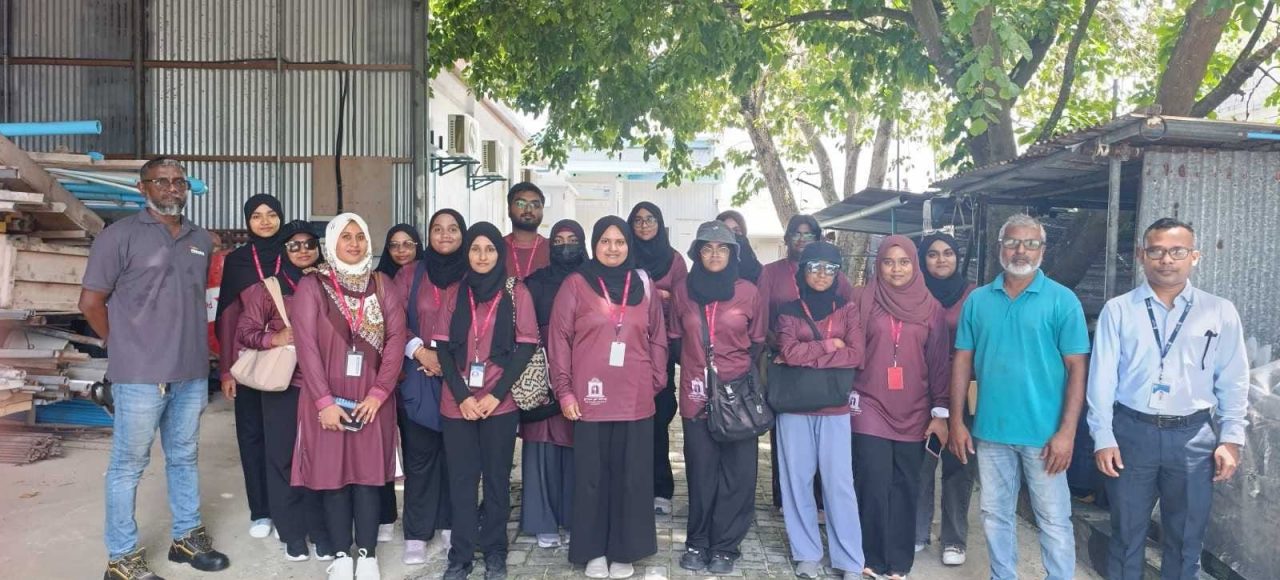
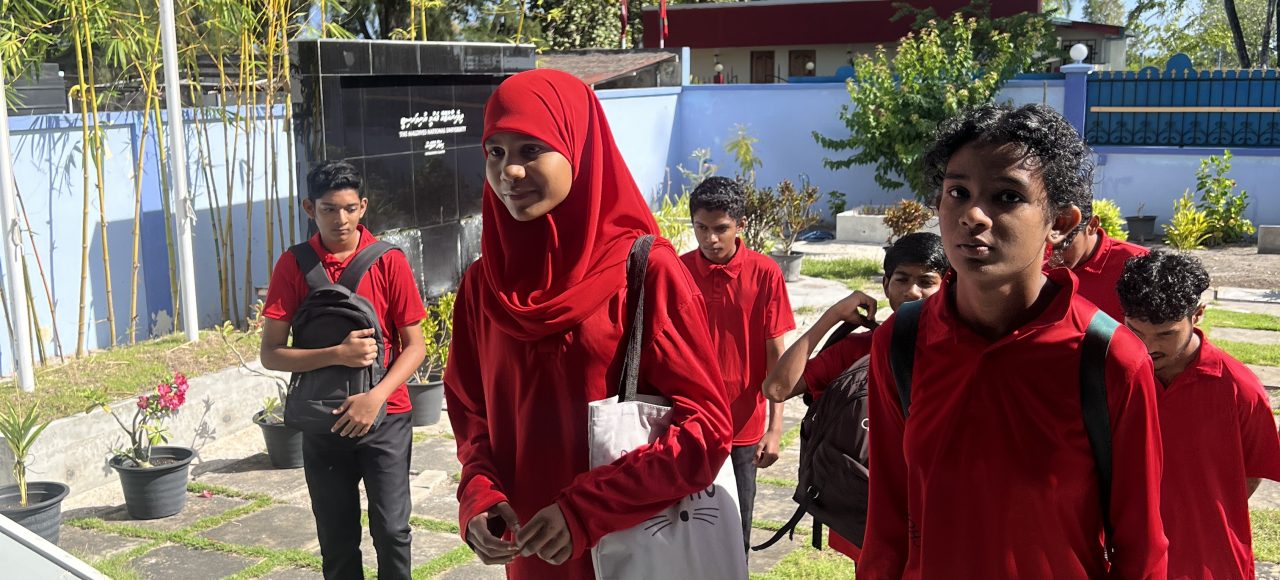
Six Semester 3 Primary Health Care students from the Faculty of Health Sciences (FHS), The Maldives National University (MNU), undertook a field posting at Lh. Naifaru Hospital from 31 May to 13 June 2026. The placement provided students with practical exposure to public health, primary health care, and patient services within a peripheral health facility.
The field visit formed an important component of students’ experiential learning, allowing them to observe healthcare delivery in a real-world setting and connect concepts learned in the classroom with practical health service delivery. Through direct exposure to the hospital environment, students developed a broader understanding of how primary health care is organised and delivered outside the capital.
During the posting, students had opportunities to engage with aspects of public health and patient services and observe the roles and processes involved in providing healthcare at the peripheral level. This experience supported their understanding of the relationship between public health principles, primary health care services, and the needs of communities served by health facilities.
The supportive involvement of the Lh. Naifaru Hospital team contributed significantly to the learning experience. Hospital staff were described as cooperative and supportive, enabling students to participate actively and gain meaningful practical exposure during their placement.
For FHS, field-based learning such as this provides an important link between academic education and professional practice. Exposure to healthcare delivery in peripheral settings can help students understand the operational realities of primary health care and develop the knowledge and practical perspective required for their future roles in the health sector.
The posting also contributed to the Faculty’s commitment to providing students with learning experiences that extend beyond the classroom. By placing students in real health service environments, the activity strengthened their ability to apply academic knowledge to practical public health and patient-service contexts.
The field visit supports the objectives of Sustainable Development Goal 3 (Good Health and Well-being) through learning focused on health service delivery, while also contributing to SDG 4 (Quality Education) through experiential and practice-based learning. Its focus on healthcare delivery in a peripheral setting also provides a connection to SDG 10 (Reduced Inequalities) by exposing students to health service contexts beyond central urban facilities.
Overall, the posting strengthened students’ understanding of primary health care delivery in peripheral settings and helped bridge classroom learning with practical experience, contributing to the preparation of future health professionals for service within the Maldives.