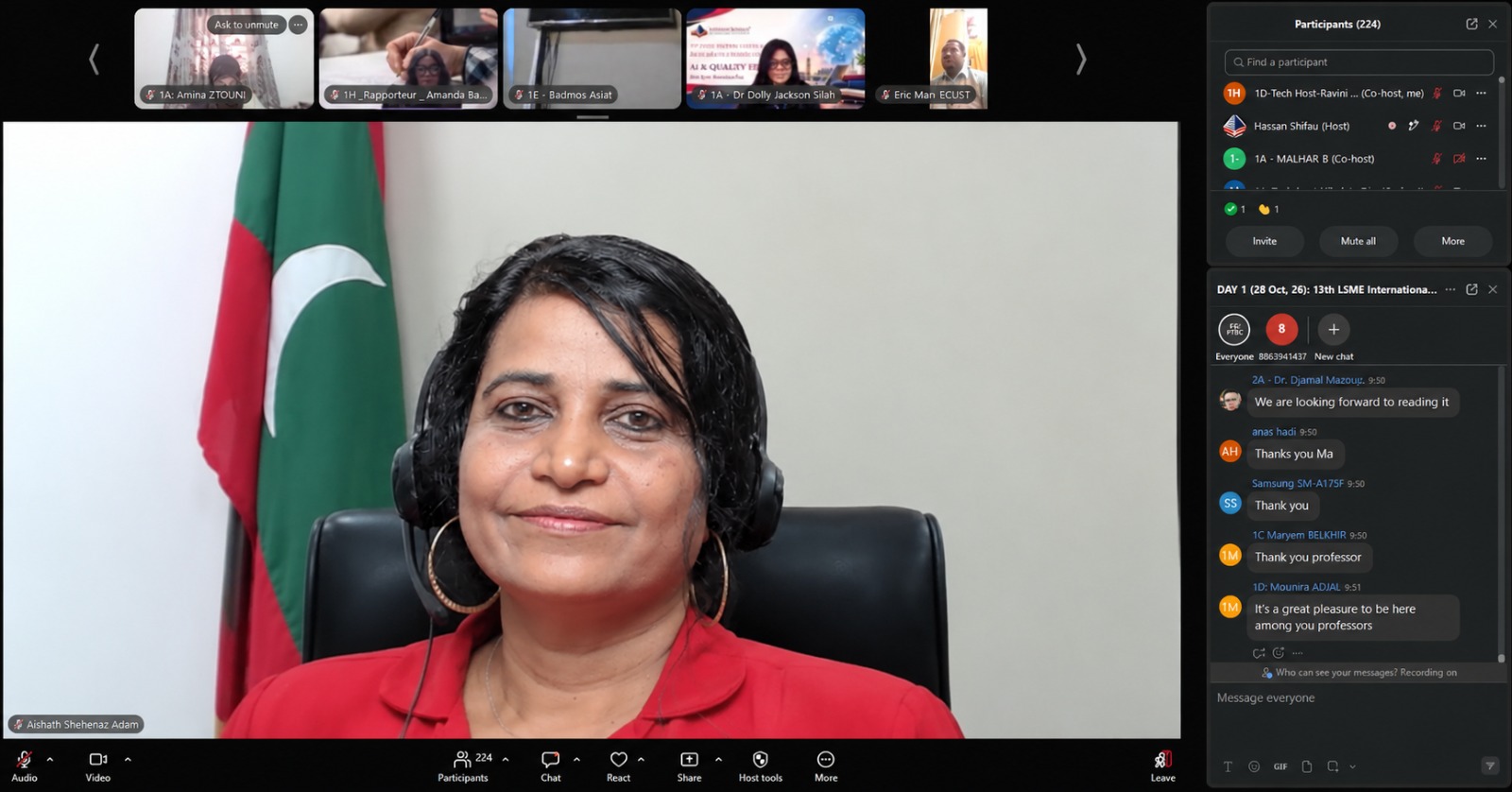
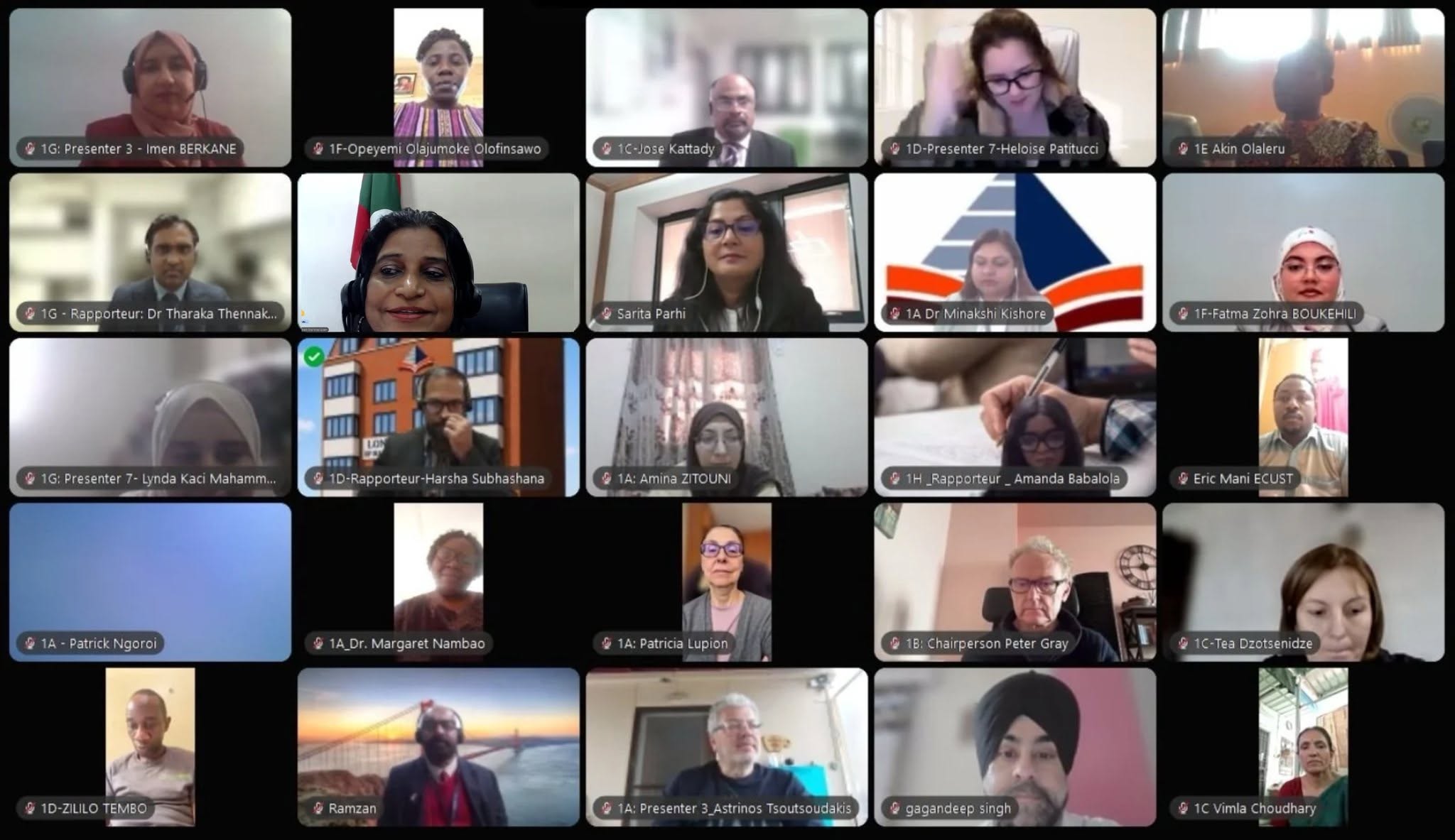
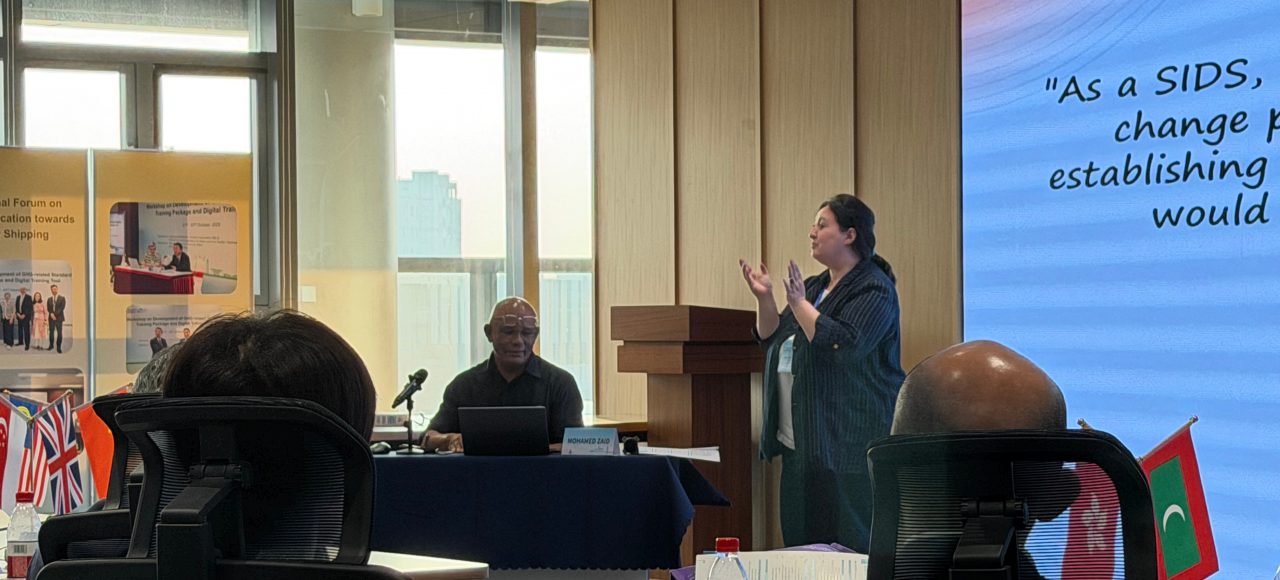
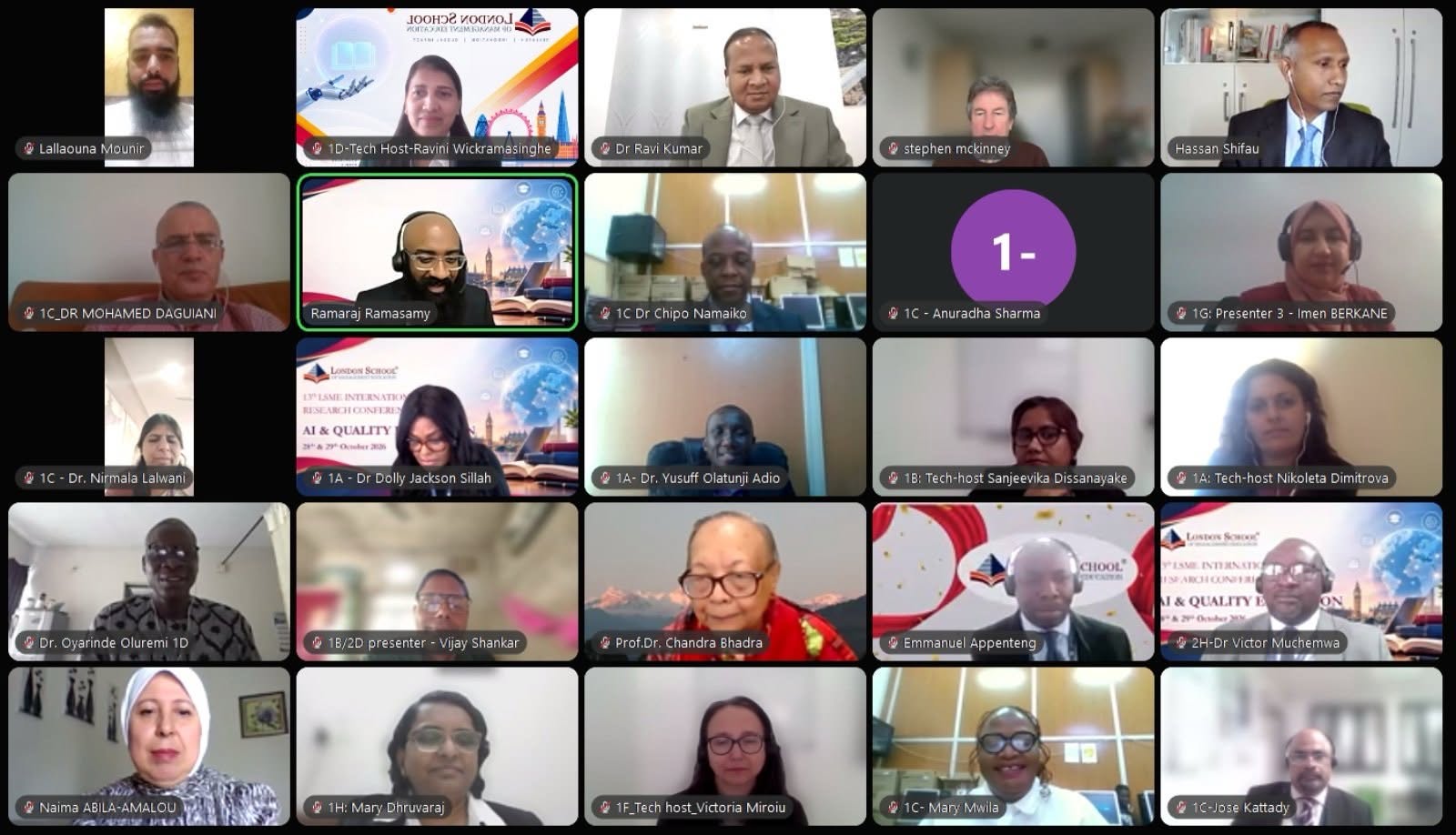
Vice Chancellor of The Maldives National University (MNU), Dr Aishath Shehenaz Adam, delivered the inaugural address as Chief Guest at the 13th LSME International Conference on AI and Quality of Education on 28 October 2026.
Organised by the London School of Management Education, the conference provided a platform to explore the opportunities and responsibilities accompanying the growing use of artificial intelligence in teaching, learning and research.
In her address, Dr Adam called for AI to help overcome geographical barriers and advance inclusive and equitable quality education, particularly for learners in small island developing states.
“The future of education should not be determined by the size of a country, the wealth of an institution or the island on which a child is born. Artificial intelligence must help us remove these barriers, not create new ones. No child’s potential should be limited by their geography,” she said.
Drawing on the experience of the Maldives, Dr Adam highlighted how AI could support personalised learning, assist teachers and enable researchers to collaborate across borders. She noted that students in remote island communities share the aspirations and abilities of those in the capital, yet may have different levels of access to specialised teachers, laboratories, libraries and higher education programmes.
She emphasised that these opportunities must be supported by reliable connectivity, appropriate devices, digital skills and investment in educators. She also encouraged research that reflects local needs and ensures that smaller countries, languages such as Dhivehi, and diverse cultural perspectives are represented in emerging technologies.
Dr Adam stressed that small island nations have valuable knowledge and experience to contribute to technological innovation. She encouraged international partnerships that strengthen research capacity, support early-career researchers and bring island perspectives into global discussions.
Reflecting on the purpose of education, she encouraged institutions to nurture independent thinking, creativity, ethical judgement and responsible use of AI, while preserving the relationships that make learning meaningful.
“Artificial intelligence may help us become more efficient educators, but it is our empathy, understanding and human connection that make us better educators,” she said.
The inaugural session was chaired by Professor Stephen McKinney, Conference Chairperson and Chair of the LSME Board of Governance, from the University of Glasgow, United Kingdom. Conference Convener Dr Ravi Kumar delivered the welcome address, followed by Professor McKinney’s introduction to the conference.
Professor Asif Mehbub Karim of Binary University, Malaysia, delivered special remarks as Guest of Honour. Professor Peter Gray, a member of the LSME Board of Governance from Nord University, Norway, also addressed the session. The programme included the launch of the LSME Research Book 2026 by Dr Sarita Parhi, Principal of LSME.
Dr Adam extended her appreciation to LSME and the organising team, with particular thanks to Mr Hassan Shifau, Chief Research & Innovations Officer, for his invitation and efforts in bringing participants together.
She concluded by encouraging collaboration that translates research and innovation into accessible, inclusive and meaningful educational opportunities for learners everywhere.