The Maldives National University (MNU), through its Business Development department, successfully conducted a full-day Strategic Planning Workshop on 22 April 2025, as part of its ongoing efforts to formulate the MNU Strategic Plan 2026–2030. The workshop brought together academic and admin heads from MNU’s colleges, faculties, centres, schools, campuses, and administrative departments to collectively contribute to shaping the University’s strategic direction for the next five years.
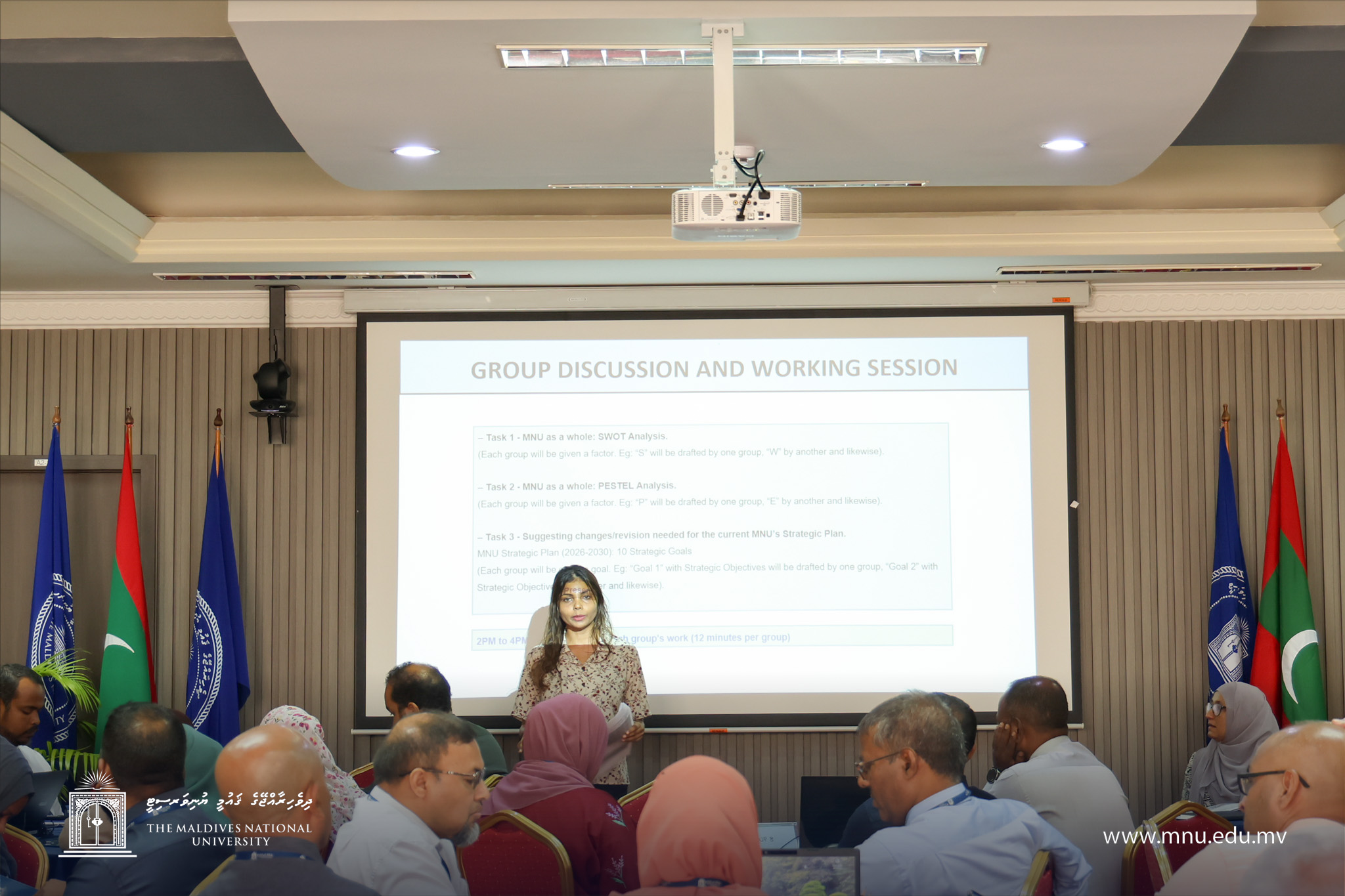
The workshop commenced with a briefing and presentation outlining the objectives, expectations, and overall framework for the new Strategic Plan. Participants then engaged in structured group discussions and working sessions designed to encourage inclusive participation, critical reflection, and collaborative thinking.
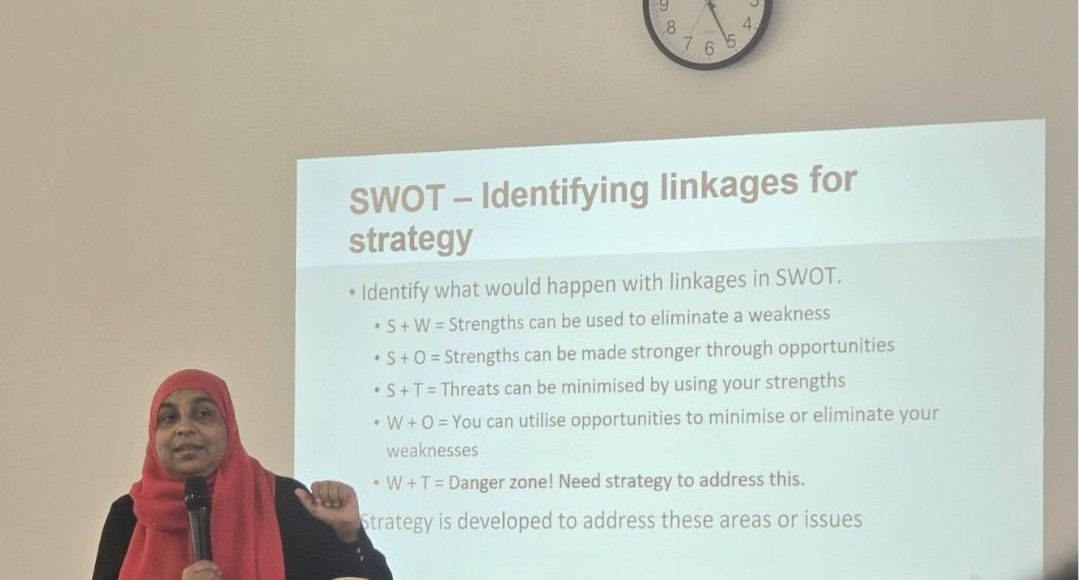
Key activities of the workshop included the development of SWOT and PESTEL analyses at an institutional level, enabling participants to assess MNU’s internal strengths and challenges, as well as external political, economic, social, technological, environmental, and legal factors influencing the University’s future. Participants also reviewed the existing Strategic Plan and proposed revisions and enhancements to ensure stronger alignment with emerging national priorities, global trends, and sustainability considerations.
A major component of the workshop focused on refining the 10 Strategic Goals of the MNU Strategic Plan 2020=2025. Participants worked in designated groups to draft and strengthen strategic objectives under each goal, ensuring clarity, relevance, and alignment with MNU’s long-term vision and mission. The day concluded with group presentations, during which outcomes from each working group were shared and formally handed over for consolidation into the draft Strategic Plan of 2026-2030.
The workshop reflects MNU’s strong commitment to participatory planning, transparency, and stakeholder engagement. Inputs gathered during the session will play a vital role in finalising a forward-looking Strategic Plan that supports academic excellence, research and innovation, community engagement, sustainability, and national development