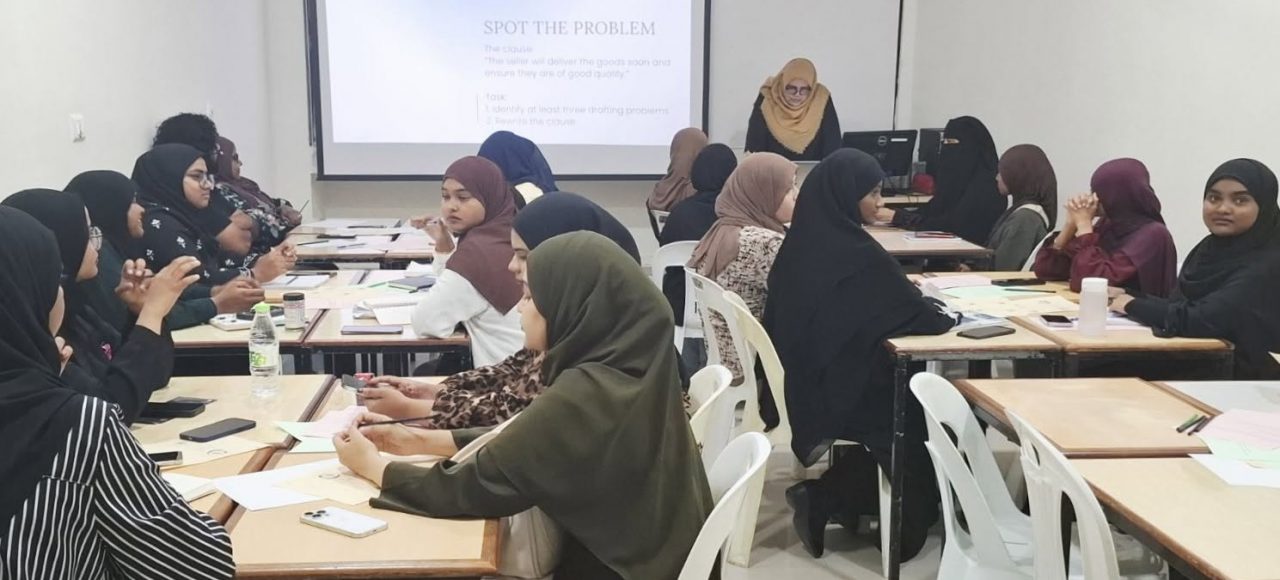
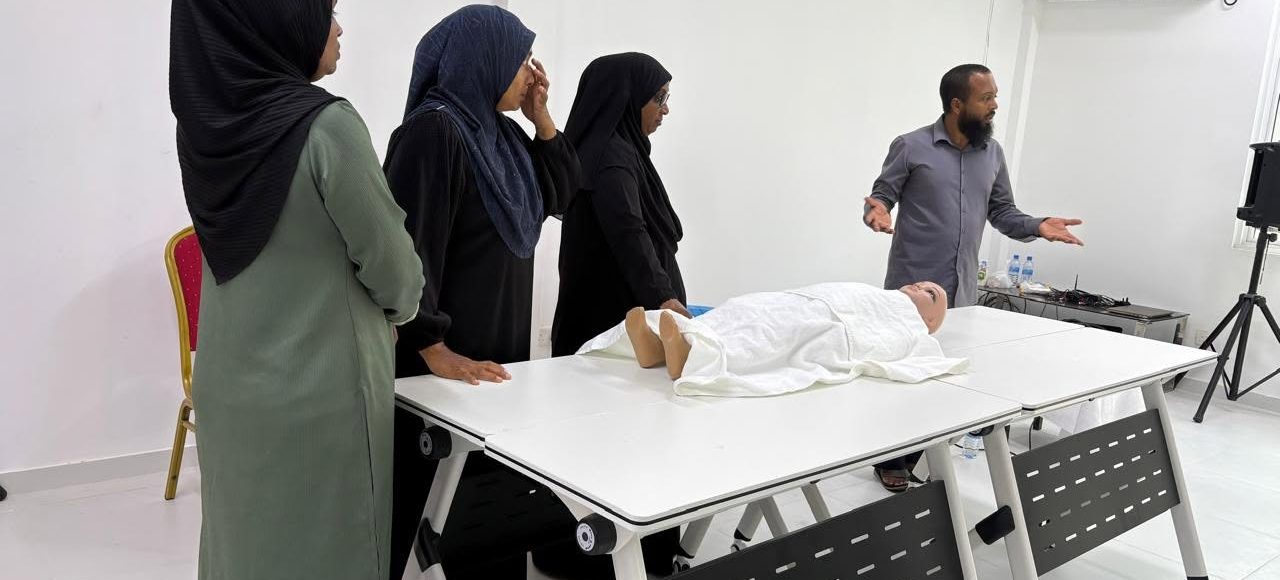
The Lunchtime Talk is an initiative organized by the Research Development Office to strengthen the research culture at MNU by providing a platform for university staff to share research findings, experiences, methodologies, and good research practices with the wider university community. The programme supports MNU’s efforts to strengthen its research culture, promote interdisciplinary dialogue and enhance the dissemination of research across faculties, schools and centres.
During 2024, 15 Lunchtime Talk sessions were conducted, covering a diverse range of topics in education, health, law, agriculture, language and culture, digital learning, social issues and professional development. The series began in February with presentations on language shift and its implications for the Dhivehi language and culture by Dr. Aminath Riyaz and improving the learning of 3D geometry in Maldivian secondary schools by Mohamed Shihab. In April, Dr. Mursaleen presented a scholarly discussion on the love of Almighty Allah towards human beings in the light of the Holy Qur’an.
Health and professional development featured prominently in the 2024 programme. Asiya Ibrahim presented research on the perceived effectiveness of the Job Family Standards for Nursing (2018), while Dr. Zeba un Naher discussed research on the MTHFR gene C677T polymorphism and its associations with health outcomes among Maldivian women. Dr. Raheema Abdul Raheem presented on the endgame strategy for leprosy in the Maldives, and Dr. Razana Faiz addressed the health status of migrants in the Maldives, bringing attention to health and equity considerations.
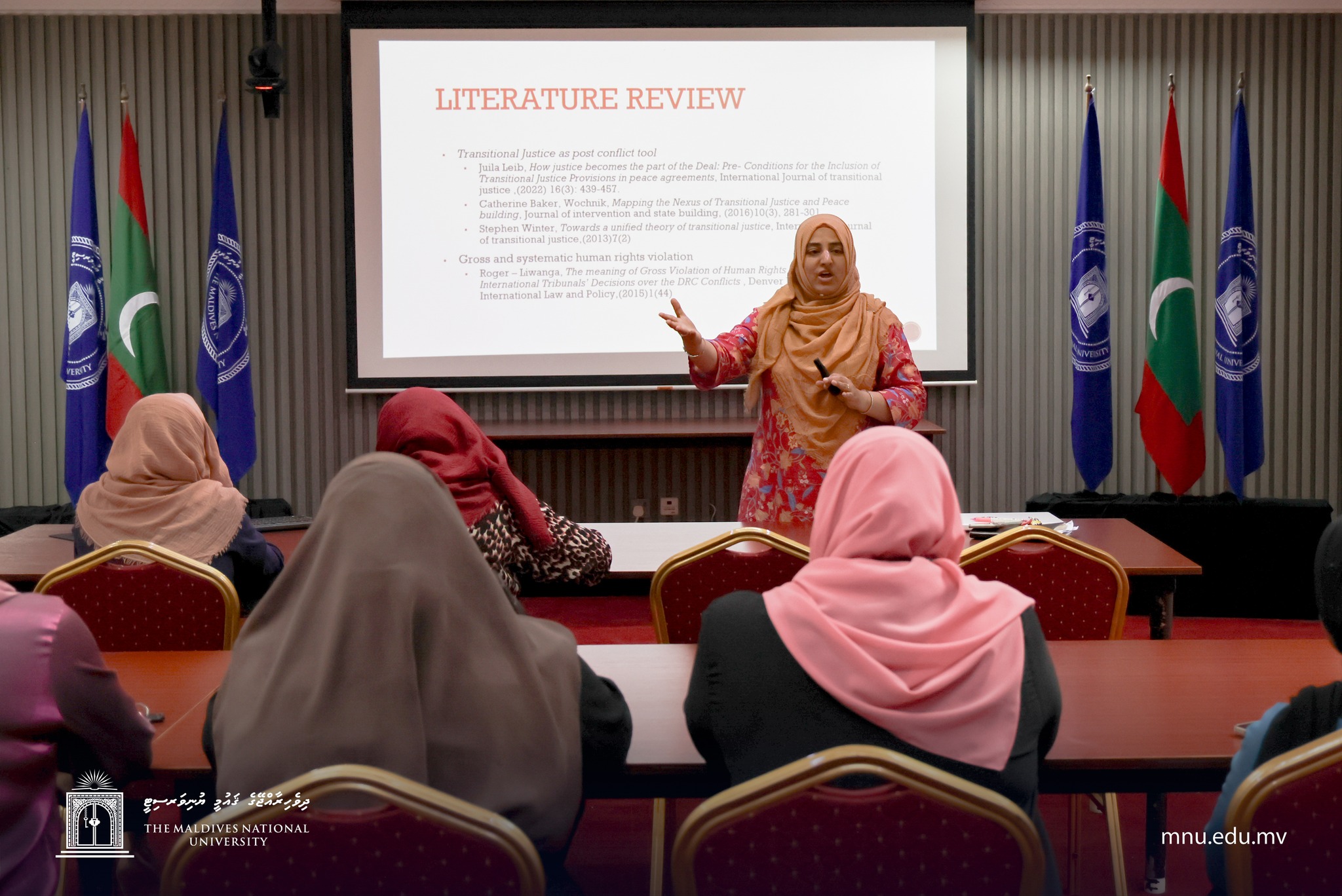
The series also provided a platform for research addressing governance and social issues. Batool Zahoor Qazi presented on transitional justice in South Asia, with reflections on the transitional justice mechanism of the Maldives, while Dr. Shanoora explored the impacts of divorce and interparental conflict.
Education and digital transformation were recurring themes. Fathimath Nasiha Abdul Muhaimin discussed online professional development in higher education, Roza Ibrahim presented on e-learning preparedness, and Dr. Aminath Waseela shared findings on the effective use of digital technologies to enhance students’ cognitive engagement and learning. Ismail Shiyar concluded the year’s programme with research examining the influence of Psychological Capital on student engagement at MNU’s Faculty of Hospitality and Tourism Studies.
Other sessions reflected the breadth of research undertaken across the University. Dr. Nadhiya Abdulla presented on farming in the Maldives, highlighting an area directly relevant to food security and national development, while Shiuna Ahmed explored the representation and characteristics of women in Dhivehi folklore, contributing to scholarship on Maldivian language, literature and culture.
Collectively, the 2024 Lunchtime Talks demonstrate the multidisciplinary nature of research at MNU and its relevance to education, health, culture, food systems, justice, social well-being and national development. The topics presented were particularly relevant to SDG 2 – Zero Hunger, SDG 3 – Good Health and Well-being, SDG 4 – Quality Education, SDG 10 – Reduced Inequalities, SDG 16 – Peace, Justice and Strong Institutions, and SDG 17 – Partnerships for the Goals.
Through the Lunchtime Talk Series, MNU continues to provide an accessible forum for researchers to disseminate their work, exchange knowledge and stimulate scholarly discussion across disciplines. The 2024 programme contributed to strengthening the University’s research culture while increasing the visibility and wider relevance of research undertaken by MNU staff.
Details of the sessions are presented below:
|
Topic
|
Date
|
Presenter
|
Related SDG(s)
|
|
Language Shift: Basmaruvumaai Bas Fanikeun, Dhivehi Bahaai Dhivehi Sagaafathah Huri Kurahkaleh
|
13-Feb-24
|
Dr. Aminath Riyaz
Faculty of Arts
|
SDG 4
SDG 17
|
|
Improving 3D geometry learning at secondary schools in Maldives
|
27-Feb-24
|
Mohamed Shihab
Faculty of Education
|
SDG 4
SDG 17
|
|
Love of the Almighty Allah towards Human beings in the Light of the Holy Qur’an
|
23-Apr-24
|
Dr. Mohamed Mursaleen
Faculty of Shariah and Law
|
SDG 4
SDG 17
|
|
Perceived Effectiveness of “Job Family Standards for Nursing (2018)”
|
7-May-24
|
Dr. Asiya Ibrahim
School of Nursing
|
SDG 3
SDG 4
SDG 17
|
|
Novelty of the Transitional Justice in South Asia: Reflections on the Transitional Justice Mechanism of Maldives
|
21-May-24
|
Batool Zahoor Qazi
Faculty of Shariah and Law
|
SDG 4
SDG16
SDG 17
|
|
Online Professional Develoment in Higher Education
|
4-Jun-24
|
Dr. Fathimath Nasiha Abdul Muhaimin
Centre for Foundation Studies
|
SDG 4
SDG 17
|
|
Farming in the Maldives
|
2-Jul-24
|
Dr. Nadhiya Abdulla
Research Development Office
|
SDG 2
SDG 4
SDG 17
|
|
Dhivehi folklore Thakun Fenna Anhenunge Sifa Thah
|
13-Aug-24
|
Shiuna Ahmed
Faculty of Arts
|
SDG 4
SDG 17
|
|
E-learning preparedness
|
27-Aug-24
|
Roza Ibrahim
Centre for Education Technology and Excellence
|
SDG 4
SDG 17
|
|
Methylenetetrahydrofolate Reductase (MTHFR) Gene C677T Polymorphism and its Association with Folate, Homocysteine, Anemia, Menstrual cycle patterns, Outcomes of pregnancy, And Risk of CVD in Maldivian females
|
10-Sep-24
|
Dr. Zeba un Naher
School of Medicine
|
SDG 3
SDG 4
SDG 17
|
|
Endgame strategy for Leprosy in the Maldives
|
24-Sep-24
|
Dr. Raheema Abdul Raheem
Deputy Vice Chancellor, Research and Enteprise
|
SDG 3
SDG 4
SDG 17
|
|
The status of health of Migrants in the Maldives
|
15-Oct-24
|
Dr. Razana Faiz
School of Medicine
|
SDG 4
SDG 10
SDG 17
|
|
Transforming Learning: Effective Use of Digital Technologies to Enhance Students’ Cognitive Engagement and Learning- A Mixed-Method Case Study in the Maldives
|
29-Oct-24
|
Dr. Aminath Waseela
Faculty of Education
|
SDG 4
SDG 17
|
|
Which is worse: Divorce or interparental conflict?
|
12-Nov-24
|
Dr. Aishath Shanoora
Faculty of Health Sciences
|
SDG 4
SDG 17
|
|
Influence of Psychological Capital (PsyCap) on Student Engagement (SE) of Faculty of Hospitality and Tourism Studies, The Maldives National University
|
3-Dec-24
|
Ismail Shiyar
Faculty of Hospitality and Tourism Studies
|
SDG 4
SDG 17
|