The Maldives National University in collaboration with UNICEF and the Ministry of Education, has completed a landscape analysis assessing the readiness for digital transformation in government schools across the Maldives. Commissioned by the Ministry of Education under the THAIBA Project and funded by UNICEF, the study provides evidence to support the development of a more inclusive, equitable and sustainable digital learning ecosystem in the country.
Using the PRISM Framework, the study assessed digital readiness across four key dimensions: technical, organizational, behavioural and financial readiness. Technical readiness focused on the availability, functionality and accessibility of digital infrastructure, tools and resources, including provisions for students with disabilities. Organizational readiness examined leadership, policies and governance structures supporting digital education, while behavioural readiness explored the skills, capacities and attitudes of teachers, students and parents towards the adoption and effective use of digital learning tools. The study also examined funding mechanisms and strategies required to ensure the long-term financial sustainability of digital education initiatives.
The research aimed to identify existing barriers and opportunities and develop evidence-based recommendations to strengthen digital education across government schools. Particular emphasis was placed on ensuring equitable access to quality digital learning opportunities, including for students with disabilities. The findings are intended to inform policy development, strengthen implementation strategies and support the establishment of a scalable and inclusive digital learning environment across the Maldives.
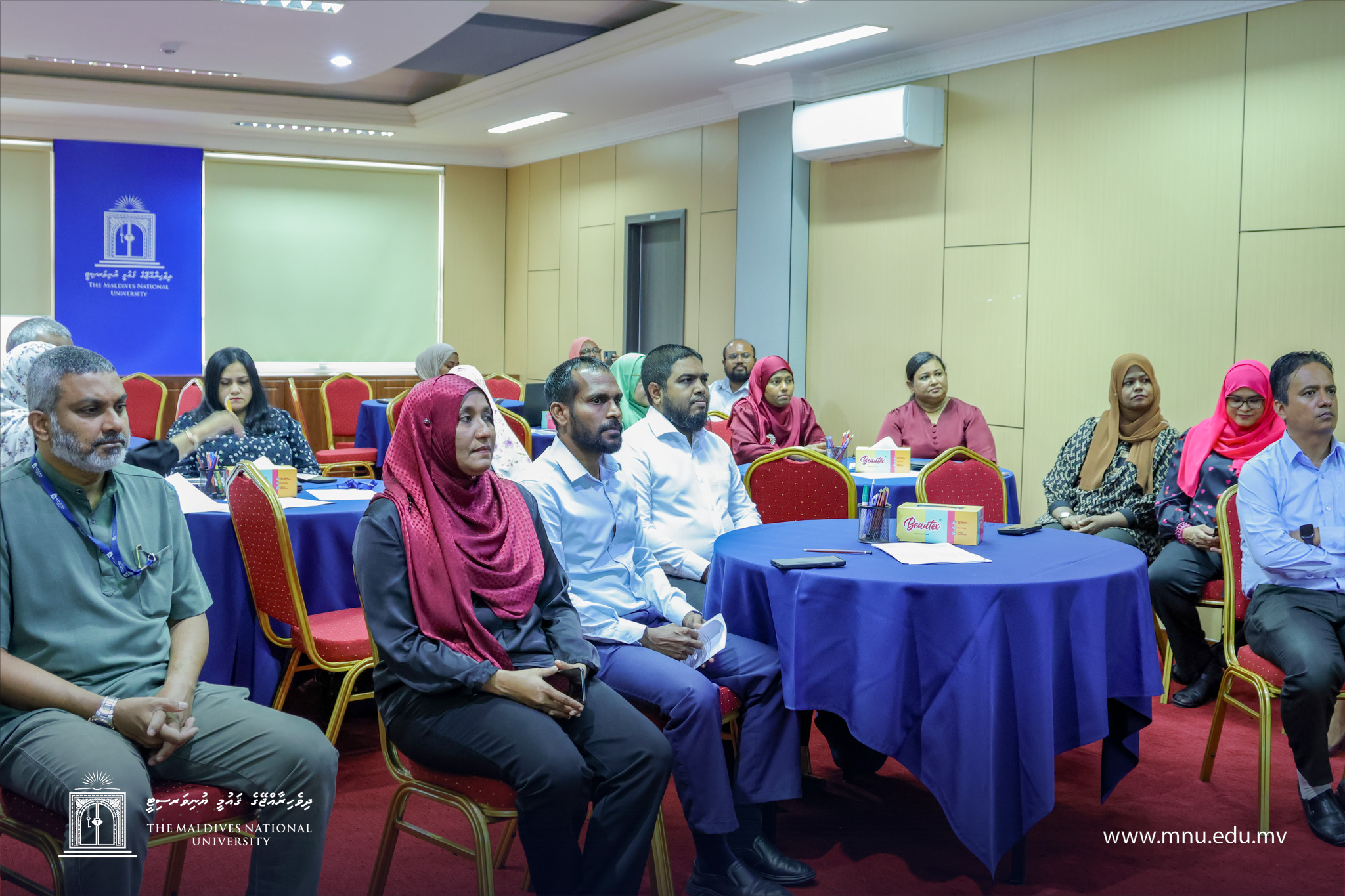
As part of the study, MNU, UNICEF and the Ministry of Education jointly hosted a Validation Workshop on 22 November 2025, bringing together representatives from MNU, UNICEF, the Ministry of Education, schools, higher education institutions and other education stakeholders. The research team presented the study methodology and key findings, followed by discussions on practical recommendations to strengthen digital readiness and advance digital learning in the Maldives. Participants shared perspectives on applying the findings in educational settings, highlighting the importance of collaboration in addressing challenges associated with digital transformation. The workshop reinforced a shared commitment to building an inclusive, equitable and sustainable digital learning ecosystem, with the study findings expected to inform future policy, planning and implementation.
The initiative particularly contributes to SDG 4 – Quality Education, through its focus on equitable and inclusive access to quality digital education; SDG 9 – Industry, Innovation and Infrastructure, through strengthening digital infrastructure and innovation in education; SDG 10 – Reduced Inequalities, through its emphasis on accessibility and inclusion, particularly for students with disabilities; and SDG 17 – Partnerships for the Goals, through collaboration between MNU, the Ministry of Education, UNICEF and other education stakeholders.