Introduction
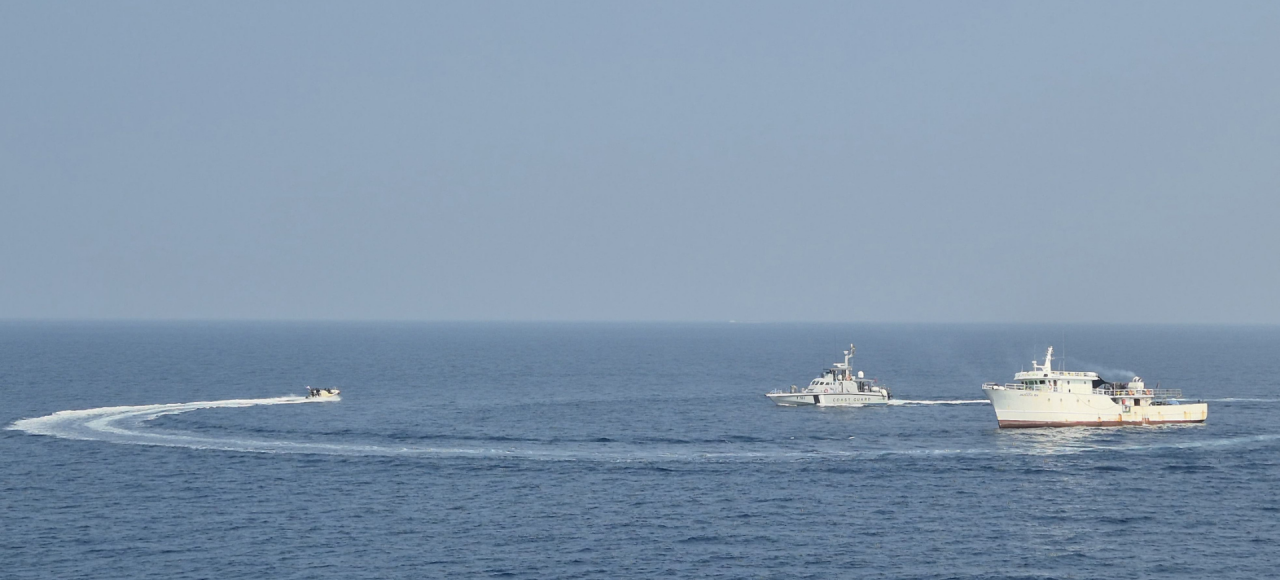
The Indian Ocean is one of the most strategically important maritime zones in the world. It serves as a conduit for global trade and energy supplies, linking the Middle East, Africa, South Asia, and East Asia. With its busy sea lanes of communication (SLOCs), the region faces persistent challenges ranging from piracy and illegal fishing to environmental hazards and humanitarian crises. Against this backdrop, Exercise Dosti (the trilateral maritime exercises between India, Maldives and Sri Lanka) has emerged as a vital instrument of maritime diplomacy in Maldives.
Exercise Dosti was launched in 1991 as a bilateral exercise between India and Maldives, expanded in 2012 to include Sri Lanka, and remains one of the oldest continuous maritime Coast Guard exercises in the Indian Ocean region. Dosti symbolises friendship and cooperation between the Indian Ocean coastal nations. It is conducted biennially. The exercise brings together the Coast Guards of these nations to practice joint drills like Search and Rescue (SAR) and pollution response.
Mauritius, Seychelles and Bangladesh participated as observers during Dosti 15 (2021), signalling the potential for broader regional participation. More than a technical drill, Dosti is a diplomatic initiative that strengthens trust, enhances interoperability, and builds collective capacity to address shared maritime security challenges, portraying a significant element of maritime diplomacy in the Indian Ocean.
Island Identity and Maritime Diplomacy
The island identity of Maldives places it at the centre of the maritime security domain. As a large ocean state, the ocean becomes the biggest resource and area of challenges for island states. Comprising 1190 islands and an exclusive economic zone of almost one million square kilometres, over 98% of the area that must be safeguarded is ocean. The protection demands dealing with internal and external issues. Furthermore, the resource constraints demand aid cooperation.
Maldives has navigated its development and security interests with regional partners, including through defence cooperation agreements, and a great deal of its cooperation in the defence area involves partnering with India, United States and Australia to establish and strengthen protection mechanisms at sea. Maldives face several challenges at sea. This includes piracy, maritime drug trafficking , IUU fishing and all of the main threats they pose, which arise from foreign sea and land, stretching the country’s security forces’ resources to deal with them alone.
Military-to-military engagements extend beyond regional partnerships, and dealing with extra-regional actors requires Maldives to navigate its national priorities with traditional regional frameworks, especially the rules-based engagements promoted by the Indo-Pacific partners, including India and Sri Lanka.
Enhancing Regional Maritime Security
According to the Information Fusion Centre IFC Singapore and IFC IOR 2024 annual report, the Indian Ocean is vulnerable to piracy, trafficking, and illegal fishing. Exercise Dosti directly addresses these threats by improving the interoperability of the participating Coast Guards. Joint SAR operations ensure rapid response to maritime accidents, while pollution control drills enhance environmental protection.
For example, in May 2021, when MV X-Press Pearl caught fire while it was anchored off the coast of Colombo, the Indian Coast Guard jointly worked with the Sri Lankan Navy to extinguish the fire – Maldives’ authorities also kept a close eye out through diplomatic and operational channels with their regional counterparts.
In addition, to deal with marine pollution in the Indian Ocean region, there is a Regional Oil and Chemical Spill Contingency Plan for the South Asian Seas. It is coordinated by the South Asian Cooperative Environment Programme (SACEP) and was created with support from the International Maritime Organisation (IMO). This plan gives countries a way to work together during major pollution emergencies. By 2018, all member countries – Bangladesh, India, Maldives, Pakistan, and Sri Lanka – had approved it through an MoU.
Exercise Dosti can help these countries to put agreements like this into action by driving countries to work together. For example, equipment such as oil-containment booms is different in each country, and these drills let teams check whether their tools are compatible and see what technical problems exist. What they learn can help guide future purchases, so countries use equipment that matches or works well together, making it easier to combine their resources during a regional oil-spill emergency.
Building Trust and Confidence
“Trust” among states is a critical foundation for regional stability, but it is frequently strained by historical tensions, border disputes, and shifting geopolitical alignments. In South Asia, scholars have opined, states such as India, Sri Lanka, and Maldives have each experienced periods of mistrust—i.e. Indian–Sri Lankan political frictions during the civil war era, and concerns in Maldives about external influence.
For example, in Maldives during the 2023 election campaign, India-Maldives relations faced a notable change with a politically drawn India (military) out campaign, driving public sentiments to include the election outcome against the then incumbent, who had closer political ties with India’s authorities. It took a continued show of determination from both sides, via exchange of high-level visits, to clear potential diplomatic clout and further enhance the long-standing diplomacy between the two nations.
Against this backdrop, Exercise Dosti serves as an important confidence and trust -and trust-building measure by facilitating predictable and structured interaction among the Coast Guards of the participating states and their respective agencies. For example, a key factor behind this could have been Exercise Dosti-16, held in February 2024. Maldivian defence minister Mohamed Ghassan Maumoon inaugurated the exercise by highlighting the importance of collaboration and interoperability among the Coast Guards of the three nations.
Another way to build confidence is through institutions that can connect states’ interests. For example, the proposition to include Bangladesh, Mauritius and Seychelles as observers marks the multilateral aspects of the Dosti-15 platform.
A multilateral Dosti initiative could support the Indian Ocean maritime security community, in conjunction with other regional initiatives such as the Indian Ocean Rim Association (IORA). The exercise enhances inclusivity and strengthens regional resilience against shared challenges. For example, by forming a regional strategic/collective partner, clean-up efforts for incidents such as the MV Wakashio oil spill could have been accelerated, minimising damage to the environment.
India’s leadership is yet crucial. India plays a central role in Exercise Dosti, leveraging the exercise as a tool of maritime diplomacy – i.e., India’s stake to guarantee regional security is higher than that of its smaller nations. India provides leadership and resources, reinforcing its position as a net security provider in the Indian Ocean. This aligns with India’s broader strategic vision under the ‘Security and Growth for All in the Region’ (SAGAR) doctrine, and the recent ‘Mutual and Holistic Advancement for Security and Growth Across Regions’ (MAHASAGAR), which emphasises collective prosperity and security.
Beyond operational benefits, Dosti carries both a political and operational significance. The name itself—meaning friendship—underscores the spirit of cooperation. The Exercise, thus, contributes to shaping regional norms of collaboration and solidarity, reinforcing the idea that maritime diplomacy is constitutive of a shared responsibility between regional actors. In that, small states have a mutually assured commitment to regional security objectives.
Conclusion
Exercise Dosti is a diverse instrument of maritime diplomacy in the Indian Ocean. It enhances security through combined operations, strengthens disaster response capabilities, builds trust among states, and expands regional cooperation. Strategically, it reinforces India’s leadership role while providing smaller states, such as Maldives, with security and diplomatic benefits. The exercises embody friendship and solidarity, contributing to the construction of a cooperative regional identity.
Author
Lt Col Ahmed Jameel is a serving officer in the Maldives National Defence Force (MNDF), with 20+ years of experience in the maritime domain. He also has a postgraduate degree in International Relations from Salve Regina University, USA. The author acknowledges that the statements, opinions and arguments made are his own and do not reflect the Maldivian Government’s policies and position.