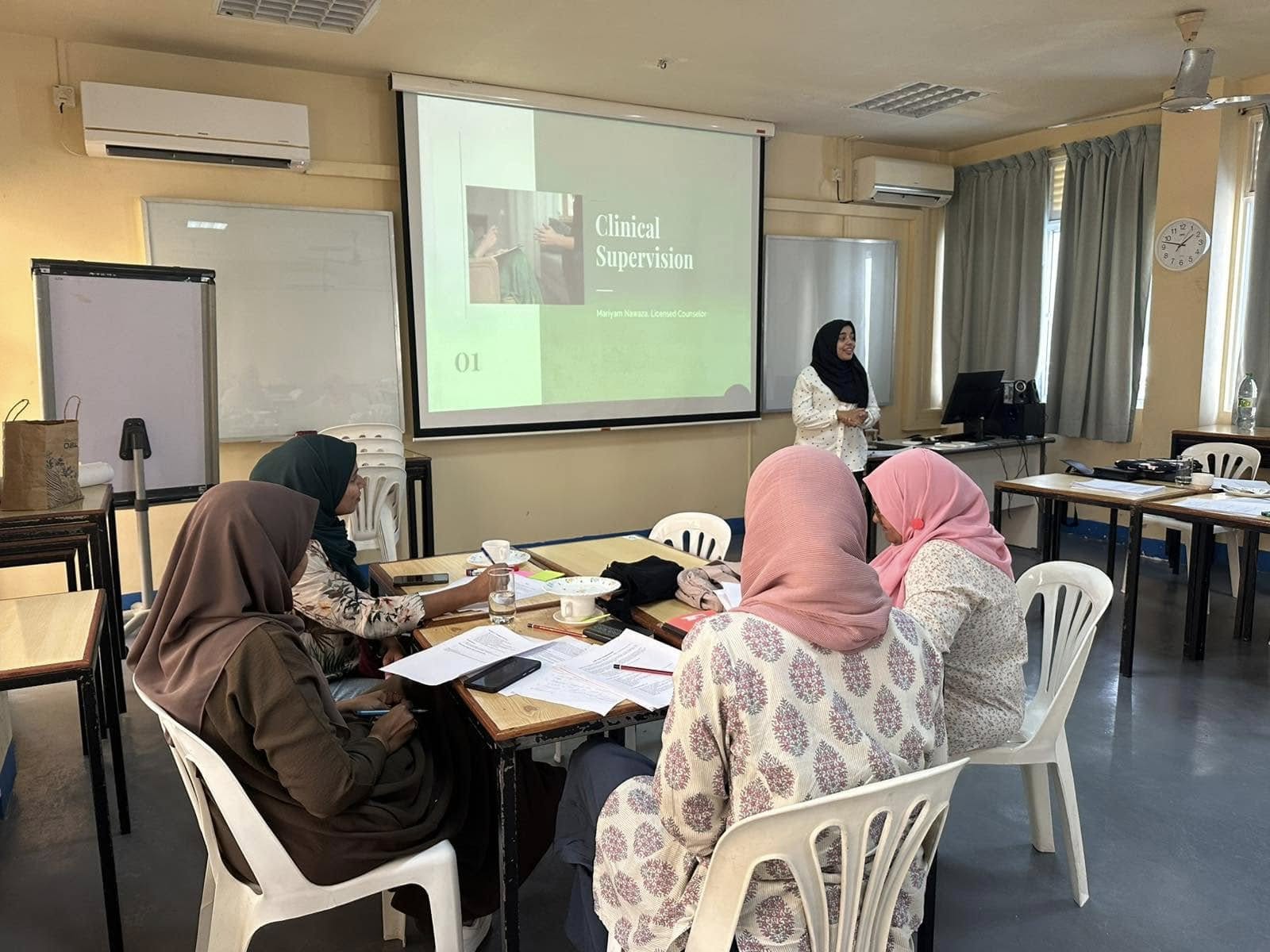
The Faculty of Health Sciences strengthened clinical supervision capacity through two professional development initiatives conducted in 2025, supporting the quality of clinical education and the development of the mental health workforce.
On 8 February 2025, a Clinical Supervision Training session was conducted for supervisors from institutions accommodating MSc in Psychology (Clinical) students commencing their placements in Term 1, 2025. The training was facilitated by Licensed Counselor Mariyam Nawaza from the Institute for Mental Well-Being and coordinated by Mariyam Ifshan Ahmed.
The training focused on strengthening supervisors’ capacity to provide structured, ethical and effective clinical supervision to students during their placements. By supporting supervisors in their role, the initiative contributed to more consistent clinical training and helped ensure that students receive appropriate guidance and professional support as they develop their competencies.
A second initiative was conducted on 8 December 2025, when a 16-hour face-to-face Clinical Supervision Training of Trainers (ToT) was delivered by WHO Consultant Dr. Rachel Ting Sing-Kiat. The training brought together 12 participants, including 8 FHS staff members and 4 other mental health professionals, with the programme coordinated by Fathimath Nahla.
Participants included Mariyam Ifshan, Afaa Mohamed, Sham’aa Saeed, Fathimath Nahla, Aminath Samha, Mariyam Neeris, Dr. Aishath Shanoora Fathimath Maeesha, Fathimath Rishtha, Haza Mohamed, Aminath Shahuru and Aminath Nahidha.
The ToT strengthened participants’ capacity in structured, ethical and evidence-informed supervision, while establishing a common foundation for clinical supervision within the department. It supported more consistent feedback, reflective practice and professional development among supervisors and mental health professionals.
Together, the initiatives demonstrate FHS’s commitment to strengthening supervision as an essential component of quality clinical education and professional practice. Effective clinical supervision supports the development of competent practitioners while contributing to the quality, safety and consistency of counselling and psychological services.
The initiatives contributed to SDG 3 (Good Health and Well-being) through strengthening the mental health workforce and supporting quality mental health services, SDG 4 (Quality Education) through enhanced clinical learning and supervision, and SDG 17 (Partnerships for the Goals) through engagement with external professionals and institutions.