Introduction
Maldives’ maritime defence cannot be confined merely to its territorial waters – i.e., effective defence planning, surveillance, partnerships, and deterrence require defence and security operations at sea that observe activities both within and beyond the country’s 200 nautical miles of waters.
Maritime crimes such as drug trafficking and piracy are rooted in foreign waters and territories, and the Maldives National Defence Force (MNDF) Coast Guard plays a pivotal role in navigating security operations with both national and regional agencies. Maldives’ large oceanic character provides it with strategic leverage to control such illegal activities by strengthening the Coast Guard’s equipment and operational capacity. As a small state, its strategic significance may be viewed as limited; however, there is room to explore the role of small states in ensuring long term regional security.
A Small-State Maritime Security Perspective
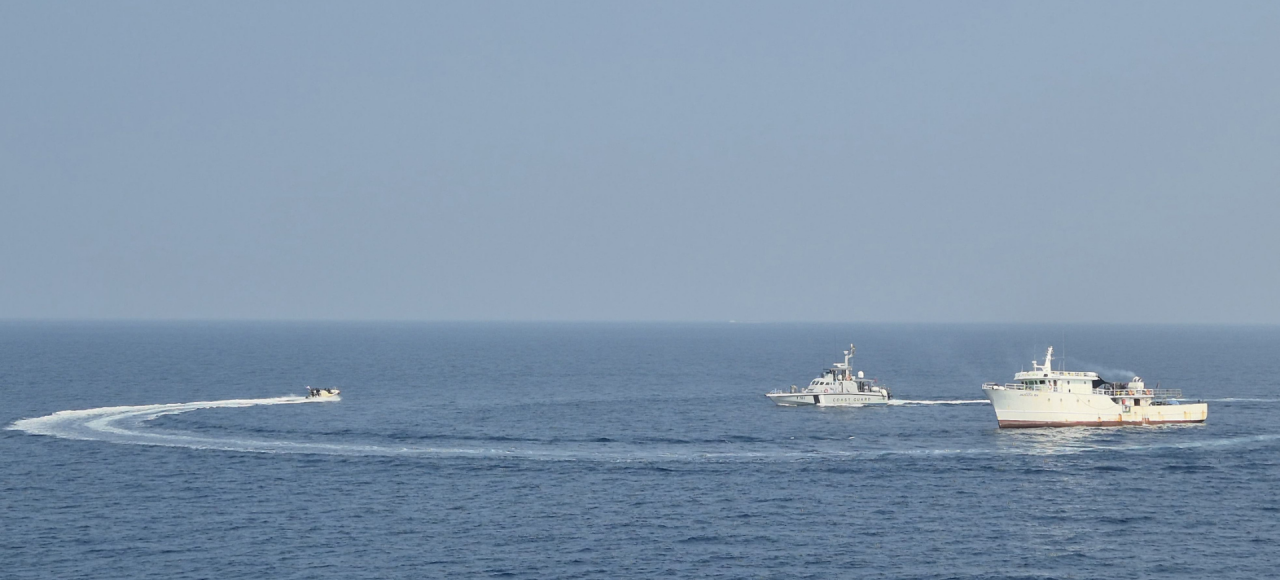
The survival of a small island state, like Maldives, is inseparable from maritime control and protection. For example, Illegal, Unreported, and Unregulated (IUU) fishing has traditionally originated far beyond territorial seas, which has spread across oceanic routes and exploited gaps in surveillance and enforcement before reaching national waters. The MNDF Coast Guard reported that in the year 2025 it intercepted eight Sri Lankan fishing vessels suspected of IUU fishing and another suspected of drug trafficking. No drugs were found during inspections, likely because they were discarded when the Coast Guard vessel was sighted.
Encounters with foreign fishing vessels suspected of IUU fishing have revealed that such operations are organised, and coordinated well outside the EEZ. Some of these fishing vessels get involved in other illegal activities, such as drug trafficking. For example, in November 2025, the MNDF Coast Guard seized 355.9 kilograms of suspected heroin and methamphetamine from a Sri Lankan fishing vessel that illegally entered the country’s waters. Additionally, piracy incidents originating in West Asia have gradually come to Maldives.
As these transnational maritime threats emerge beyond the Maldives’ EEZ but materialise within its waters, effective monitoring is required before they cross into the EEZ.
Hence, a defence posture anchored solely to territorial seas reflects a legalistic, not strategic, understanding of security. By the time threats physically cross into these zones, maritime deterrence has already failed, and response options are usually limited. Therefore, for large ocean states, maritime defence must be anticipatory rather than reactive, oriented toward shaping the wider operating environment rather than merely guarding its formal maritime boundaries. Such an approach will ensure continuous and holistic preparedness in the face of conflict or adversity and ensure an all-pervasive and timely response.
For example, operating beyond 200 nautical miles provides an island nation with strategic depth. Early warning is the cornerstone of maritime defence, particularly for states with limited force structures, enabling the country’s maritime forces are to be in a state of perpetual readiness. Surveillance and information-gathering in the wider Indian Ocean allow authorities to detect patterns, identify anomalies, and assess intent long before the threats reach national waters.
IUU fishing incidents tell us part of the bigger story in a bid to demonstrate how Maldives must address multiple non-traditional threats while managing, protecting and securing a vast ocean that greatly adds to its strategic depth by coordinating national, regional and local resources.
This does not necessarily require the creation of a blue-water navy in the traditional sense – i.e., size and capacity can be measured by how the Coast Guard plans and conducts its operations. Such operations are a test of a nation’s resolve and temperament, and how best a country can utilise its existing resources with existing intelligence as opposed to merely acquiring assets for deployments.
Achieving Forward Maritime Defence?
Extended maritime domain awareness
Maldives must prioritise early detection through the use of satellite surveillance, vessel monitoring systems, intelligence-sharing, and real-time tracking of suspicious maritime activity along distant sea lanes, rather than waiting for vessels to cross legal boundaries – i.e., there is a requirement for maritime intelligence and awareness.
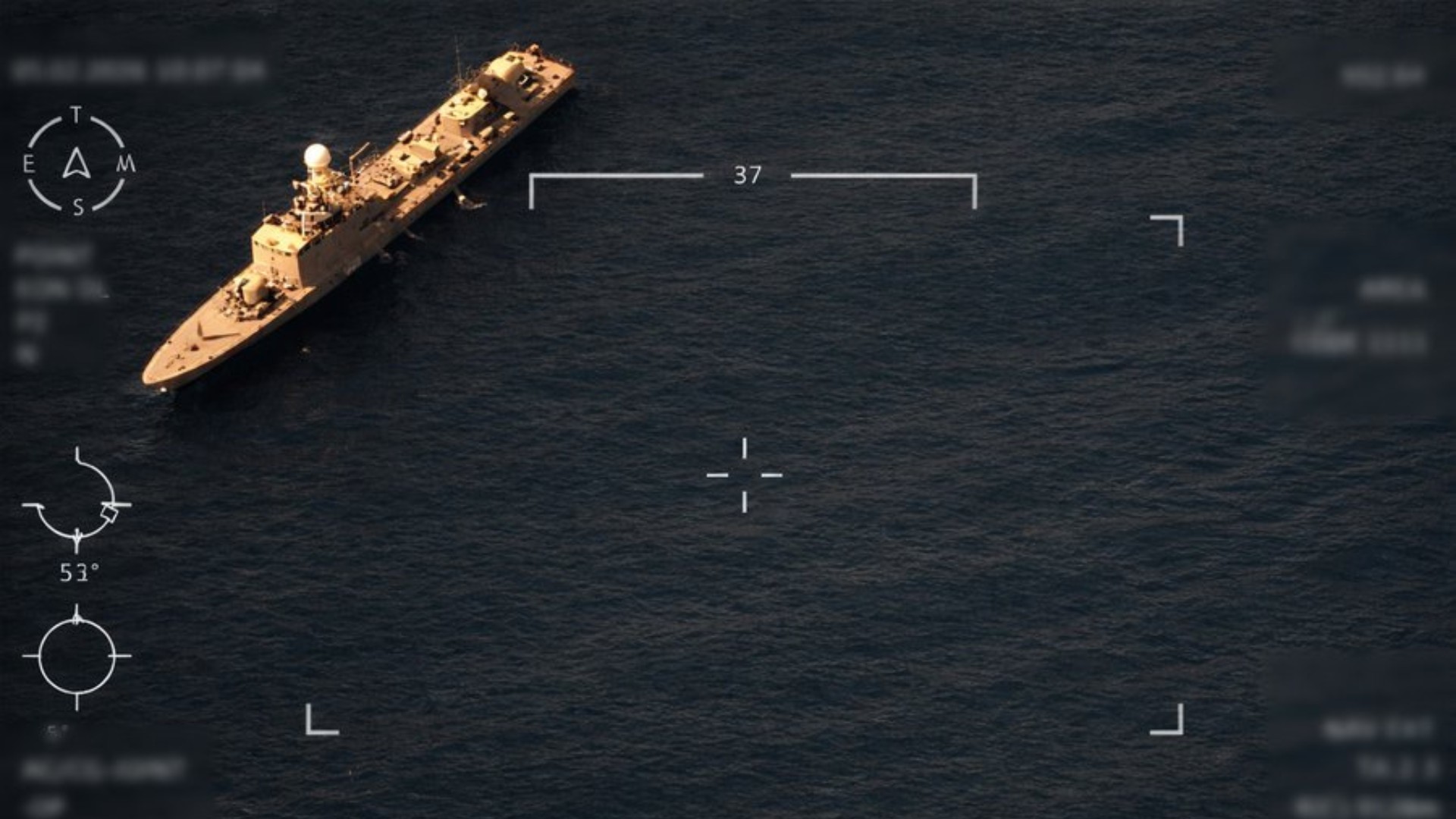
A key component of extended maritime domain awareness (MDA) for Maldives lies in the use of high-endurance long-range Unmanned Aerial Vehicles (UAVs), such as the Turkish Bayraktar drones presently used by MNDF. In addition, Maldives must diversify its import of drones from countries like India, which is emerging as a key market for drones across the Indo-Pacific.
By operating via satellite-enabled communications, these platforms significantly extend the Maldives’ surveillance reach beyond the physical limits of its EEZ. Importantly, the drones do not need to fly beyond 200 nautical miles to observe activities occurring beyond that boundary. Instead, elevated altitude, long-range sensors, and satellite data links allow them to monitor distant maritime spaces while remaining within operationally safe and legally uncontested airspace.
Networked approach to enforcement
Given the limited nature of MNDF Coast Guard assets, Maldives cannot physically patrol all areas beyond 200 nautical miles. Instead, it could rely on information-led deterrence, using intelligence to cue limited assets toward maritime criminals and vessels. This transforms maritime defence from constant presence to selective, intelligence-driven intervention, which is more realistic for Maldives.
For example, a recent MNDF operation using drones alongside the Coast Guard ship Dharumanvantha demonstrated how air and sea assets can work together to maintain continuous surveillance. The operation was based on intelligence gathered from MDA tools, clearly signalling to maritime criminal networks that continuous surveillance was in place and it was merely undertaken to deter adversaries. Incidentally, the author was the commanding officer of the Coast Guard ship during the said operation.
Regional and international military cooperation
Since piracy and transnational crimes originate outside Maldivian maritime jurisdiction, defence beyond 200 nautical miles depends on cooperation with neighbouring states and external partners operating in the wider Indian Ocean. Joint patrols, shared intelligence platforms, and coordinated responses allow Maldives to shape the maritime environment beyond its EEZ without overstretching its own capabilities. It also ensures that partner nations do not view Maldivian actions beyond their EEZ as antithetical to their interests.
Most recent anti-drug operations have taken place beyond Maldives’ EEZ through cooperation and intelligence-sharing with neighbouring countries. One example is a combined operation between the Sri Lanka Navy and the MNDF Coast Guard, which led to the interception of a Sri Lankan fishing trawler carrying 344 kg of crystal methamphetamine and 124 kg of cocaine in the Maldivian EEZ on 23 November 2024.
Maldives has also placed a liaison officer at the Information Fusion Centre – Indian Ocean Region (IFC IOR) as part of its collaborative efforts. In the future, Maldives may also send liaison officers to IFC Singapore and the Combined Maritime Forces (CMF) in Bahrain. The presence of liaison officers in these information-sharing hubs will greatly advance Maldivian capabilities and allow it to anticipate the nature of maritime threats at hand.
By extending defence planning beyond 200 nautical miles, Maldives signals strategic awareness and national resolve. Potential criminals are deterred not merely by the presence of ships at sea, but by the knowledge that their actions are visible, traceable, and subject to collective response if and when required.
Conclusion
For Maldives the sea is not a moat; it is the strategic heartland – i.e., the ocean is the foundation of its national identity and security (economically, culturally, politically). Confining maritime defence to territorial waters or the EEZ risks becoming vulnerable to strategic surprise and can lead to the gradual erosion of sovereignty. By extending defence planning, surveillance, partnerships, and deterrence beyond 200 nautical miles, Maldives can better counter transnational threats, preserve its autonomy, and ensure long-term national survival. This is the beginning of the era of collective transnational defence, and Maldives is ready to take the lead.
In an era of interconnected maritime challenges, security does not begin at the border, but well beyond it.
Author
Lt Col Ahmed Jameel is a serving officer in the Maldives National Defence Force (MNDF), with 20+ years of experience in the maritime domain. He also has a postgraduate degree in International Relations from Salve Regina University, USA. The author acknowledges that the statements, opinions and arguments made are his own and do not reflect the Maldivian Government’s policies and position.